


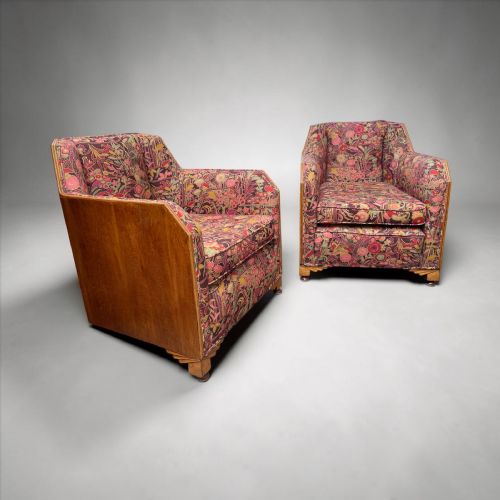
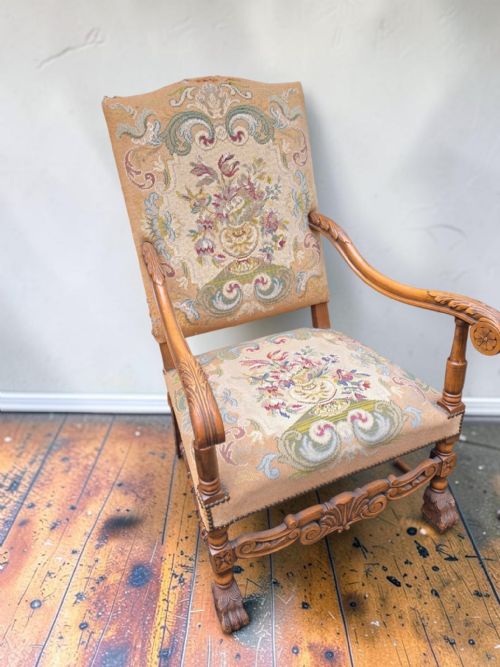
Antique French Accent Chairs
These antique French accent chairs bring ornate seating and period character to a room, offering classic style in giltwood, oak and silk.
What these pieces are
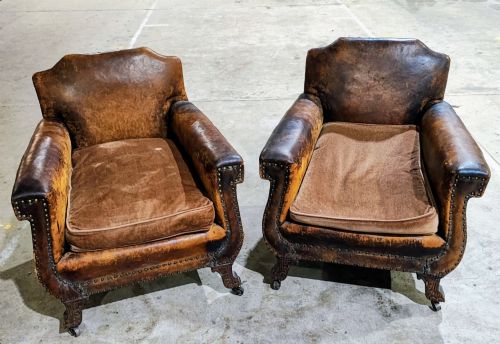
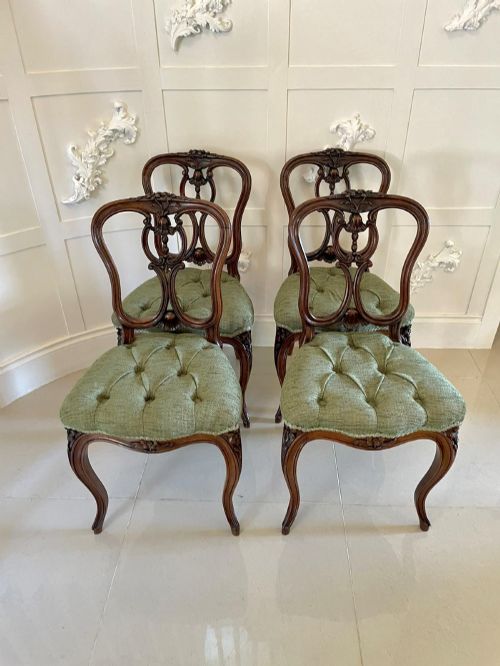
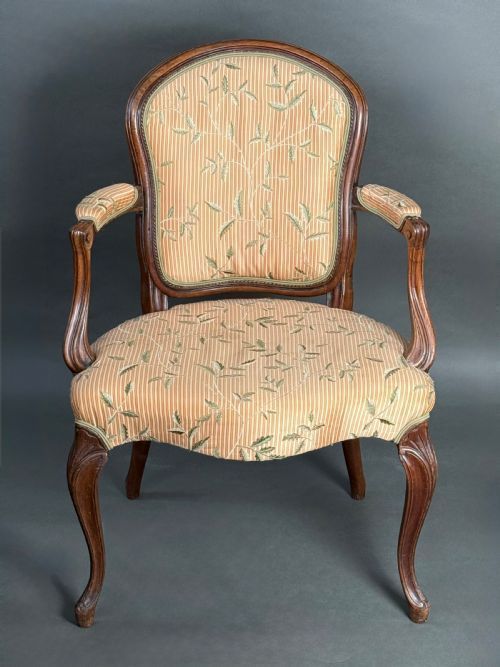
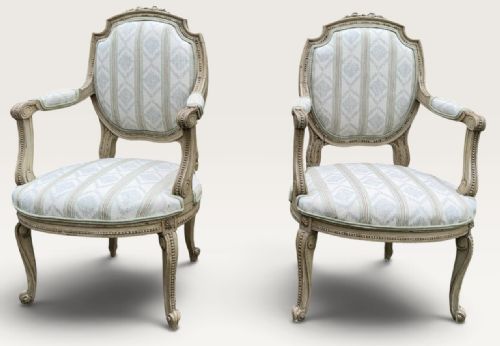
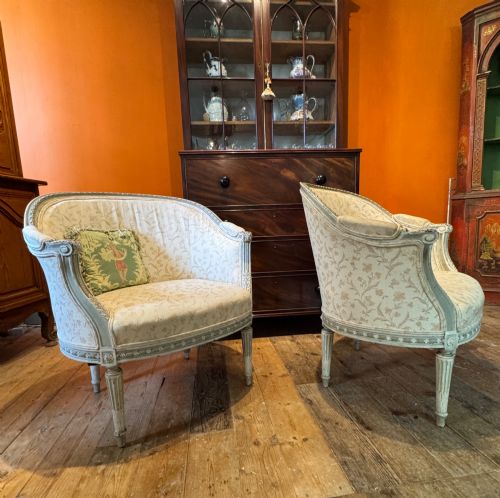
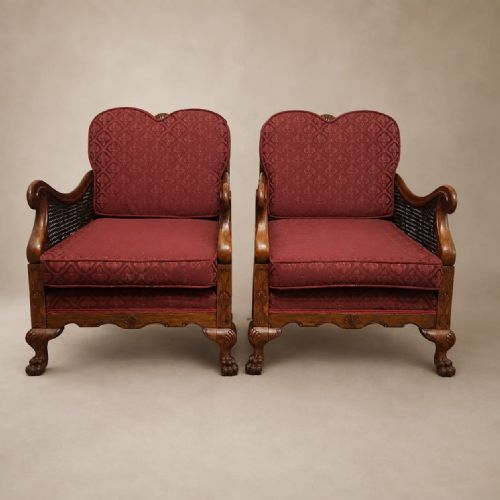
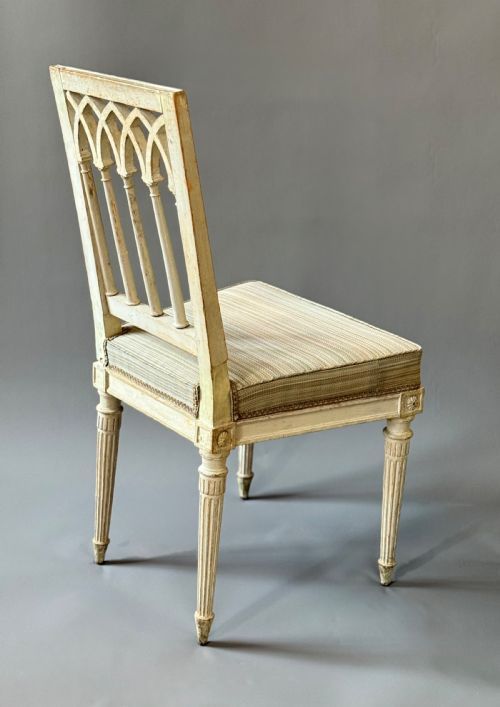
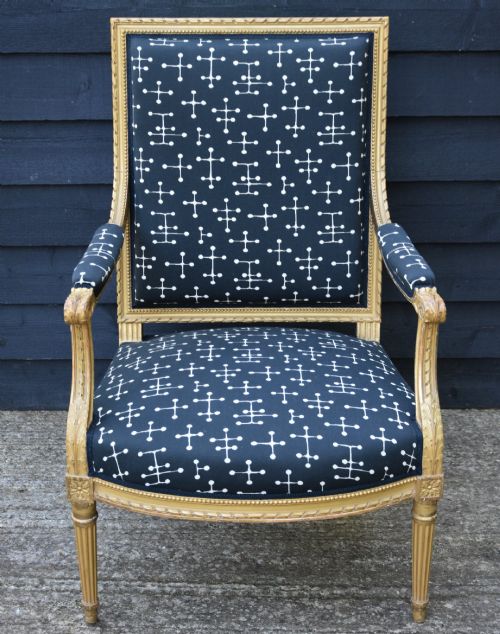
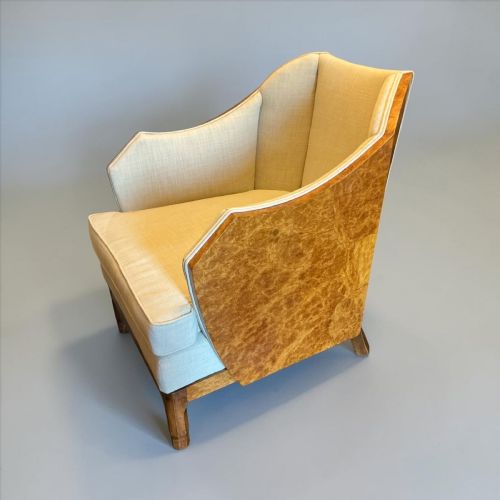
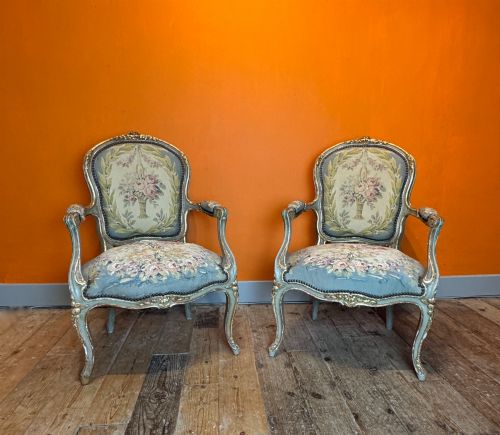
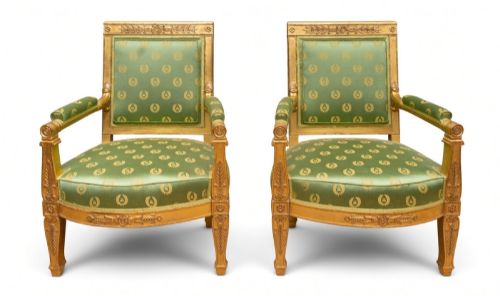
When you search for antique french accent chairs, you are looking at nineteenth-century seating shaped by historic French design traditions. The selection includes pairs of armchairs, side chairs, boudoir chairs and fauteuils dating from the 1880s through to 1900.
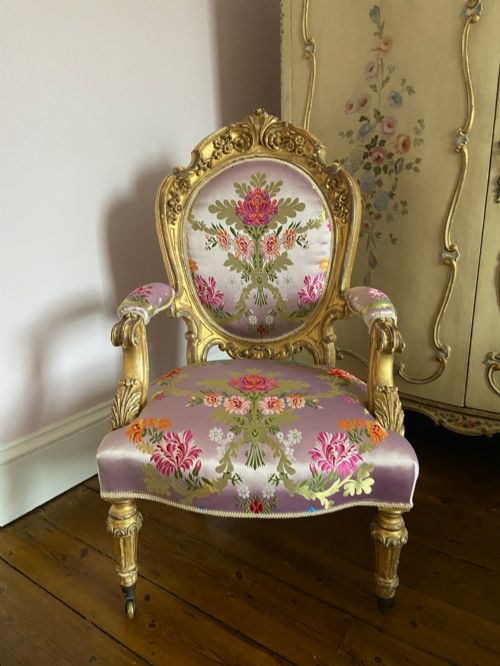
You are most likely to meet pairs of armchairs and salon chairs finished in giltwood, oak or painted wood. These seating forms span French Rococo, Louis XVI and French Renaissance Revival styles.
Originating from French chateaux and salons, these pieces bring decorative woodwork and period upholstery into modern interiors. Each form serves as a distinct accent piece for a room.
How they were made
Carpenters shaped the frames from solid woods such as oak, beech and general timber before applying paint, carved details or gold leaf. Giltwood frames display layers of gold leaf applied over a prepared gesso base on wood.
Upholstery forms an essential part of the construction, utilising materials like silk fabric and traditional stuffing over sprung or webbed bases. Many frames feature carved ornamentation characteristic of revival styles.
Retail Price Guide 2026
Typical UK retail prices for french accent chairs, calculated from the Sellingantiques database of over a million retail prices indexed since 2003. This retail price guide relies exclusively on Sellingantiques data; no external sources or auction records are used, so the figures do not describe the wider market.
The listings feature nineteenth-century seating spanning the 1880s and 1890s, constructed primarily from oak, beech and giltwood.
What varies in quality
The standard of carving across the wooden frames separates standard production from finer craftsmanship. Crisp, deep relief work on giltwood and oak indicates superior workshop execution.
The integrity of the structural frame and the choice of textile influence the overall character. Silk upholstery and well-preserved original or renewed finishes elevate the presentation of the piece.
The Antique French Accent Chairs Glossary
- Giltwood
- Wood that has been covered with a thin layer of gold leaf. This finish appears frequently on formal nineteenth-century seating.
- Fauteuil
- An open-armed upholstered armchair with wooden armrests. This form originated in seventeenth-century France and remained popular through the revival periods.
- Boudoir chair
- A small, low upholstered chair designed for private rooms. These pieces often feature decorative fabric and compact proportions.
- Louis XVI
- A neoclassical design style characterised by straight lines, symmetry and classical ornamentation. Chairs from this revival period display restrained geometric forms.
Frequently Asked Questions
What is a fauteuil armchair?
A fauteuil is an open-armed wooden armchair with upholstered back and seat. The wooden frame remains visible around the padded elements.
These chairs were designed for formal sitting rooms and salons in French interiors.
How do I identify French revival styles?
French revival styles copy earlier historic periods such as Rococo or Louis XVI. Look at the carved details and frame shapes to determine the specific design influence.
Nineteenth-century makers often combined elements from these classical periods in salon chairs.
Where should I place an accent chair?
Accent chairs suit bedrooms, dressing rooms or drawing rooms where extra seating is required. Boudoir chairs work well in smaller private spaces due to their compact scale.
Pairing two matching chairs creates a balanced display in a corner or by a fireplace.
What materials are used in these frames?
Frames consist of hardwoods like oak and beech, often shaped into curved or straight structural supports. Some surfaces feature applied paint or gold leaf.
Upholstery materials range from silk fabric to various traditional textiles.