

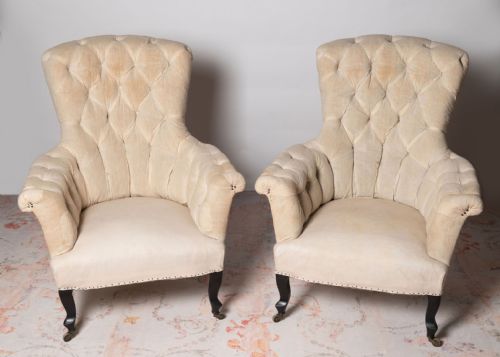
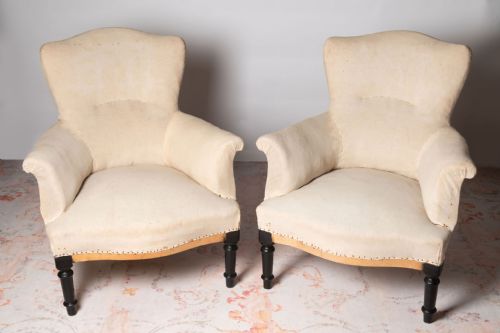
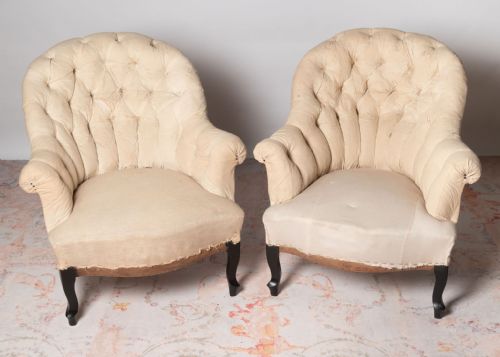
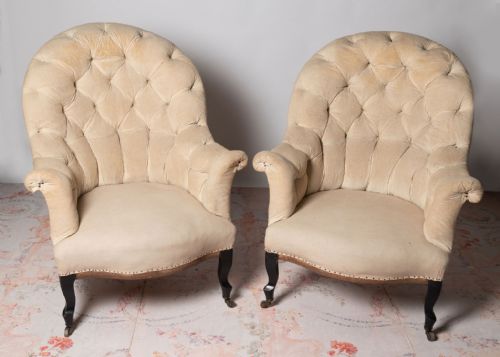
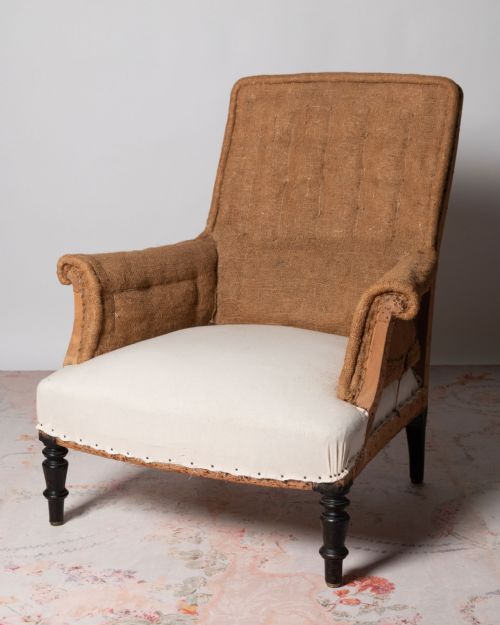
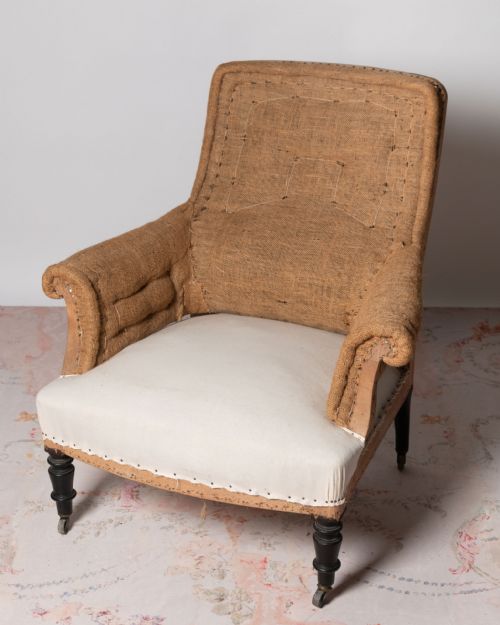


Ebonised Leg Armchairs
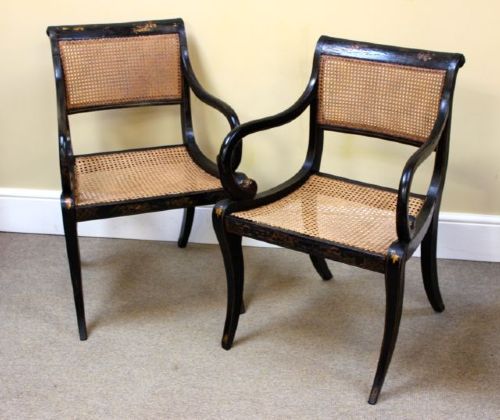
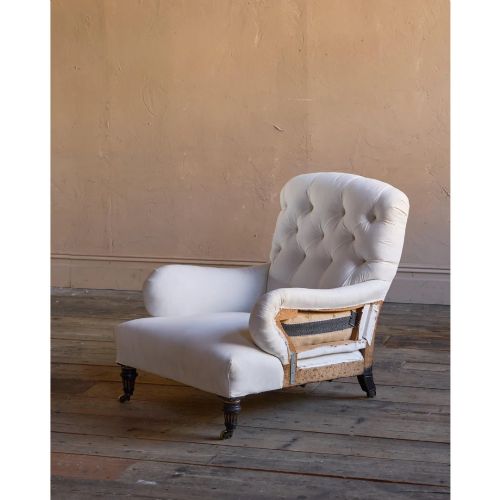
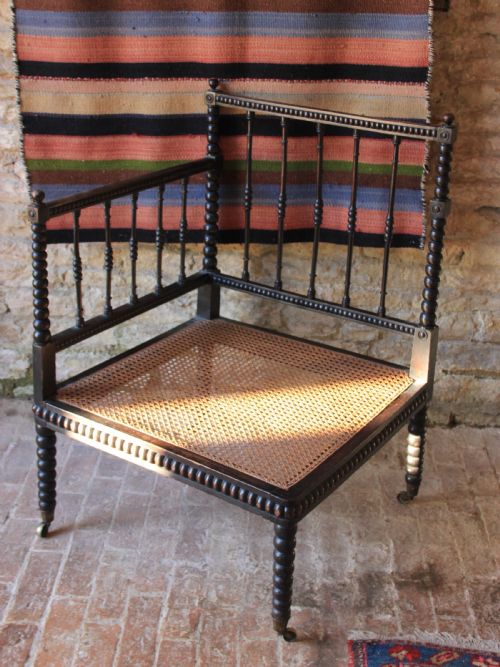
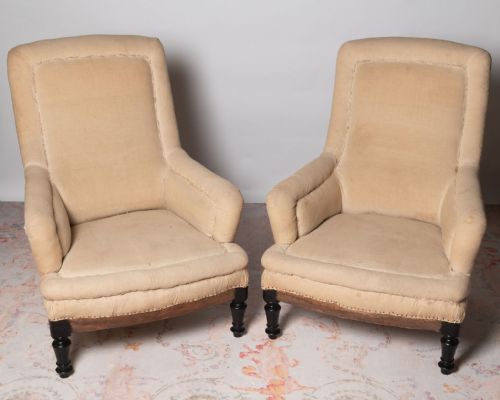
These ebonised leg armchairs are 19th Century French pieces offering distinctive seating for a period interior.
What these armchairs are
Ebonised leg armchairs comprise 19th Century French seating forms designed with darkened wooden supports. The listings on this page consist exclusively of French pair of chairs originating from the nineteenth century.
These items bring period character to a room through their traditional silhouette and contrasting structural materials. Buyers encounter matching pairs rather than single pieces among the current selection.
How they were made
Makers constructed the framework using timber and beech, applying an ebonised finish to create the dark surface on the legs. Metal and brass components frequently form part of the internal or external hardware.
Upholstery includes layers of linen, calico, and velvet to finish the seating surface. Traditional joinery secures the wooden elements together.
Materials recorded across the selection include ebonised wood, beech, timber, linen, calico, velvet, metal, and brass.
What varies in quality
Quality rests in the precision of the ebonised finish and the integrity of the underlying timber and beech frame. Superior examples display careful attention to the turned or shaped wooden supports.
The condition of the textile coverings, whether linen, calico, or velvet, influences the overall presentation of each pair. Metal and brass detailing adds a further measure of refinement where present.
The Ebonised Leg Armchairs Glossary
- Ebonised wood
- Timber treated to imitate ebony, creating a dense black appearance on furniture legs. This finish was popular during the nineteenth century.
- Beech
- A dense hardwood commonly utilised for chair frames and structural components. It provides sturdy support for upholstered seating.
- Calico
- A plain-woven textile frequently employed as an under-upholstery layer in period chairs. It supports the outer velvet or linen fabric.
- Napoleon III
- A French design style spanning the nineteenth century, known for eclectic revivals and dark polished finishes. Pieces from this aesthetic often feature ebonised elements.
Frequently Asked Questions
What period do these armchairs date from?
The pieces available on this page originate from the 19th Century.
They reflect the French manufacturing traditions of that era.
Are these chairs sold individually?
The listings consist entirely of pairs rather than single items.
Buyers acquire two matching chairs together.
What materials are used in the frames?
Makers utilised timber and beech as the primary structural woods.
An ebonised treatment gives the legs their characteristic dark finish.
What fabrics cover the seating?
Upholstery materials include linen, calico, and velvet.
These textiles complete the nineteenth century French design.