
French Crapaud Armchairs
French crapaud armchairs are low-slung, fully upholstered seats designed for deep comfort, bringing intimate nineteenth-century Parisian style directly into a modern room.
French Crapaud Armchairs
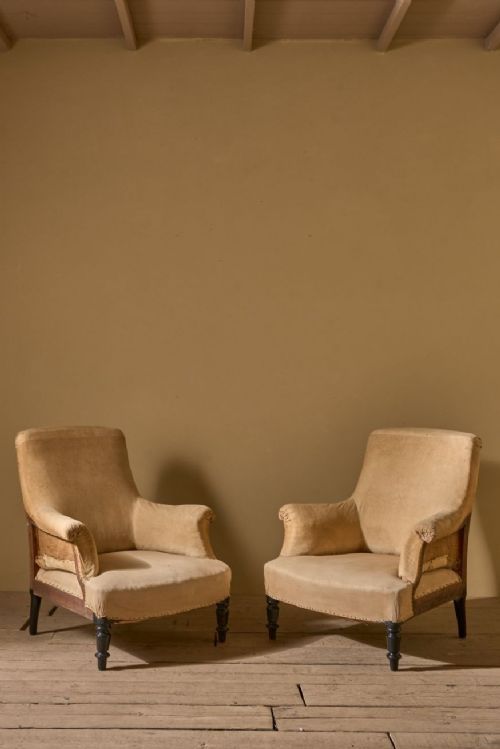
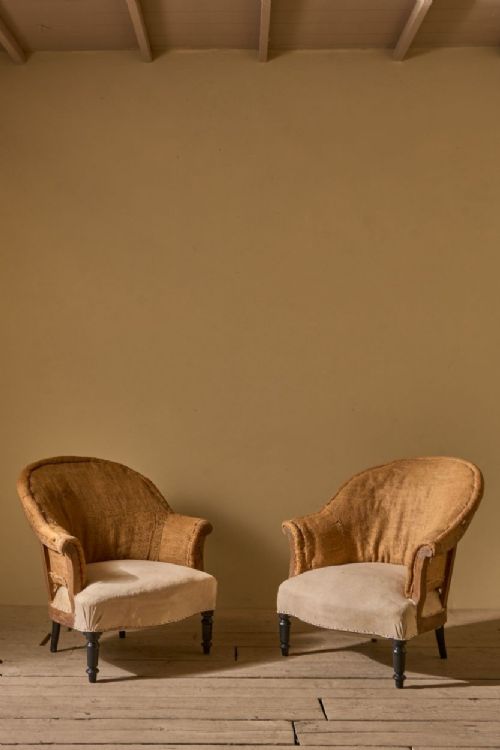
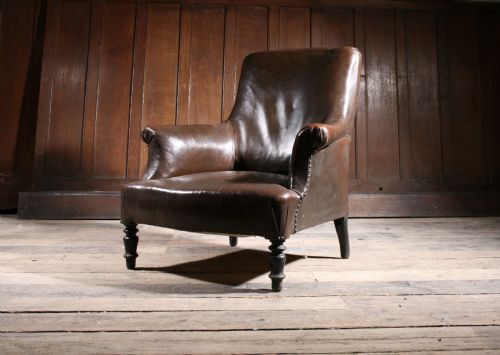
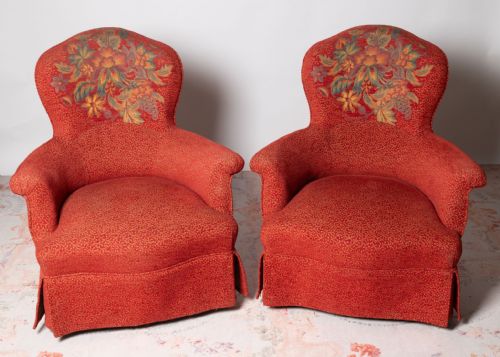
When you search for French crapaud armchairs, you encounter low, rounded seats built for lounging, frequently appearing in nineteenth-century styles such as Napoleon III. These pieces often feature sprung tub shapes, curved backs, and enclosed frames designed to keep the sitter warm near a hearth.
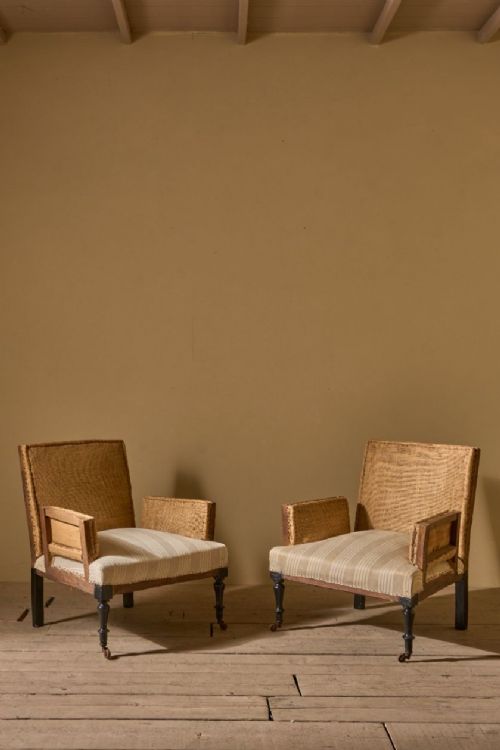
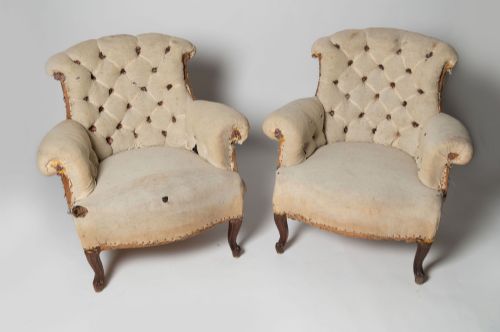
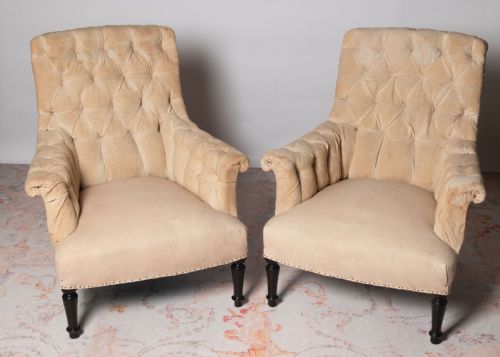
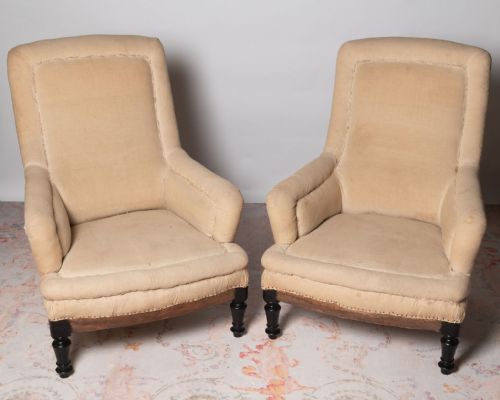
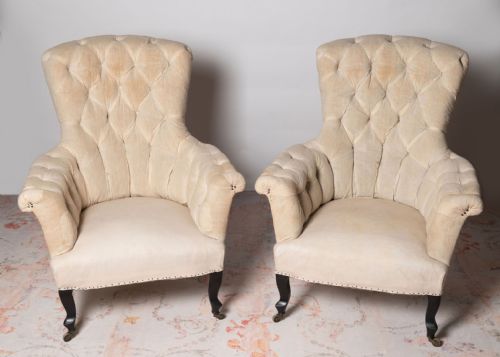
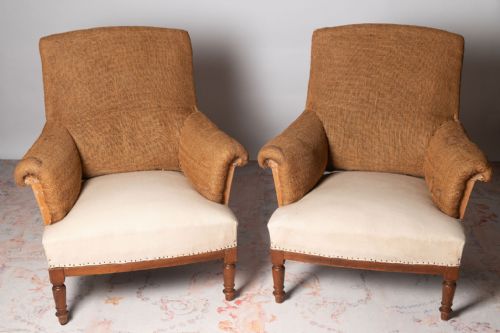
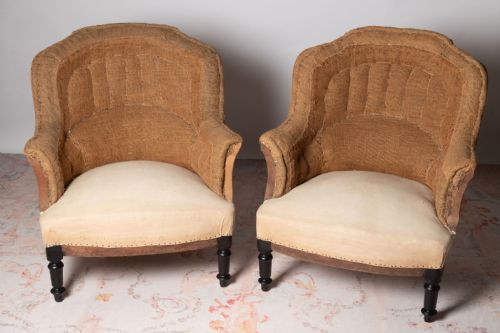
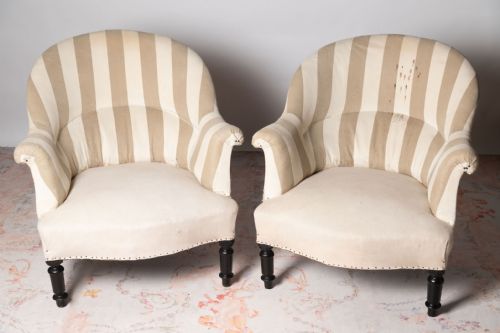
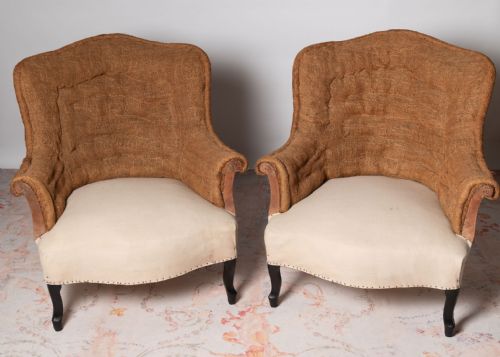
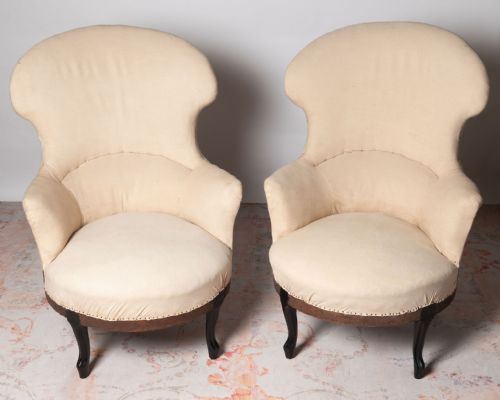
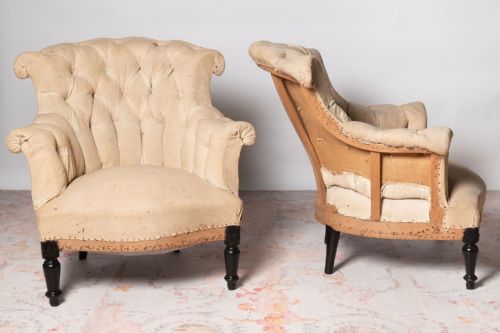
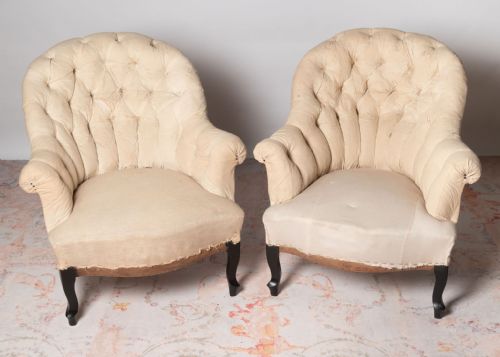
The versions most common on this page date from the nineteenth century and the early nineteen-hundreds, often arriving un-upholstered in hessian and calico, ready for final fabric selection. Many survive in pairs, showing square backs, high buttoned curves, or boudoir proportions spanning from the eighteen-hundreds to nineteen-thirty.
How they were made
Makers constructed the hidden frames of these chairs from sturdy timbers like beech and wood, building tight, low-slung profiles that completely concealed the structural joinery beneath padding. Traditional upholstery layers employed materials such as hessian, cotton, and linen to build resilient sprung seats and rounded tub backs.
Finishing touches often included brass details and rows of decorative tacks securing the outer textiles. Many examples survive stripped down to calico and bare webbing, revealing the rigorous internal construction.
French Crapaud Armchairs Retail Price Guide 2026
Typical asking prices for french crapaud armchairs among the pieces listed under this phrase on Sellingantiques today, from the lower quarter to the upper quarter. They describe what is for sale here now, not the wider market.
Listings feature items spanning the nineteenth century, nineteen-hundred, and nineteen-thirty, utilising materials such as beech, leather, cotton, and brass.
What varies in quality
The integrity of the internal beech frame and the responsiveness of the original spring work dictate the baseline standard of a piece. Chairs retaining robust, uncompromised wooden structures provide a superior foundation for modern restoration.
Proportion and silhouette also define the upper tier, distinguishing elegant, tautly curved tub backs from heavier, clumsier interpretations. The finesse of the original upholstery lines and the crispness of the square or high buttoned profiles separate ordinary examples from exceptional ones.
The French Crapaud Armchairs Glossary
- Crapaud
- A low, fully upholstered armchair originating in France, named for its squat, toad-like silhouette. These seats prioritize deep, enclosed comfort over exposed wood framing.
- Napoleon III
- A nineteenth-century French design period known for eclectic revivals and deep, luxurious upholstery. Pieces from this era often feature sprung tub shapes and curved backs.
- Hessian
- A coarse, woven fabric made from jute or hemp utilised as a foundational layer in traditional upholstery. It provides the heavy-duty base that supports internal stuffing and springs.
- Calico
- A plain-woven cotton fabric used beneath decorative top textiles to create a tight, smooth lining. It secures the stuffing before the final outer material is applied.
- Tub chair
- An armchair with a continuous rounded back and arms forming a single, enclosed barrel shape. This form offers sheltered seating designed to block draughts.
French Crapaud Armchairs: Frequently Asked Questions
What is a crapaud armchair?
A crapaud armchair is a low, fully upholstered French seat designed to sit close to the floor with a rounded, barrel-shaped back. The style dates predominantly to the nineteenth century and prioritises enclosed comfort.
The name translates from the French word for toad, reflecting the squat, low-slung stance of the traditional frame. These chairs are often found covered in calico or hessian, awaiting bespoke upholstery.
How do I date a French armchair?
Dating relies on examining the underlying timber frame, construction techniques, and stylistic markers such as Napoleon III design traits. Nineteenth-century examples typically show hand-turned beech components and traditional stuffing materials beneath the fabric.
Later pieces from around nineteen-hundred or nineteen-thirty introduce subtle shifts in proportion and spring technology. Comparing the silhouette against verified period pieces helps clarify the exact era of manufacture.
Are these chairs comfortable for daily use?
These armchairs were specifically engineered for deep lounging, featuring low seats and supportive, curved backs. Their heavily padded construction makes them remarkably suited for relaxed daily sitting in a living room or bedroom.
Restoring the internal springs and padding with quality materials ensures the seat provides correct ergonomic support. Many buyers choose pieces stripped for upholstery precisely to rebuild the comfort to modern standards.
Why do so many chairs need upholstery?
Many nineteenth-century frames survive stripped back to their original hessian and calico layers because historic outer fabrics wore away over generations. This leaves the raw structural foundation exposed for a new owner to apply bespoke textiles.
Purchasing an un-upholstered frame allows complete control over the final colour and texture of the covering. It ensures the finished chair matches contemporary interior schemes while preserving the antique core.