
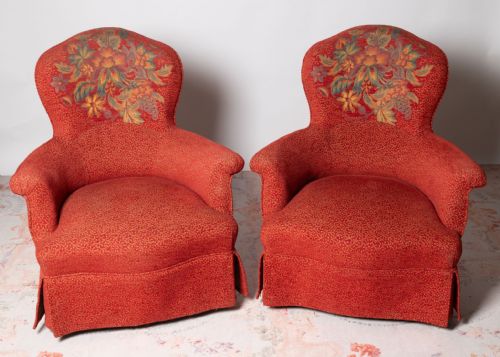


Red Fabric Armchair
A red fabric armchair is a substantial seating form bringing warmth to a room, and you will find examples here spanning the eighteenth century to the twentieth.
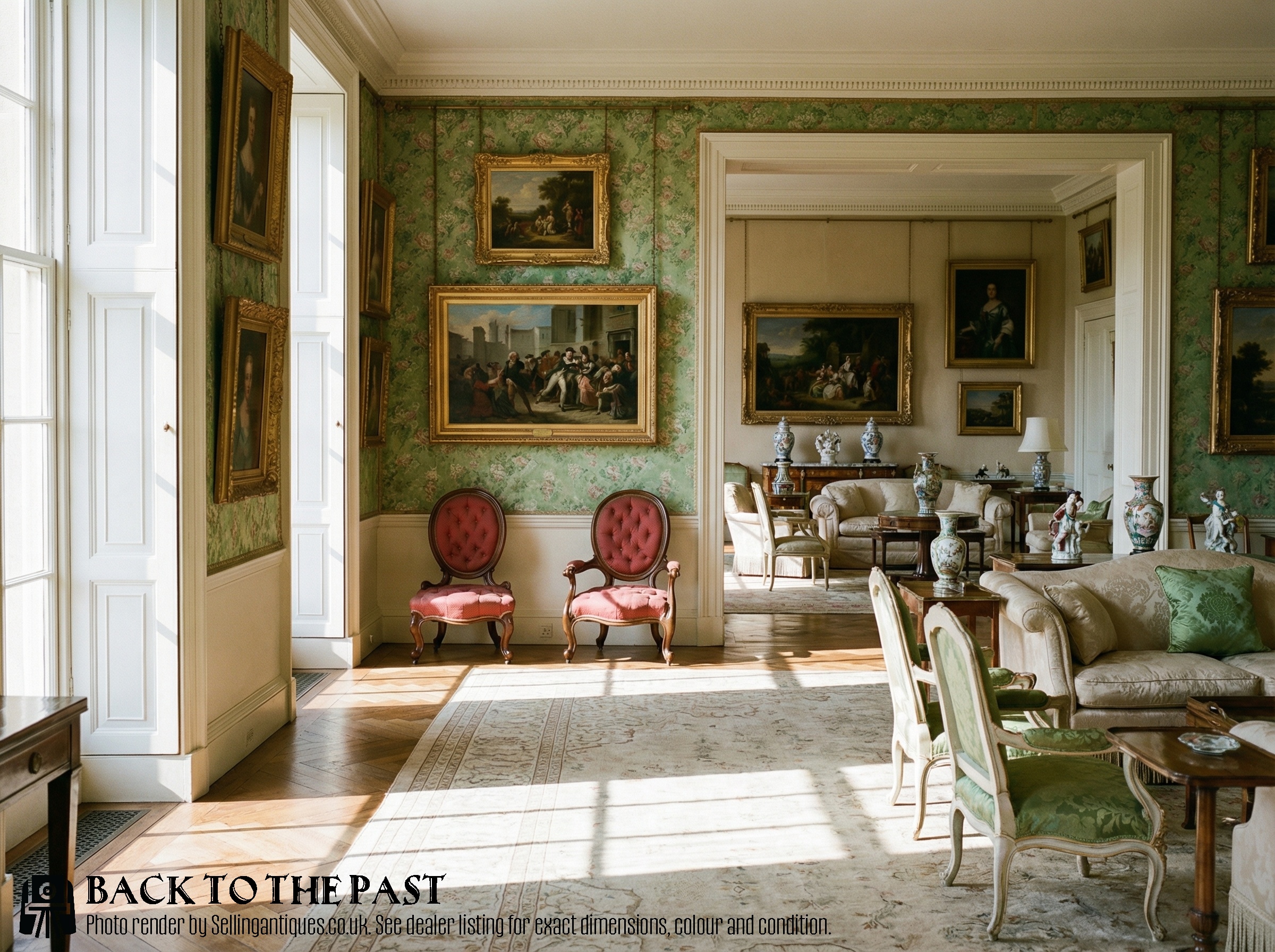
Red Fabric Armchair
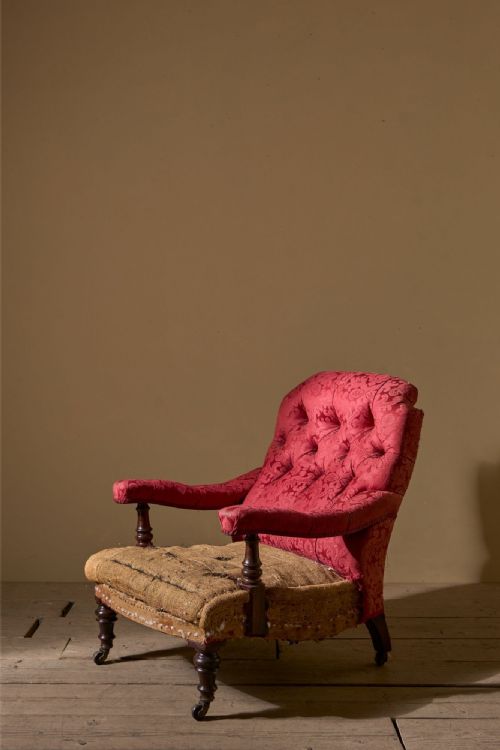
A red fabric armchair is a seated furniture piece designed for relaxation or reception use, encountered in forms ranging from compact Victorian button-back chairs to generous nineteenth-century country house models. When you search for a red fabric armchair, you enter a field where timber frames from the Georgian, Victorian, and Edwardian eras carry various upholstery treatments.
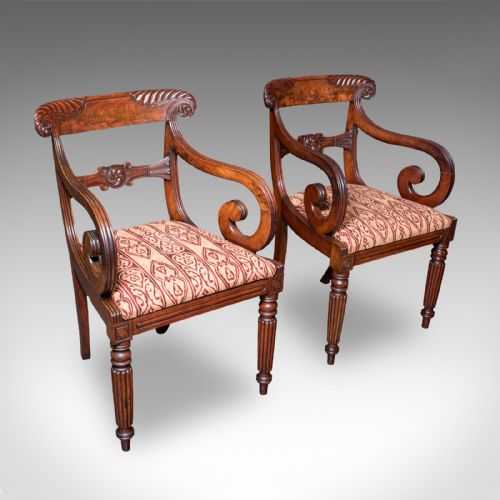
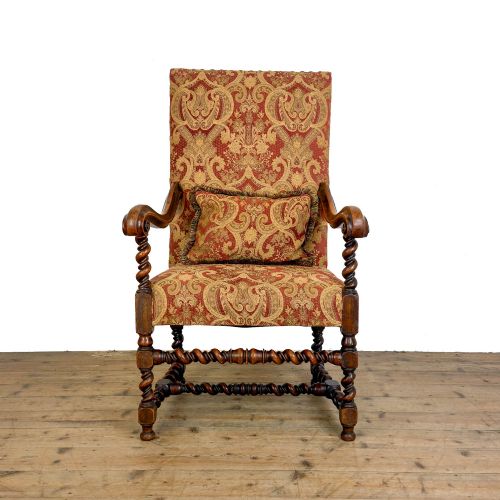
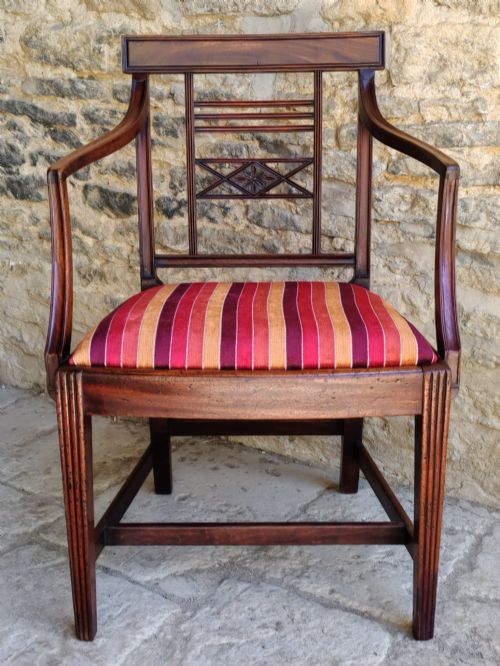
The selections on this page include open armchairs, carvers, and high-backed wing chairs originating from English, French, and Scottish workshops. Mahogany and walnut frameworks dominate the listings, paired with diverse fabric coverings from period damasks to modern wools.
You are most likely to encounter nineteenth-century walnut or mahogany frames fitted with supportive padded arms and deep seats. These pieces blend structural woodwork with tactile textile coverings suited to studies, libraries, and drawing rooms.
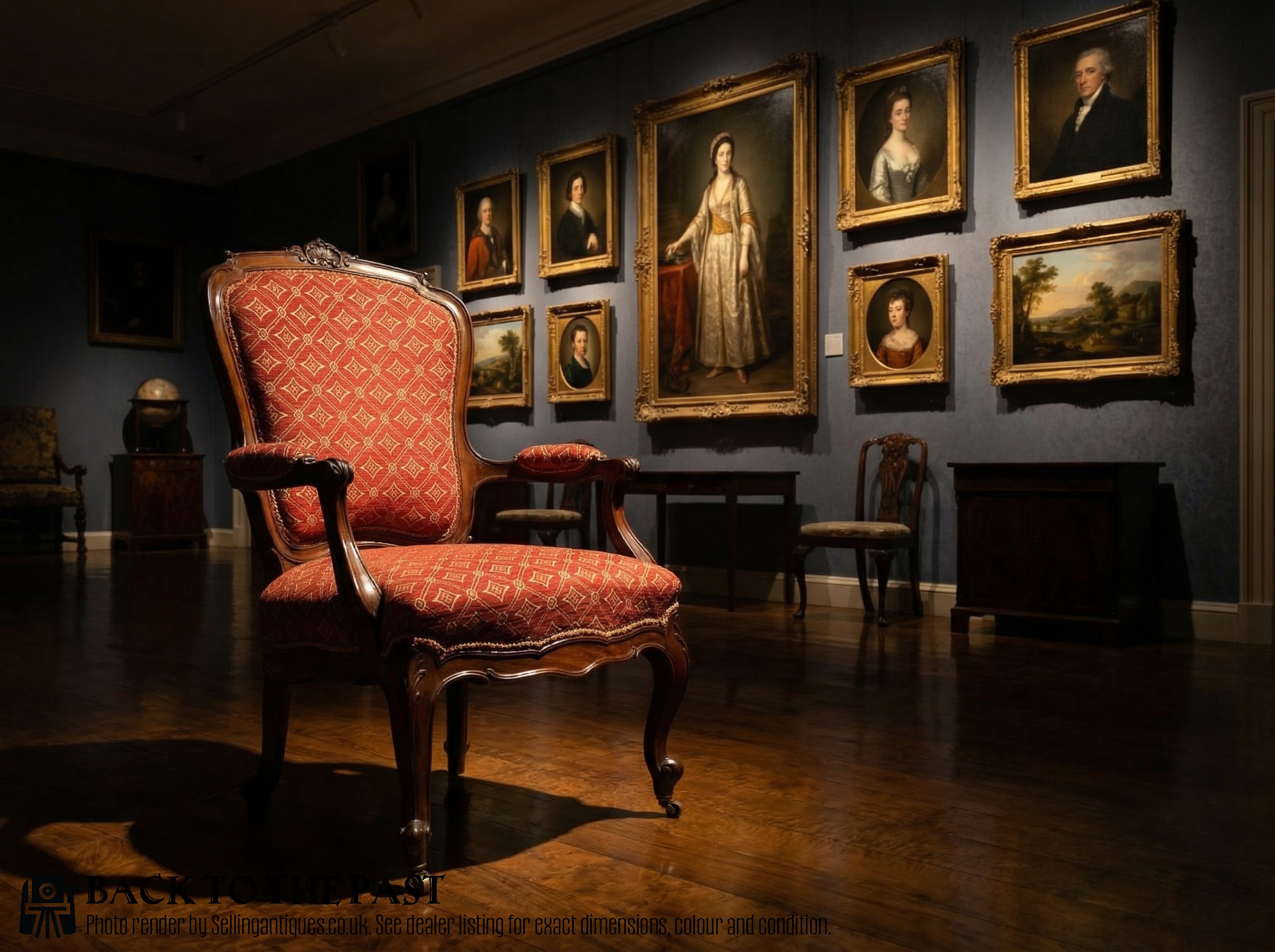
How they were made
The structural framework relies upon dense hardwoods such as mahogany, walnut, and general hardwood, shaped by hand through turning, carving, and joinery techniques. Woodworkers constructed these skeletons with mortise and tenon joints to ensure stability under heavy daily use.
Upholstery layers were built up using traditional stuffing materials secured over webbing and springs, enclosed finally by outer textiles including damask and standard upholstery fabric. Brass castors and decorative tacks frequently completed the assembly of nineteenth-century examples.
Red Fabric Armchair Retail Price Guide 2026
Typical asking prices for red fabric armchair among the pieces listed under this phrase on Sellingantiques today, from the lower quarter to the upper quarter. They describe what is for sale here now, not the wider market.
Several armchairs arrive with folding campaign mechanisms, ready for sudden Victorian military deployments.
What varies in quality
Quality rests primarily in the crispness of the timber carving and the integrity of the underlying frame construction. Finer pieces demonstrate superior joinery and select mahogany or walnut grains chosen by the cabinetmaker.
The proportion and balance of the armchair shape dictate visual success, alongside the historical appropriateness of any reupholstery textile chosen for the seat and back.
Gillows·Howard and Sons
The Red Fabric Armchair Glossary
- Carver
- An armchair designed with arms, originally intended for the head of a dining table or for reception use.
- Wing chair
- A high-backed armchair featuring upholstered side panels designed to shield the sitter from draughts.
- Damask
- A reversible figured fabric traditionally woven on a jacquard loom with patterns formed by contrasting warps and wefts.
- Elbow chair
- A traditional term for an armchair with low supports for the arms, often found in nineteenth-century settings.
- Button back
- An upholstery method where deep buttons are pulled through the padding to create a uniform diamond-patterned tufting.
Red Fabric Armchair: Frequently Asked Questions
How do I identify a Victorian armchair?
Victorian armchairs typically feature dark hardwoods like walnut or mahogany, often combined with deep button-backed upholstery and carved decorative details. They frequently employ heavier proportions than earlier Georgian seating.
Look closely at the turnings on the legs and the profile of the arm supports to distinguish mid-nineteenth-century work from later Edwardian reproductions.
What is a country house armchair?
Country house armchairs are comfortable, generously proportioned seating pieces designed for relaxed domestic living rather than formal reception rooms. They often show deeper seats and softer, accommodating padding.
These pieces prioritize comfort and durability, frequently appearing with upholstered arms and turned wooden legs fitted with brass castors.
Can I use an antique armchair daily?
Most antique armchairs are structurally robust enough for everyday seating, provided the internal webbing and joints remain sound and stable. Hardwood frames in mahogany and walnut tolerate regular use well.
It is sensible to check that the internal foundation supports your weight comfortably without excessive sagging in the seat base.
How do I care for wooden chair frames?
Maintain the polished wood surfaces by dusting regularly with a soft cloth and applying a sparing amount of quality furniture wax occasionally. Avoid placing antique seating near direct heat sources or strong sunlight.
Protecting the timber from extreme humidity fluctuations prevents the hardwood and traditional joinery from drying out or splitting over time.