
Fireside Wing Chair
When you want a fireside wing chair, you are looking for a high-backed seat designed to shield the sitter from draughts.
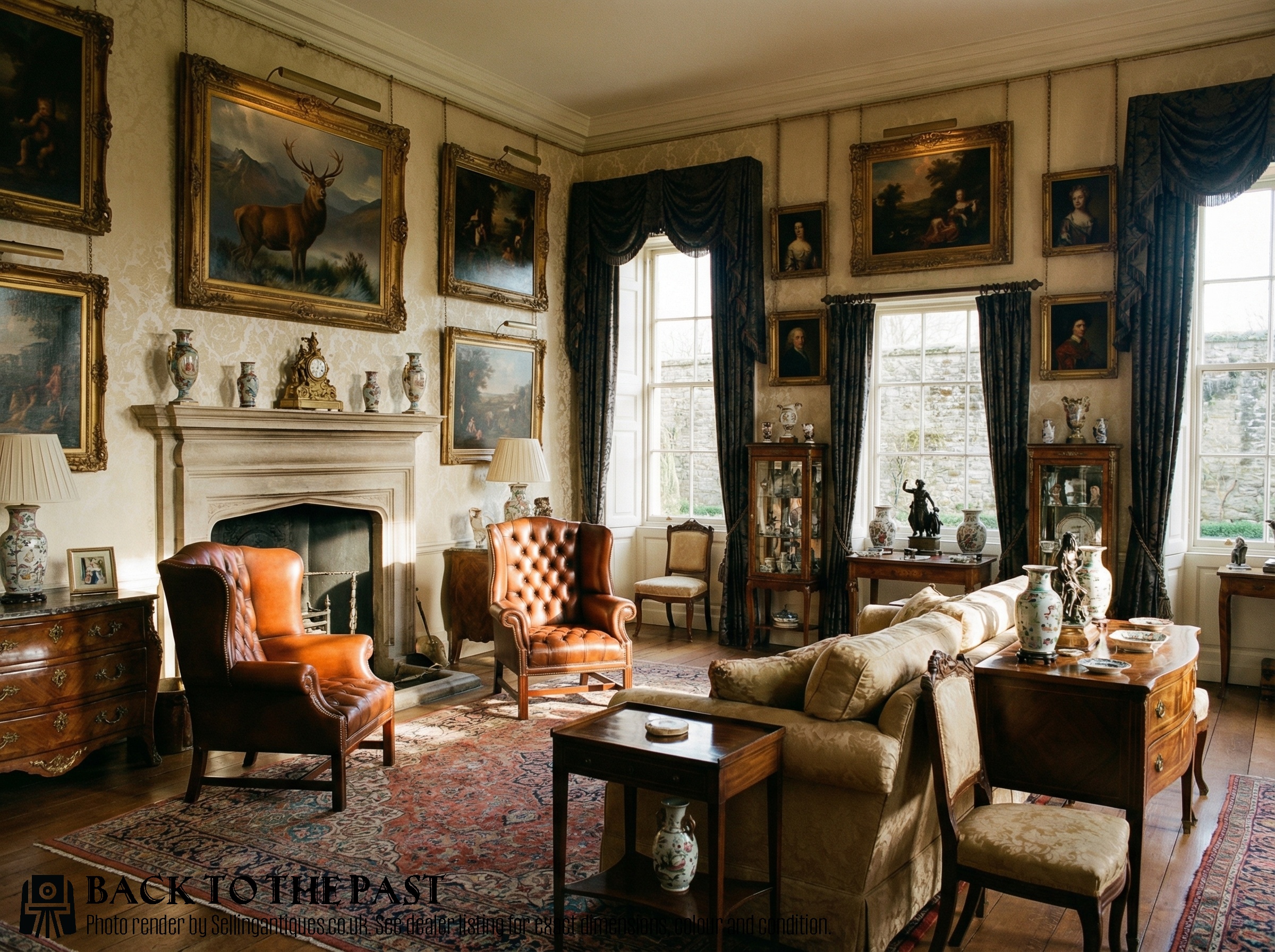
Fireside Wing Chair
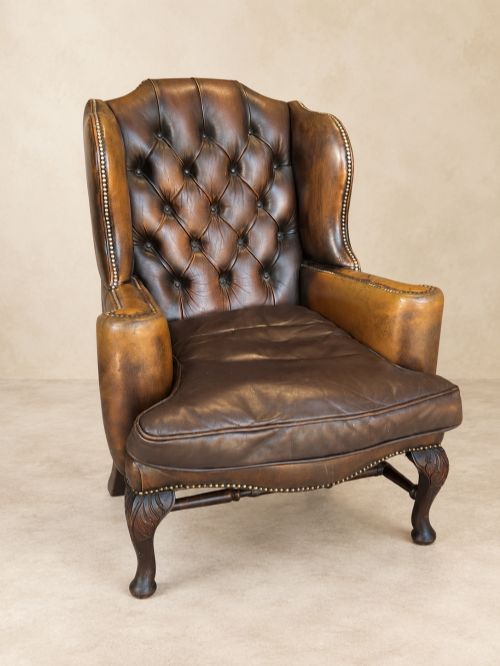
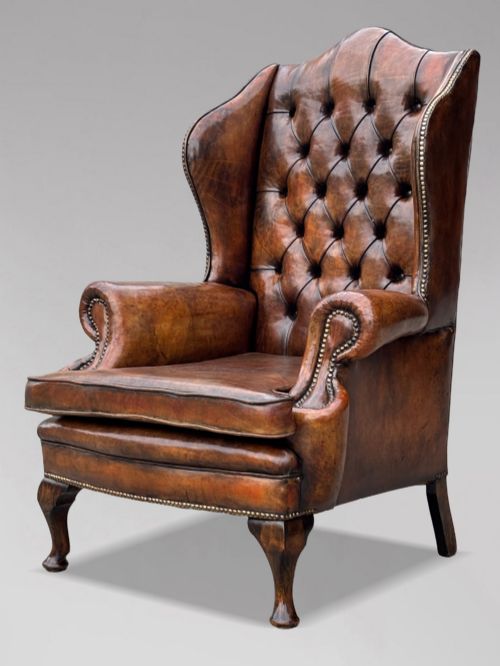
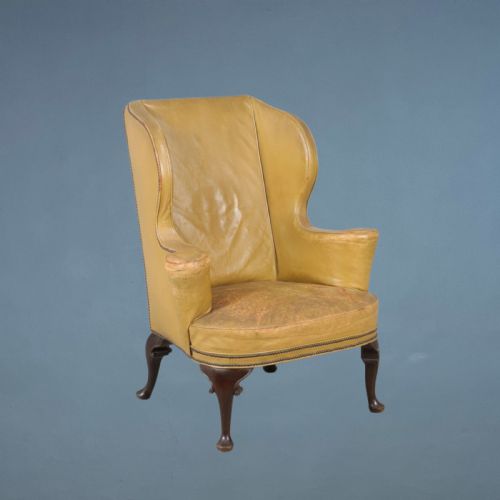
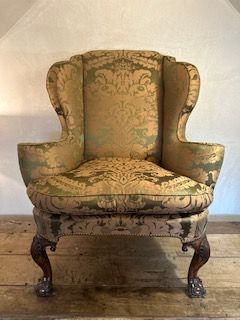
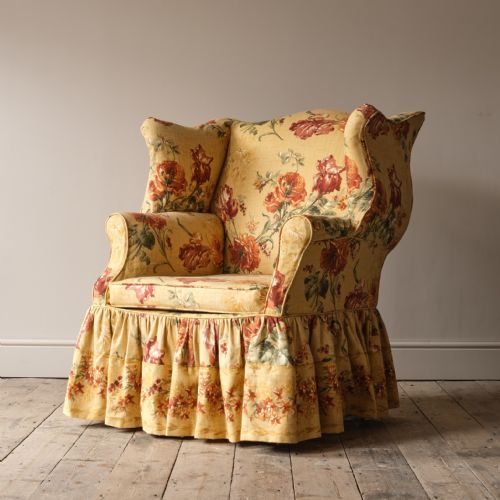
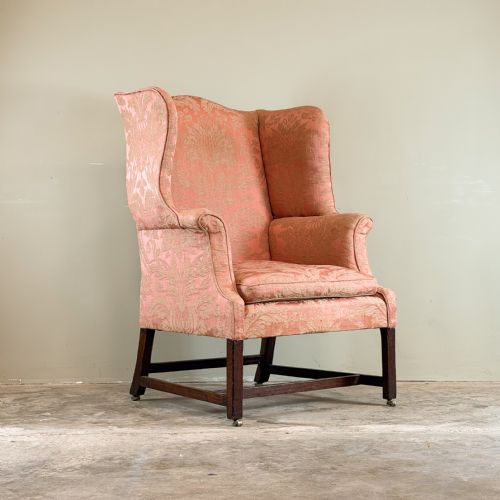
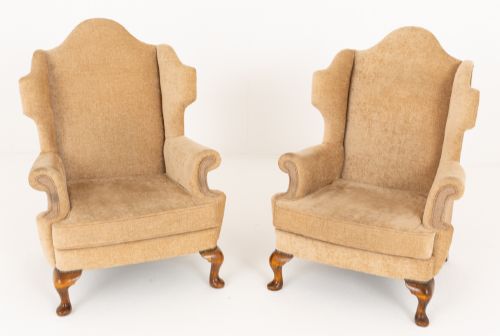
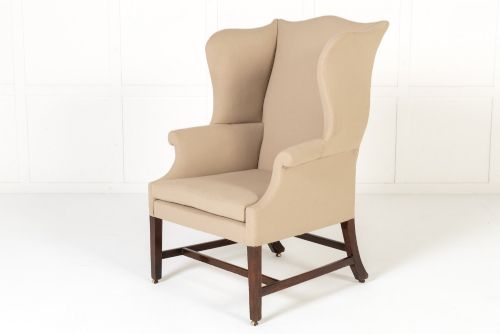
A fireside wing chair is a traditional armchair featuring characteristic side panels, known as wings, designed to trap heat from the hearth and protect the occupant from cold room draughts. The form evolved significantly over centuries, moving from rigid wooden vernacular seating to heavily padded, upholstered lounging furniture.
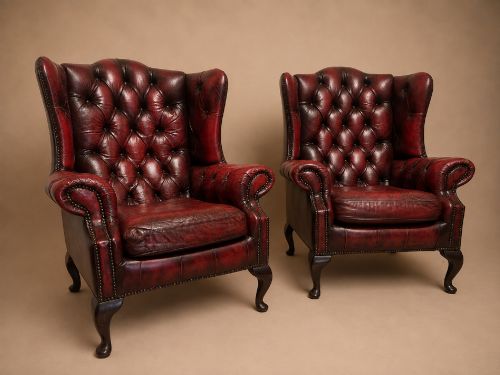
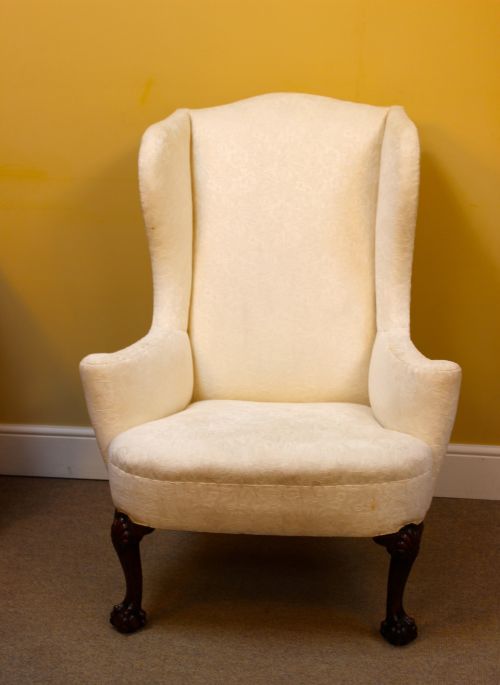
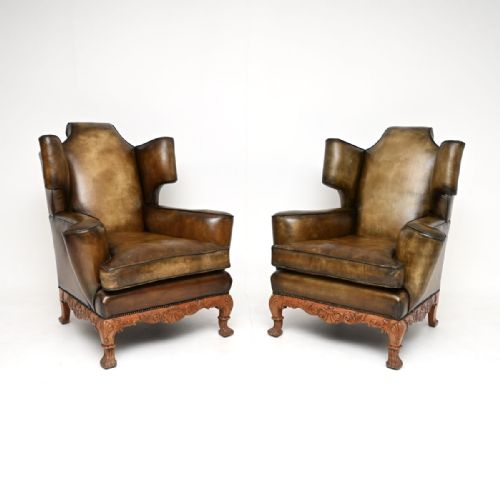
On this marketplace, the versions you are most likely to meet span from the 18th century through the Victorian and Edwardian eras up to the 1930s. Pieces range from formal Georgian mahogany and walnut examples with cabriole legs to sturdy oak lambing chairs and later leather buttoned club styles.
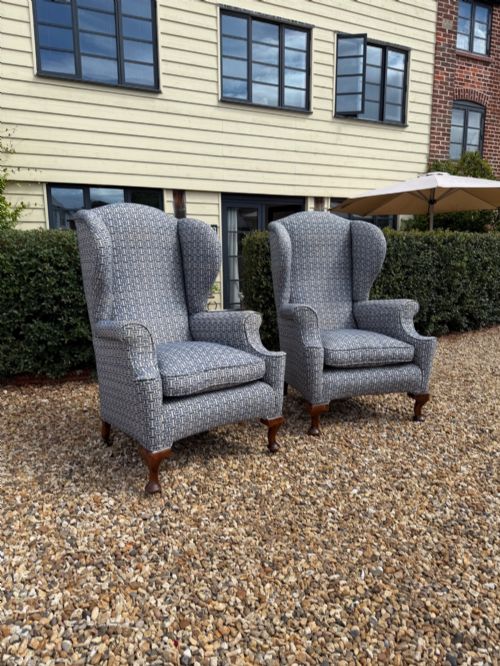
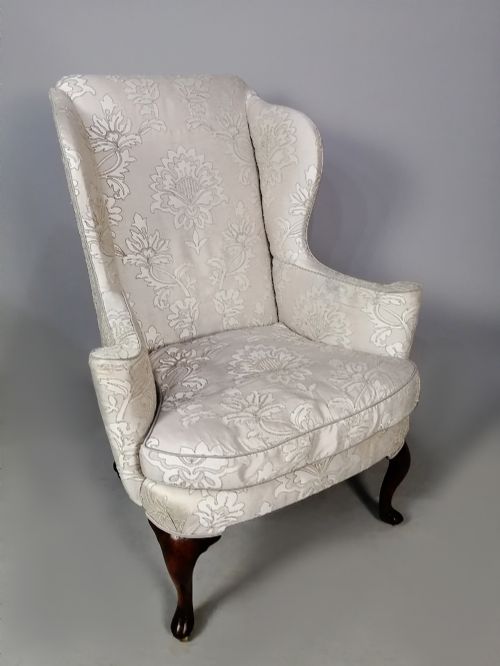
Makers and designers also produced revival pieces, such as Queen Anne style and George III style chairs created during the 19th and early 20th centuries. Buyers will encounter both fully upholstered armchairs covered in leather, velvet, or plaid fabric and bare frames sold specifically for reupholstery.
How They Were Made
The underlying frames of these chairs rely on substantial timbers such as mahogany, walnut, oak, fruitwood, and general hardwood or timber. Joinery methods varied by period, utilising sturdy traditional joints for earlier vernacular oak and fruitwood pieces, alongside more refined mahogany and walnut framing for Georgian and Victorian iterations.
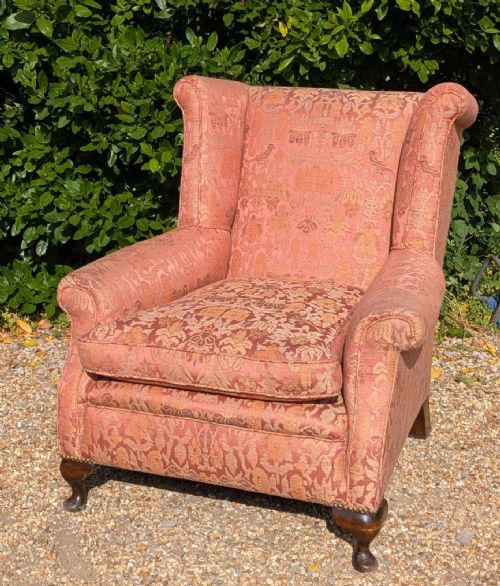
Upholstery techniques defined the comfort and profile of the seat, employing traditional stuffing materials covered in leather, horsehair, or modern fillings like feathers. Outer coverings ranged from durable tan and brown leather to patterned textiles, chenille twill, draylon, and contemporary wool plaids, often secured with brass tacking.
Fireside Wing Chair Retail Price Guide 2026
Typical asking prices for fireside wing chair among the pieces listed under this phrase on Sellingantiques today, from the lower quarter to the upper quarter. They describe what is for sale here now, not the wider market.
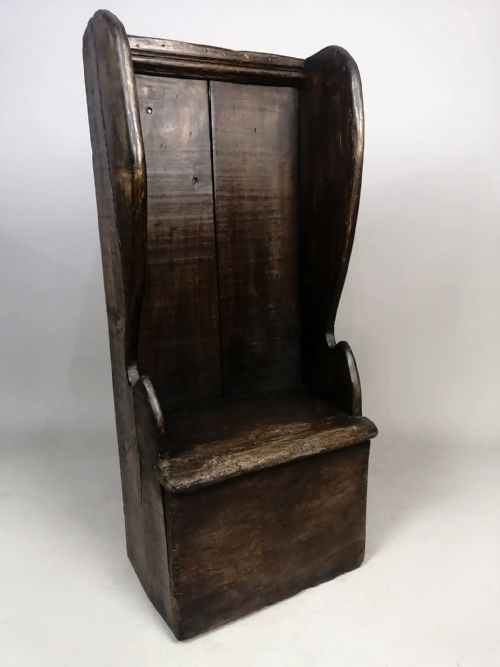
Early child-sized lambing chairs prove that even the youngest household members required proper draught protection by the hearth.
What Varies in Quality
The distinction between ordinary and exceptional examples rests upon the integrity of the frame timber and the purity of the stylistic period execution. Superior pieces exhibit well-proportioned wings, balanced cabriole or straight legs, and substantial timber scantlings that have survived centuries without structural compromise.
Another measure of distinction involves the quality of the upholstery materials and the fidelity of any historical revival work. Chairs retaining genuine period leather with patination or executed in high-grade traditional fabric sit naturally at the upper end of the scale compared to utilitarian or heavily altered examples.
Howard And Sons
The Fireside Wing Chair Glossary
- Wingback
- An armchair featuring projecting side panels attached to the arms and framing the upper back. This traditional design originally served to keep hearth warmth close to the sitter.
- Cabriole leg
- A furniture leg that curves outward in a convex arc at the knee and tapers inward in a concave arc toward the foot. This classic shape appears frequently on Georgian and revival armchairs.
- Button back
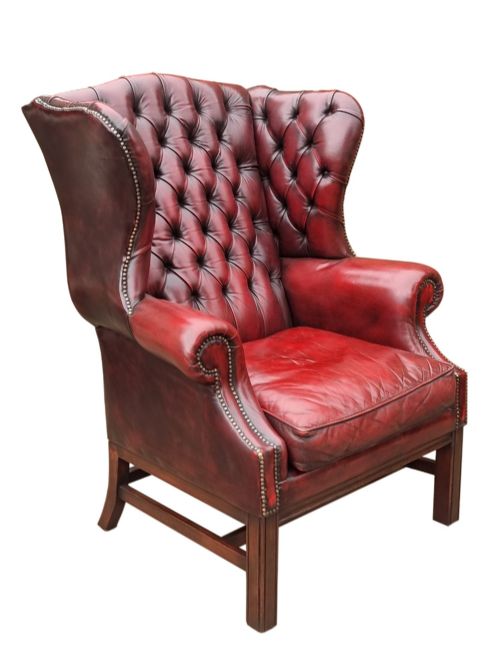
- An upholstery style where depressions are formed in the padding by pulling buttons deep into the stuffing at regular intervals. This technique adds both structural tension and a distinct decorative texture to leather or fabric.
- Barrel back
- A seating variation where the upholstered back curves continuously around to form integrated armrests in a rounded enclosure. It offers an exceptionally snug posture by the hearth.
Fireside Wing Chair: Frequently Asked Questions
What is a fireside wing chair used for?
These armchairs provide comfortable seating traditionally positioned close to a fireplace or hearth. The characteristic side wings block cold draughts while helping to retain heat radiated from the fire.
Over time, the form transitioned from a functional draught-excluding seat into a primary lounge chair found in studies, living rooms, and country house drawing rooms.
How do I date an antique wing chair?
Dating relies on examining the secondary woods used in the frame construction, the profile of the legs, and the style of the upholstery buildup. Georgian and 18th-century examples often feature hand-carved mahogany or walnut timbers with distinct period leg forms.
Later Victorian, Edwardian, and 1930s pieces introduce machine-sawn framing components, different upholstery webbing techniques, and revival stylistic markers such as Queen Anne or George III styling.
Are original leather wing chairs comfortable?
Original leather wing chairs offer a supportive sit, though the comfort level depends heavily on the condition of the internal webbing, springs, and stuffing. Many period examples utilise traditional stuffing materials that provide a firmer, more upright posture than modern deep-cushioned armchairs.
Buyers should expect antique leather to show surface cracking and natural patination gathered over decades of use, contributing to the tactile character of the piece.
What does sold for reupholstery mean?
Cheliers listed for reupholstery retain their solid wooden frames and basic internal support structures, but the outer fabric, leather, and top stuffing layers have worn out or been removed. This allows a new owner to select custom upholstery matching their specific interior decor.
Restoring these frames preserves the historic woodwork while ensuring the functional seating surface meets modern comfort and aesthetic preferences.