
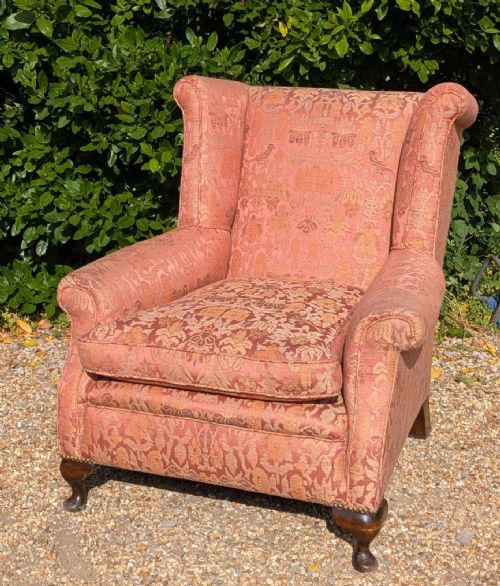
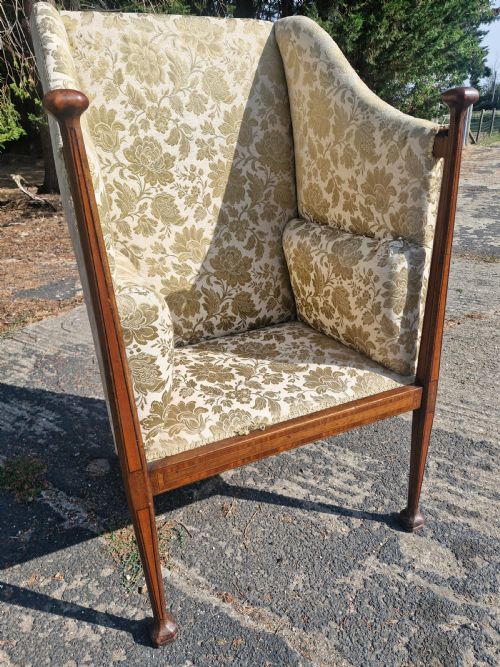
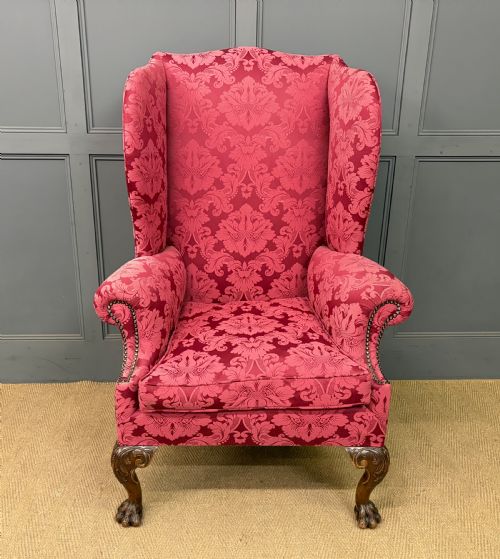


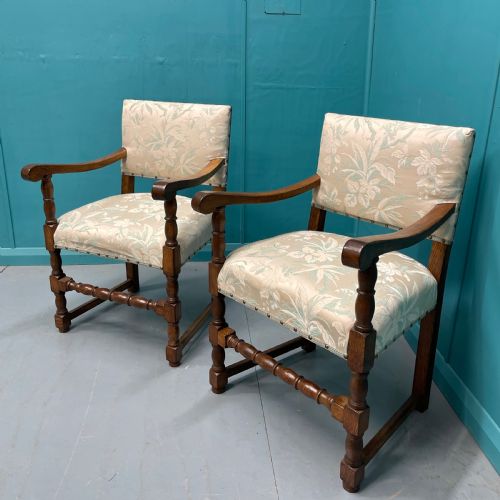


Floral Damask Armchair
A floral damask armchair brings tactile depth and formal pattern to a room, offering a supportive seat wrapped in patterned textile.
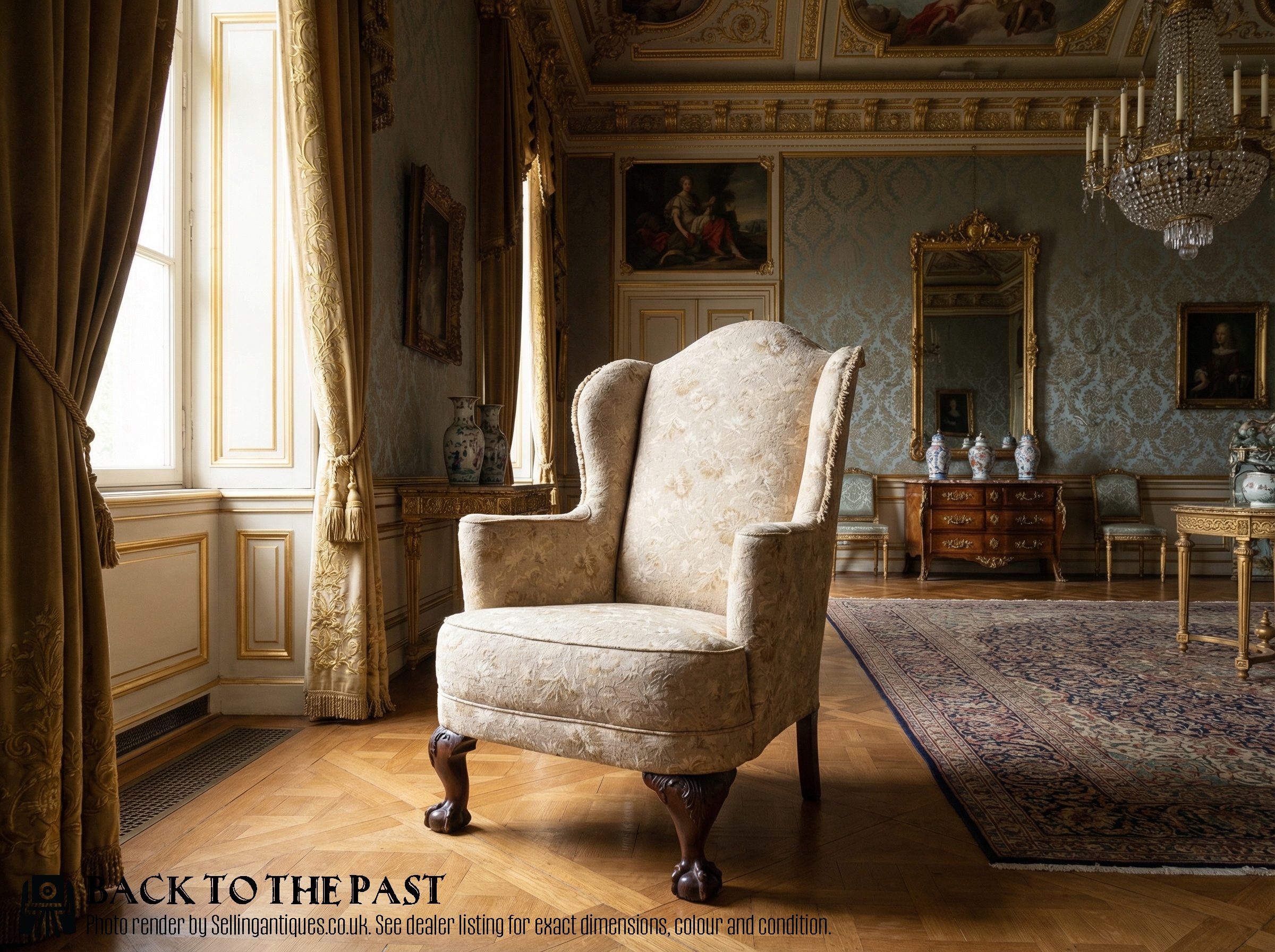
Floral Damask Armchair
A floral damask armchair represents a specific intersection of supportive seating and patterned textile upholstery. Buyers searching for a floral damask armchair will encounter pieces spanning multiple centuries and stylistic revivals.
The selection ranges from early examples like the eighteenth century wing chair and late eighteenth century walnut high back armchairs to nineteenth century walnut wing armchairs. Later interpretations include Edwardian winged armchairs, nineteen tens high back wing upholstered armchairs, and nineteen twenties barrel back and fireside armchairs.
Stylistic influences vary widely across the inventory. Pieces draw on Queen Anne style, Chippendale style, English country house aesthetics, Art Nouveau, Victorian design, and Art Deco, alongside French salon suites and English oak armchairs.
How they were made
Construction relies on traditional timber frames fashioned from mahogany, walnut, oak, and general wood. These structural skeletons provide the necessary rigidity for upholstered seating forms.
Upholstery incorporates damask, fabric, and damask fabric, occasionally featuring feather filling inside the cushion components. Additional detailing includes brass accents and marquetry work on specific walnut frames.
Feather filled cushions ensure that an antique chair still offers the same soft landing it provided a century ago.
What varies in quality
Quality separates along the execution of the timber frame and the refinement of the upholstery work. Hand carved details and marquetry inlay require a higher level of artisan skill than plain structural woodwork.
The choice and application of textile also dictate the overall character of the piece. Dense damask weaves and feather filling elevate the tactile experience compared to standard fabric coverings.
The Floral Damask Armchair Glossary
- Damask
- A reversible figured fabric with patterns formed by contrasting warp and weft threads. It provides a subtle sheen and textured floral surface.
- Wing chair
- An armchair featuring side panels or wings attached to the arm rests. This design originally protected the sitter from draughts.
- Marquetry
- The art of applying pieces of veneer to a structure to form decorative patterns. It appears on wooden frames of specific periods.
- Barrel back
- A seating form where the backrest curves continuously into the arms in a rounded enclosure. This shape offers an enveloping sit.
Floral Damask Armchair: Frequently Asked Questions
How do I date a wing armchair?
Dating relies on examining the timber frame construction, leg shapes, and upholstery methods used in the piece. Different eras favoured distinct profiles like Queen Anne cabriole legs or straight Chippendale supports.
Changes in padding materials and internal webbing also provide clues to the decade or century of origin.
Are these chairs comfortable for daily use?
Most examples are designed for relaxation, often featuring generous proportions and supportive upholstery. Feather filled cushions add an extra layer of softness to the seat.
Their suitability depends on the firmness of the internal support and the height of the backrest.
Where should I place a salon suite?
Salon suites suit formal drawing rooms, large bedrooms, or expansive living spaces where matching seating can be grouped together. They create a unified decorative scheme.
Positioning them away from direct sunlight protects the damask fabric from fading over time.
How do I care for damask upholstery?
Maintenance involves gentle vacuuming with a soft brush attachment to remove dust from the woven pattern. Professional cleaning is recommended for deeper marks to protect the textile fibres.
Avoiding placement near heat sources keeps the wood and fabric stable.