

Chippendale Armchair
When you search for a chippendale armchair, you encounter seating ranging from eighteenth-century originals to later revival dining and library chairs.
Chippendale Armchair
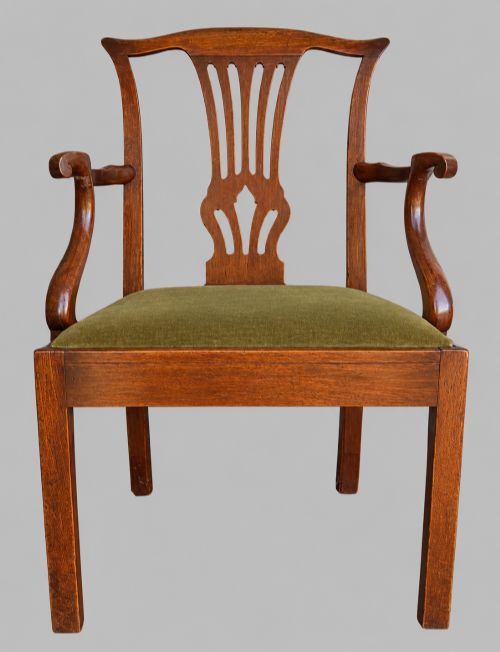
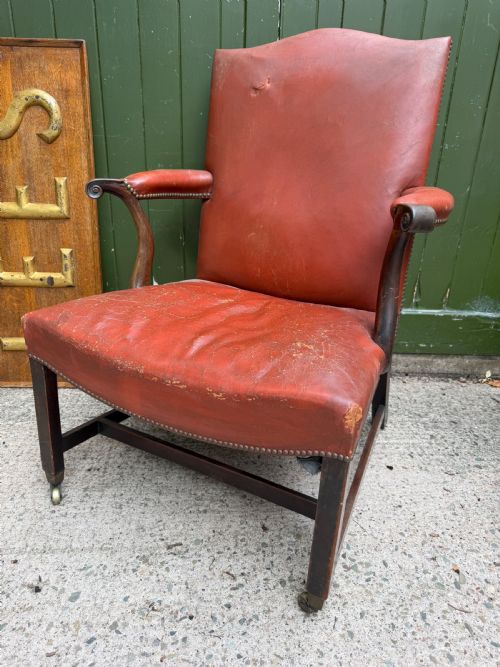
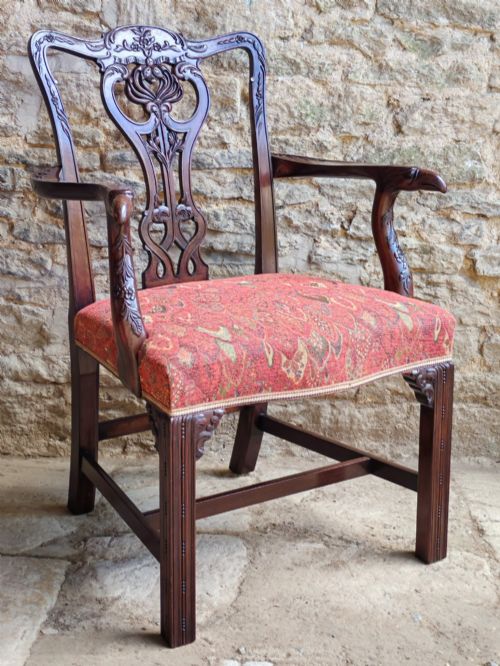
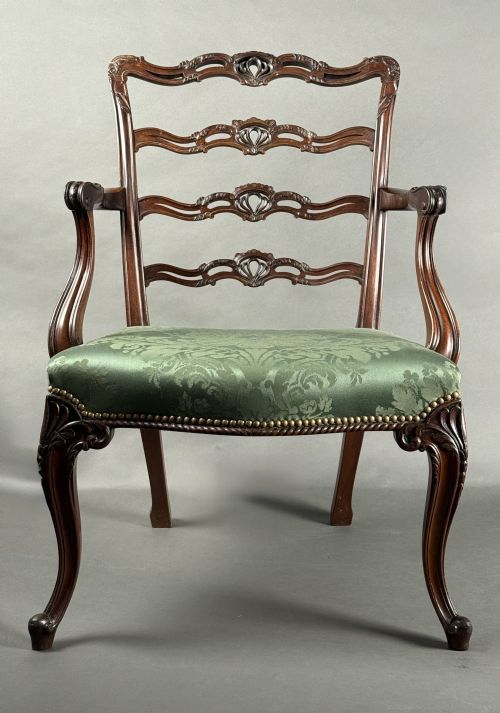
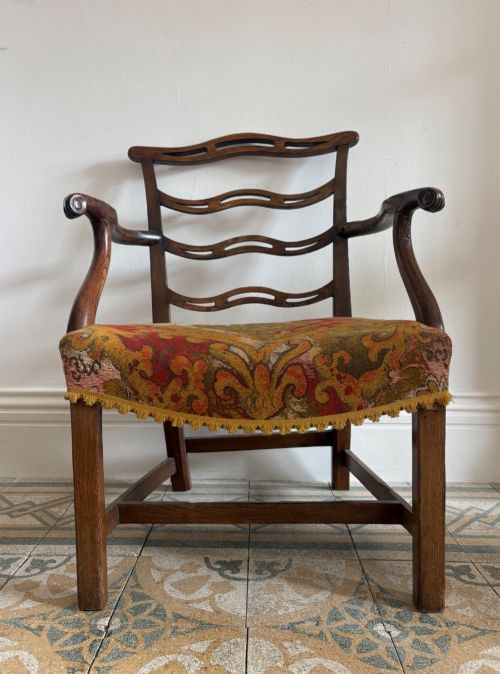
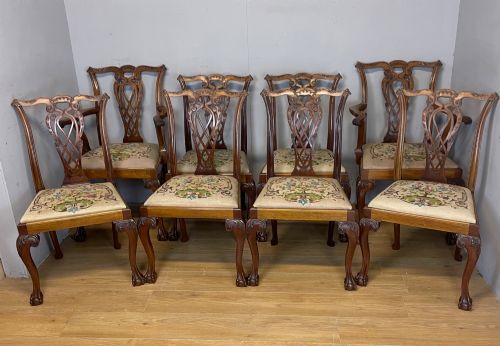
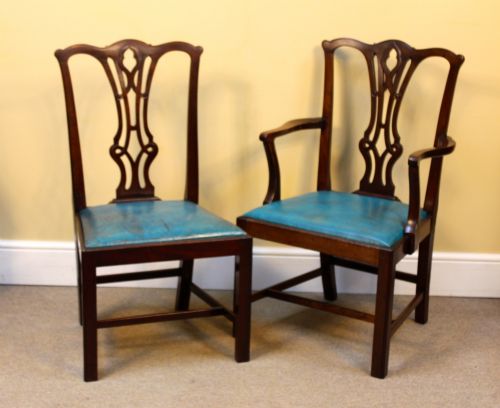
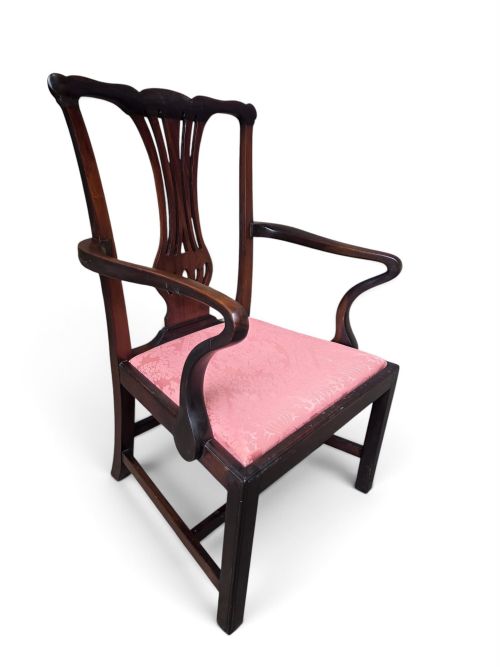
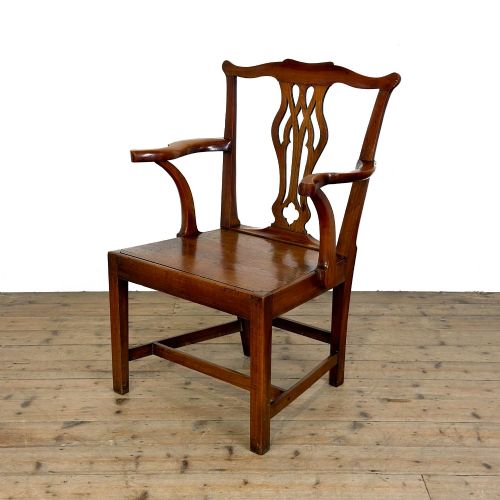
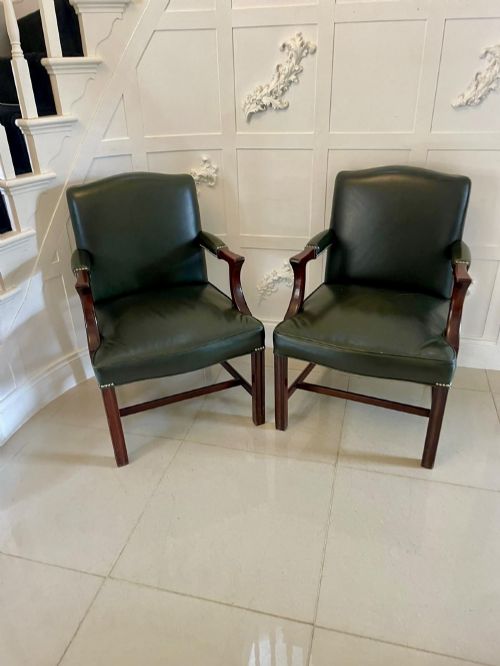
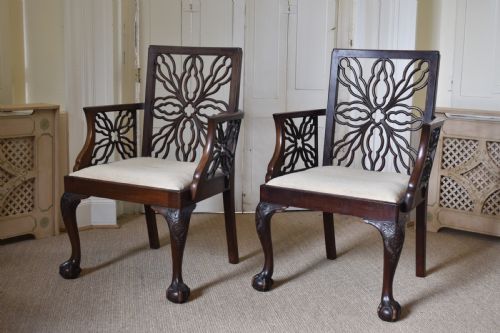
A chippendale armchair typically presents carved mahogany framing with distinctive pierced splat backs and scroll arms. These pieces span dining chairs, desk chairs, and library armchairs, including large Gainsborough models.
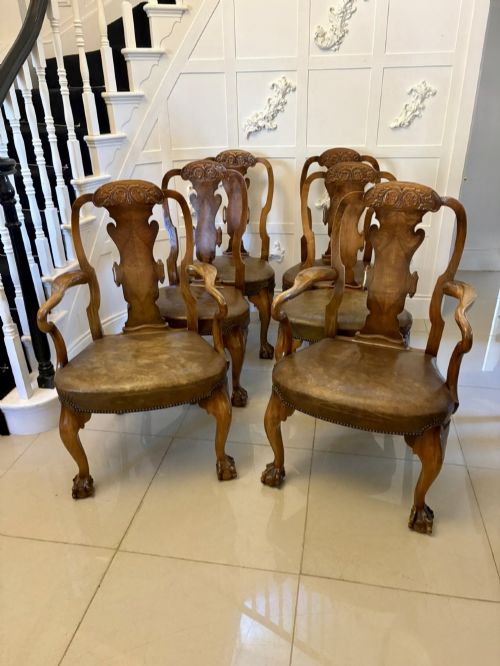
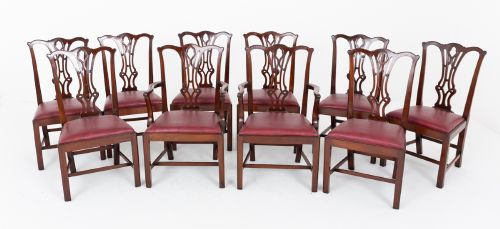
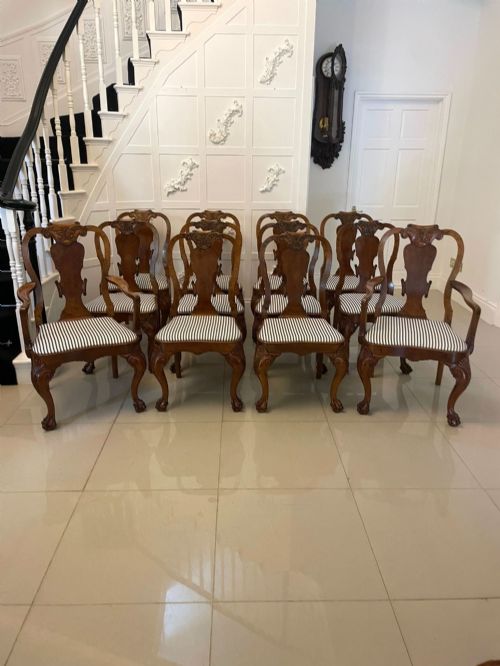
The inventory on this page mixes genuine Georgian pieces from the eighteenth century with later Chippendale Revival examples produced across the nineteenth and twentieth centuries.
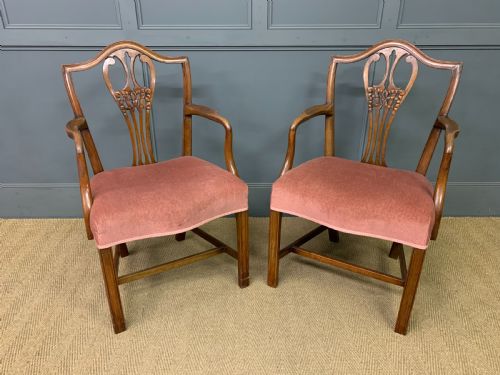
Buyers meet single library chairs, matched dining sets, and pairs of carvers upholstered in leather, damask, velvet, or traditional tapestry.
Materials and Construction
Cabinetmakers relied primarily on solid mahogany, supplemented by walnut, fruitwood, elm, oak, and teak, often finished with detailed hand-carved blind fretwork or intricate pierced splats.
Upholstery methods utilised traditional stuffing secured beneath leather, velvet, damask, or bespoke fabric, complemented by brass tack detailing on library and Gainsborough models.
Chippendale Armchair Retail Price Guide 2026
Typical asking prices for chippendale armchair among the pieces listed under this phrase on Sellingantiques today, from the lower quarter to the upper quarter. They describe what is for sale here now, not the wider market.
Some chairs spent centuries observing family arguments before landing here.
Factors of Distinction
The distinction between ordinary and exceptional examples rests in the crispness of the hand-carved mahogany details and the proportions of the frame. Heavy timber sections and deeply articulated splats indicate superior workshop production.
Original period pieces retain their structural integrity alongside patinated timber surfaces, whereas revival items demonstrate varying standards of period accuracy in their carving and joinery.
Howard and Sons·Warings·Alfred Allen of Birmingham·Thomas Chippendale
The Chippendale Armchair Glossary
- Carver
- An armchair designed to match a set of dining chairs, typically featuring open arms and a wider seat. These pieces often sat at the head of the dining table.
- Gainsborough armchair
- A wide, low-seated upholstered armchair with open padded arms and mahogany legs, originating in the mid-eighteenth century. These seats served primarily as library or desk chairs.
- Blind fretwork
- Low-relief geometric carving applied directly to flat wooden surfaces, often resembling Chinese lattice patterns. This technique frequently appears on Chinese Chippendale furniture.
- Splats
- The vertical wooden strip positioned in the centre of a chair back, frequently pierced and carved in ribbon or ladderback designs. The complexity of this carving defines the chair's style.
- Cockpen
- A lattice-work chair design influenced by Chinese aesthetics, featuring intersecting wooden bars across the back and arms. These distinctive seats date from the eighteenth and nineteenth centuries.
Chippendale Armchair: Frequently Asked Questions
How do I date a chippendale armchair?
Examination of the timber, joinery methods, and wear patterns reveals the likely period of manufacture. Eighteenth-century pieces display dense mahogany and hand-cut joinery, while revival pieces from later centuries show distinct machine tooling.
Secondary indicators include the style of the carving and the type of secondary woods used in the frame construction.
What is a Chinese Chippendale armchair?
This variant incorporates Asian-inspired architectural motifs, such as blind fretwork lattice patterns and square legs. Cabinetmakers adapted these decorative elements during the mid-eighteenth-century chinoiserie fashion.
Such chairs appear in both genuine Georgian incarnations and late nineteenth-century revival suites.
Can I use these chairs at a desk?
Many models function effectively as desk chairs, particularly open-arm carvers and Gainsborough types with leather upholstery. Their proportions accommodate seated work while offering padded back support.
Careful measurement of desk clearance and arm height ensures a proper fit for daily use.
How do I care for antique upholstery?
Preserving original leather or fabric requires gentle cleaning with appropriate conditioning balms and protection from direct sunlight. Traditional stuffings benefit from minimal pressure and stable room humidity.
Professional conservation maintains the integrity of delicate textiles like damask and velvet.