
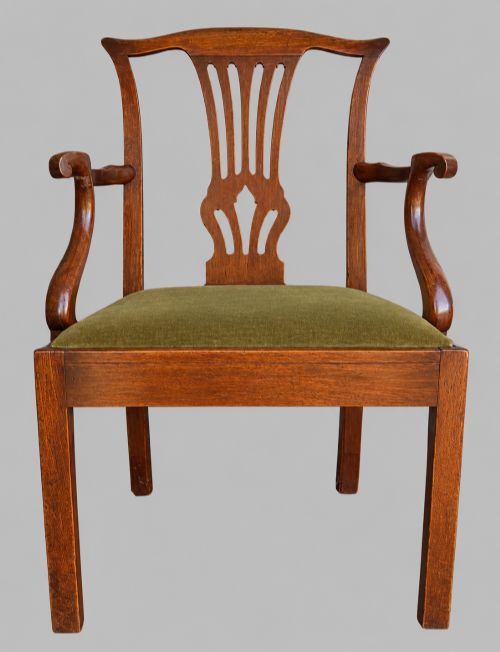
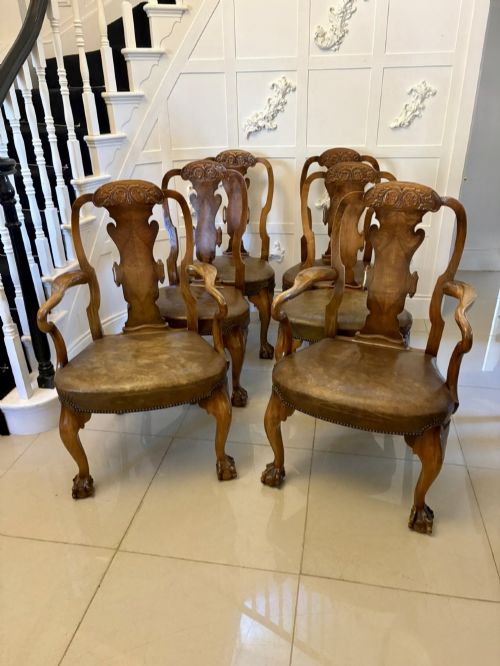
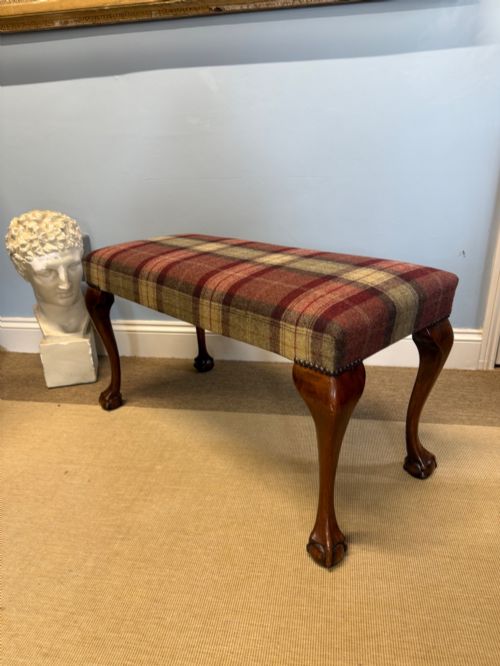
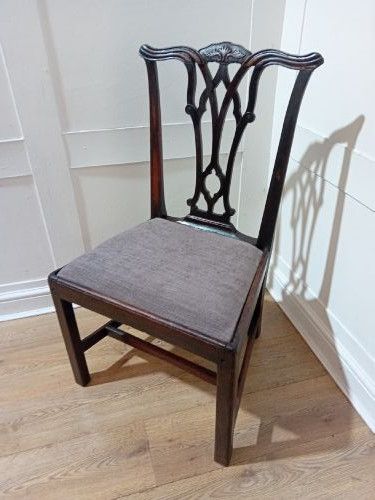
Chippendale Style Seating
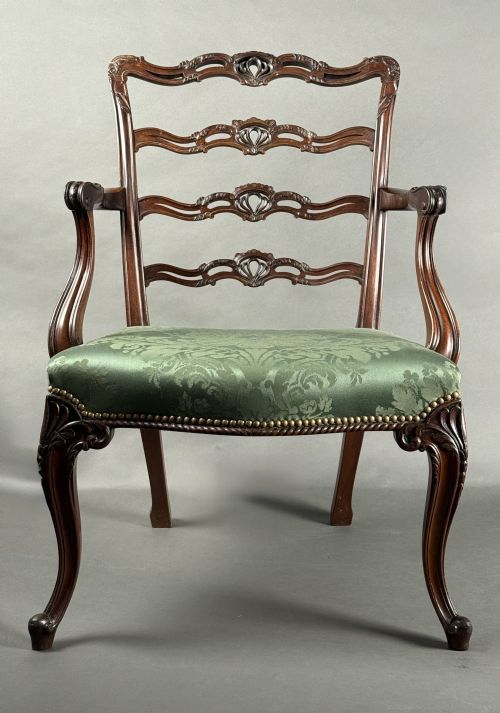
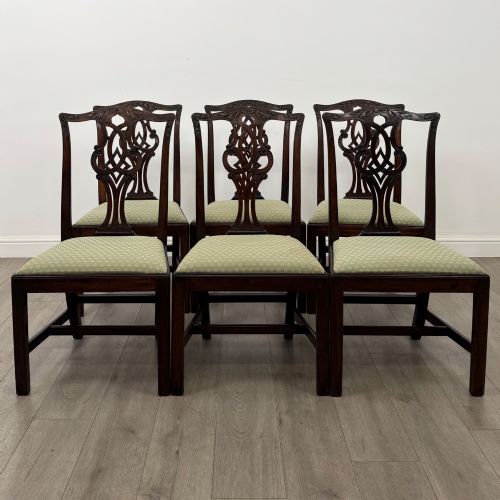
Chippendale style seating brings substantial mahogany frames and intricate carved detail into a room, offering both historical weight and lasting comfort.
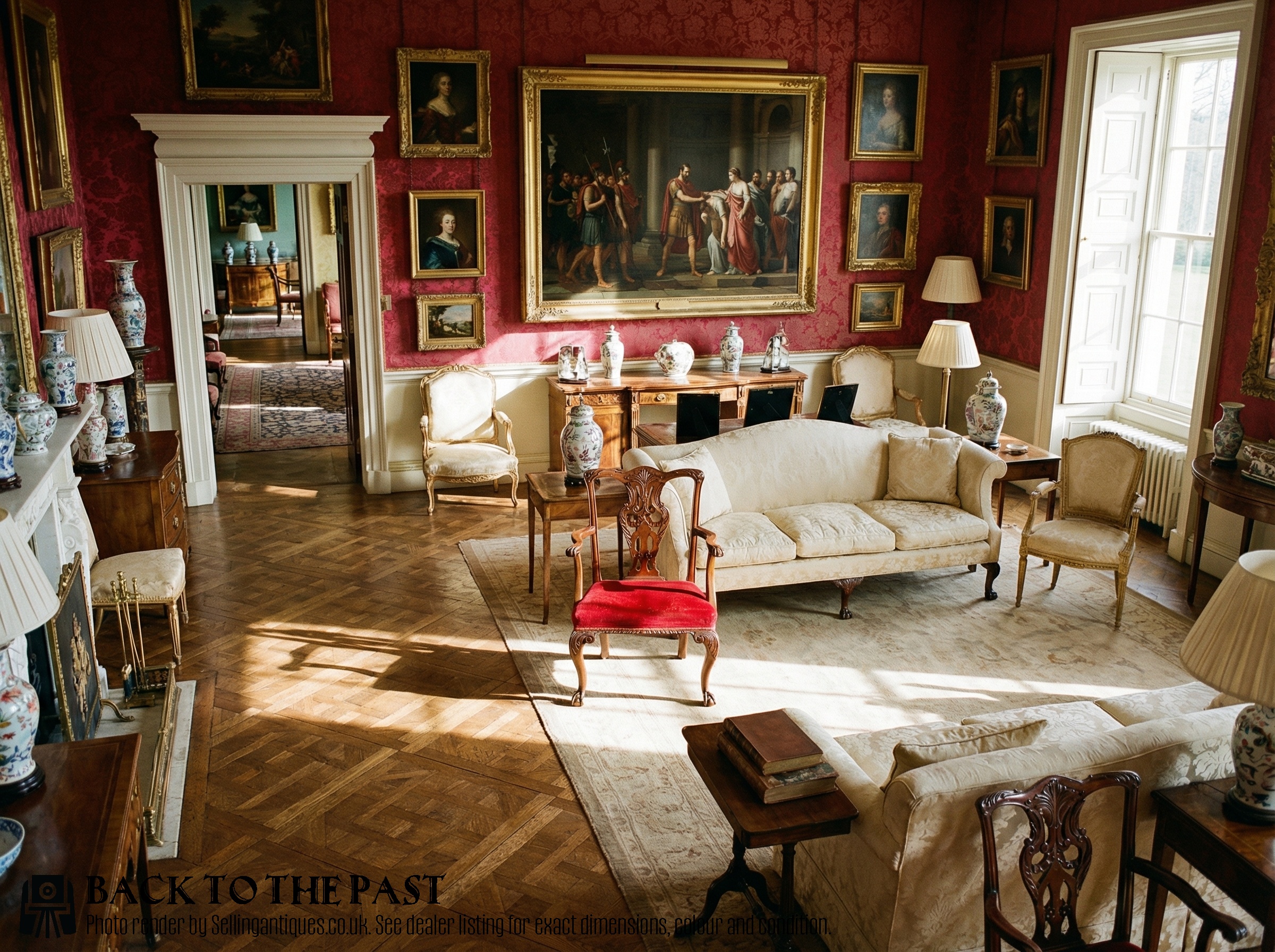
Chippendale style seating
Chippendale style seating spans several distinct periods, appearing in genuine eighteenth-century examples as well as nineteenth-century revivals, Edwardian interpretations, and early twentieth-century reproductions.
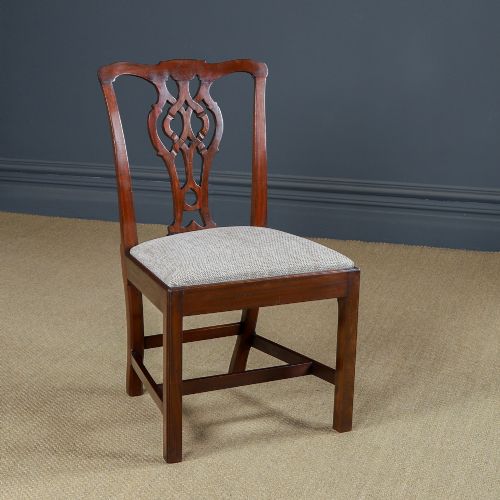
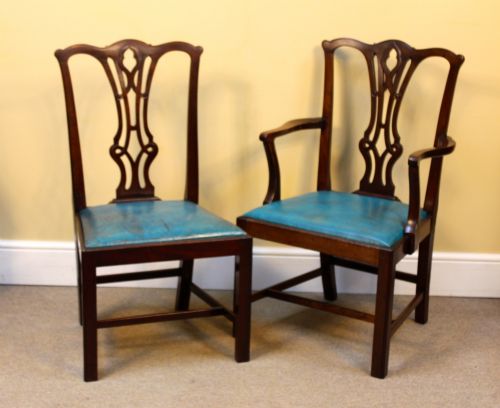
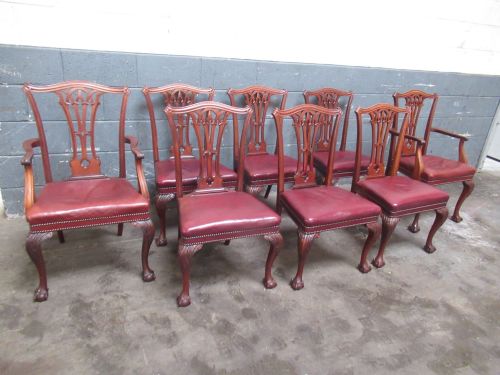
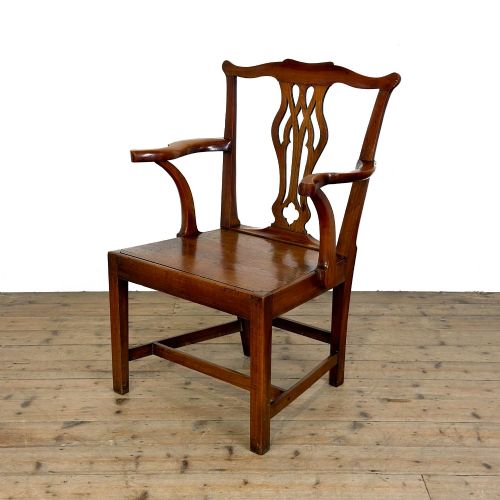
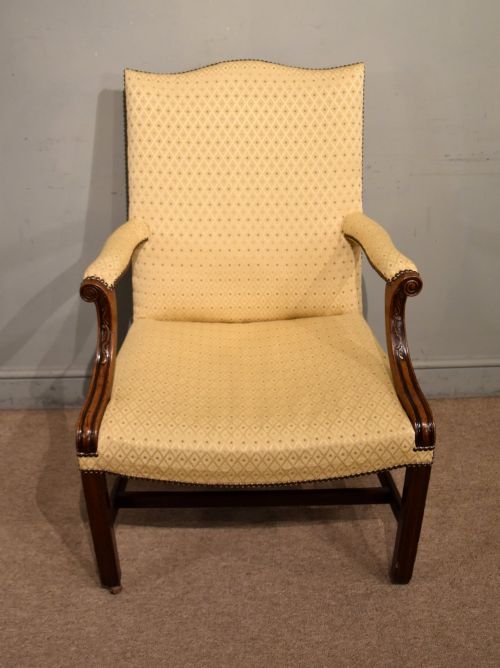
The primary forms found within these listings include armchairs, carver chairs, side chairs, Gainsborough armchairs, and tub club armchairs.
Makers utilised resilient timbers such as mahogany and fruitwood, often pairing the exposed woodwork with leather, velvet, damask, or traditional upholstery.
Construction and Materials
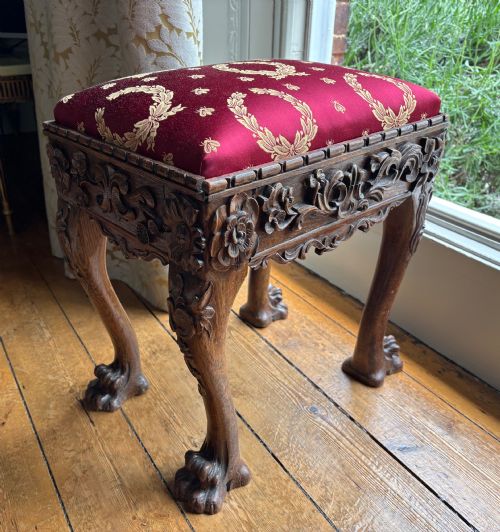
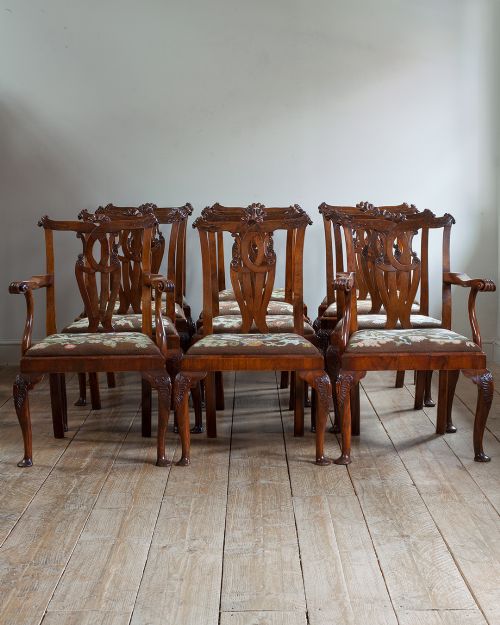
Makers fashioned these chairs from dense hardwoods like mahogany and fruitwood, selecting timber capable of supporting deep carving on splats, rails, and legs.
Upholstered elements incorporate traditional stuffing and webbing beneath coverings of leather, velvet, damask, and standard fabric, secured with brass detailing where appropriate.
Retail Price Guide 2026
Typical UK retail prices for chippendale style seating, calculated from the Sellingantiques database of over a million retail prices indexed since 2003. This retail price guide relies exclusively on Sellingantiques data; no external sources or auction records are used, so the figures do not describe the wider market.
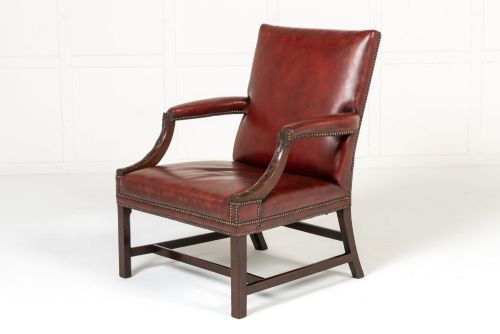
Club armchairs sneak into this seating category wearing heavy leather suits.
Assessing Quality
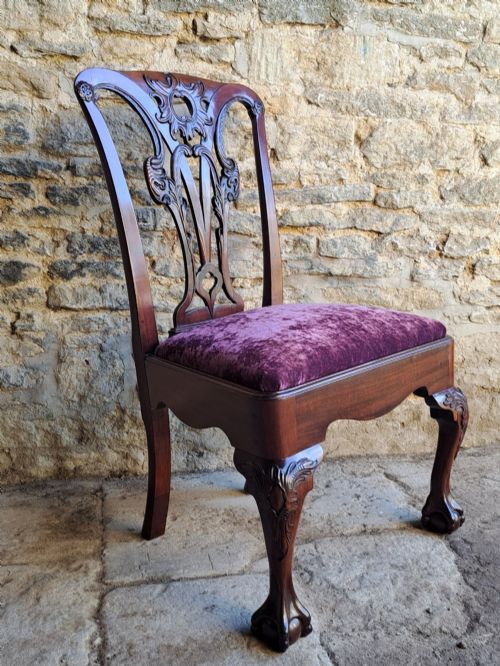
The distinction between standard commercial pieces and finer examples rests in the crispness and depth of the carved woodwork, particularly along the chair backs and legs.
Material selection dictates the overall presence of the piece, with dense, well-figured mahogany and hand-dyed leather elevating the finish far beyond basic fruitwood frames and standard fabric.
Thomas Chippendale
The Chippendale Style Seating Glossary
- Carver chair
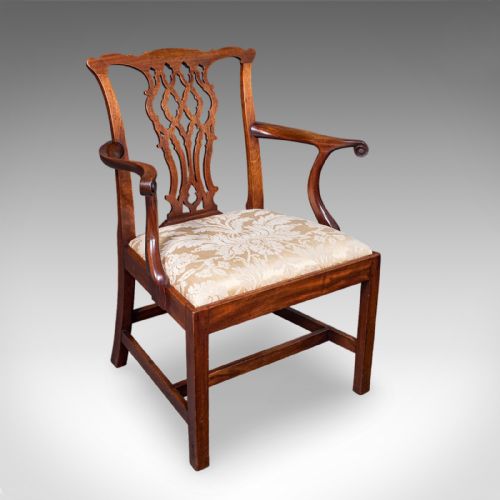
- An armchair designed specifically for the head of a dining table, featuring elevated armrests to accommodate dining.
- Gainsborough armchair
- A wide, upholstered armchair with open padded arms and short legs, originating in the mid-eighteenth century.
- Splat
- The vertical wooden strip down the centre of a chair back, frequently pierced or carved in characteristic regional patterns.
- Fruitwood
- A dense timber harvested from orchard trees such as pear or apple, utilised for furniture framing.
Frequently Asked Questions
Are these chairs comfortable for daily dining?
Many examples feature generous proportions and supportive upholstered pads designed for extended sitting during meals.
Armchairs and carver variants offer additional support through enclosed wooden armrests.
How do I distinguish eighteenth-century pieces from later revivals?
Early pieces display authentic timber oxidation and hand-tool marks consistent with period workshop practices.
Nineteenth and twentieth-century revivals often utilise machine assistance while closely copying the earlier ornamental vocabulary.
What is the difference between a side chair and a carver chair?
Side chairs lack armrests, allowing several to fit neatly around the sides of a dining table.
Carver chairs include arms and usually sit at either end of the table.
How should I care for leather upholstery on these chairs?
Hand-dyed leather benefits from regular dusting with a dry cloth and occasional conditioning to maintain suppleness.
Avoid placing leather seating near direct heat sources or strong sunlight to prevent drying.