
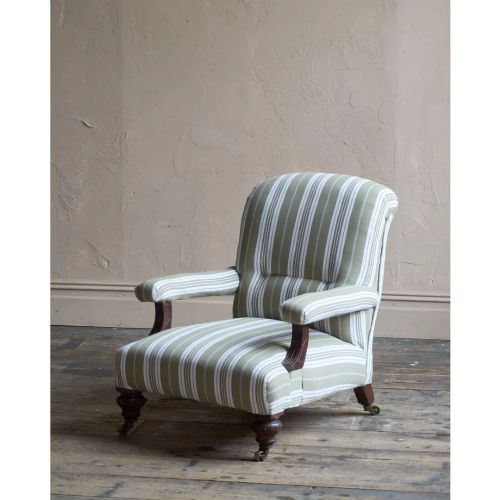
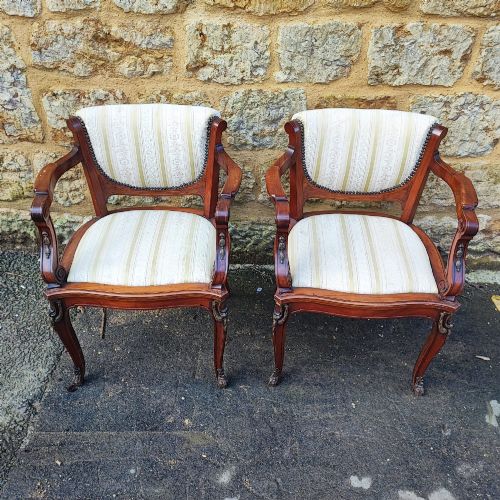
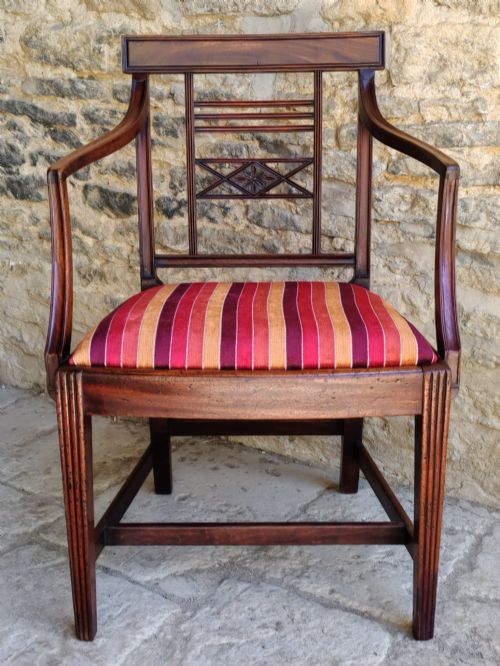


Striped Fabric Armchair
A striped fabric armchair brings pattern and comfortable seating into a room, drawing on decades of upholstery traditions from the eighteenth century onwards.
Striped Fabric Armchair
A striped fabric armchair encompasses seating forms ranging from nineteenth-century oversized open armchairs and Victorian low chairs to Edwardian country house models and early twentieth-century wing armchairs. Buyers searching for a striped fabric armchair encounter various historical iterations, including George III mahogany dining chairs, carvers, and French boudoir chairs.
The selection includes examples finished in mahogany, walnut, and painted wood, alongside pieces designed for re-upholstery in modern or traditional textiles. Formats span from intimate parlor seating to substantial library armchairs and small settees resting on fluted legs.
Markers of distinction and build
Quality rests in the integrity of the timber frame, the crispness of any carved walnut or mahogany detailing, and the structural proportion of the arms and legs. Superior examples retain original framing lines without excessive timber replacement or structural compromise.
The execution of the upholstery foundation and the choice of textile influence the piece's character. Pieces displaying maker stamps or adherence to specific historical design styles command distinct attention from collectors.
Striped Fabric Armchair Retail Price Guide 2026
Typical asking prices for striped fabric armchair among the pieces listed under this phrase on Sellingantiques today, from the lower quarter to the upper quarter. They describe what is for sale here now, not the wider market.
Several armchairs retain their original ticking fabric, proving that industrial stripes were charming long before anyone thought of them as designer.
The Striped Fabric Armchair Glossary
- Carver
- An armchair, often matching a set of dining chairs, featuring open arms designed to accommodate formal clothing. These chairs frequently date from the eighteenth century.
- Wing armchair
- A high-backed seat featuring protective side panels designed to shield the occupant from draughts. Versions range from Georgian forms to early twentieth-century interpretations.
- Open armchair
- A seat where the arms are left un-upholstered, exposing the structural timber frame. This style highlights the carved mahogany or walnut woodwork.
- Gainsborough armchair
- A type of wide, upholstered seat with open padded arms, short legs, and an arched back originating in the mid-eighteenth century. They are typically executed in mahogany or walnut.
- Ticking fabric
- A tightly woven, durable textile historically utilised as a heavy-duty lining or outer cover for stuffed furniture. It provides a structured base for traditional upholstery.
Striped Fabric Armchair: Frequently Asked Questions
How do I date a striped fabric armchair?
Dating relies on examining the timber species, joinery methods, and the underlying frame construction. Stylistic cues such as fluted legs or cabriole supports point to specific design periods.
Upholstery fabrics often reflect later interventions, so inspection of the bare frame beneath remains essential for accurate period attribution.
Can I use these chairs in a modern interior?
These armchairs integrate into contemporary spaces by providing a textural contrast against neutral walls and minimalist furniture. Their varied profiles allow them to function as reading seats or accent pieces.
Many examples tolerate modern fabric choices while retaining their historical frame silhouettes.
What is a library armchair?
A library armchair is a substantial, deeply upholstered seat designed for extended periods of reading or study in domestic studies. They often feature generous proportions and robust mahogany or walnut frames.
Some iterations incorporate reclining mechanisms or wider armrests for additional comfort.
How do French and English styles differ?
French armchairs from periods like Louis XVI or later boudoir designs typically feature painted finishes, curved show-wood frames, and delicate fluted legs. English counterparts tend to emphasise the natural grain of mahogany or walnut through unpainted surfaces.
Proportions also vary, with English country house models focusing on deep-seated comfort.