
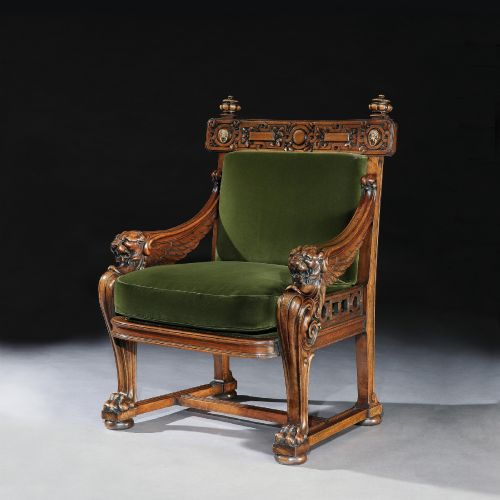
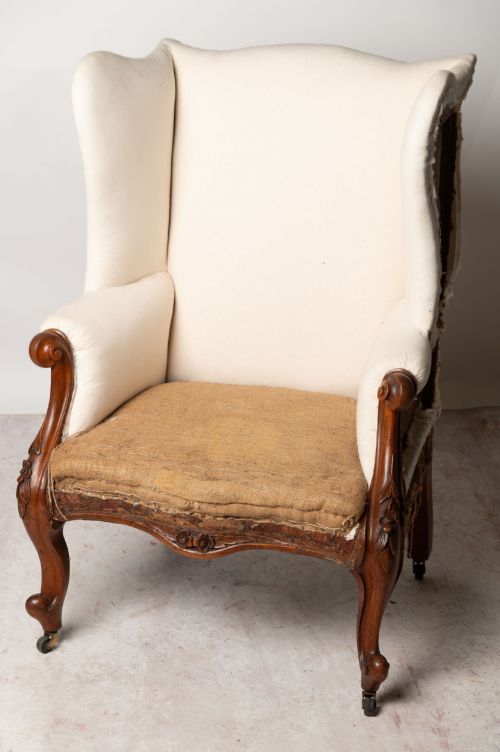
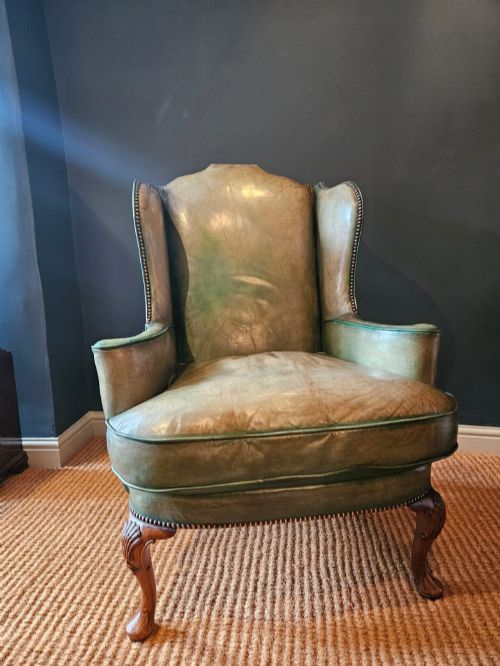
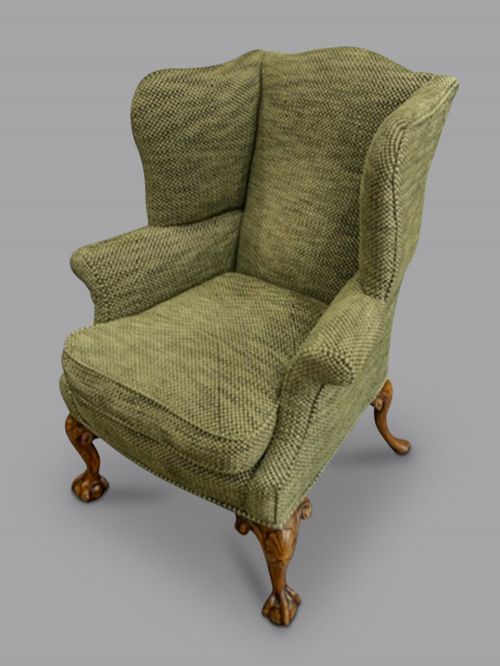
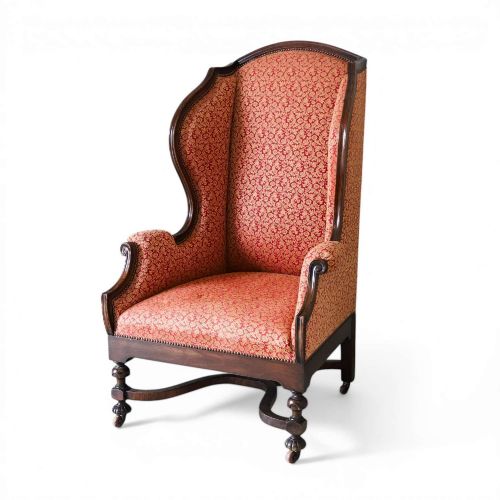
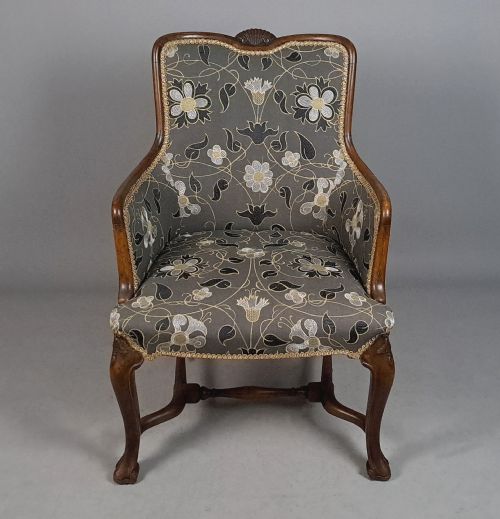
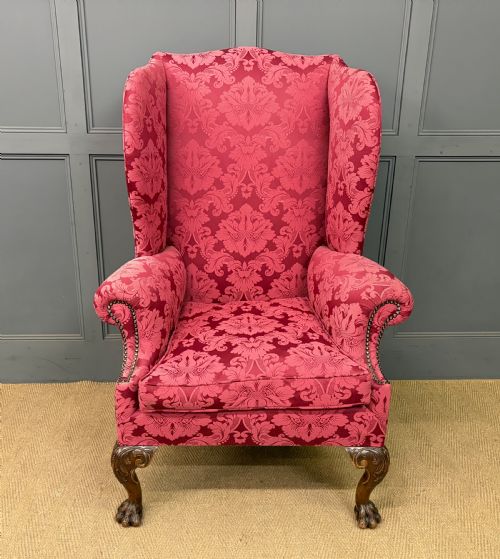


Walnut Wing Armchair
A walnut wing armchair offers high-backed comfort and draught-excluding side panels, making it an enduring fireside choice.
Walnut Wing Armchair
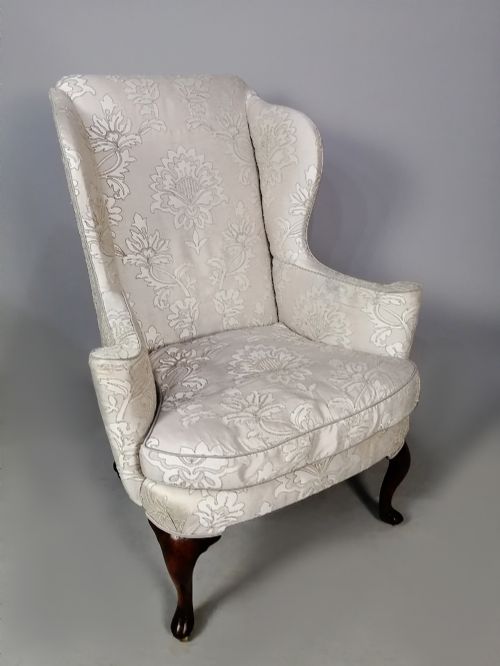
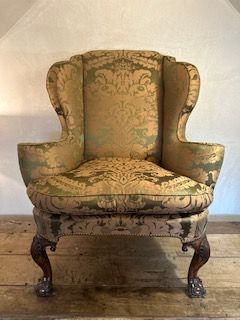
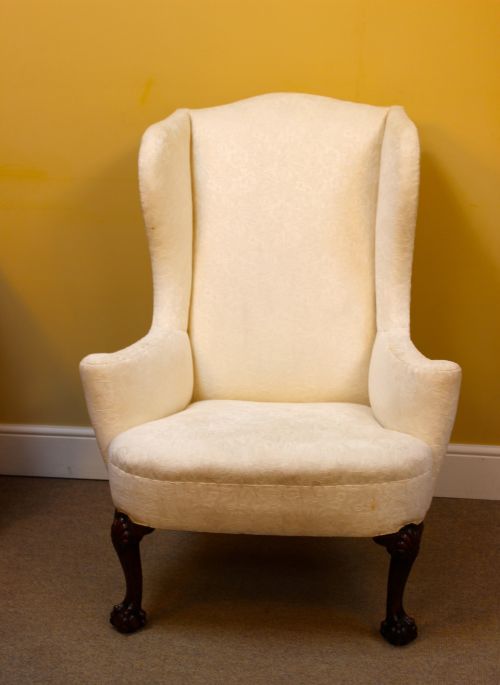
A walnut wing armchair is a deeply upholstered seat framed by protective side wings designed to retain heat from an open hearth and shield the sitter from drafts. These substantial chairs appear in various historical iterations, ranging from genuine 18th-century examples to later revival pieces.
The most common pieces on this page originate from the 19th century, drawing heavily on earlier aesthetic movements such as Queen Anne, Carolean, and William and Mary styles. Makers during the Victorian era frequently revisited these earlier silhouettes, producing high-backed seating with substantial proportions.
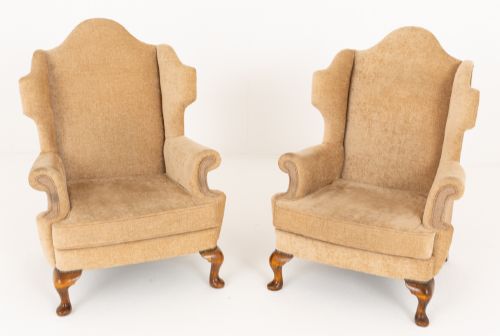
Surviving examples span both English and French workshops, encompassing solitary armchairs alongside occasional matched pairs. Their forms range from modest, compact proportions to large, commanding seats designed for prominent domestic spaces.
Construction and Materials
The underlying frames of these chairs rely on solid walnut timber, sometimes supported by internal secondary woods, shaped to form the characteristic curved wings and scrolled armrests. Master cabinetmakers utilised traditional joinery methods to ensure the structural integrity of the high backrest and load-bearing legs.
Upholstery techniques historically involved layered stuffing held in place with hessian and secured with brass tacks, finished with outer coverings of damask, silk, linen, leather, or standard upholstery fabric. Surviving pieces often demonstrate the evolution of these textiles across different centuries of use and reupholstery.
Retail Price Guide 2026
Typical UK retail prices for walnut wing armchair, calculated from the Sellingantiques database of over a million retail prices indexed since 2003. This retail price guide relies exclusively on Sellingantiques data; no external sources or auction records are used, so the figures do not describe the wider market.
Materials recorded across these pieces include solid walnut, mahogany, brass tacks, hessian foundations, and various textiles like damask, silk, and leather.
Evaluating Quality
The distinction between standard examples and superior pieces rests largely on the crispness of the timber carving and the architectural balance of the wings. Finer chairs exhibit meticulous hand-carving along the cabriole legs and stretchers, whereas lesser pieces display softer or more mechanical detailing.
Proportion and stance dictate visual success, with the best examples maintaining a harmonious relationship between the height of the back, the sweep of the arms, and the rake of the legs. Originality of the walnut frame and the retention of period upholstery materials further elevate the standing of an individual chair.
Thomas Sopwith
The Walnut Wing Armchair Glossary
- Wingback
- An upholstered armchair featuring projecting side panels designed to protect the occupant from draughts. This signature shape developed during the late 17th century.
- Cabriole leg
- A furniture leg that curves outward at the knee and tapers inward toward the foot, frequently terminating in a pad or claw. It is a defining feature of Queen Anne and Georgian seating.
- Damask
- A reversible figured fabric woven on a jacquard loom, commonly utilised for historic upholstery. Silk and wool variations appear frequently on formal period chairs.
- Hessian
- A coarse woven fabric, typically made from jute fibres, utilised as a foundational layer beneath top upholstery. It provides structural support for internal stuffing.
- Carolean Style
- A decorative aesthetic spanning the mid-to-late 17th century, characterised by rich carving and high-backed proportions. Later 19th-century revival pieces often adopted these motifs.
Frequently Asked Questions
How do I date a walnut wing armchair?
Dating relies on examining the timber characteristics, leg shapes, and underframe construction methods. Earlier 18th-century examples display distinct joinery and proportions compared to 19th-century revival pieces.
Stylistic cues such as cabriole legs, stretcher placement, and carved details offer further evidence regarding whether a chair originates from the Georgian period or a later Victorian workshop.
Are these chairs comfortable for daily use?
Most antique wing armchairs provide deep, supportive seating due to their substantial upholstered backs and padded armrests. Their ergonomic design was originally conceived for long hours spent reading or resting near the hearth.
Modern comfort levels often depend on the condition of the internal stuffing and whether the upholstery has been recently restored using traditional or contemporary materials.
How should I care for walnut furniture?
Walnut timber requires protection from direct sunlight and sudden fluctuations in atmospheric humidity to prevent warping or fading. Regular dusting with a soft, dry cloth preserves the natural lustre of the polished wood surface.
Upholstery care depends entirely on the specific fabric used, ranging from delicate silk damask to durable leather, and benefits from professional cleaning when necessary.