


Deconstructed French Chairs
Deconstructed french chairs bring raw upholstery and exposed frames into a room, offering tactile seating rooted in nineteenth-century forms.
Deconstructed French Chairs
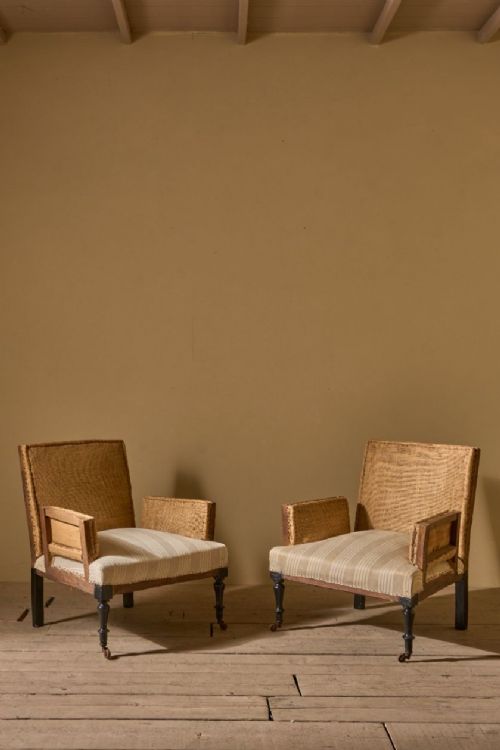
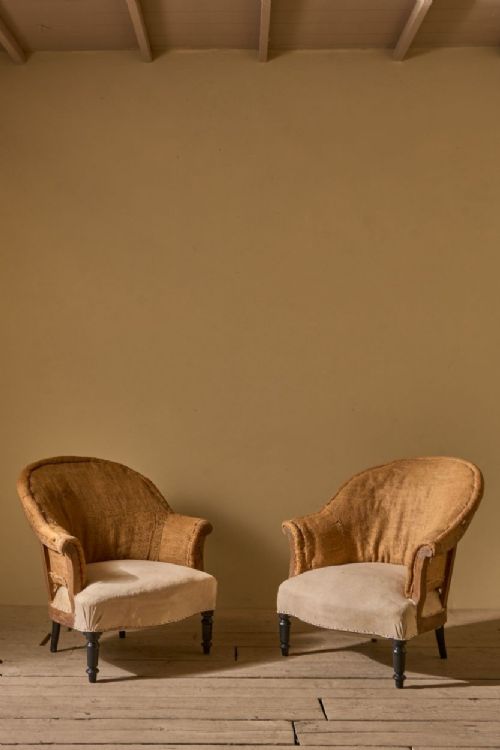
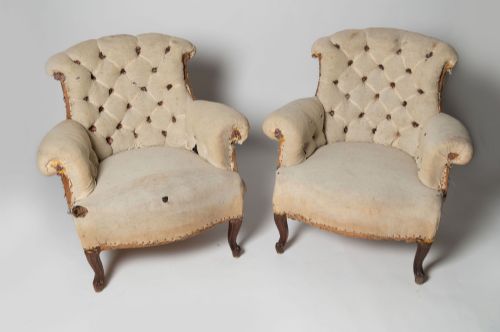
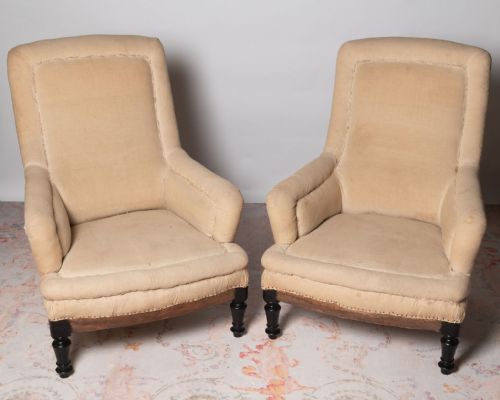
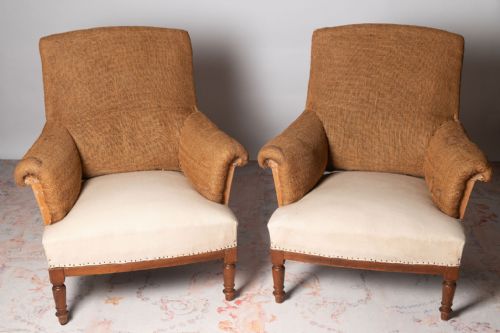
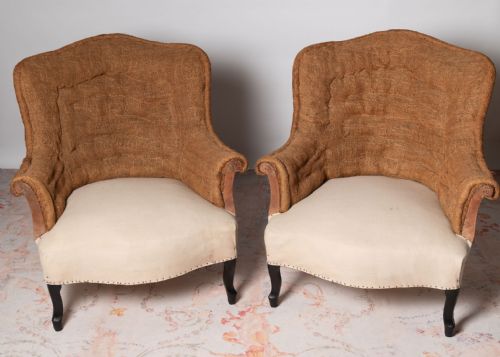
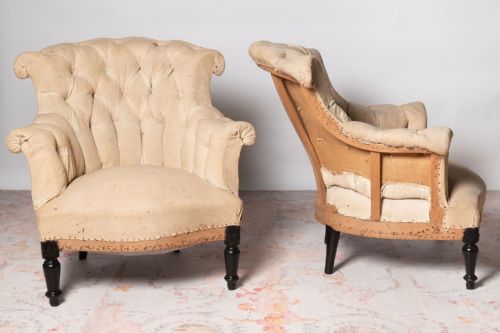
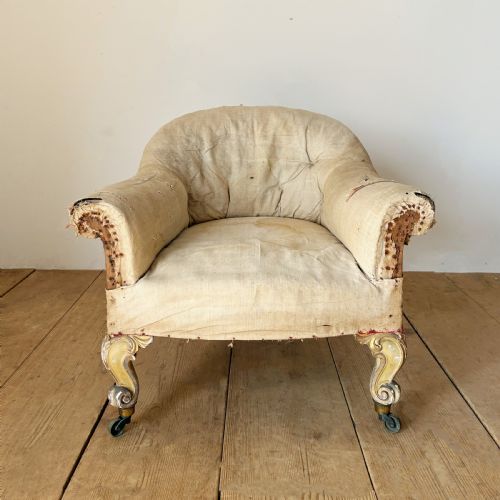
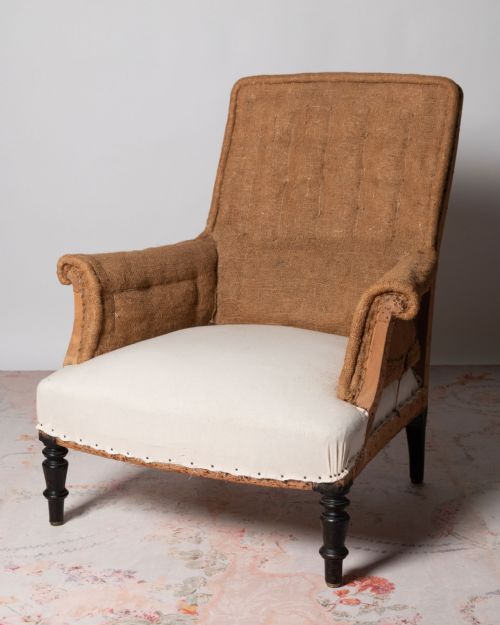
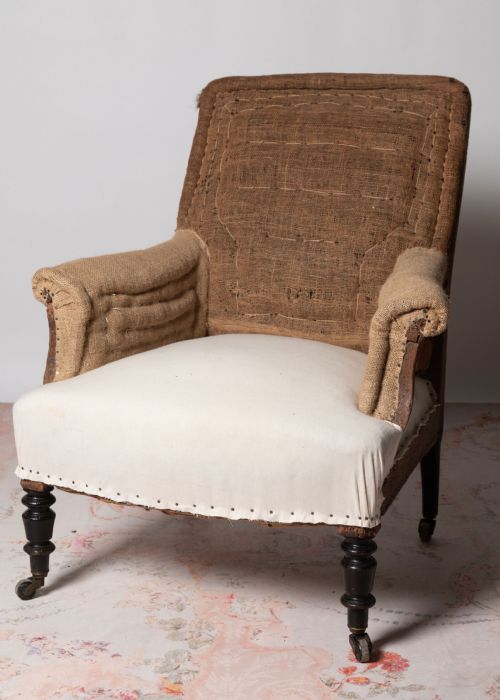
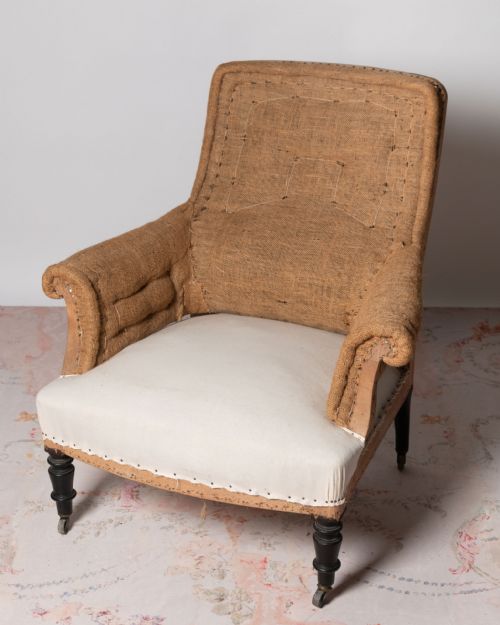
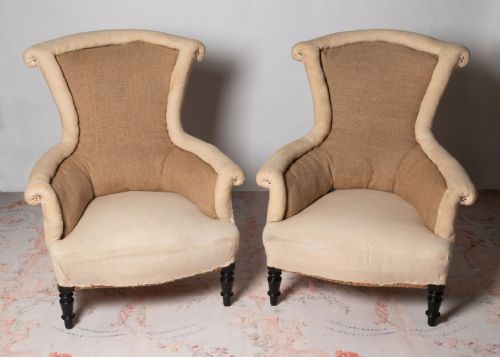
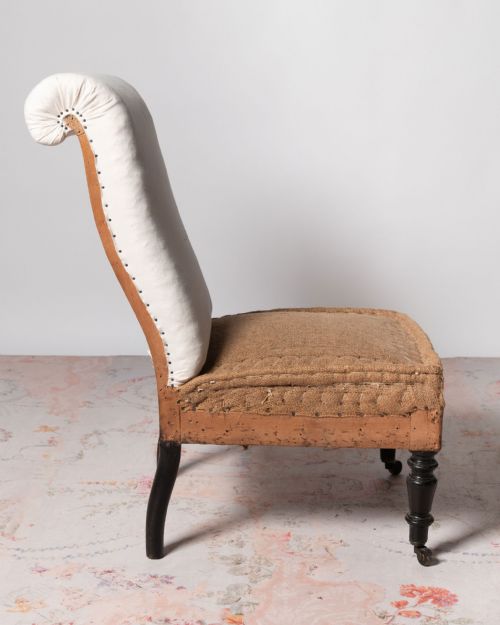
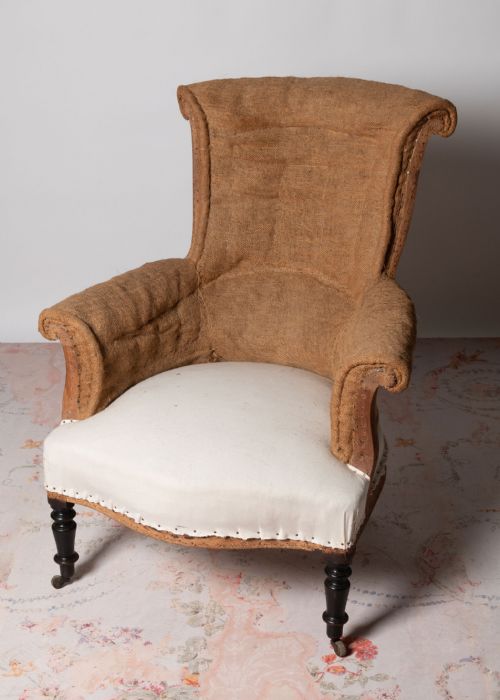
When you search for deconstructed french chairs, you encounter seating stripped back to show inner webbing, hessian and stuffing. These pieces originate mainly from the nineteenth century, spanning periods such as the Edwardian era, Napoleon III, and Louis XVI.
The forms on this page include armchairs, tub chairs, slipper chairs, and chaise longues. Styles range from French provincial and country to formal Napoleon III designs, often presented in pairs or individual antique formats.
Buyers seek these chairs for their raw architectural frames and exposed materials. They bridge traditional joinery with a stripped-down aesthetic that suits modern and classic interiors alike.
Materials and Construction
The framework relies on timber construction, predominantly beech, shaped into scroll backs, square sides, and piecrust curves. This woodwork supports internal padding secured with brass tacks and traditional joinery.
Upholstery relies on layers of hessian, calico, linen, and cotton combined with metal components. This foundational build remains visible, showing the raw interior stuffing and webbing rather than a finished outer fabric.
Even without their final velvet gowns, these chairs keep their dignity intact.
Assessing Quality
Quality rests in the integrity of the wooden frame and the stability of the exposed structure. Finer pieces display crisp carving on beech wood and balanced proportions across armchairs and chaises longues.
The appeal also depends on the honesty of the stripping process and the durability of the remaining hessian and webbing. A superior example retains its original period character without compromised joints.
The Deconstructed French Chairs Glossary
- Hessian
- A coarse woven fabric typically made from jute fibres, used as the foundational layer for internal upholstery. It provides structural support beneath the padding.
- Tub Chair
- An armchair with a rounded back that curves continuously into the arms. This enclosed form appears frequently in nineteenth-century designs.
- Slipper Chair
- A low-seated upholstered chair originally designed for bedrooms. It often lacks arms and sits close to the floor.
- Chaise Longue
- An elongated upholstered seat intended for reclining. The form combines a chair with an extended footrest.
- Calico
- A plain-woven cotton fabric used historically as an under-layer or lining. It holds internal stuffing securely in place.
Deconstructed French Chairs: Frequently Asked Questions
What are deconstructed french chairs?
These are nineteenth-century seating pieces stripped of their outer top-covers to expose the internal webbing, hessian, and wooden frames. They highlight the raw construction methods of period makers.
Styles include Napoleon III armchairs, tub chairs, and slipper chairs originating from French provincial and country traditions.
How were these chairs originally used?
They served as formal salon seating, bedroom chairs, or lounging furniture in nineteenth-century homes. Armchairs and chaises longues provided functional comfort in parlours and private chambers.
Today, buyers place them in living rooms and studies as statement pieces that combine antique frames with industrial textile textures.
How do I live with exposed upholstery?
Living with raw hessian and calico requires an appreciation for tactile, aged textiles and visible stitching. These pieces work well against neutral walls where their structural frames stand out.
Protect the exposed webbing from heavy friction and direct sunlight to maintain the integrity of the vintage fabrics.
How do I tell Napoleon III chairs apart?
Napoleon III pieces often feature scroll backs, square sides, or shaped tub designs that reflect mid-nineteenth-century French taste. They tend to have robust beech frames built for comfort.
Other styles on this page include Edwardian salon armchairs and provincial country variants, each showing distinct regional carpentry.