




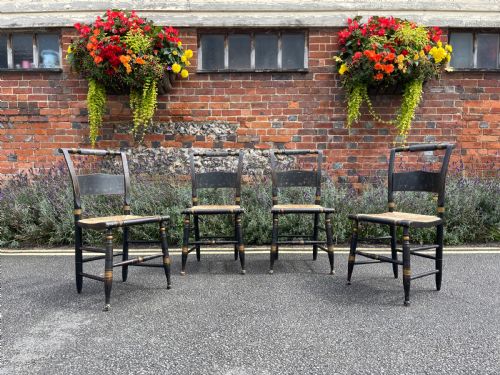
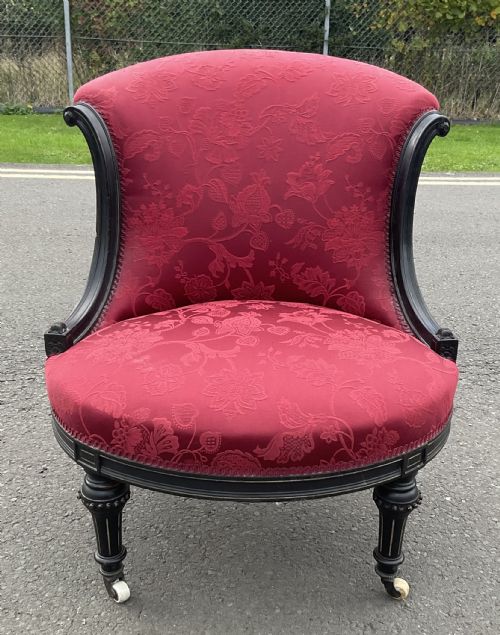
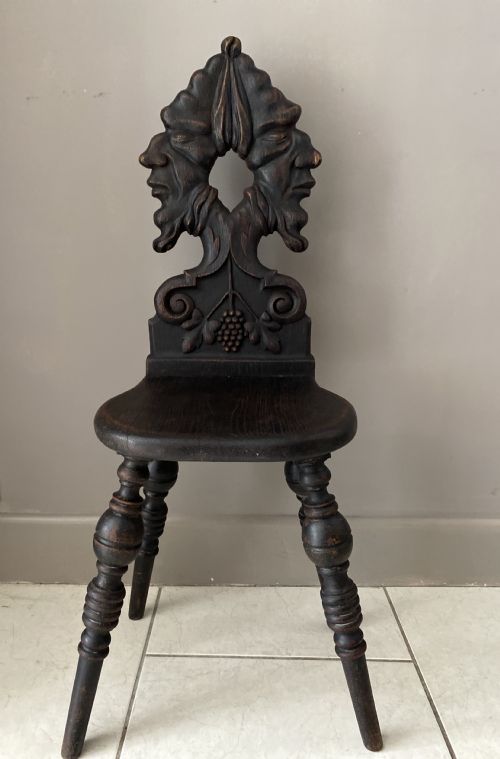
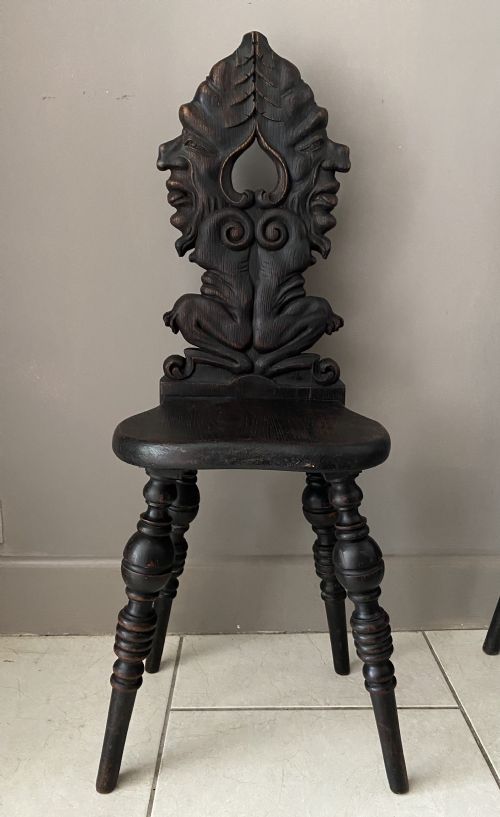
Black Turned Leg Chair
A black turned leg chair brings together honest timber work and dark finishes, offering practical seating with distinct historic character.
Black Turned Leg Chair
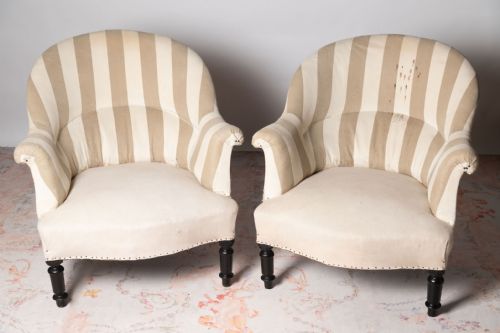
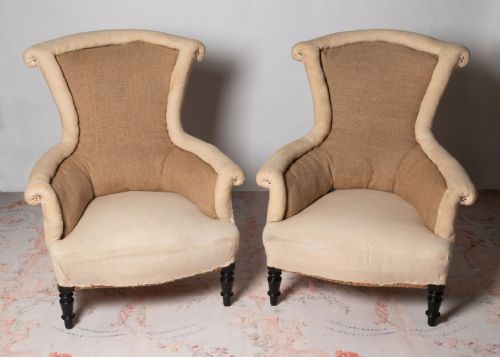
When searching for a black turned leg chair, buyers encounter various forms spanning armchairs, side chairs, dining chairs, and specialist seats such as nursing chairs or piano stools. The selection draws primarily from nineteenth century origins, showcasing diverse provincial and formal interpretations.
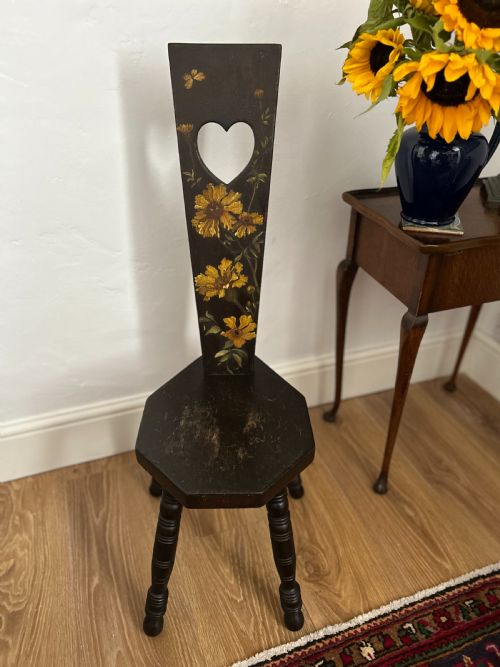
Makers and workshops across different regions adopted ebonised finishes, paint, and dark hardwoods to achieve the characteristic appearance. These chairs range from simple Welsh folk art and American provincial designs to elaborate French and Anglo-Indian Regency productions.
The common thread uniting these pieces is the combination of turned supports with a dark surface, whether achieved through natural ebony, ebonised wood, or applied paint. Such seating suits domestic interiors seeking traditional texture and historic presence without excessive formality.
What varies in quality
Quality reveals itself in the crispness of the turning and the integrity of the underlying timber frame. Finer examples display balanced proportions, refined carving, and well-executed ebonising or paintwork that has aged gracefully.
Regional vernacular pieces demonstrate robust local craftsmanship, while pieces attributed to established makers show greater refinement in joinery and upholstery detailing.
One cheerful hall chair comes complete with carved gargoyles to keep uninvited guests properly startled.
W.Williamson & Sons·Gillows
The Black Turned Leg Chair Glossary
- Ebonised Wood
- Timber treated with a stain or finish to imitate expensive ebony. This technique was popular in nineteenth-century furniture to create dramatic dark surfaces.
- Turned Leg
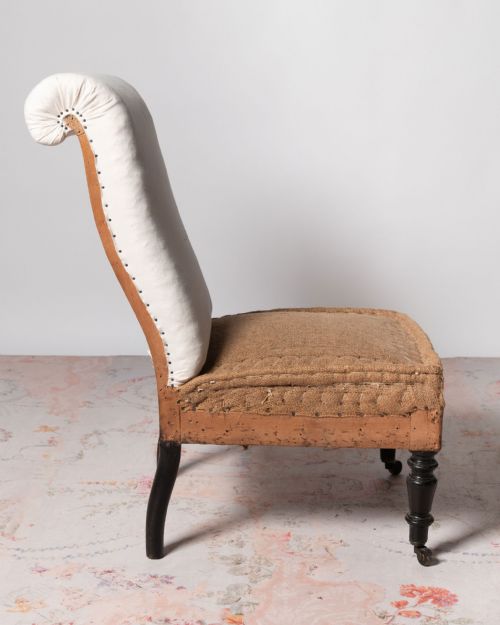
- A support shaped on a lathe to create cylindrical, spiral, or bulbous profiles. It forms a key structural and decorative element on these chairs.
- Slipper Chair
- A low-seated chair traditionally used in bedrooms for dressing. These often feature upholstered backs and short legs.
- Aesthetic Movement
- A nineteenth-century design style emphasising visual beauty over narrative subject matter. Furniture from this period frequently utilises ebonised finishes and gilt detailing.
- Windsor Chair
- A traditional seating form constructed with a solid wooden seat into which the legs and back spindles are separately bored. These pieces reflect sturdy provincial craftsmanship.
Black Turned Leg Chair: Frequently Asked Questions
What periods do these chairs come from?
The available pieces predominantly date from the nineteenth century, including specific periods like the Regency era and the Victorian epoch. Makers worked within established regional styles ranging from English country to French provincial.
Exact dating relies on construction methods, timber choice, and stylistic markers characteristic of nineteenth-century workshops.
How do I care for ebonised wood?
Ebonised surfaces require gentle dusting with a soft cloth and protection from direct sunlight to prevent fading. Avoid harsh chemical cleaners that can strip the dark finish.
Maintaining stable indoor humidity preserves both the timber substrate and any applied decorative paint or gilding.
Were these chairs used for dining?
Many examples function as side or dining chairs, particularly sets designed for formal or domestic gathering spaces. Other variants serve specialised roles as library armchairs, hall chairs, or nursing seats.
Form often dictates function, with lower seats suited to dressing rooms and robust wooden frames built for hallways.
How do I identify a Regency piece?
Regency items display classical influences, often featuring specific carved details such as swag or lambrequin back splats. These pieces utilise quality timbers like mahogany alongside precise joinery.
Proportions tend to be refined, reflecting the neoclassical tastes prevalent during the early nineteenth century.