
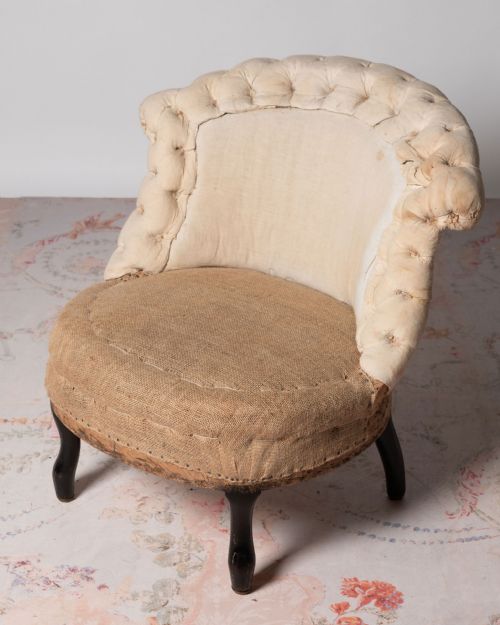


French Boudoir Armchair
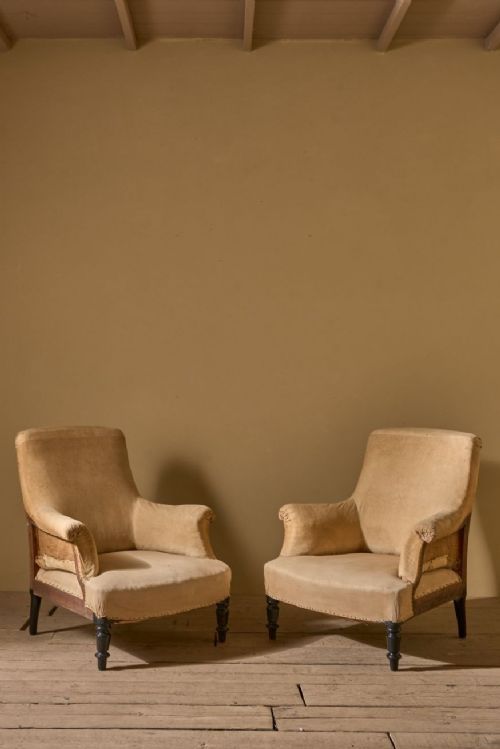
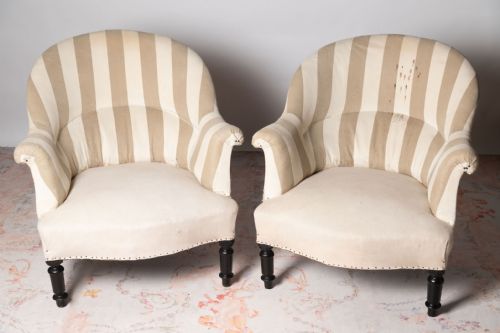
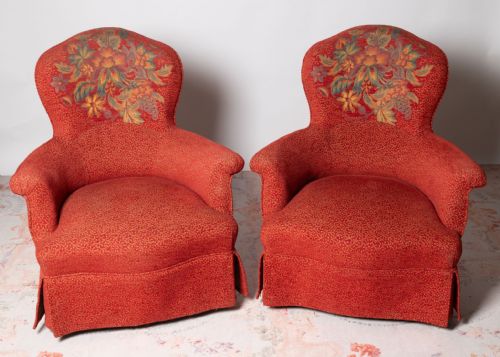
A french boudoir armchair brings intimate seating to a room, offering low proportions and plush upholstery rooted in nineteenth century design.
French Boudoir Armchair
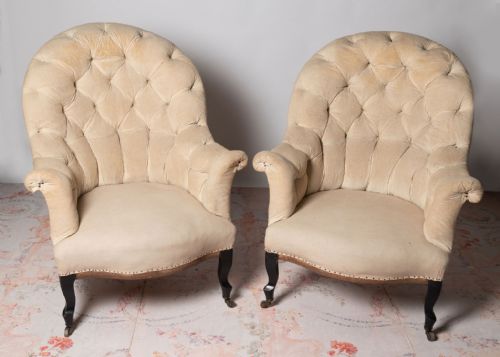
A french boudoir armchair sits low and comfortable, designed originally for private chambers and dressing rooms rather than grand reception spaces. Buyers exploring this page will encounter nineteenth century forms alongside pieces from nineteen hundred and nineteen thirty.
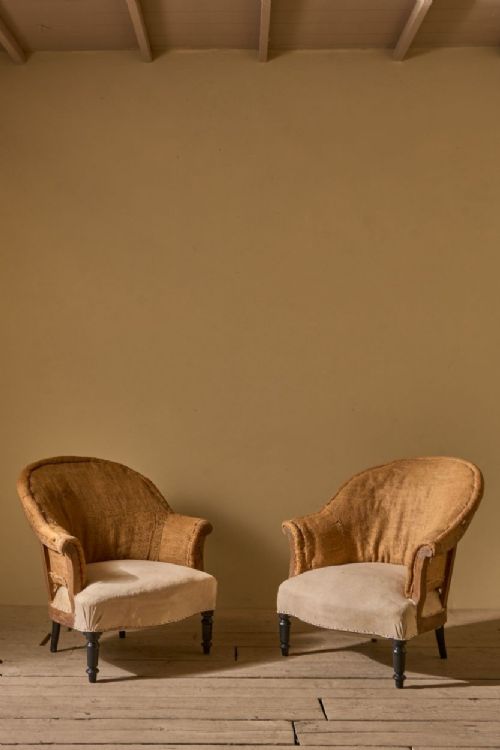
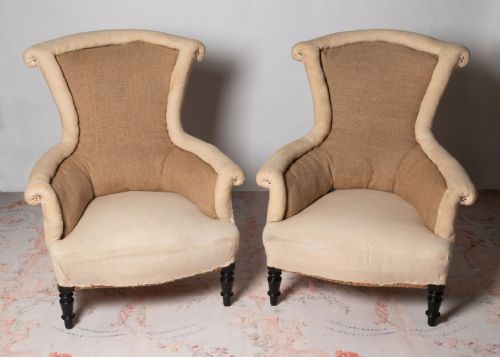
The selection ranges from tub chairs and plain square back armchairs to scroll back designs and occasional pairs suited for upholstery or recovering. Napoleon III and French Empire styling dominate the offerings, bringing curved frames and classic silhouettes to domestic interiors.
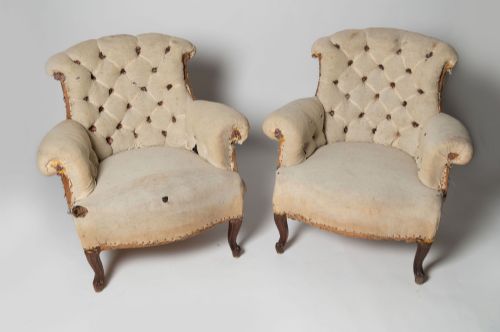
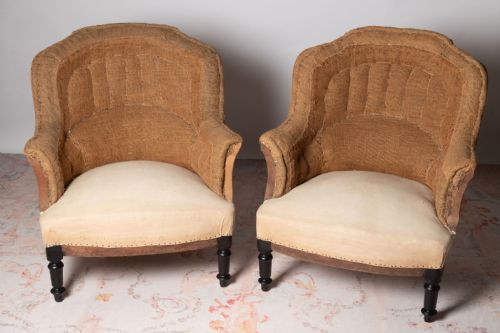
Many examples arrive stripped to calico, hessian, or raw wood frames, inviting buyers to choose their own textile finish. Others retain older velvet or cotton covers from previous generations of use.
How they were made
Makers built these frames using sturdy timbers such as beech and ebonised wood, sometimes applying gilt leaf to highlight carved details. Traditional joinery supported the compact proportions required for intimate seating.
Traditional upholstery techniques relied on internal stuffing of hessian and cotton, finished with outer layers of velvet, calico, or linen. Frames prepared for recovering reveal the webbed foundations and coiled springing beneath.
Listings feature wooden frames in beech and ebonised finishes, upholstered in velvet, cotton, calico, hessian, and linen.
What varies in quality
The integrity of the wooden frame dictates the baseline worth of the chair, with solid beech and crisp carving marking out superior examples. Frames that remain firm without excessive movement in the joints hold up best over decades of use.
The depth of the original shaping and the grace of the scroll or square back define the visual appeal. Pieces retaining their structural lines without clumsy alterations satisfy collectors looking for authentic nineteenth century proportions.
The French Boudoir Armchair Glossary
- Napoleon III
- A nineteenth century French design style characterised by eclectic revivals, comfort, and upholstered luxury. It draws upon earlier monarchical aesthetics while embracing new domestic intimacy.
- Calico
- A plain woven cotton fabric often used as an under-upholstery layer or a base for tighter decorative covers. It provides a neutral foundation before final top fabrics are applied.
- Hessian
- A coarse woven fabric made from jute fibres, traditionally used in traditional upholstery for webbing and stuffing containment. It sits hidden beneath the outer textile.
- Tub chair
- An armchair featuring a rounded back that curves continuously into low arms. This form wraps around the sitter for compact comfort.
- Scroll back
- A chair back featuring an outward-curving top rail resembling a scroll. This silhouette appears frequently in nineteenth century seating.
French Boudoir Armchair: Frequently Asked Questions
Where did these chairs originally sit?
These compact seats belonged in private dressing rooms, bedrooms, and intimate sitting spaces rather than formal parlours. Their low profile made them suitable for close quarters and private relaxation.
Today they serve similar functions as accent seating in bedrooms, hallways, or smaller sitting rooms where space remains at a premium.
Why do some chairs need upholstery?
Many nineteenth century frames survive stripped to their bare foundations of hessian and webbing because earlier fabric deteriorated. This allows new owners to select contemporary textiles that match modern interiors.
Buying a frame ready for recovering offers complete control over the final colour and fabric weight without compromising the antique structure.
How do I spot a Napoleon III piece?
Napoleon III armchairs typically display curved wooden framing, plush sprung seats, and an emphasis on comfort over rigid formality. They often feature ebonised wood or gilt finishes.
Look for low proportions and distinct nineteenth century padding techniques that prioritise a soft, enveloping sit.
Can I mix these with modern furniture?
The compact scale and varied upholstery options of these chairs allow them to sit comfortably alongside contemporary decor. A velvet or linen finish bridges historical frames with modern colour palettes.
Placing one beside clean-lined modern sofas creates a balanced contrast of periods within a room.