




French Low Back Armchairs
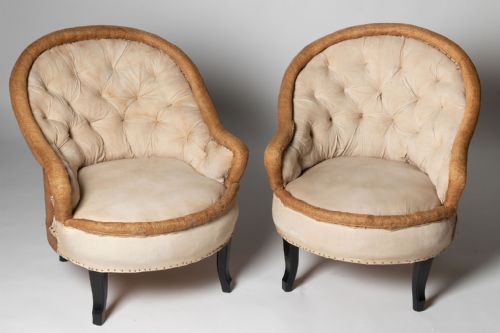
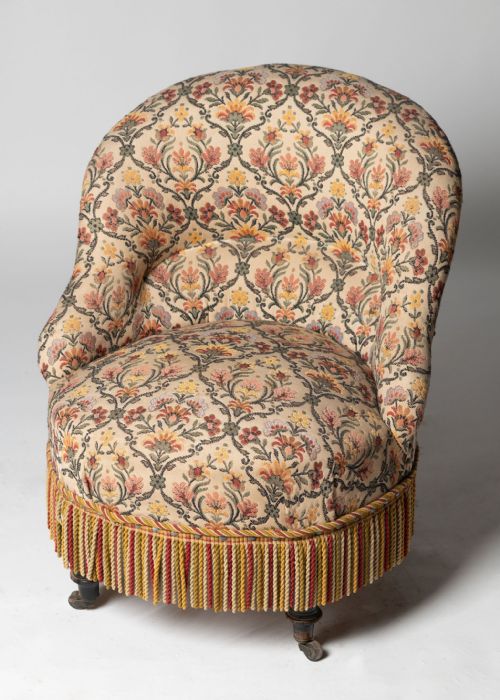
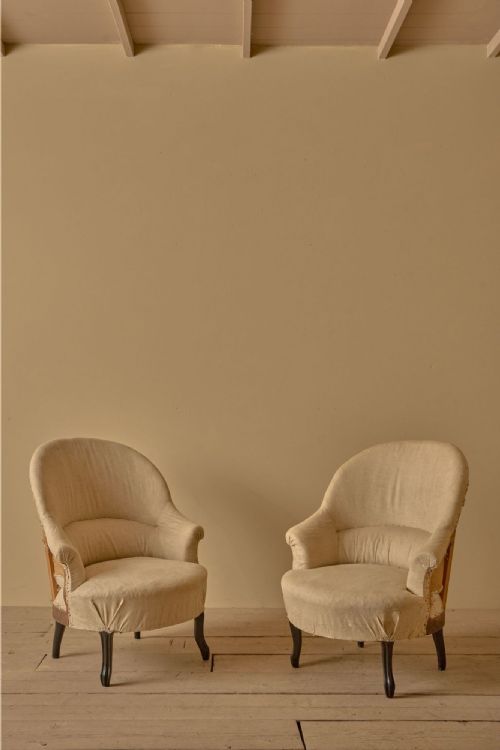
These French low back armchairs bring a distinct continental elegance to a room, offering comfortable seating with a low profile that opens up a space.
French Low Back Armchairs
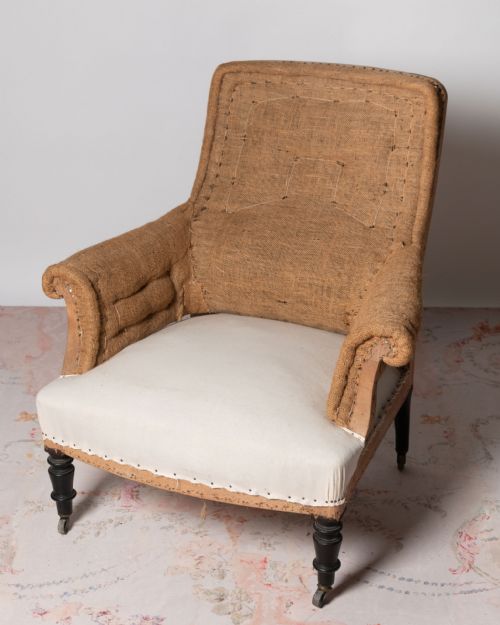
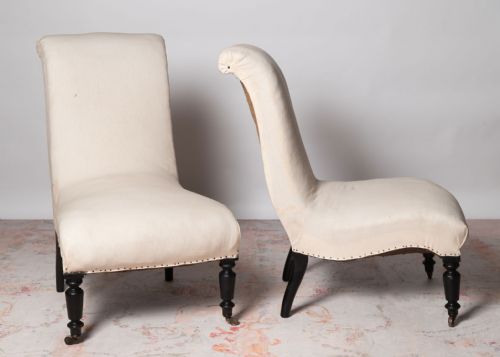
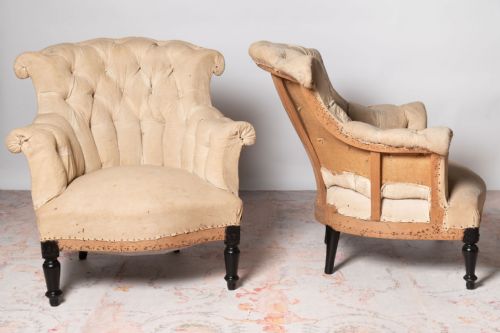
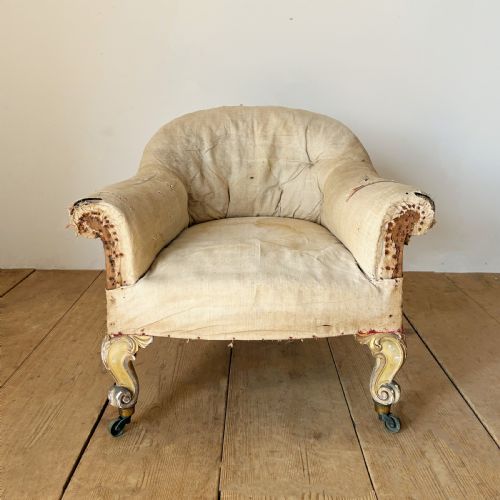
French low back armchairs span comfortable seating options originating from continental workshops, predominantly emerging through the nineteenth century and into the early twentieth century. When searching for french low back armchairs, a buyer encounters tub chairs, slipper chairs, and open armchairs designed for low-slung lounging.
The nineteenth century yields the largest share of examples on this page, often carrying Napoleon III or Victorian stylistic influences, alongside later twentieth-century Art Deco interpretations. These pieces appear individually or as matched pairs, featuring wood frames and upholstered bodies ready for covering.
How they were made
Maker construction relies on hardwood frames, sometimes ebonised for a dark finish, supported by brass details where appropriate. Frames are shaped with scroll backs or square sides to define the silhouette of the chair.
Upholstery foundations utilise traditional materials including hessian, calico, cotton, and linen to pad and cover the internal structure before final textile finishing.
French Low Back Armchairs Retail Price Guide 2026
Typical asking prices for french low back armchairs among the pieces listed under this phrase on Sellingantiques today, from the lower quarter to the upper quarter. They describe what is for sale here now, not the wider market.
Some of these low-slung chairs were built specifically low so nineteenth-century ladies could manage their voluminous skirts without tumbling.
What varies in quality
Quality rests upon the structural integrity of the hardwood frame and the precision of the carved or ebonised woodwork. Pieces with robust joinery and balanced proportions stand apart from simpler iterations.
The sophistication of the period style, whether the fluid curves of a French Rococo Revival or the geometric lines of Art Deco, dictates the refinement of the armchair.
The French Low Back Armchairs Glossary
- Napoleon III
- A nineteenth-century French design period known for eclectic revivals and comfortable upholstered seating. It draws on earlier monarchical styles while embracing plush comfort.
- Tub chair
- An armchair featuring a continuous curved back and arms that form a rounded enclosure. This form provides a cocooning seat popular in nineteenth-century salons.
- Slipper chair
- A low-seated upholstered chair originally designed for dressing rooms. Its low profile makes it easy to sit in while putting on shoes.
- Ebonised
- Wood treated to imitate ebony, giving it a deep black finish. This technique highlights the carved contours of nineteenth-century chair legs.
- Hessian
- A coarse woven fabric typically made from jute fibres. It serves as traditional internal webbing and padding support in antique upholstery.
French Low Back Armchairs: Frequently Asked Questions
Where did these armchairs originate?
These armchairs originate from France, reflecting continental design sensibilities from the nineteenth century onward.
They encompass regional variations and workshop styles that prioritise domestic comfort and decorative presence.
How were low back chairs used?
Low back chairs were traditionally used in intimate settings such as bedrooms, dressing rooms, and smaller salons.
Their reduced height allowed occupants to sit comfortably without blocking views across a furnished room.
Are these armchairs sold in pairs?
Many of these armchairs are available as matched pairs, which proves particularly useful for symmetrical interior arrangements.
Single examples also appear frequently across the selection for accent placement.
What periods do these chairs represent?
The selection spans the nineteenth century, including Napoleon III and Victorian eras, alongside twentieth-century Art Deco pieces.
Each period introduces distinct frame shapes and upholstery configurations unique to its decade of manufacture.