
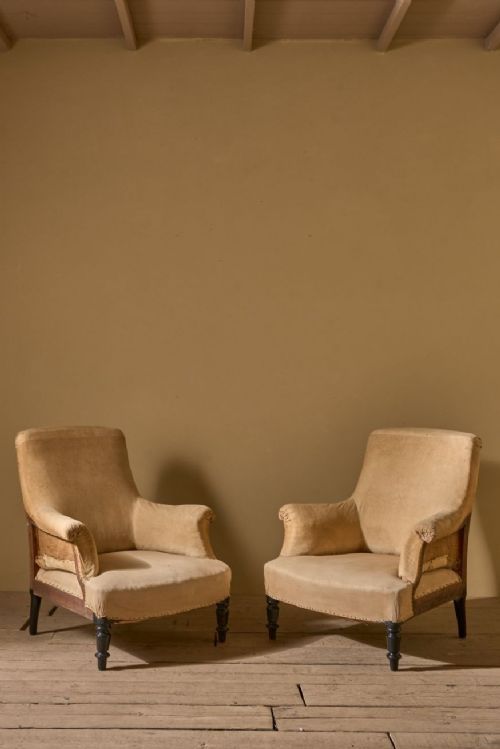
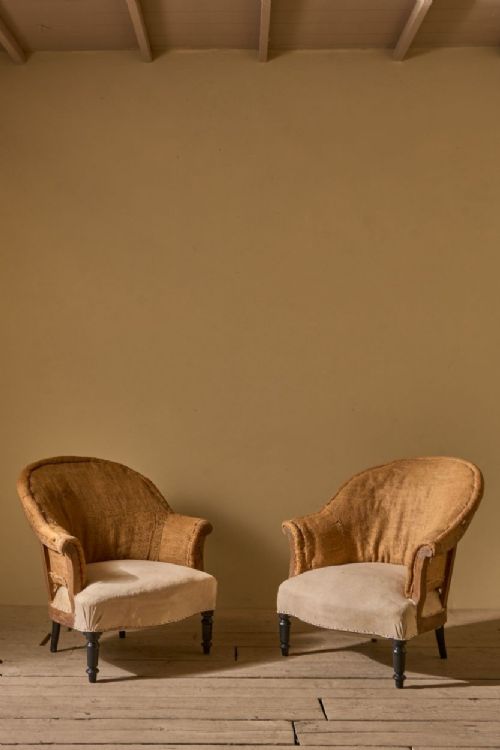
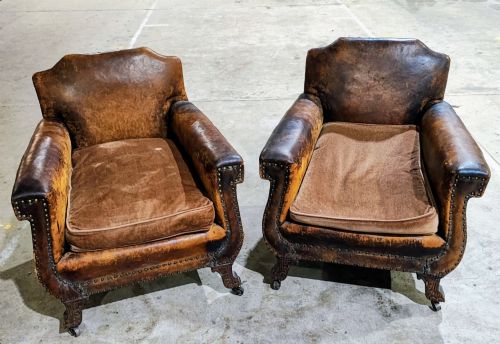
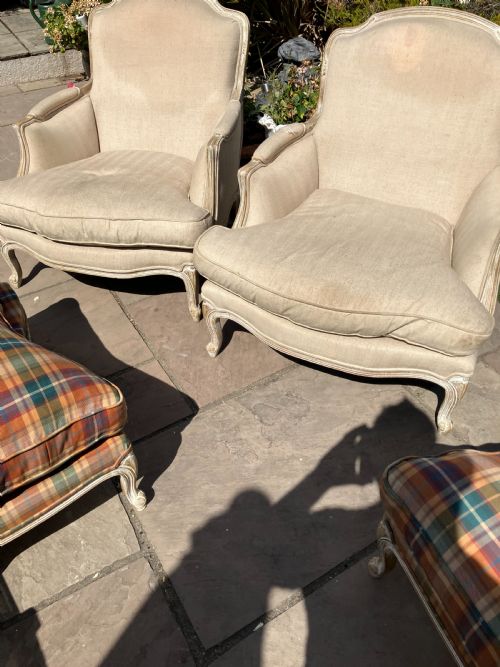
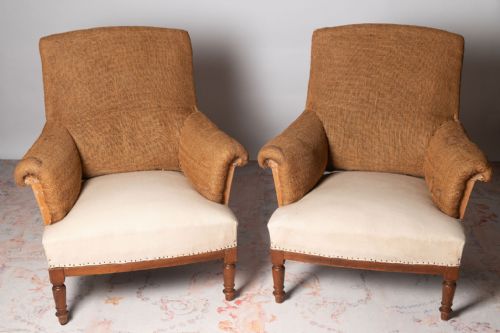
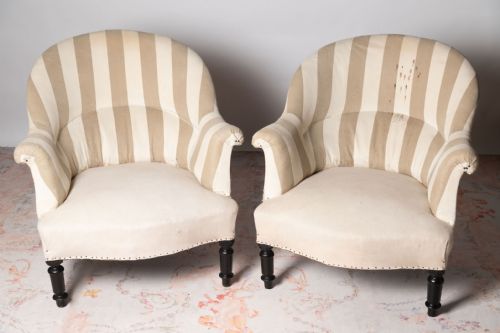
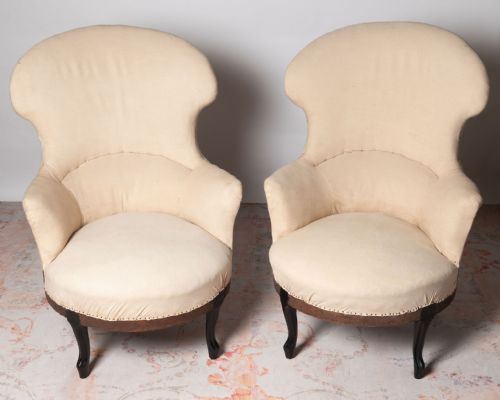
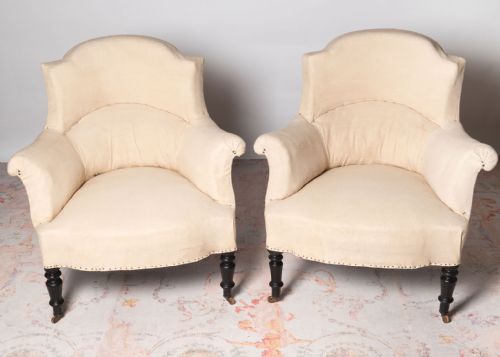
Pair French Club Chairs
When you search for pair french club chairs, you enter a world of deep-sprung seating built for comfort and presence.
Pair French Club Chairs
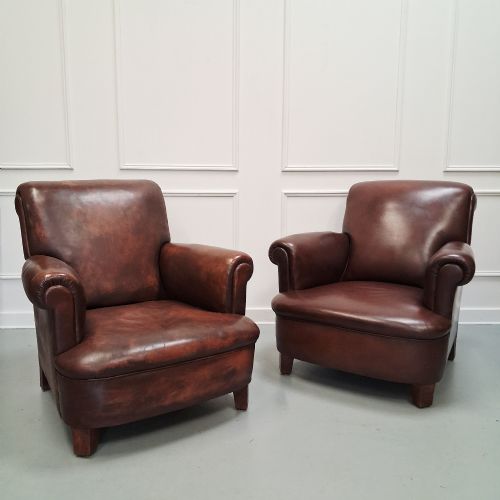
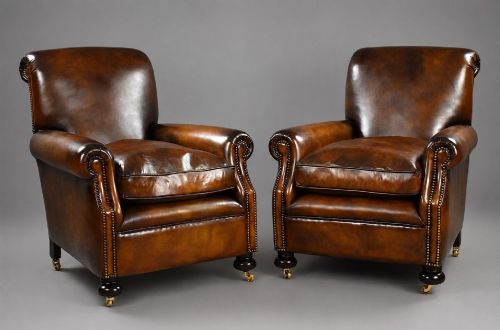
A pair french club chairs selection brings together matched pairs of heavy, low-slung seating designed primarily for comfort and relaxation. The most frequent versions encountered here date from the early decades of the twentieth century, particularly the 1920s and 1930s, alongside nineteenth-century iterations.
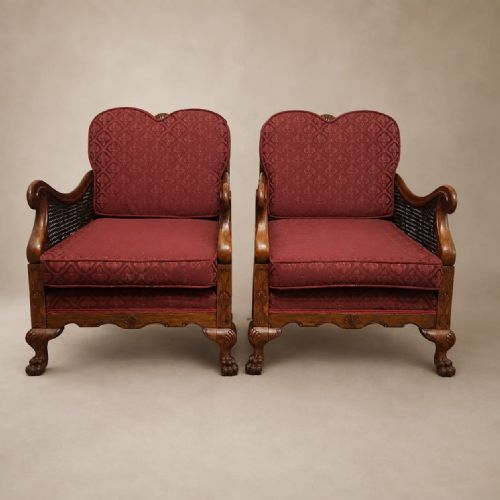
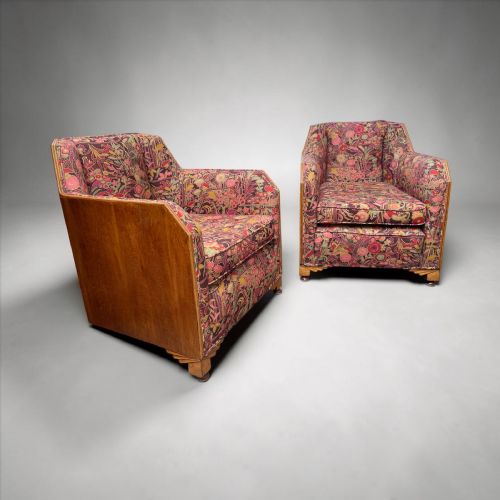
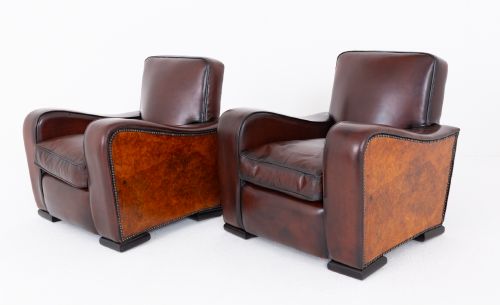
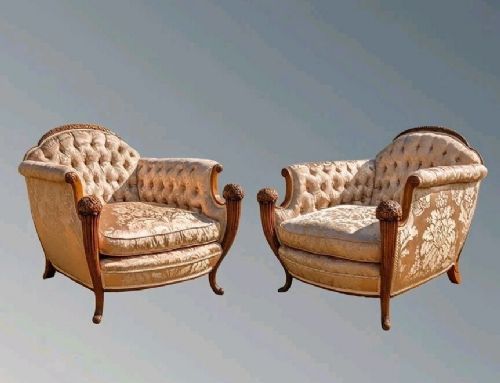
These seats generally manifest as deep armchairs with substantial padded arms and sprung backs, rooted in French domestic traditions. Variations range from streamlined Art Deco silhouettes to traditional Napoleon III and Louis styles.
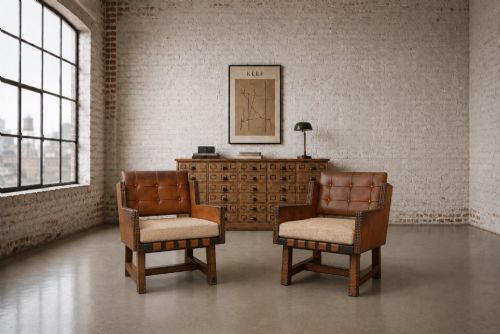
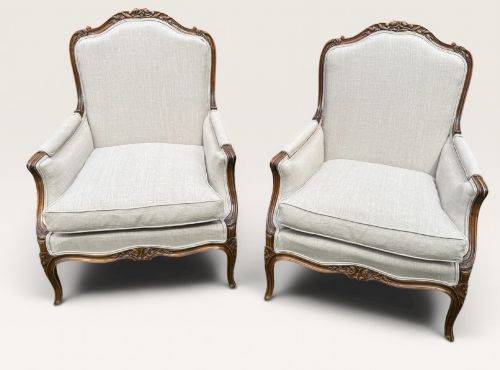
Buyers find examples executed in supple leather as well as alternative coverings like fabric, linen, and silk. Their substantial scale makes them focal points in a library, study, or drawing room.
How they were made
Makers built the structural frames of these armchairs from sturdy timbers including walnut and other hardwoods, ensuring stability beneath heavy upholstery. Complex interior spring systems and stuffing provided the signature deep comfort expected from club chairs.
Outer coverings relied heavily on durable leather, stretched and secured over padding, though some examples utilised silk, linen, and woven cane panels. Brass details occasionally appeared as subtle decorative accents on frames and feet.
Pair French Club Chairs Retail Price Guide 2026
Typical asking prices for pair french club chairs among the pieces listed under this phrase on Sellingantiques today, from the lower quarter to the upper quarter. They describe what is for sale here now, not the wider market.
Listings span from the 1850s through the mid-20th century, encompassing Napoleon III, Edwardian, Art Deco, and Louis revival periods.
What varies in quality
The integrity of the internal wooden frame and the resilience of the original springing dictate the baseline quality of any pair. Chairs retaining their structural firmness and dense padding sit higher in the hierarchy than those with softened or sagging interiors.
The grade and finish of the outer leather or fabric define the visual appeal, with smooth patination and intact stitching marking superior examples. Finer pairs demonstrate careful proportioning in the arms and back, alongside harmonious matching between both chairs.
The Pair French Club Chairs Glossary
- Club chair
- A deep, comfortable armchair featuring upholstered armrests and a low back, historically designed for relaxed lounging in private clubs and homes.
- Art Deco
- A design style prominent in the 1920s and 1930s characterised by sleek geometric lines, streamlined forms, and modernist symmetry. Pieces from this era often utilise walnut and smooth leather.
- Bergere
- An enclosed upholstered armchair with wooden framing around the back and sides, frequently incorporating woven cane panels.
- Napoleon III
- A nineteenth-century French revival style incorporating diverse historical influences, often yielding elaborately curved or button-backed seating.
- Patina
- The surface sheen and softening of tone developed on leather and wood through age and handling.
Pair French Club Chairs: Frequently Asked Questions
What defines a true club chair?
A true club chair is defined by its deep, low-slung seat, generous proportions, and thick padding designed for sustained comfort. These seats typically feature rounded, upholstered armrests that invite relaxed posture.
Historically developed in France, they evolved from earlier armchairs into heavy, substantial pieces meant for reading rooms and domestic studies.
How do Art Deco models differ?
Art Deco examples feature more streamlined silhouettes, geometric lines, and reduced ornamentation compared to earlier nineteenth-century styles. They frequently pair walnut frames with smooth cigar-brown or coloured leather.
This twentieth-century iteration focuses on clean curves and functional mass rather than historical revival motifs.
Where should I place a pair?
These matched pairs suit generous living spaces, studies, or libraries where their substantial physical presence can anchor the room. Positioning them opposite a fireplace or flanking a low table creates a balanced seating area.
Their substantial scale requires adequate floor space to prevent the room from feeling overcrowded.
How do I identify a 1930s piece?
Pieces from the 1930s typically exhibit characteristic Art Deco proportions, featuring clean lines, club-form arms, and walnut elements. Leather upholstery from this decade often displays a distinct softened grain and rich patination.
Construction methods reflect the period's transition toward simpler, heavier comfort-driven seating designs.