

Walnut Cabriole Armchair
A walnut cabriole armchair brings rich timber grain and curving legs into a room, offering both sturdy support and historic presence.
What these pieces are
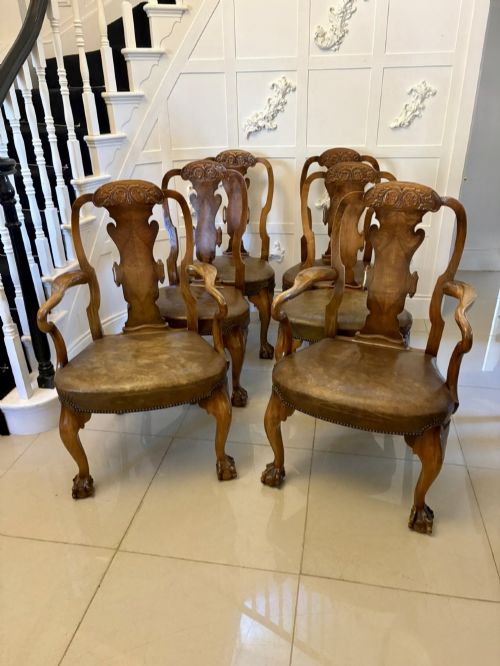
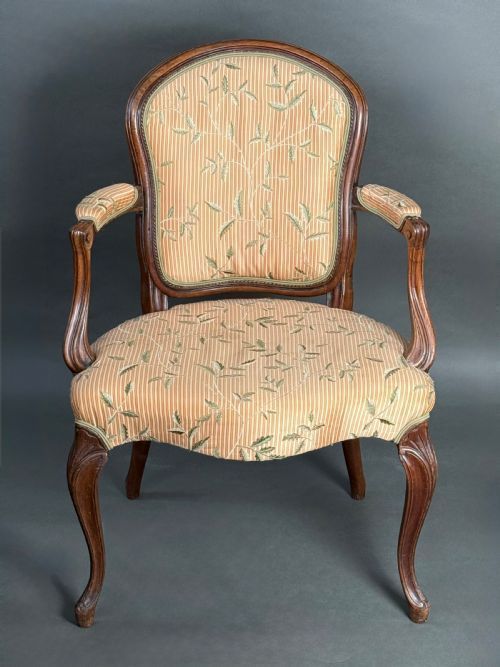
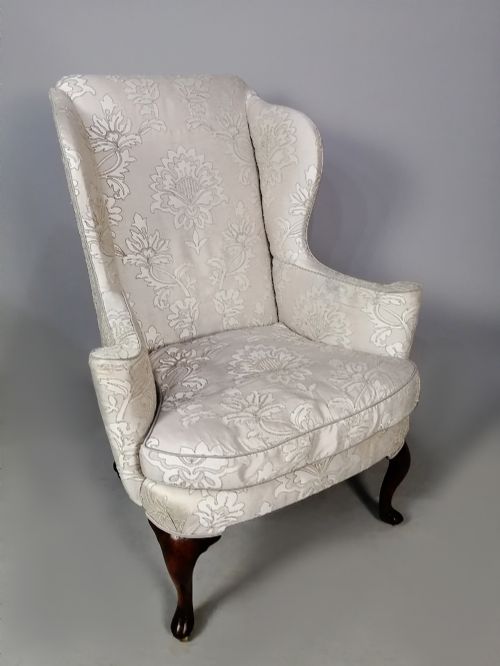
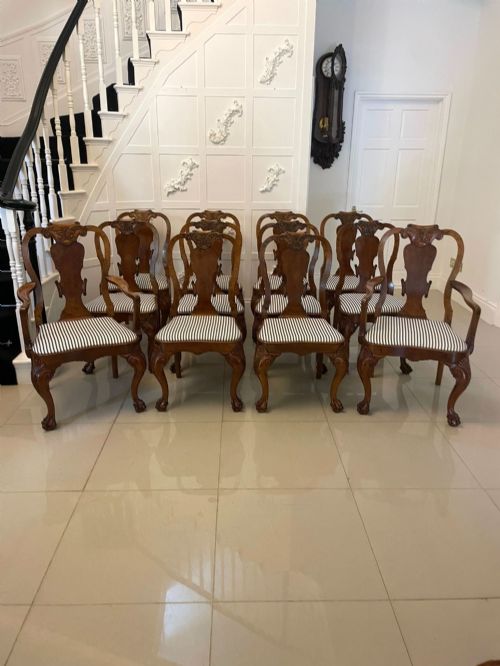
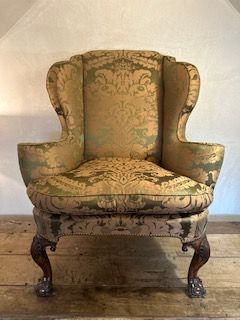
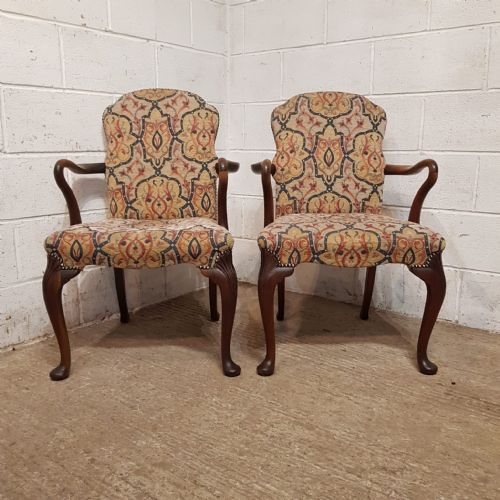
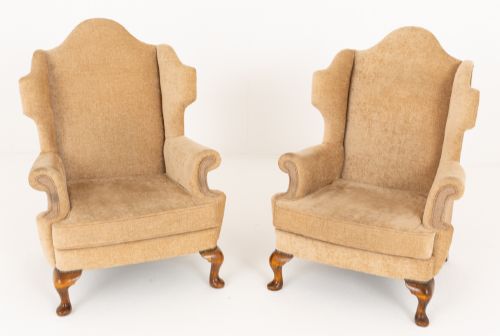
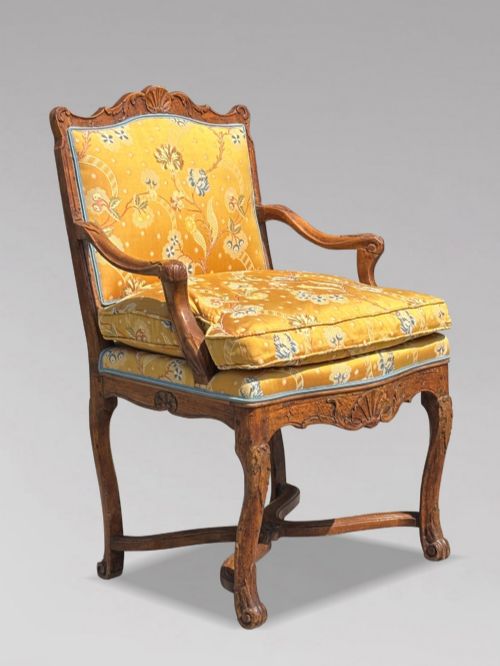
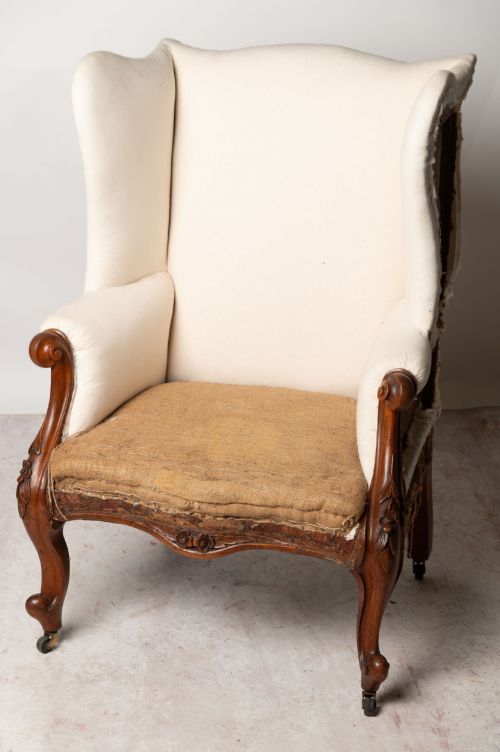
A walnut cabriole armchair combines warm timber framing with distinctive double-curved legs that finish in forms like claw and ball feet. These seats appear across multiple periods, including the Georgian era, the Victorian decades, and the Edwardian years.
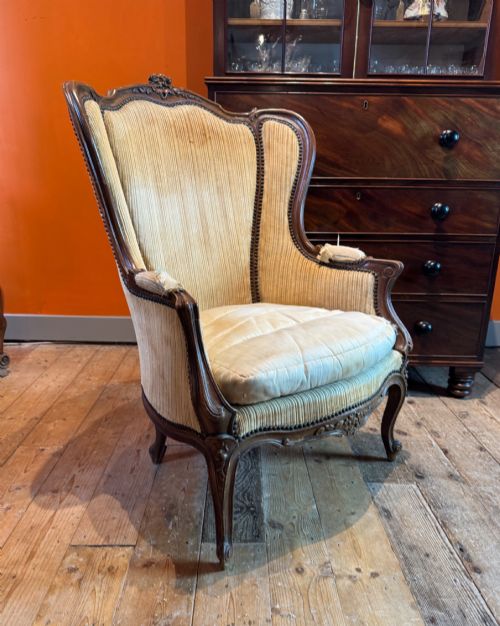
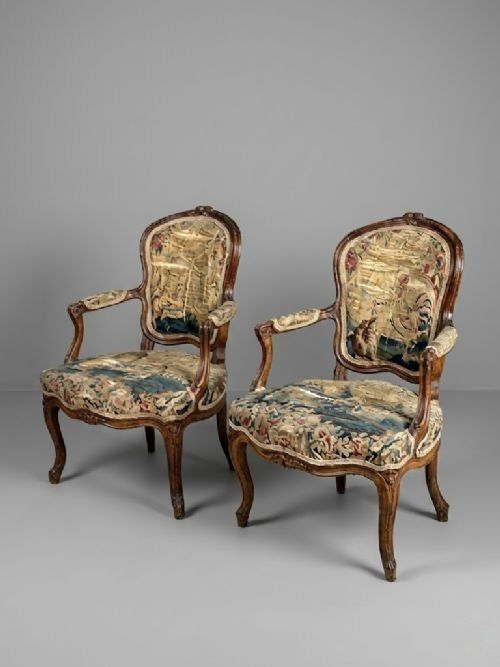
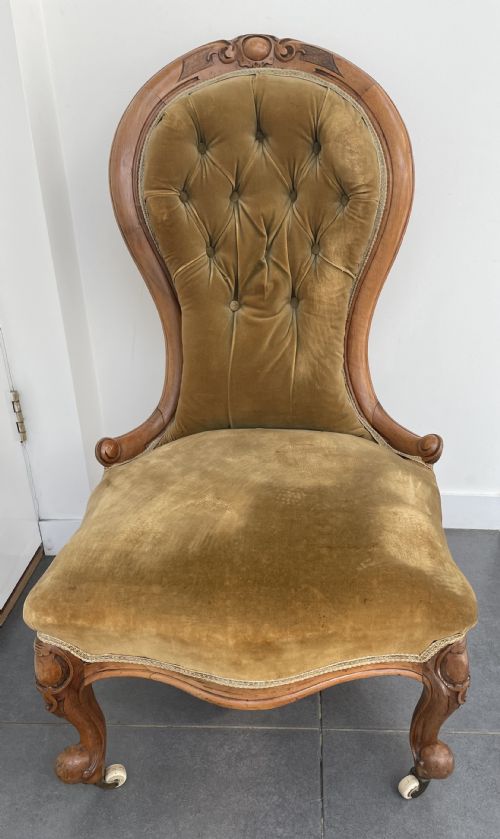
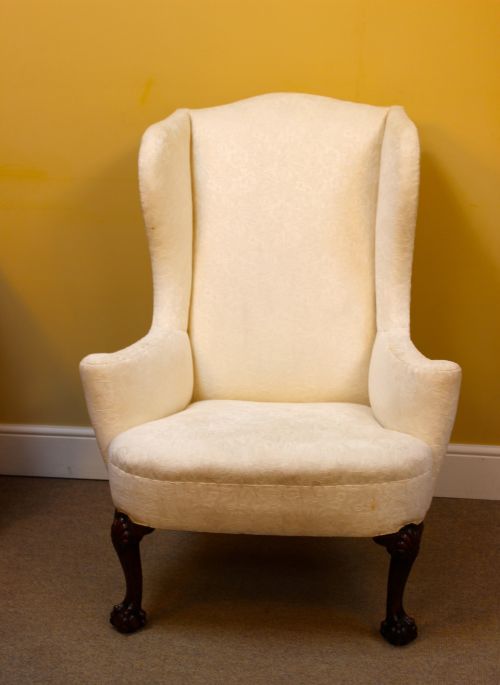
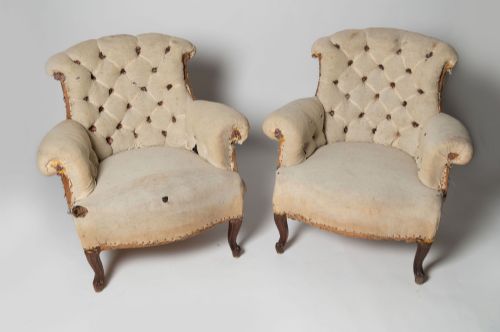
The evidence shows forms ranging from high-backed wing armchairs upholstered in leather, linen, and cotton to open drawing room seats and spoon-backed fireside chairs. Pieces arrive in styles that span authentic Georgian construction alongside later Queen Anne, George II, and French Napoleon III revivals.
Buyers are most likely to encounter 19th-century interpretations and early 20th-century revival pieces on this page, alongside select 18th-century examples. These chairs serve as both functional seating and focal points in traditional interiors.
How they were made
Carpenters shaped the primary frames from walnut, occasionally pairing them with beech secondary timbers, and carved the distinctive cabriole legs directly into the wood. Some examples incorporate leaf-capping on the front legs or gilding applied to the structural frames.
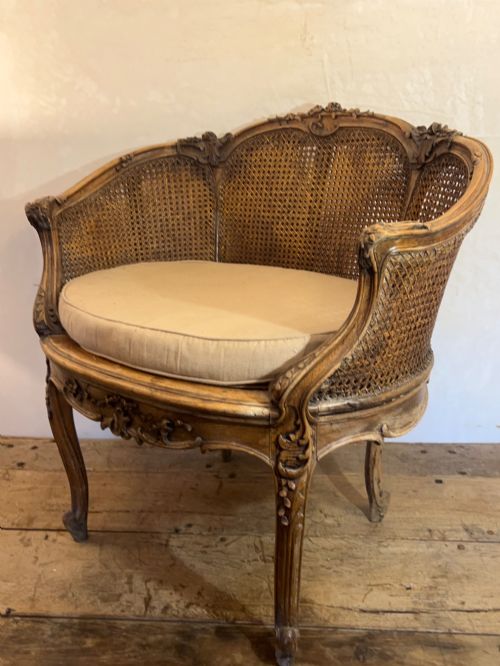
Upholstery methods utilised traditional stuffing secured beneath coverings of leather, cotton, linen, and textiles, often finished with braid trim or button backs. Caned panels also appear on specific chair backs, showing skilled weaving directly into the walnut framework.
Retail Price Guide 2026
Typical UK retail prices for walnut cabriole armchair, calculated from the Sellingantiques database of over a million retail prices indexed since 2003. This retail price guide relies exclusively on Sellingantiques data; no external sources or auction records are used, so the figures do not describe the wider market.
Several armchairs incorporate caned backs, allowing eighteenth-century style breezes to circulate while you sit.
What varies in quality
The distinction between standard examples and finer pieces lies in the crispness of the wood carving on the cabriole legs and the integration of the joinery. Superior items display deep, purposeful carving on the knees and feet rather than soft or flat detailing.
Material selection also drives the division, with richly figured walnut grain and premium upholstery coverings like full hide or heavy textiles elevating the piece. The integrity of the original frame construction and the preservation of early surface patination separate everyday workshop output from master production.
The Walnut Cabriole Armchair Glossary
- Cabriole leg
- A furniture leg that curves outward at the knee and tapers inward toward the ankle, mimicking an animal's limb. This form originated in antiquity and returned to prominence during several revival periods.
- Wing armchair
- A high-backed seat featuring protective side panels designed to shield the occupant from drafts. These chairs frequently stand on cabriole legs and appear in both leather and textile upholstery.
- Spoon back
- An upholstered chair back shaped with a concave contour that resembles the bowl of a spoon. This silhouette gained particular favour during the Victorian period.
- Claw and ball foot
- A furniture foot carved to represent a bird's talon clutching a spherical orb. This detail often terminates the bottom of a cabriole leg on formal seating.
- Drop in seat
- A removable chair seat frame upholstered separately before being dropped into a recess in the wooden rail. This construction method appears across various 18th-century and revival styles.
Frequently Asked Questions
How do I spot a reproduction?
Examine the timber grain, tool marks, and construction joints beneath the upholstery line for signs of age. Older frames show hand-cut joinery and natural timber oxidation that modern machinery struggles to replicate.
Compare the proportions and carving depth of the cabriole legs against documented period examples. Revival pieces from the Edwardian era or the 1920s often use different internal secondary woods and machine-sawn components.
Are these chairs comfortable for daily use?
Most of these chairs offer supportive upright seating, particularly the wingback and padded arm variations designed for drawing rooms and firesides. The ergonomics reflect historical standards rather than deep modern lounging.
Upholstery comfort depends on the internal stuffing condition, which varies across pieces. Many antique chairs retain firm support suitable for reading and formal conversation.
Which period is best to buy?
The choice depends on whether you prefer authentic 18th-century construction or the robust revival pieces built during the Victorian and Edwardian eras. Georgian items offer historic longevity, while later interpretations often provide durable daily seating.
Consider the wood finish and upholstery style that matches your existing interior. Each era brings distinct interpretations of the cabriole form and walnut grain.
How do I care for walnut wood?
Keep walnut furniture away from direct sunlight and strong heat sources to prevent the timber from drying out or splitting. Consistent indoor humidity levels preserve the natural moisture in the wood.
Dust the carved cabriole legs and frame regularly with a soft, dry cloth. Avoid silicone-based polishes that can build up on the antique surface over time.