
French Painted Armchairs
French painted armchairs bring classical proportion and decorative paintwork into a room, offering both seating and strong historical character.

French painted armchairs
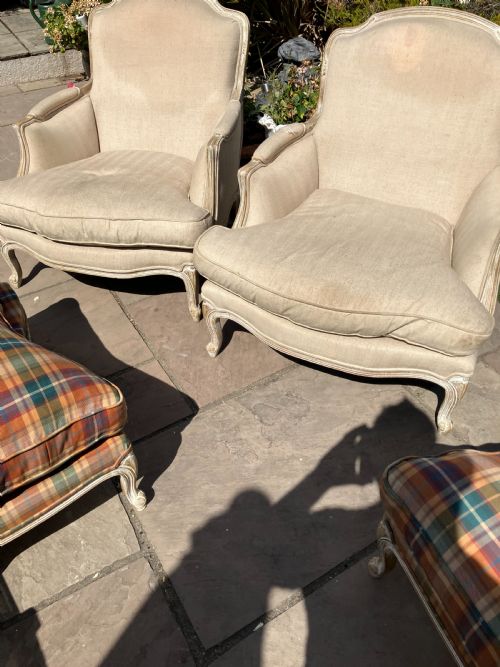
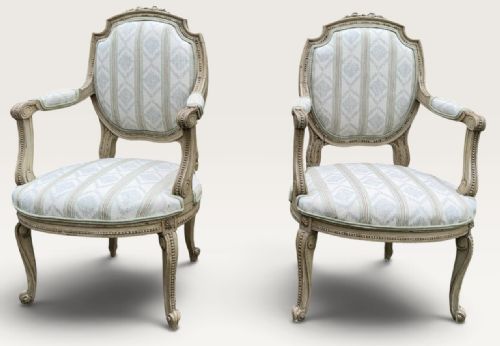
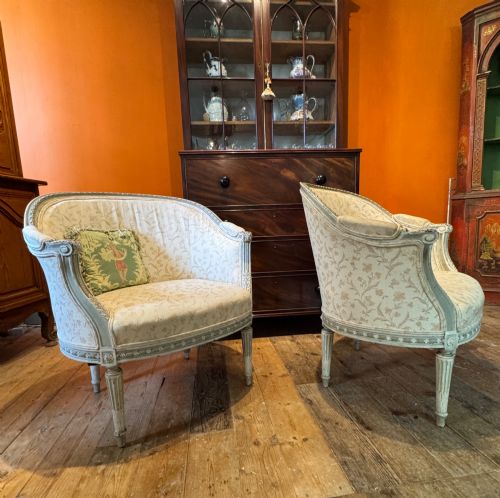
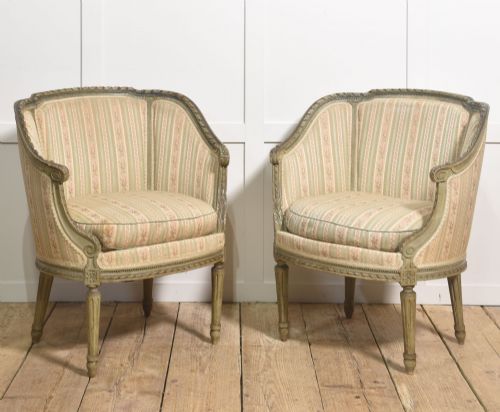
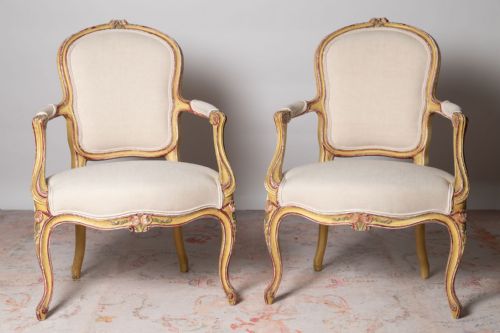
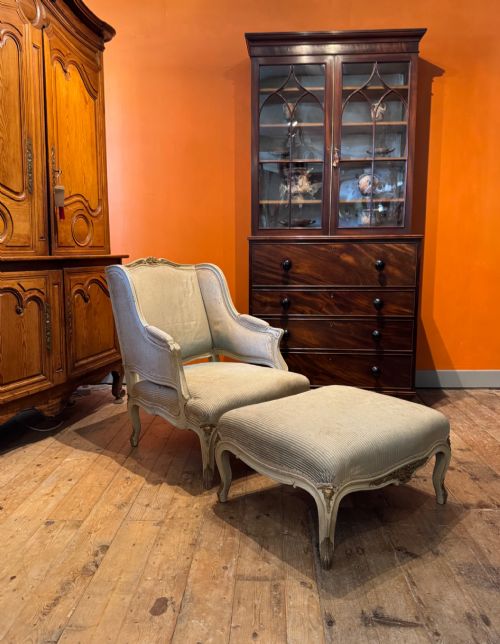
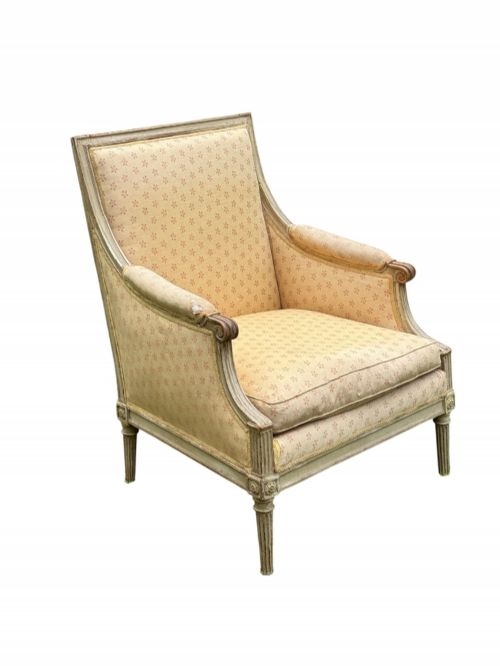
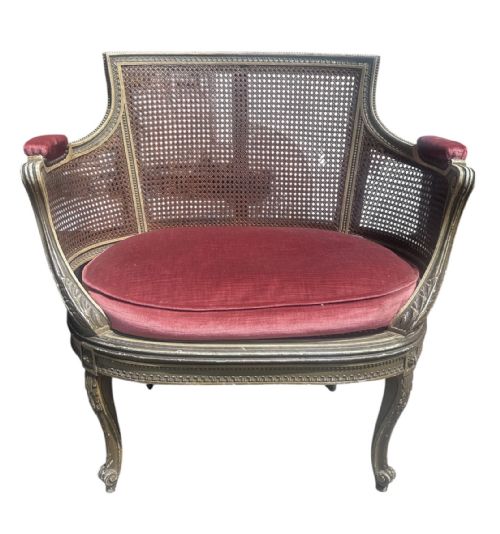
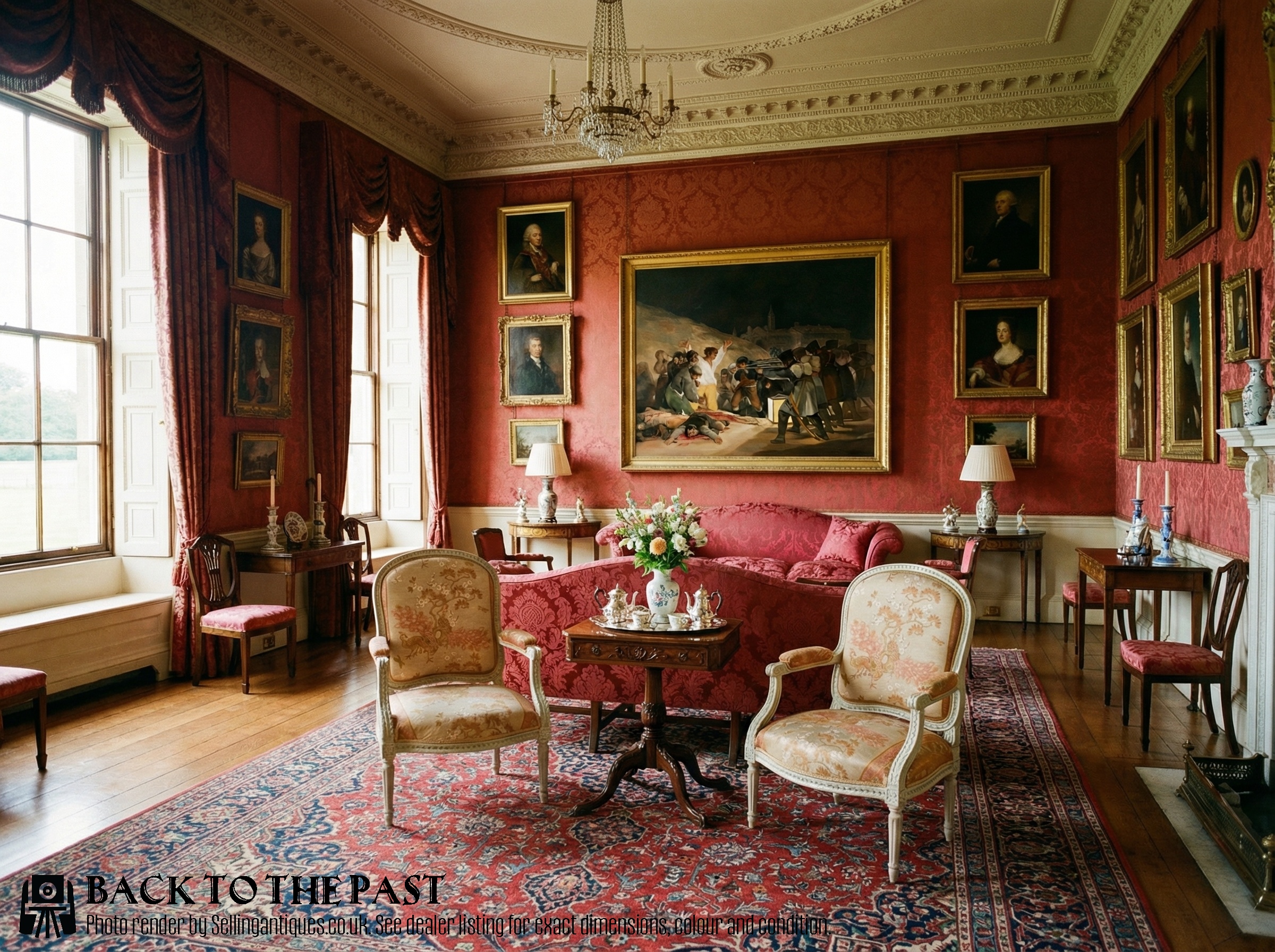
French painted armchairs span the nineteenth century, nineteen hundred, the Edwardian period, and nineteen twenty, often following Louis XVI and French Chateau styles. These seating pieces appear frequently as pairs, ranging from salon chairs and fauteuils to bergères, tub armchairs, and folding iron and wood designs.
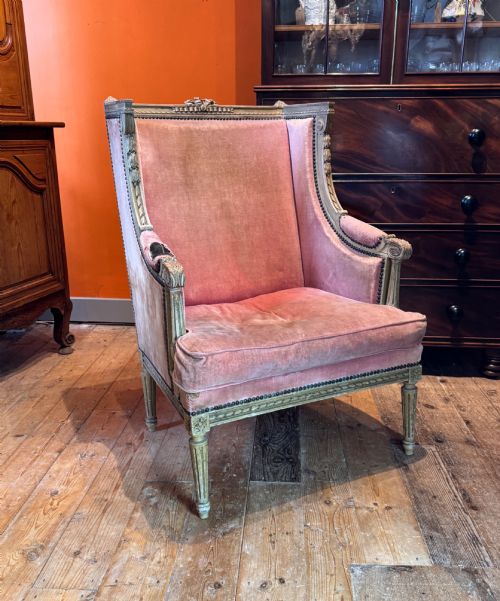
The evidence shows forms that include shield backs, wing armchairs, and buttoned backs, alongside open armchairs and larger upholstered seating. Many examples carry specific stylistic influences such as Louis XVI revival details.
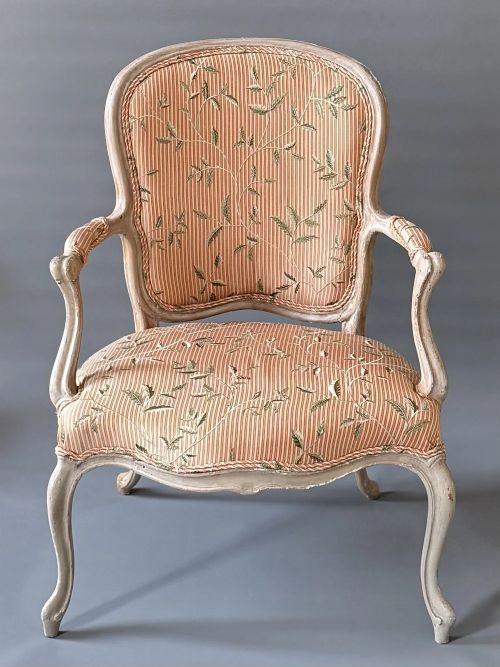
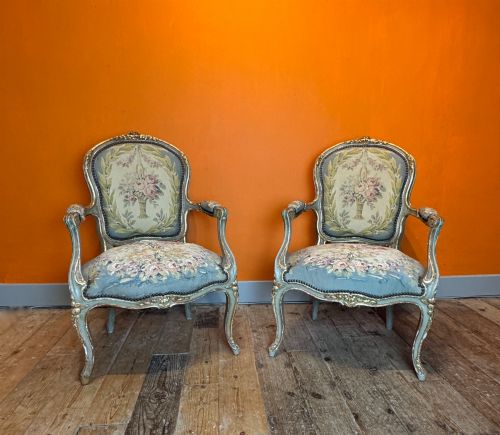
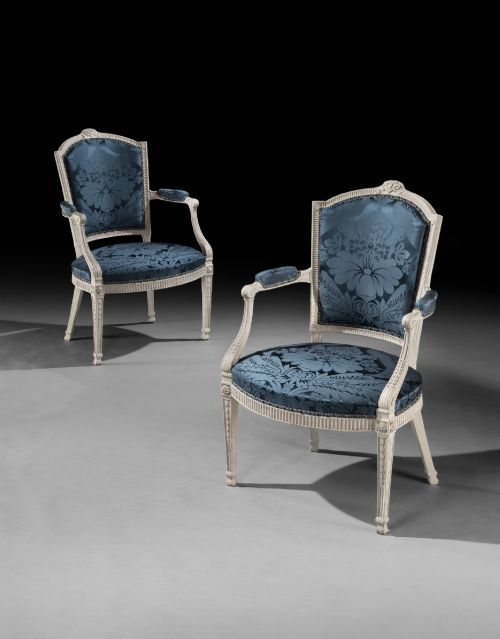
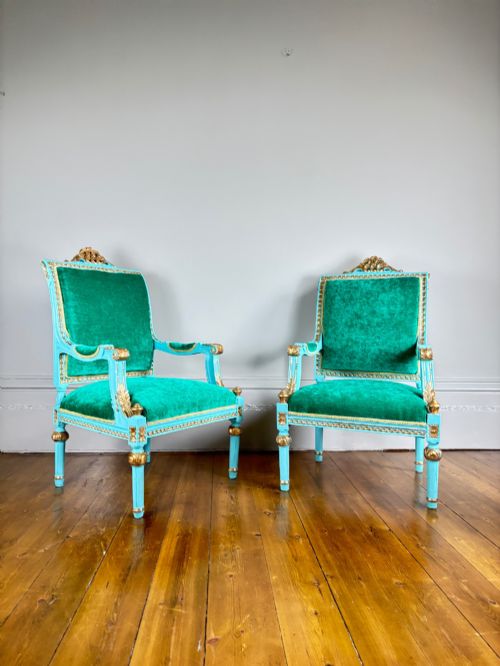
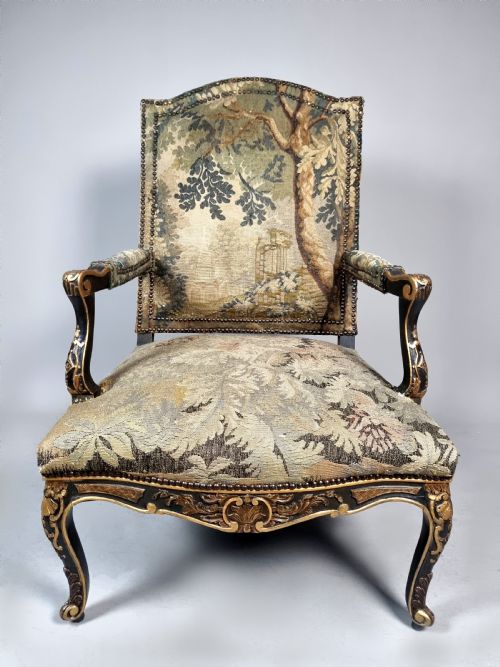
The majority of these chairs retain painted wooden frames, sometimes combined with parcel-gilt highlights or carved decoration. They serve equally as decorative salon seating and functional armchairs for domestic interiors.
Distinctions in quality
Quality rests in the precision of the carved wooden frame and the execution of the painted or parcel-gilt surface. Finer examples display crisp detail in the carving of the beech framework and harmonious integration of paintwork.
Upholstery choices also separate the range, with specialised textiles such as needlepoint, tapestry fabric, and buttoned upholstery indicating higher-tier execution compared to standard fabric coverings.
Retail Price Guide 2026
Typical UK retail prices for french painted armchairs, calculated from the Sellingantiques database of over a million retail prices indexed since 2003. This retail price guide relies exclusively on Sellingantiques data; no external sources or auction records are used, so the figures do not describe the wider market.
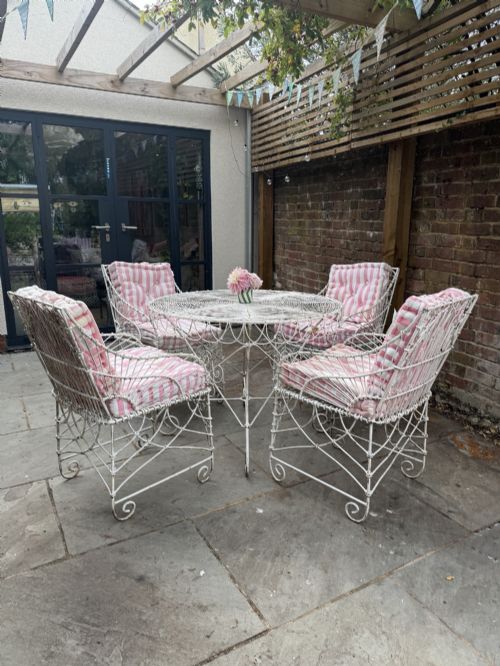
Among the formal wood and velvet ranks, a sturdy set of folding iron and wood armchairs stands ready for impromptu salon seating.
The French Painted Armchairs Glossary
- Fauteuil
- An open-arm armchair with an upholstered seat, back, and arm pads, typically featuring an exposed wooden frame. This form is common across nineteenth-century examples.
- Bergère
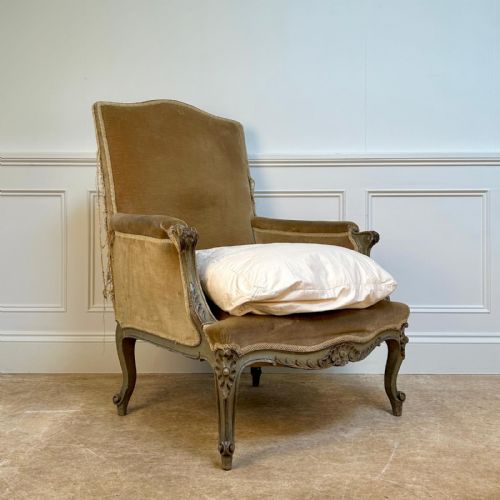
- An enclosed armchair with upholstered sides set into a wooden frame, often accompanied by a loose cushion. These chairs offer deeper seating than standard open armchairs.
- Giltwood
- Timber treated with gold leaf or metallic powder to create a gilded surface. This technique highlights carved details on the frame.
- Parcel-gilt
- A decorative finish where only specific raised portions of the painted wooden frame are gilded. This method contrasts gold highlights with the primary painted ground.
- Needlepoint
- Hand-stitched canvas embroidery utilised for chair upholstery. It provides a textured, durable surface often seen on period seating.
Frequently Asked Questions
What is a fauteuil?
A fauteuil is an open-armed French chair featuring an exposed wooden frame with upholstered arm pads, back, and seat.
These chairs were designed for formal salons and domestic sitting rooms during the eighteenth century and later revived.
How do I identify a bergere?
A bergère is distinguished by its enclosed upholstered sides, solid wooden frame, and a cushioned seat.
This enclosed design provides a deeper and more supportive sit than open-frame armchairs.
What is parcel gilt?
Parcel-gilt refers to a finish where select carved areas of a painted wooden frame are highlighted with gold leaf.
This technique adds depth and decorative contrast to the primary painted surface.
What woods were used?
Makers constructed the structural frames primarily using beech and beechwood, which accepted carved detail and paint finishes.
Some folding variations also incorporated iron alongside wood for added mechanical strength.
Which styles appear most?
The listings show a strong presence of Louis XVI and Louis XVI revival styles, alongside French Chateau influences.
These pieces reflect classical symmetry, straight tapered legs, and refined carved ornamentation.