
Vintage Open Armchairs
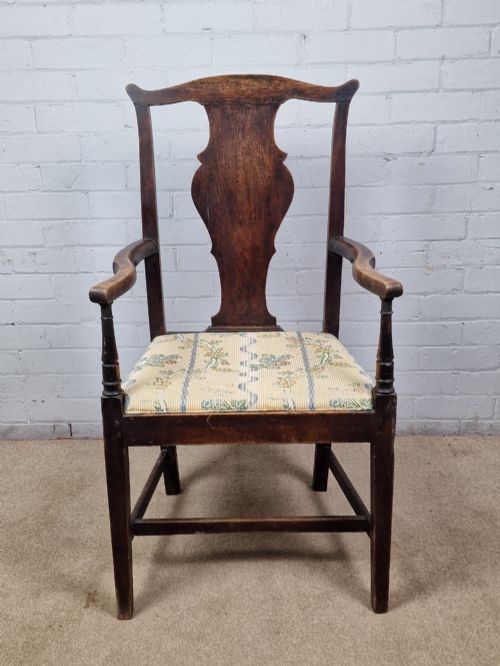
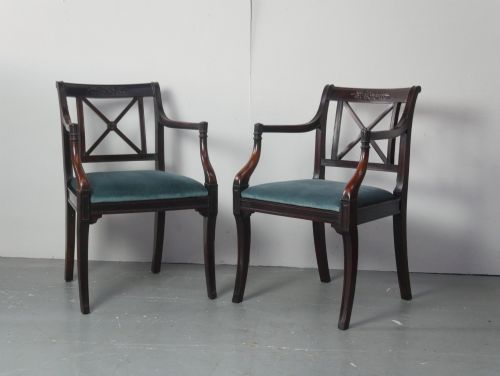
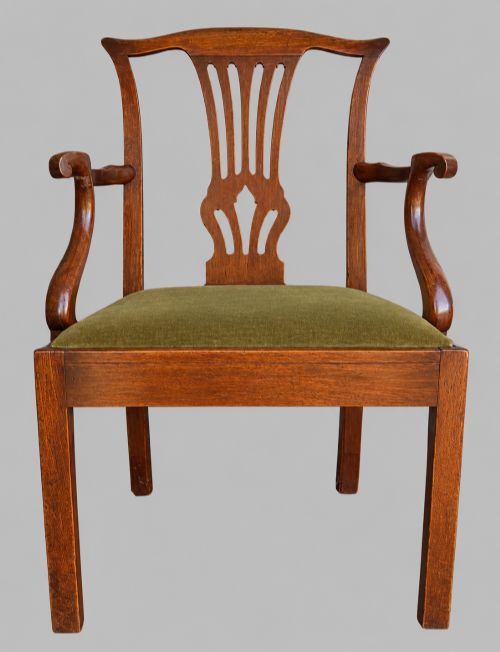
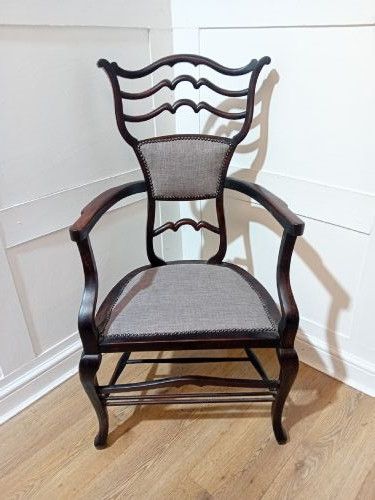
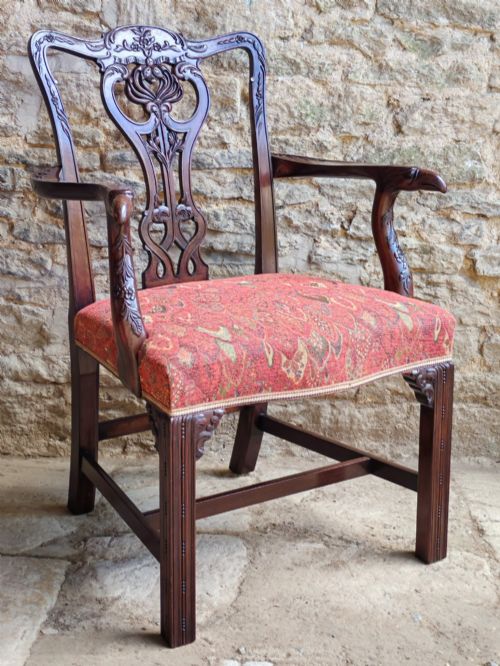
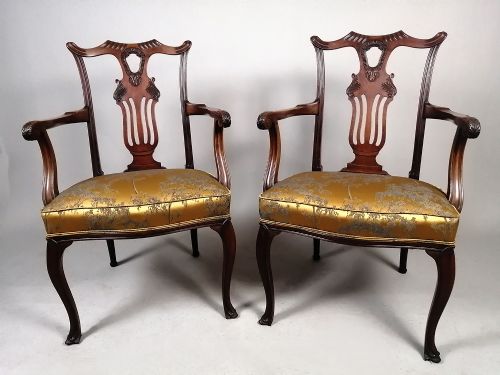
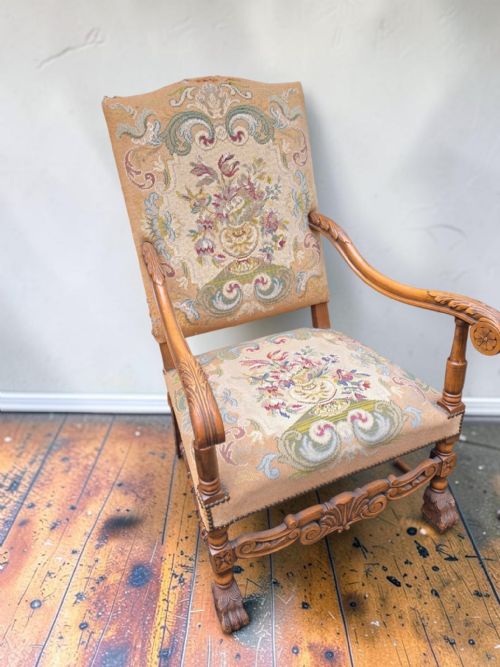
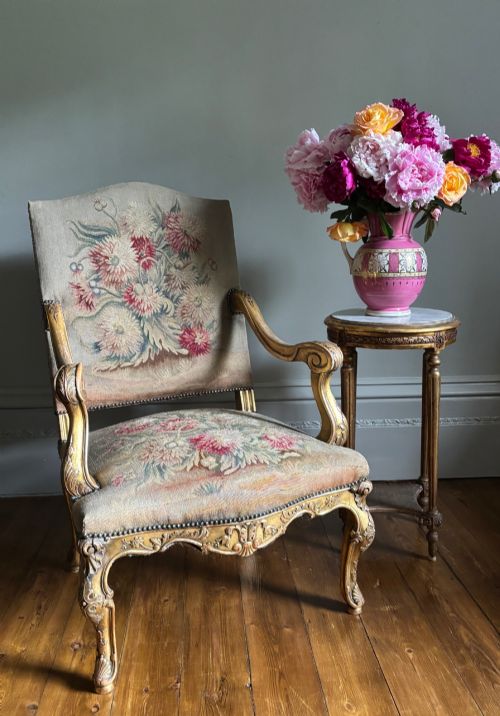
These vintage open armchairs span multiple periods from the eighteenth century through to the 1930s, offering structural timber frames paired with diverse textile covers.
Vintage Open Armchairs
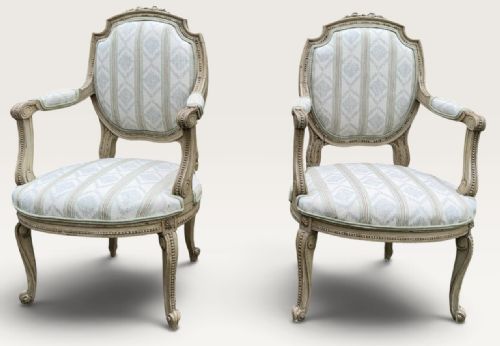
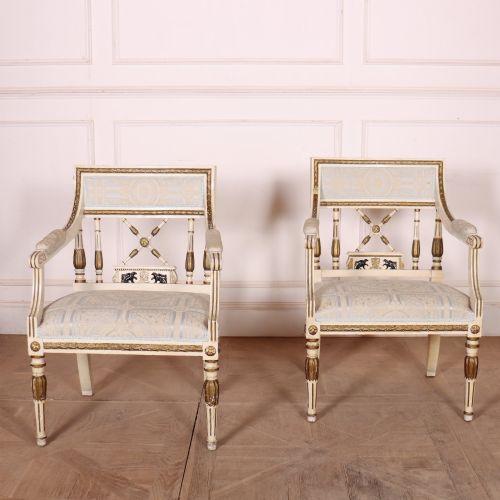
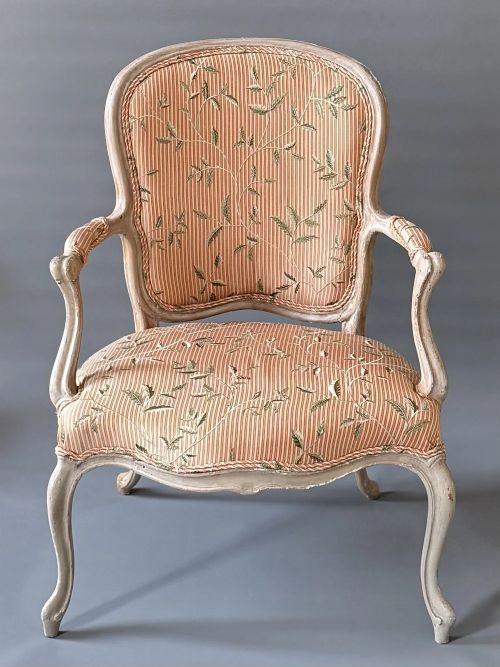
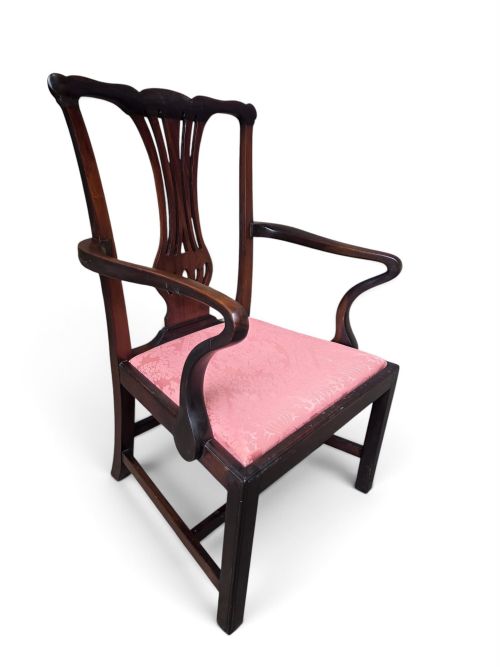
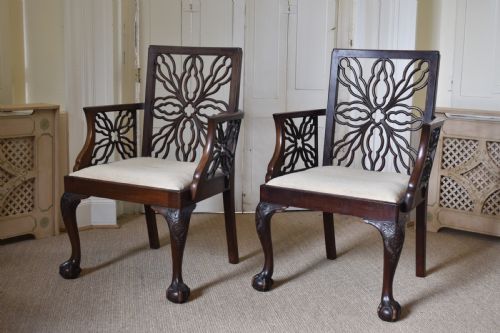
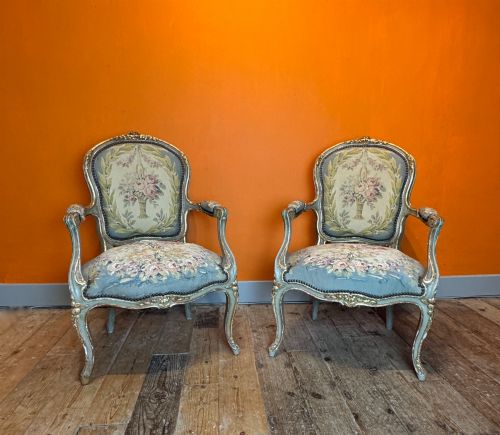
Vintage open armchairs encompass seating designed with exposed timber arms, crossing periods from the eighteenth century alongside Georgian, Victorian, and later revivals such as Edwardian, Regency, and French styles.
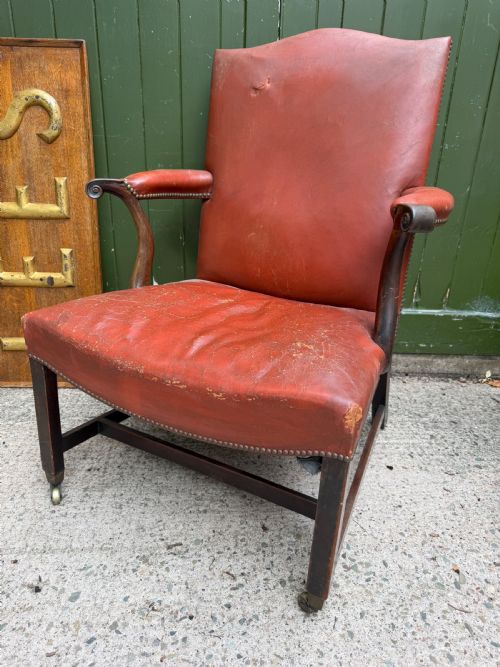
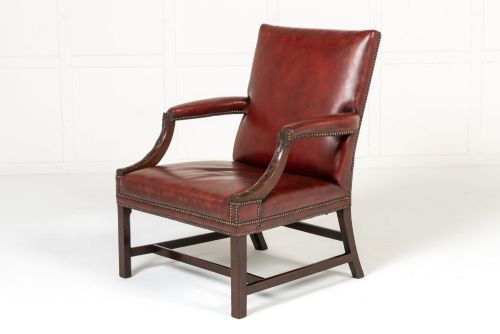
The selection here includes library armchairs, Gainsborough chairs, elbow chairs, and French fauteuils constructed in forms intended for desks, reading, and reception spaces.
Origins range across English, French, Swedish, and Anglo-Indian workshops, rendered in woods like mahogany, walnut, oak, and rosewood.
How they were made
Carpenters shaped structural frames from hardwoods including mahogany, walnut, oak, and rosewood, applying carved detail, blind fretwork, parcel gilding, or original painted finishes directly to the timber.
Upholstery techniques combined traditional webbing and stuffing with coverings in leather, velvet, silk tapestry, and printed fabric, secured with brass tacks or piping.
Listings feature timbers including mahogany, walnut, oak, and rosewood alongside upholstery in leather, velvet, and tapestry.
What varies in quality
The standard of carving defines the distinction between simpler production pieces and finely detailed workshop items, seen in the crispness of acanthus leaves, scrollwork, and gilded surfaces.
Timber selection and frame integrity dictate longevity, where dense mahogany or walnut retains stability better than softer woods, and original upholstery materials preserve historical character.
Howard and Sons·Gillows·Edward Barnsley·Mellier and Co
The Vintage Open Armchairs Glossary
- Gainsborough chair
- A wide, upholstered armchair with open padded arms, short cabriole or square legs, and a low seat designed during the eighteenth century for writing desks or libraries.
- Fauteuil
- An open-armed wooden armchair of French origin featuring exposed carved framework and upholstered back and seat panels.
- Elbow chair
- A seating piece with supportive armrests branching from the sides, historically positioned at the head of a dining table or utilised as a desk chair.
- Parcel gilt
- A decorative treatment where portions of a wooden or gesso frame are selectively covered in gold leaf while the underlying paint or timber remains visible.
- Blind carving
- Relief carving applied across a flush wooden surface without protruding mouldings, frequently associated with mid-eighteenth-century Chippendale furniture.
Vintage Open Armchairs: Frequently Asked Questions
How do I identify a Gainsborough chair?
A Gainsborough chair is characterised by an open-armed timber frame enclosing an upholstered seat and back, standing on straight or cabriole legs.
These pieces typically date from the eighteenth century or later revival periods and were built primarily for library or desk use.
How should I care for antique leather upholstery?
Historic leather requires gentle dusting and occasional specialist nourishment to prevent drying and cracking across the surface.
Original hand-dyed hides benefit from minimal intervention to preserve their existing patina and colour.
Are French revival armchairs different from original pieces?
Revival items produced during the Victorian or Edwardian eras replicate earlier Louis XVI, Regence, or Directoire aesthetics using period-specific machinery and timber.
Examining the internal construction and wood ageing helps distinguish eighteenth-century originals from nineteenth-century interpretations.