

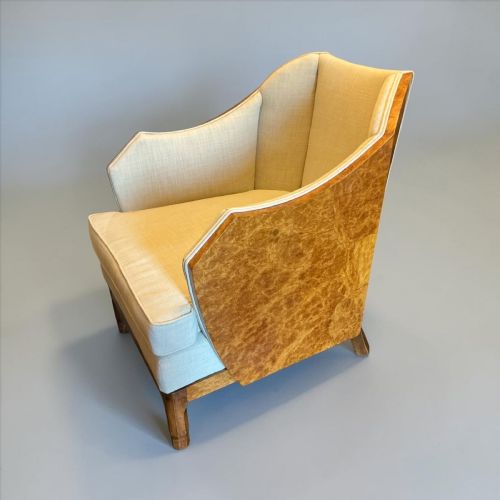
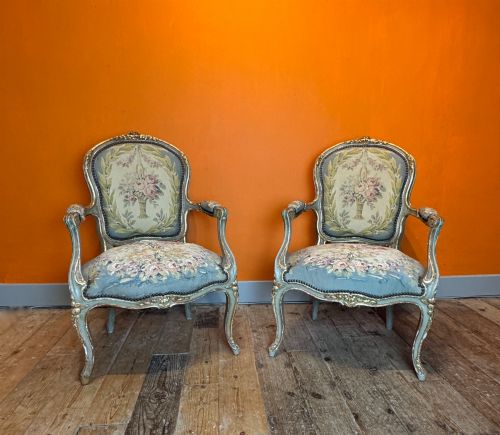
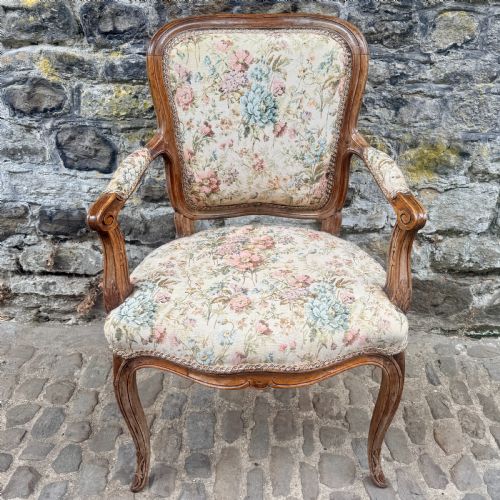
French Carved Armchairs
French carved armchairs bring formal nineteenth and early twentieth century seating into a room with shaped timber frames and upholstered comfort.
How they were made
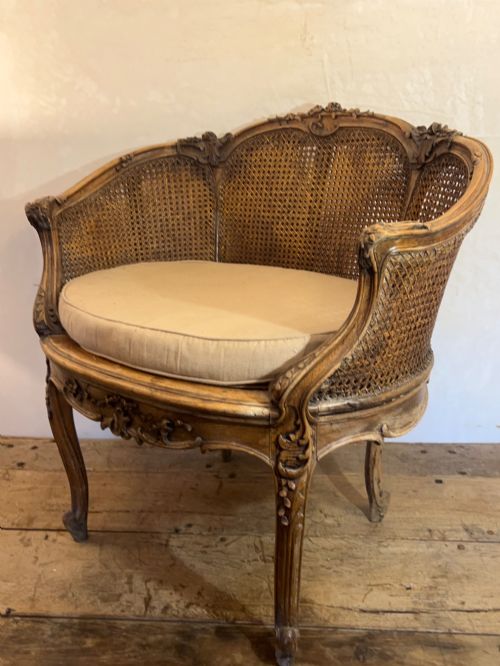
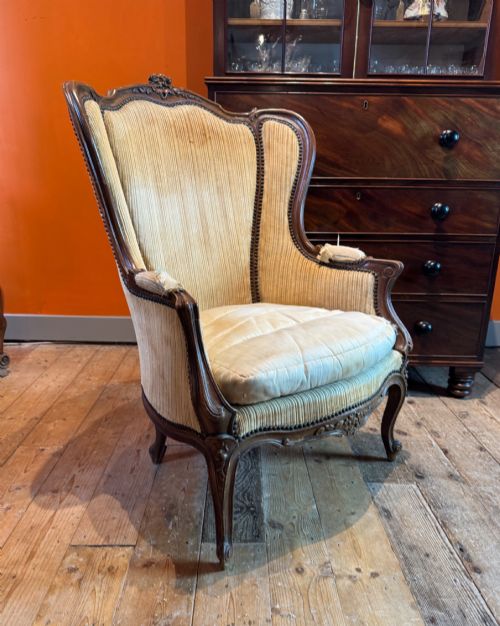
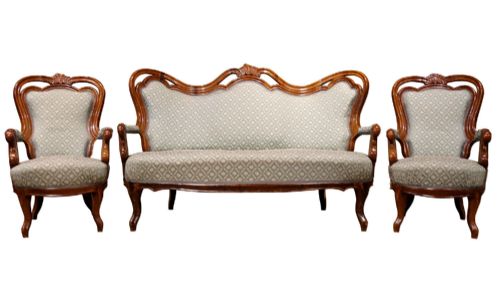
Craftsmen shaped solid timbers like walnut, beech, oak, and mahogany into curved structural frames using traditional joinery. Hand carving defined the foliage, scrollwork, and decorative motifs along the crest rails and cabriole legs.
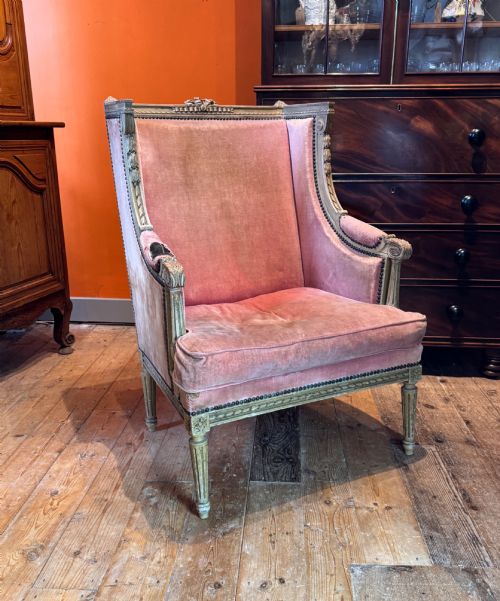
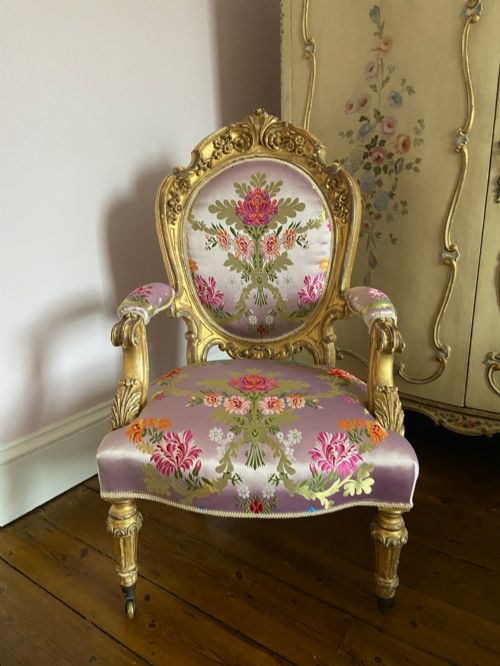
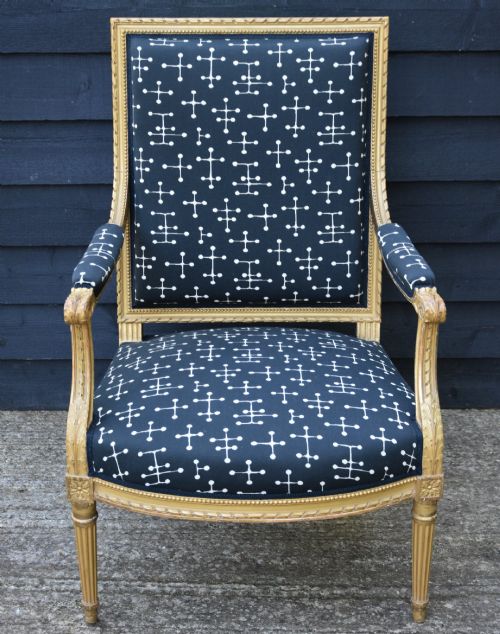
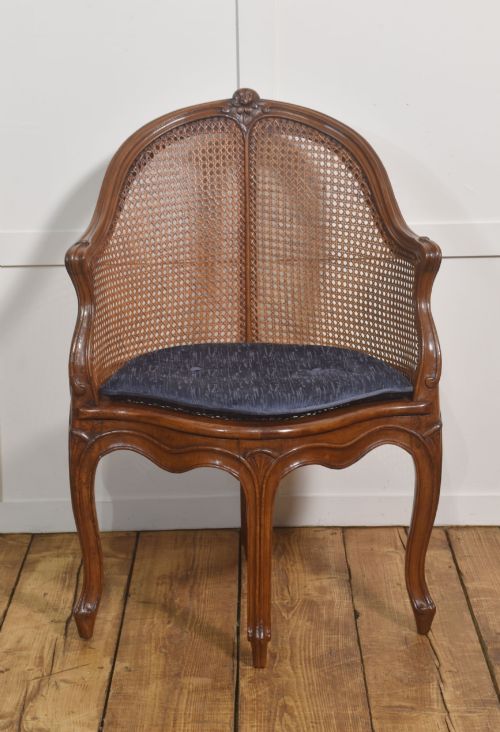
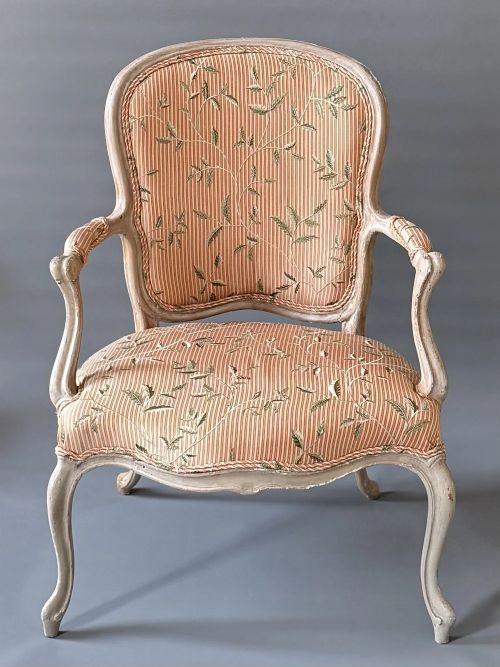
Frames received various surface finishes, including gilding, paint, or polished timber. Upholstery materials such as velvet, damask, tapestry, cane, and plain fabric were secured over traditional padding.
What varies in quality
Depth and crispness of the hand carving distinguish finer frames from simpler production. The definition in floral motifs and scrolls shows the carver's skill.
Choice of primary wood and the execution of gilding or painted finishes affect the overall presence. Solid walnut and well-preserved giltwood sit at the upper end of the scale.
Retail Price Guide 2026
Typical UK retail prices for french carved armchairs, calculated from the Sellingantiques database of over a million retail prices indexed since 2003. This retail price guide relies exclusively on Sellingantiques data; no external sources or auction records are used, so the figures do not describe the wider market.
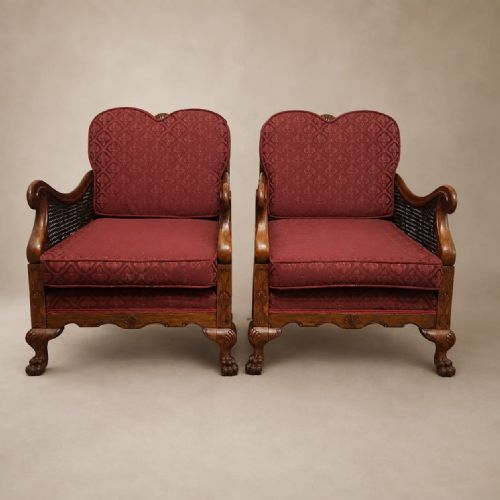
Upholstery choices across these listings include velvet, red damask, tapestry, cane, and plain fabric.
The French Carved Armchairs Glossary
- Fauteuil
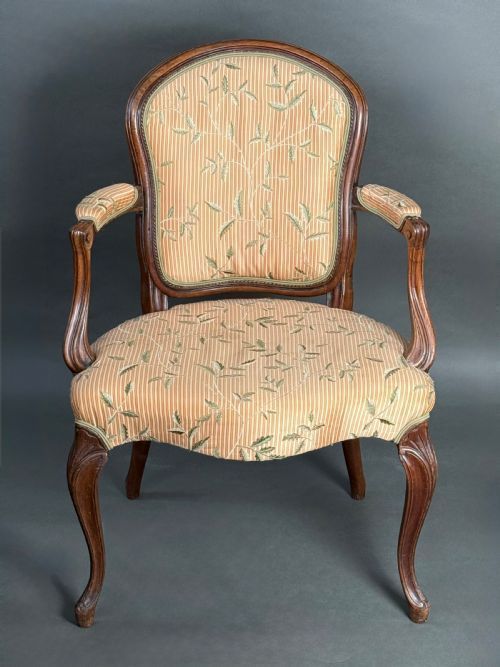
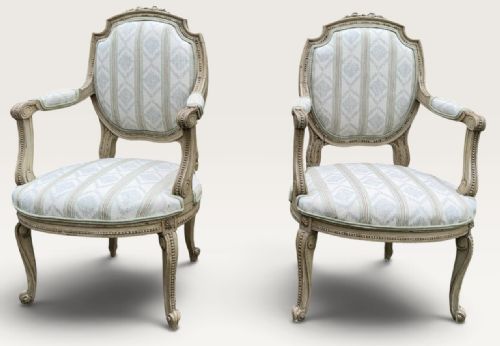
- An open-arm armchair with upholstered seat and back, developed in France during the eighteenth century. The wooden arms typically end in carved scrolls.
- Bergere
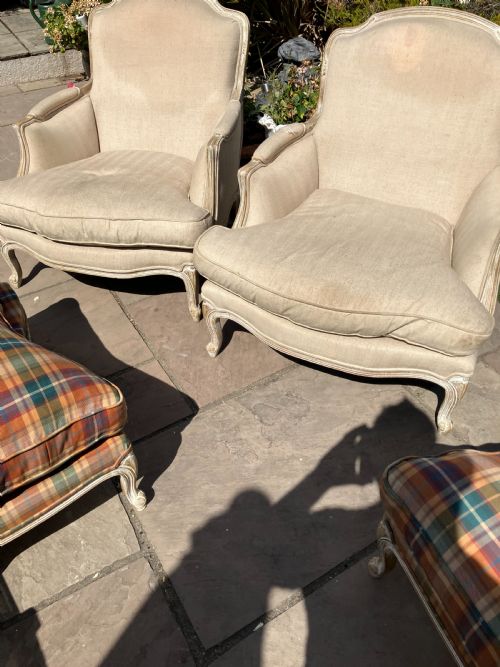
- A closed-arm armchair featuring an upholstered back and sides enclosing a loose seat cushion. These often include padded armrests.
- Giltwood
- Timber coated with a thin layer of gold leaf or gilt finish. This surface treatment appears frequently on formal revival salon chairs.
- Cabriole leg
- A furniture leg that curves outward at the knee and tapers inward toward the foot. This form is common on Louis XV style seating.
Frequently Asked Questions
How do I clean the wood frame?
Dust timber and gilt surfaces regularly with a dry, soft cloth to prevent buildup. Avoid chemical polishes that can damage historic finishes or gilding.
For stubborn marks, consult a professional restorer rather than using household cleaning products.
Are these chairs comfortable for daily use?
Many examples provide deep seating and supportive upholstered backs. Their suitability depends on the firmness of the internal padding.
Some period pieces suit occasional sitting in a drawing room better than heavy daily lounging.
What is a bergere armchair?
A bergere is a French armchair style featuring solid upholstered sides and back. It usually includes a loose, down-filled seat cushion.
This enclosed design offers a more secure and enveloping seat than an open-arm fauteuil.