

Victorian Armchair with Castors
A victorian armchair with castors is a sprung seat built for ease of movement, uniting solid timber frames with upholstered comfort.
Victorian Armchair with Castors
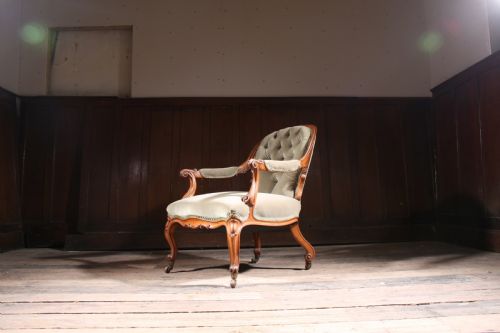
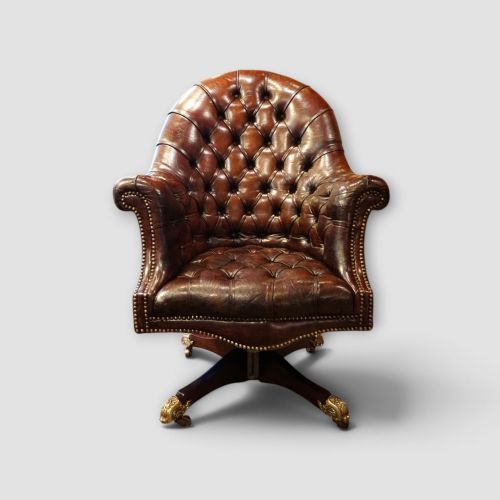
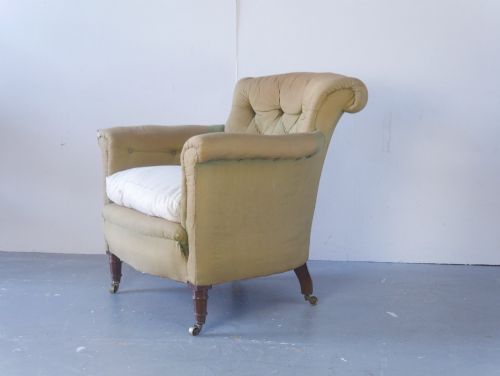
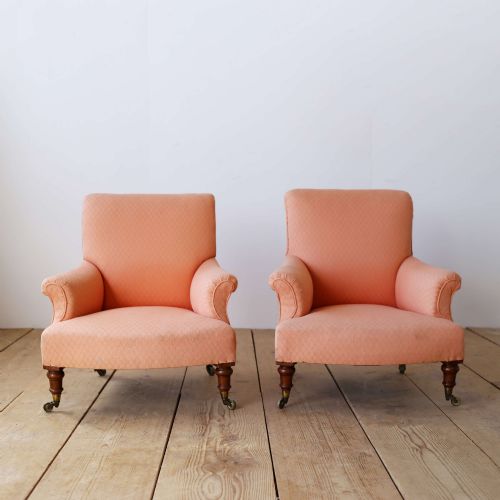
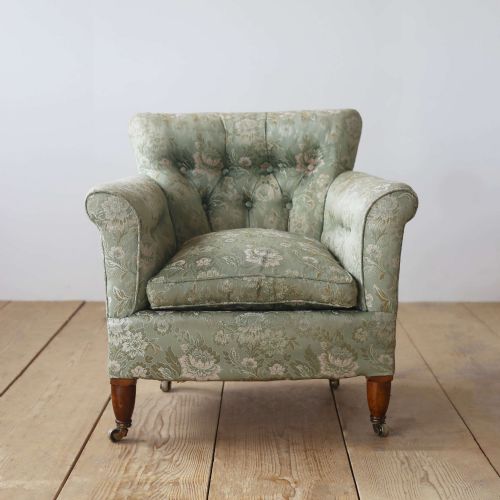
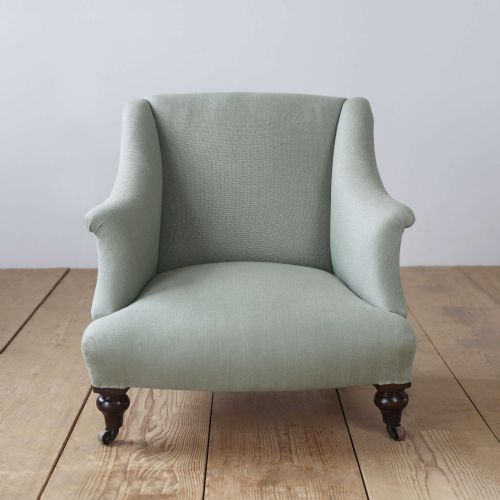
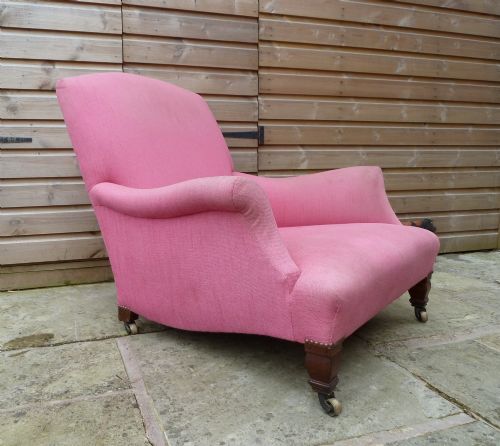
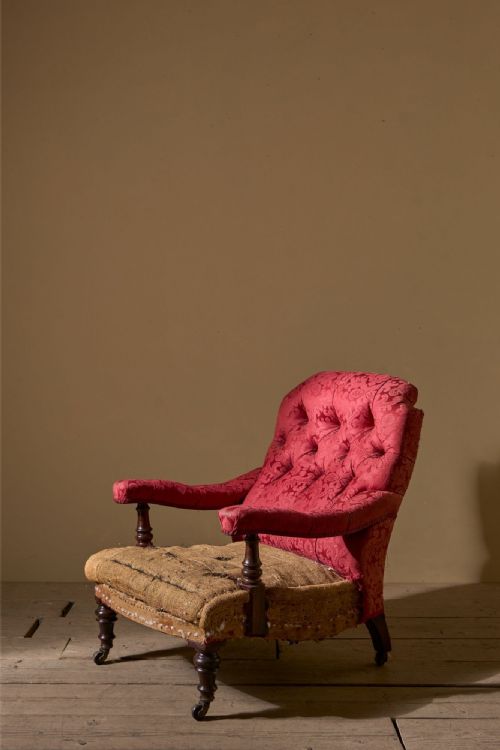
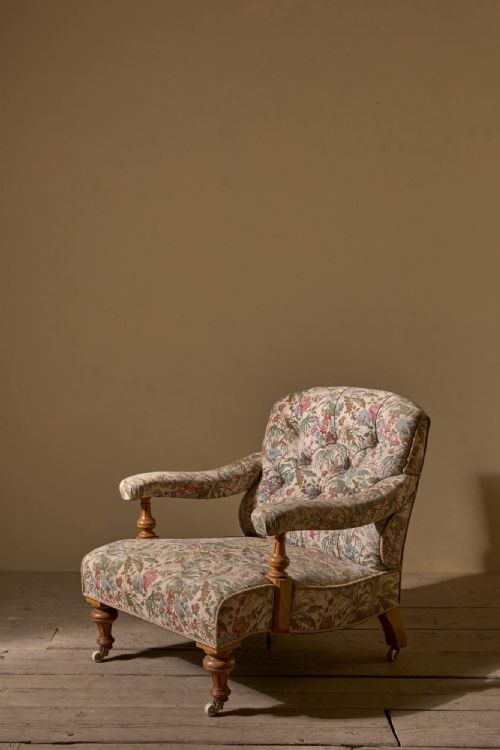
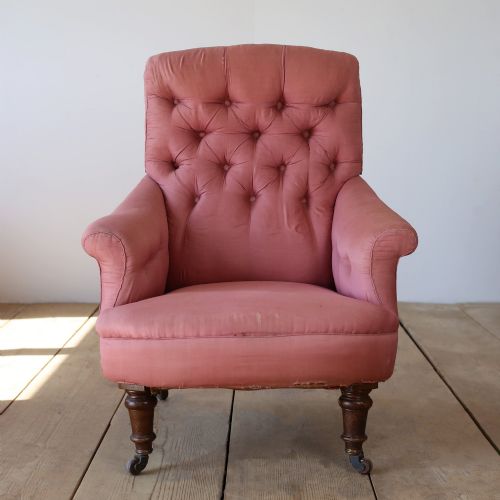
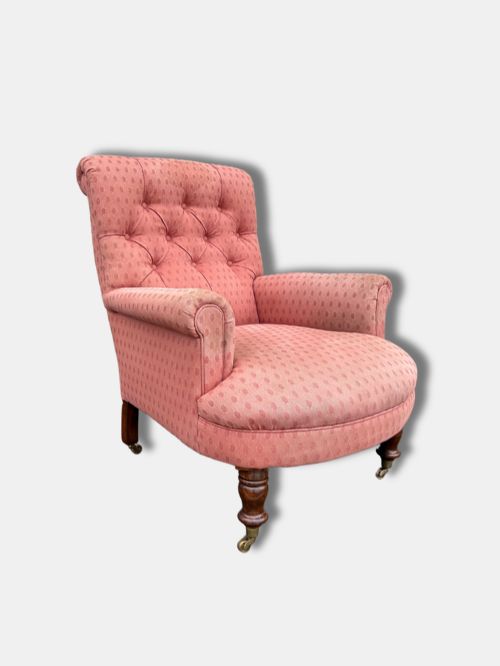
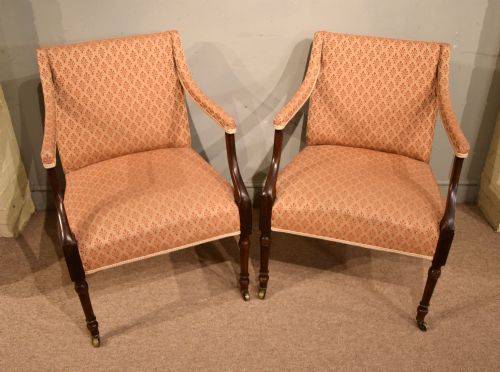
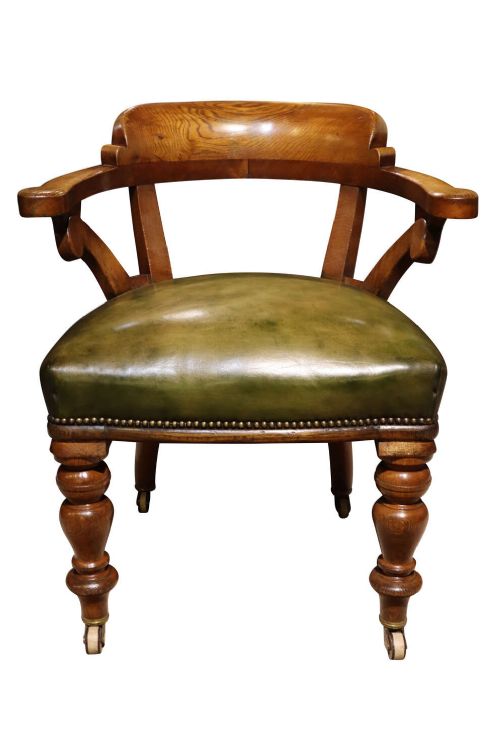
When you search for a victorian armchair with castors, you find nineteenth-century seating designed for sitting rooms, studies and libraries. The selection spans open armchairs, button-backed drawing room pieces and substantial library chairs resting on small metal wheels.
Most examples hail from the Victorian era, alongside related styles from the Edwardian period, William IV and Regency years. Woods such as mahogany, walnut and oak form the structural frames, often paired with brass castors on the feet.
You will encounter comfortable lounge forms, low slipper chairs, desk chairs and oversized club styles. Many rely on deep cushioning and upholstered backs, while others showcase carved showwood frames.
How they were made
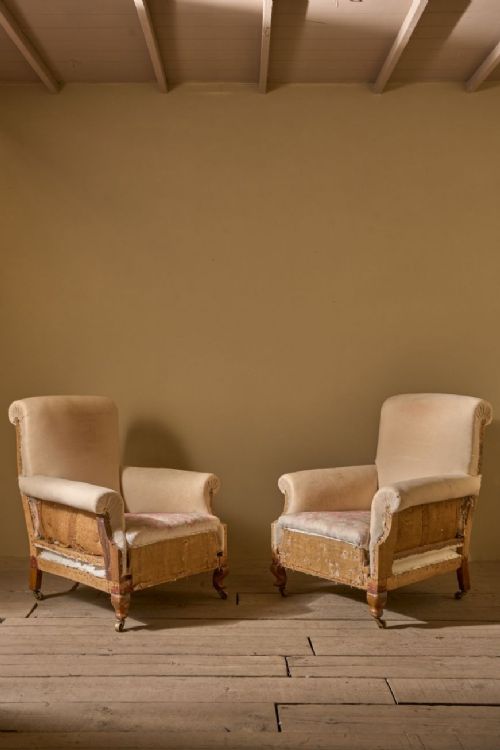
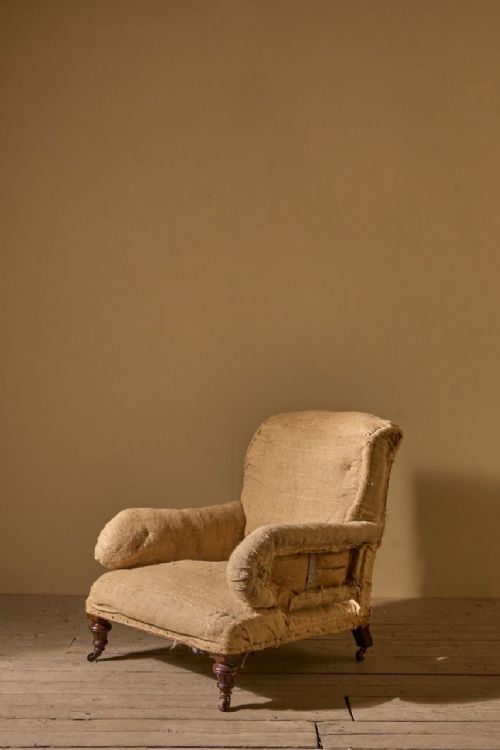
Frames take shape from dense hardwoods including mahogany, walnut, oak and rosewood, carved or turned into structural legs and arms. These timbers provide the rigid skeleton required to support internal springs and deep padding.
Upholstery uses traditional stuffing enclosed in textiles such as velvet, cotton, needlework, leather and Kilim. Brass castors are fitted to the base of the legs to allow smooth rolling across carpets and floorboards.
Some oak chairs retain their low profile for watching past sporting spectacles.
What varies in quality
The standard of craftsmanship shows in the carving of the wooden frame and the precision of the joinery. Superior examples maintain firm structural integrity, while lesser pieces suffer from loose joints or replaced components.
Original upholstery materials and maker stamps elevate a piece, whereas modern recovered fabrics alter the historic character. The weight and finish of the brass castors also signal the grade of the original commission.
Howard And Sons·James Shoolbred·J.Mills·William Birch
The Victorian Armchair with Castors Glossary
- Castor
- A small wheel mounted on a swivel assembly at the foot of a leg. It allows heavy armchairs to be repositioned easily across a room.
- Button back
- An upholstery technique where depressions are formed in the padding by stitching through to the frame. This secures the filling and creates a patterned grid of tufts.
- Showwood
- Timber framework left visible around the upholstered sections of a chair. It highlights the grain and polish of woods like walnut or mahogany.
- Bergere
- An upholstered armchair with enclosed cane or upholstered sides and back. It offers a lighter profile while maintaining seating comfort.
- Cockfighting chair
- A low, specialised seat with a narrow back designed originally for spectators. Users straddled the seat facing backward during matches.
Victorian Armchair with Castors: Frequently Asked Questions
What is a Victorian armchair with castors?
These are nineteenth-century upholstered seats built on timber frames with small wheels attached to the feet for mobility.
They appear in forms ranging from low slipper chairs to large library armchairs.
How were these armchairs used?
They served as comfortable seating in drawing rooms, studies, libraries and bedrooms for reading or resting.
The castors allowed people to shift the heavy chairs closer to firesides or reading tables.
How do I care for leather upholstery?
Leather surfaces benefit from regular dusting and occasional conditioning to prevent the hide from drying out.
Keep them away from direct sunlight and heat sources to preserve the original material.
How can I tell the period?
Dating relies on timber choices, leg turning styles, upholstery methods and construction details.
Matching design traits to Victorian, Regency or Edwardian conventions helps narrow the era.