
Mahogany Turned Leg Armchair
A mahogany turned leg armchair offers substantial Victorian seating, combining rich timber frames with versatile upholstered forms.
What these armchairs are
A mahogany turned leg armchair brings together robust Victorian seating and distinctive wooden supports. These pieces appear across the nineteenth century, spanning decades from eighteen fifty to eighteen ninety.
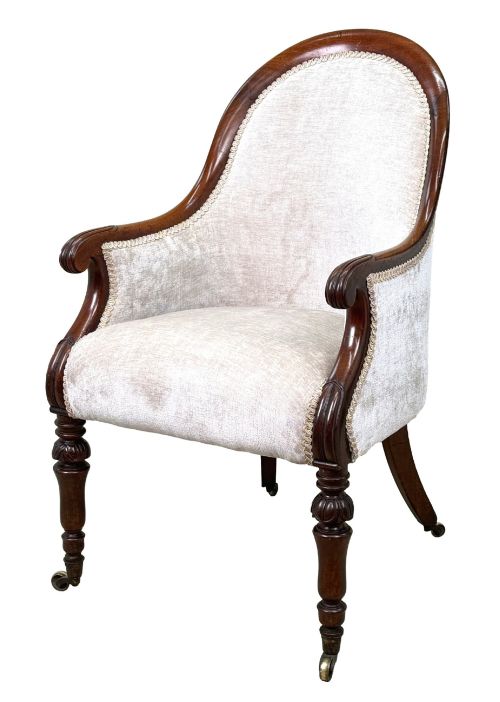
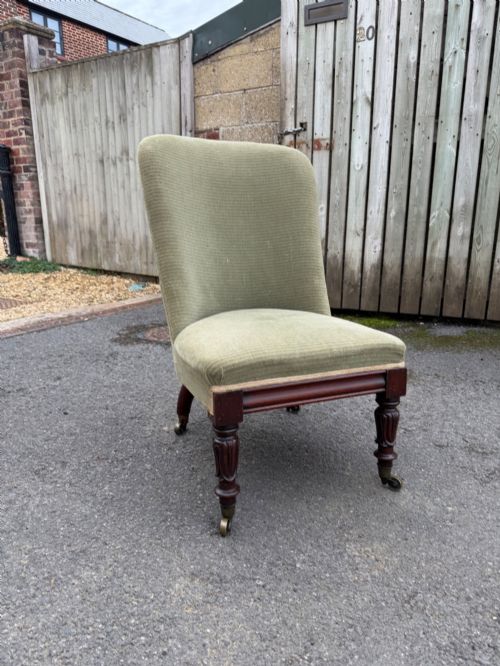
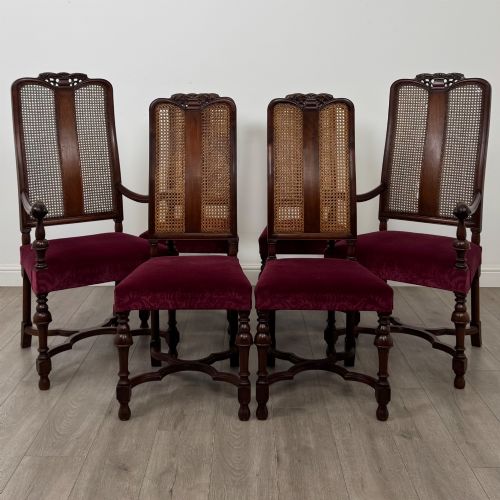
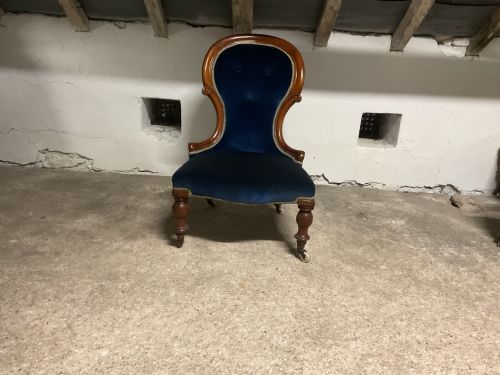
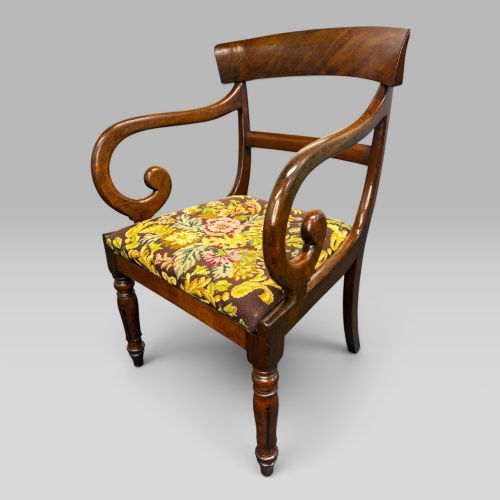
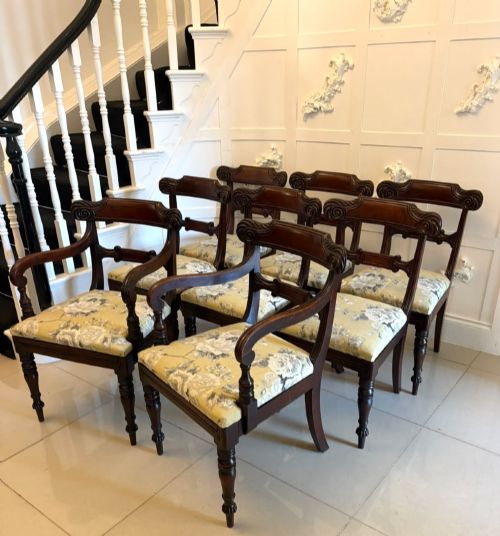
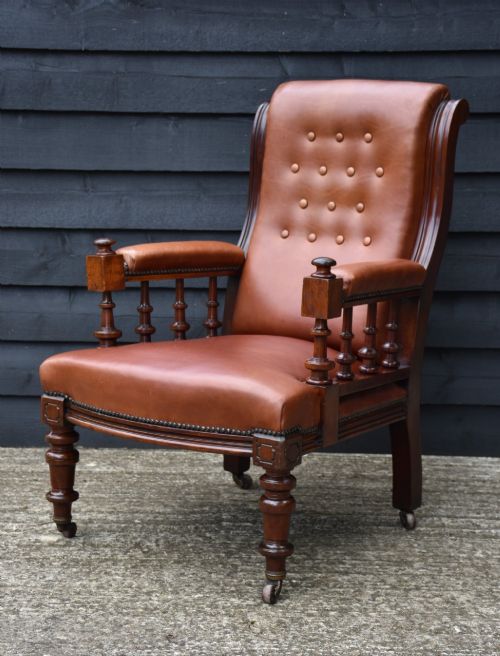
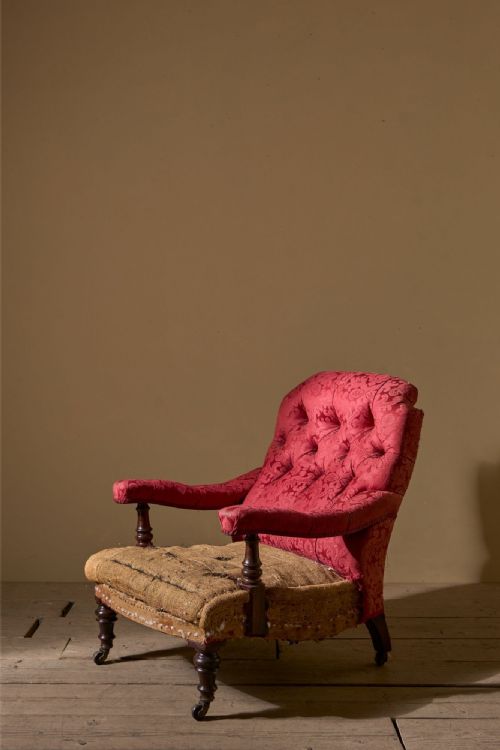
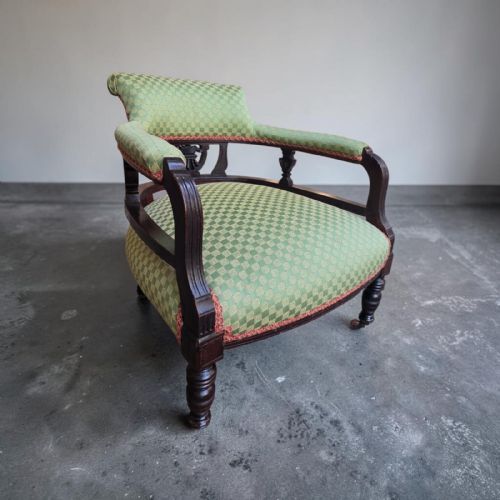
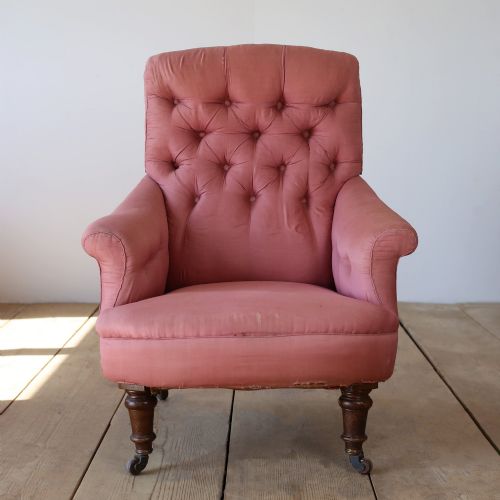
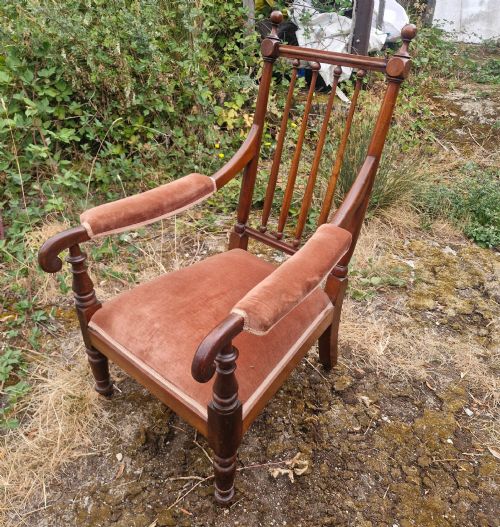
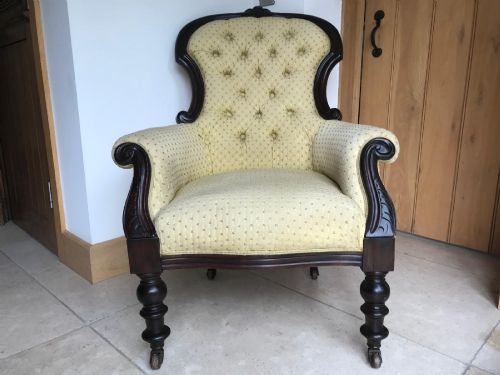
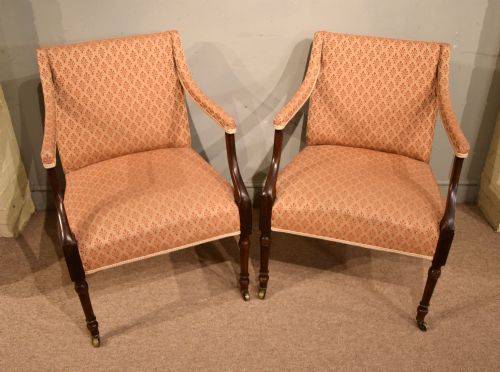
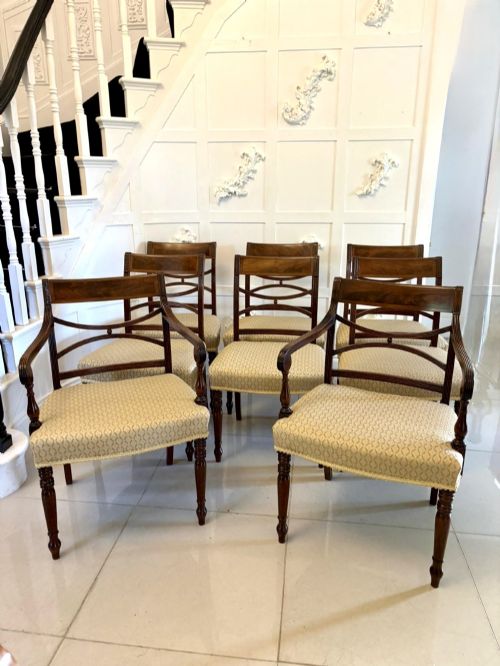
The selections include generous English arm chairs, gentleman's gaming chairs, library models, and button back designs. Many examples feature exposed turned front legs paired with upholstered backs and arms.
Makers such as Howard and Sons, James Shoolbred, and William Birch appear in the records alongside general nineteenth-century English workshop production. Buyers encounter both compact reading chairs and expansive winged or barrel back forms.
How they were made
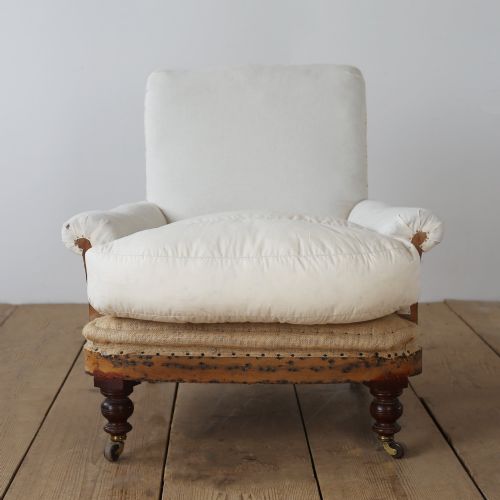
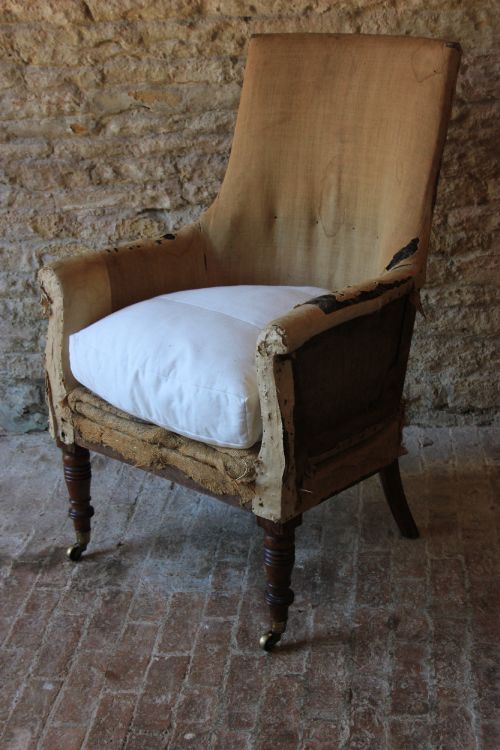
Frames are constructed from solid mahogany, shaped with turned wooden legs that often terminate in brass cappings and castors. Joinery techniques of the nineteenth century secure the heavy timber structures underneath the upholstery.
Upholstery materials recorded in the evidence include cotton, velvet, leather, red morocco leather, cotton calico, and ivory fabric. Interiors incorporate sprung elements, down sack backs, and deep buttoning.
Makers finished their chairs with diverse top covers, ranging from plain fabrics to branded manufacturer linings. Metalwork components like brass castors facilitate movement beneath the heavy mahogany frames.
Retail Price Guide 2026
Typical UK retail prices for mahogany turned leg armchair, calculated from the Sellingantiques database of over a million retail prices indexed since 2003. This retail price guide relies exclusively on Sellingantiques data; no external sources or auction records are used, so the figures do not describe the wider market.
Listings show materials including mahogany, brass, fabric, cotton, velvet, leather, and cotton calico across Victorian periods.
What varies in quality
The distinction between standard nineteenth-century production and premier workshop output rests in the attribution to makers like Howard and Sons or William Birch. Documented maker stamps and original upholstery linings elevate historical significance.
Material selection dictates the tactile experience, shifting from standard cotton calico to luxury red morocco leather or velvet. The precision of the turned mahogany legs and the integration of brass castors reveal workshop skill.
Howard and Sons·James Shoolbred·William Birch
The Mahogany Turned Leg Armchair Glossary
- Mahogany
- A durable hardwood utilised for the structural frames and exposed turned legs of nineteenth-century seating.
- Turned leg
- A wooden support shaped on a lathe to create cylindrical or decorative profiles.
- Button back
- An upholstery style where depressions are formed by pulling stitches deep into the padding.
- Morocco leather
- A fine goatskin leather used for upholstery, noted for its textured grain.
- Castor
- A small wheel mounted on a swivel assembly attached to the base of each leg for mobility.
Frequently Asked Questions
What periods do these armchairs date from?
The pieces span the nineteenth century, with specific dates pointing to eighteen fifty, eighteen eighty, and circa eighteen ninety.
Victorian manufacturing dominates the records, showing consistent use of mahogany frames and turned leg designs throughout this era.
How do I identify a maker?
Makers like Howard and Sons or William Birch often marked their frames, castors, or top covers.
Archival listings show specific maker attributions tied to particular upholstery styles and nineteenth-century workshop practices.
What upholstery materials were used?
Original coverings include cotton, velvet, ivory fabric, cotton calico, and red morocco leather.
Interiors frequently feature down sack backs, deep buttoning, and traditional sprung padding.
Are the legs always made of mahogany?
The exposed turned front legs and primary frames utilise mahogany across the recorded nineteenth-century examples.
Additional metal components such as brass cappings and castors frequently accompany the turned wooden feet.