

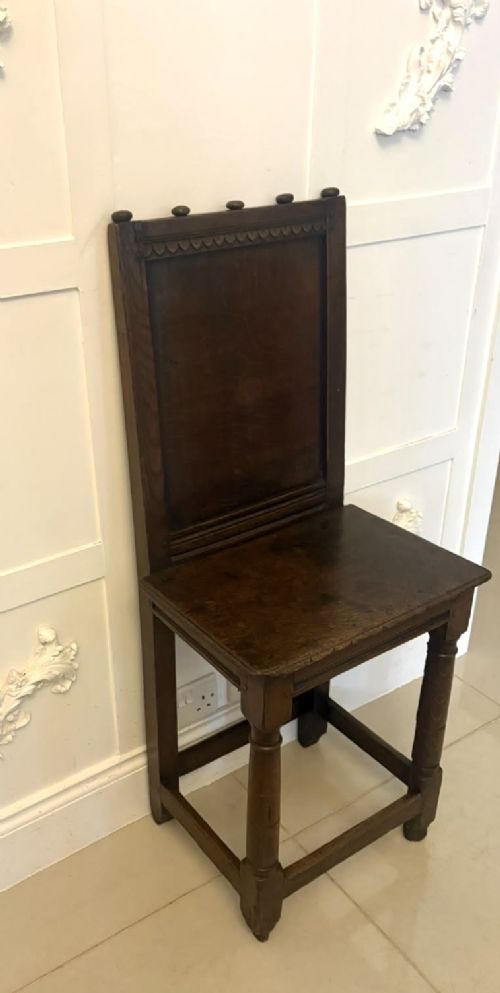
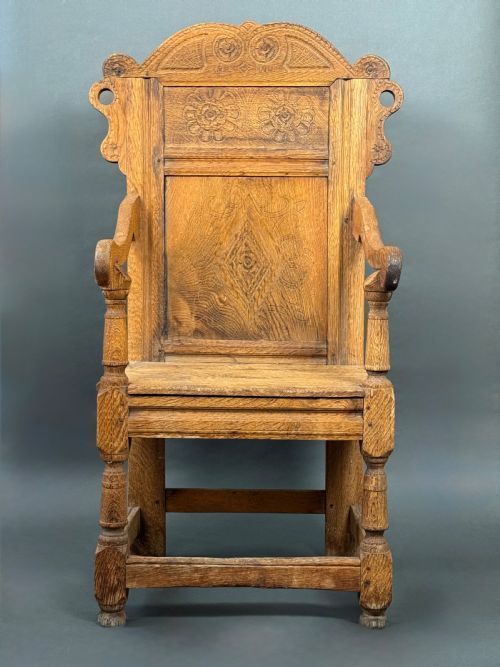
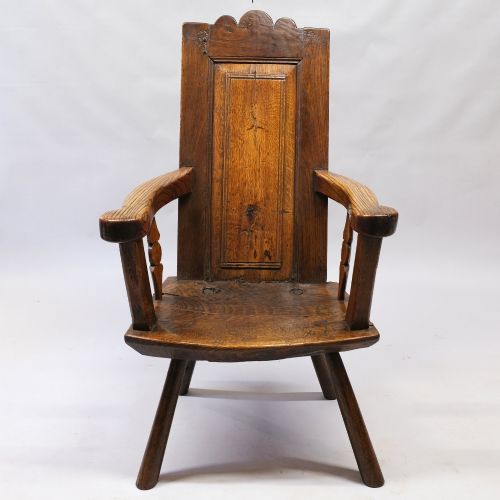
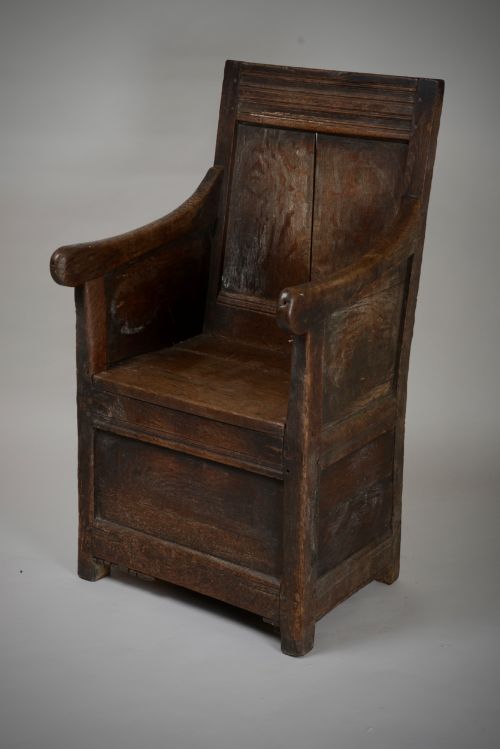
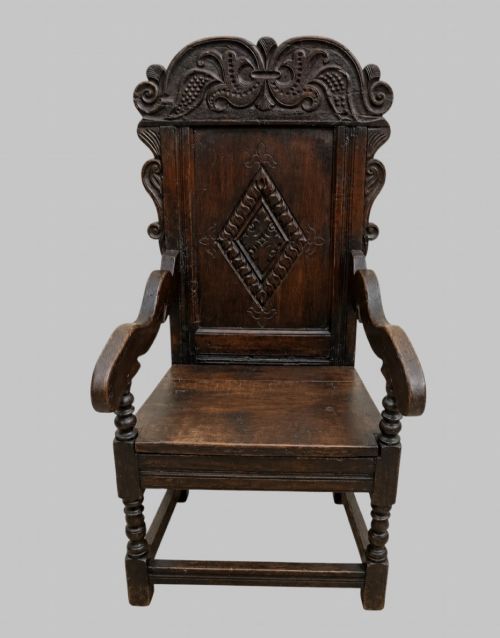
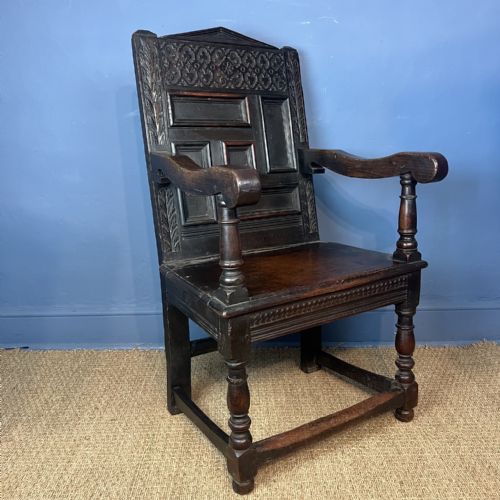


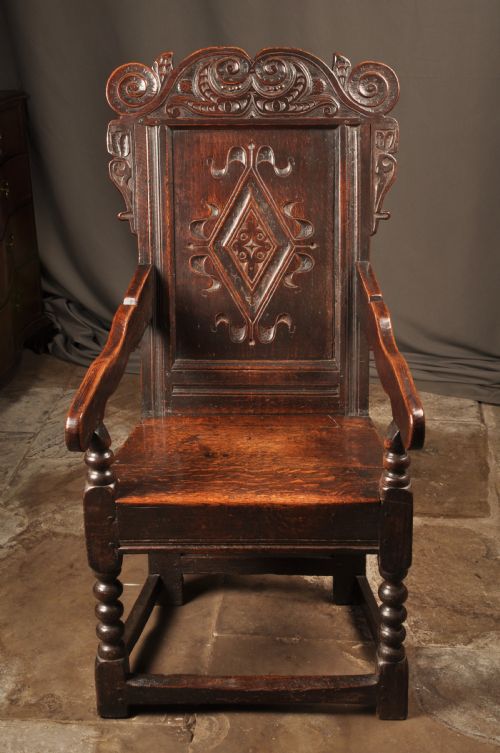
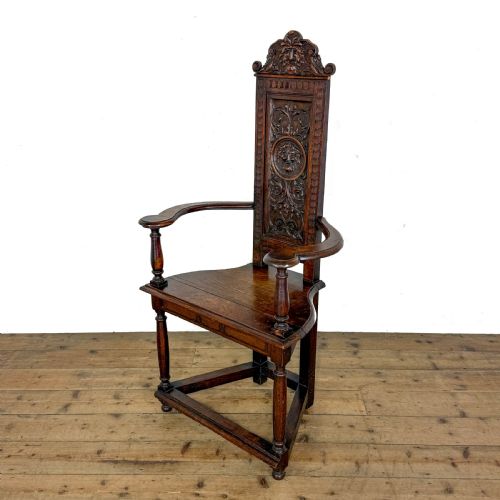
Brown Oak Wainscot Chair
A brown oak wainscot chair offers solid timber construction and panelled backs, anchoring an interior with seventeenth-century character.
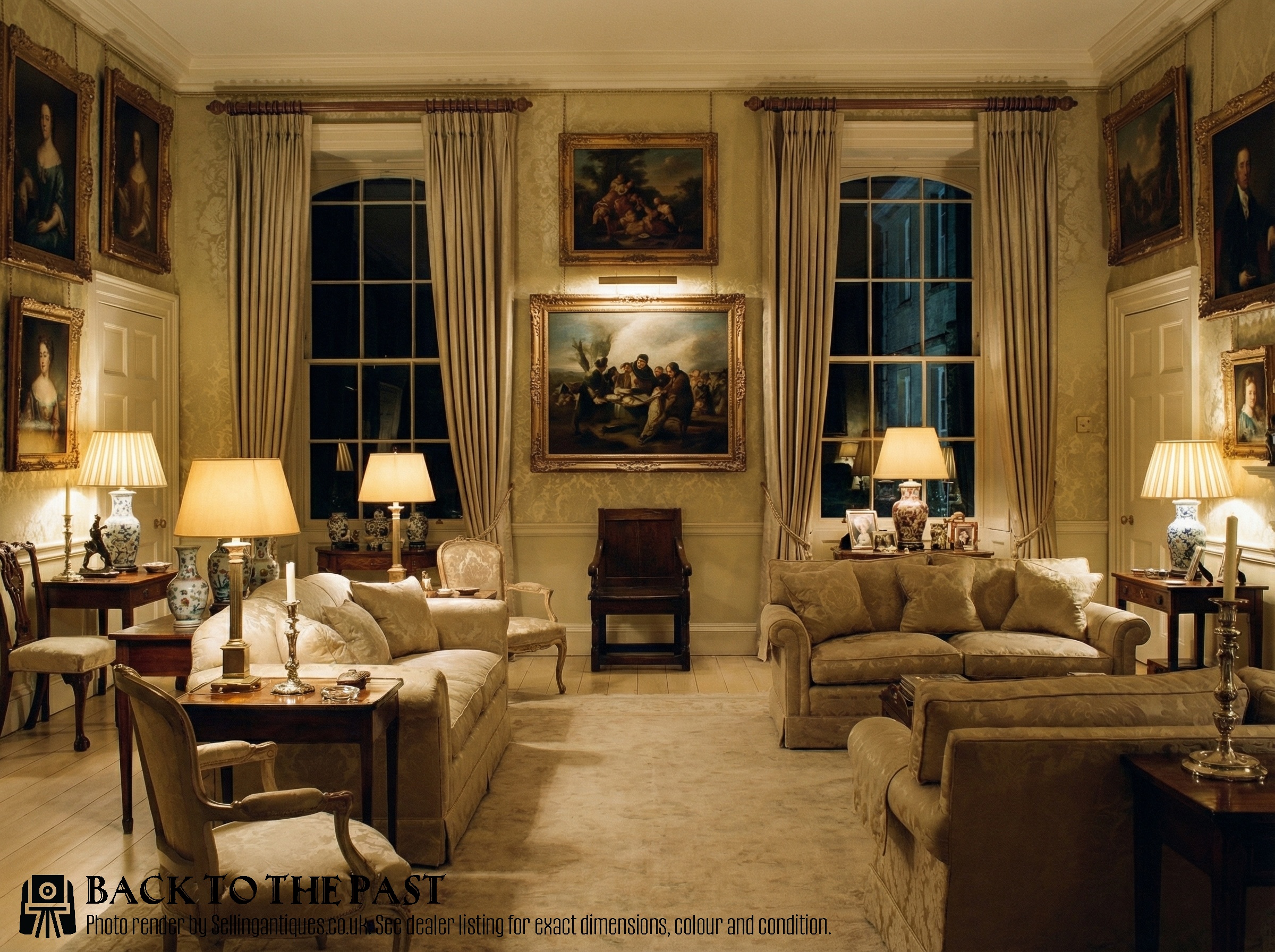
Brown Oak Wainscot Chair
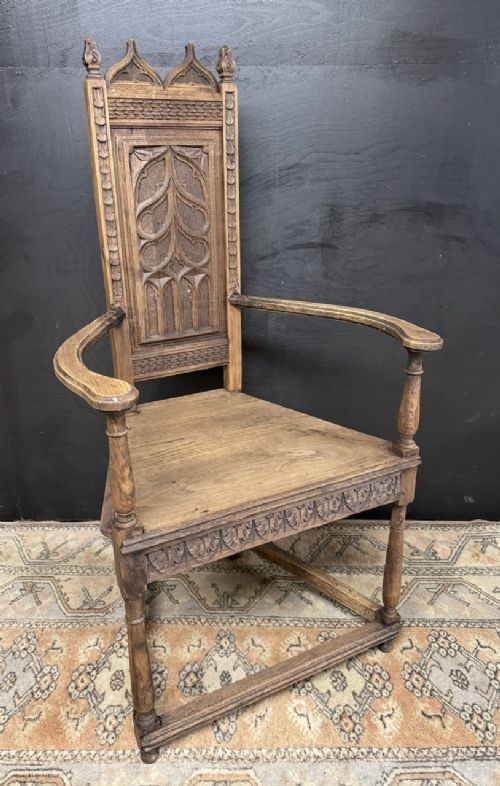
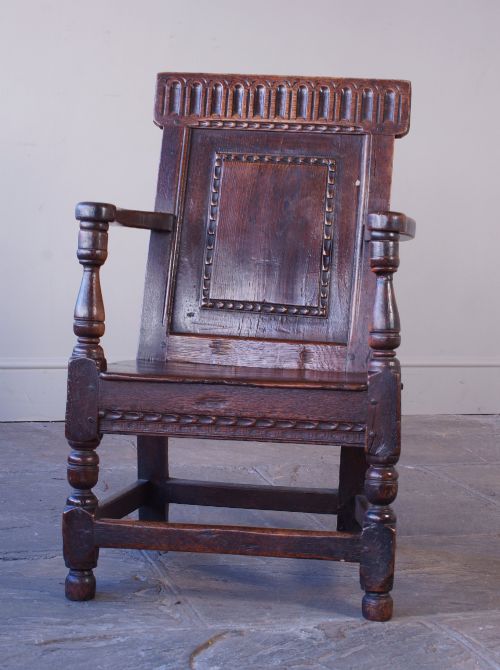
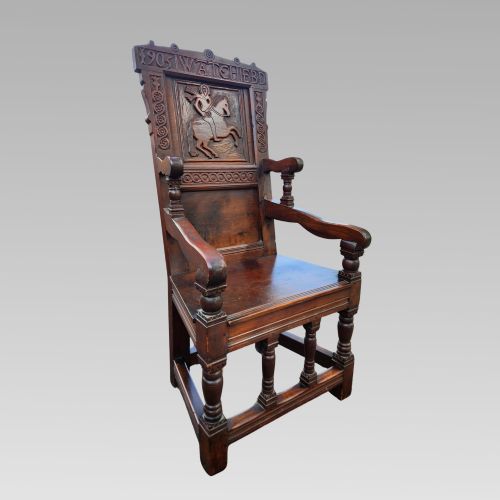
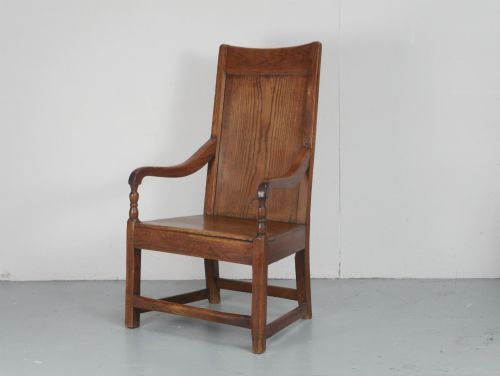
A brown oak wainscot chair is a heavy, wooden armchair built with panelled backs, solid seats and sturdy arms, originating from domestic and regional traditions. The selections span the sixteenth century through to the nineteenth century, including period pieces and later revivals.
The versions most commonly found here date from the seventeenth century, showing regional British variations from Yorkshire, Lancashire, Cheshire, the West Country, Wales and Scotland. Alongside full-sized armchairs, the listings include smaller scaled items and side chairs.
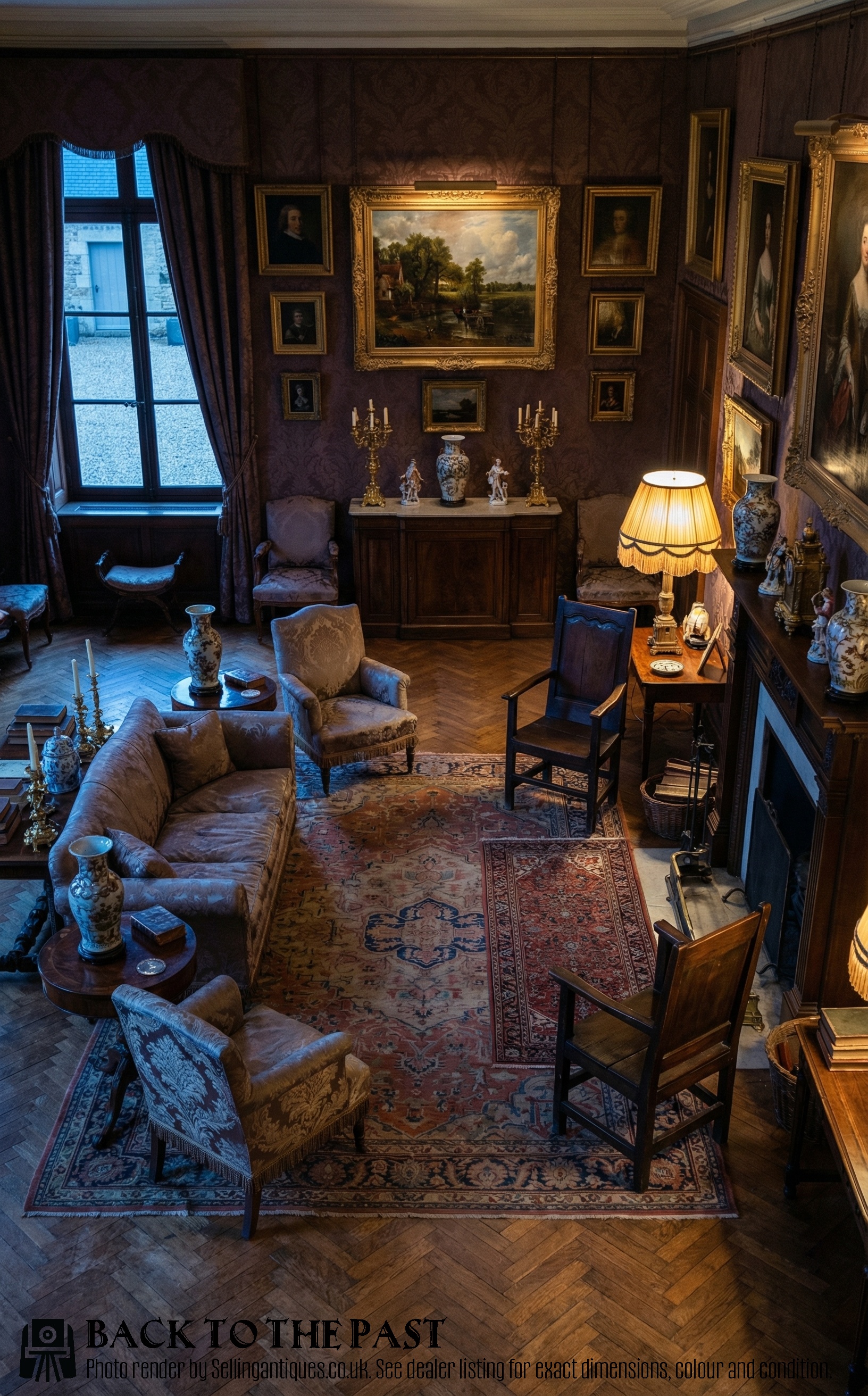
How they were made
Joinery techniques relied on mortise and tenon joints secured with wooden pegs, creating rigid frames without relying on metal nails. Timbers such as oak, elm and pine were worked by hand, producing heavy boards and solid panel backs.
Carving, panelling and turning decorate the structural members, utilising simple gouges and chisels. Some examples incorporate secondary materials like velvet, leather and metal studs for upholstery.
Brown Oak Wainscot Chair Retail Price Guide 2026
Typical asking prices for brown oak wainscot chair among the pieces listed under this phrase on Sellingantiques today, from the lower quarter to the upper quarter. They describe what is for sale here now, not the wider market.
Several smaller chairs survive scaled down for children or ladies, proving that early domestic comfort was not reserved solely for the head of the household.
What varies in quality
The integrity of the original joinery and the survival of early timber surfaces determine the grade of a brown oak wainscot chair. Pieces retaining their primary boards without extensive modern replacement timber command greater attention from collectors.
The depth and crispness of hand carving on the crest rails and panel backs distinguish simpler provincial work from more ambitious regional shops.
The Brown Oak Wainscot Chair Glossary
- Wainscot
- A heavy wooden armchair characterised by panelled construction and solid timber arms. The term originally denoted fine foreign oak panel boards.
- Joined oak
- Furniture constructed using interlocking pegged joints rather than simple nailed boards. This method provided exceptional strength for heavy household seating.
- Backstool
- An early form of chair without arms, essentially a wainscot chair reduced to a panelled back and seat. These sit alongside larger armchairs in early vernacular rooms.
- Jacobean
- The period covering the reign of James I, associated with robust oak furniture and geometric strapwork carving. Surviving items often display dark patination accumulated over centuries.
- Box chair
- An early seating form featuring an enclosed base beneath the seat, operating as storage. These heavy pieces represent transitional domestic designs.
Brown Oak Wainscot Chair: Frequently Asked Questions
What is a wainscot chair?
A wainscot chair is a heavy wooden armchair constructed with panelled backs and solid timber arms, originating when oak was the primary material for domestic furniture.
These chairs served as principal seats of authority in early households, positioned near the hearth or at the head of a communal table.
How do I date an oak chair?
Dating relies on construction methods, tool marks, timber shrinkage patterns and regional carving styles. Seventeenth-century examples show pegged mortise and tenon joints and hand- cleft boards.
Later nineteenth-century revival pieces often display machine-sawn timber uniformity and different assembly tolerances beneath the seat.
Where were these chairs made?
Regional workshops across Britain produced these forms, with distinct local characteristics appearing in pieces from Yorkshire, Lancashire, Cheshire, Wales and the West Country.
Local timber availability and regional carving preferences created recognisable variations in crest rails and panel arrangements.
How do I live with one?
These heavy chairs anchor a room when placed against panelled walls or in hallways, functioning well as standalone sculptural objects.
Keep them away from direct heat sources and sudden humidity changes to protect the aged oak timber and traditional joinery.