
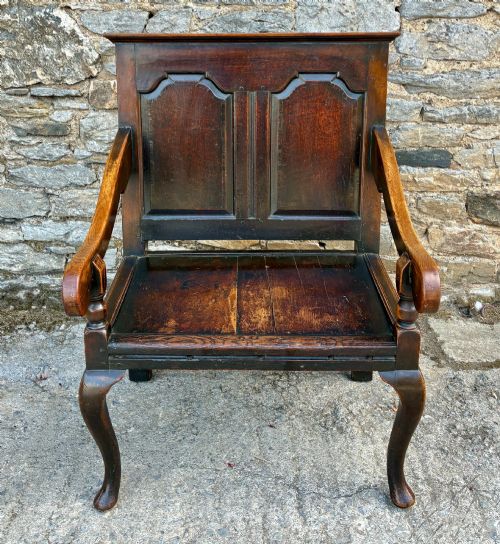
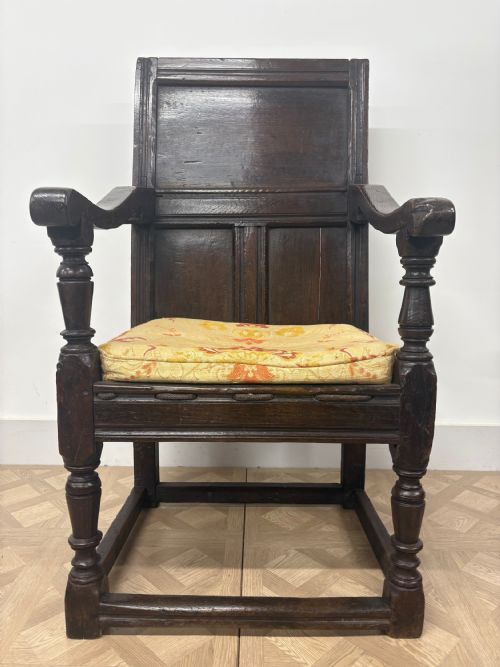
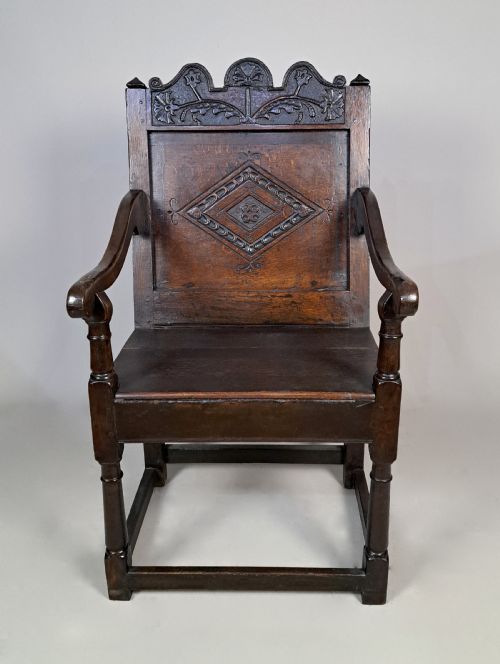
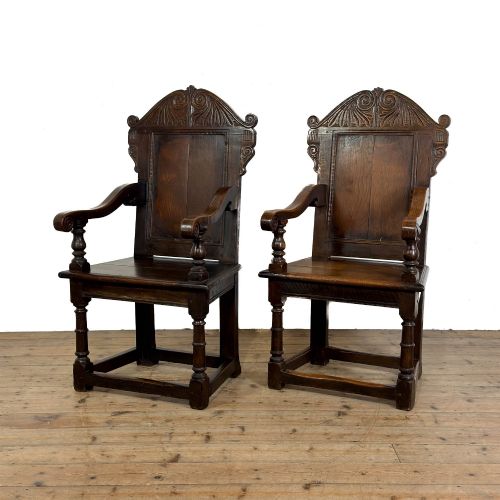

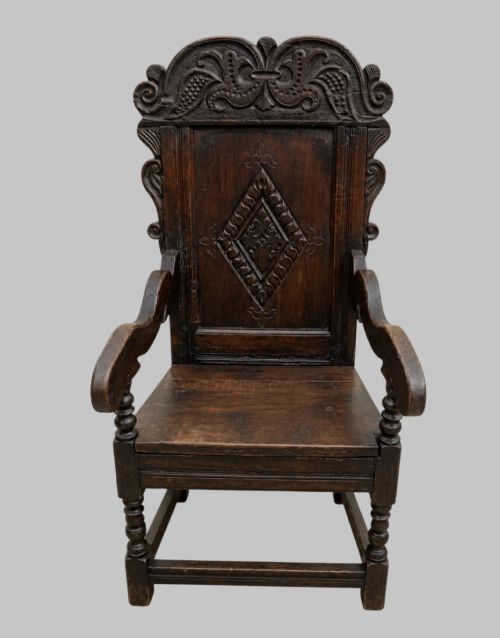


Panel Back Armchair
A panel back armchair is a solid timber seat built for longevity, offering sturdy support through framed wooden panels.
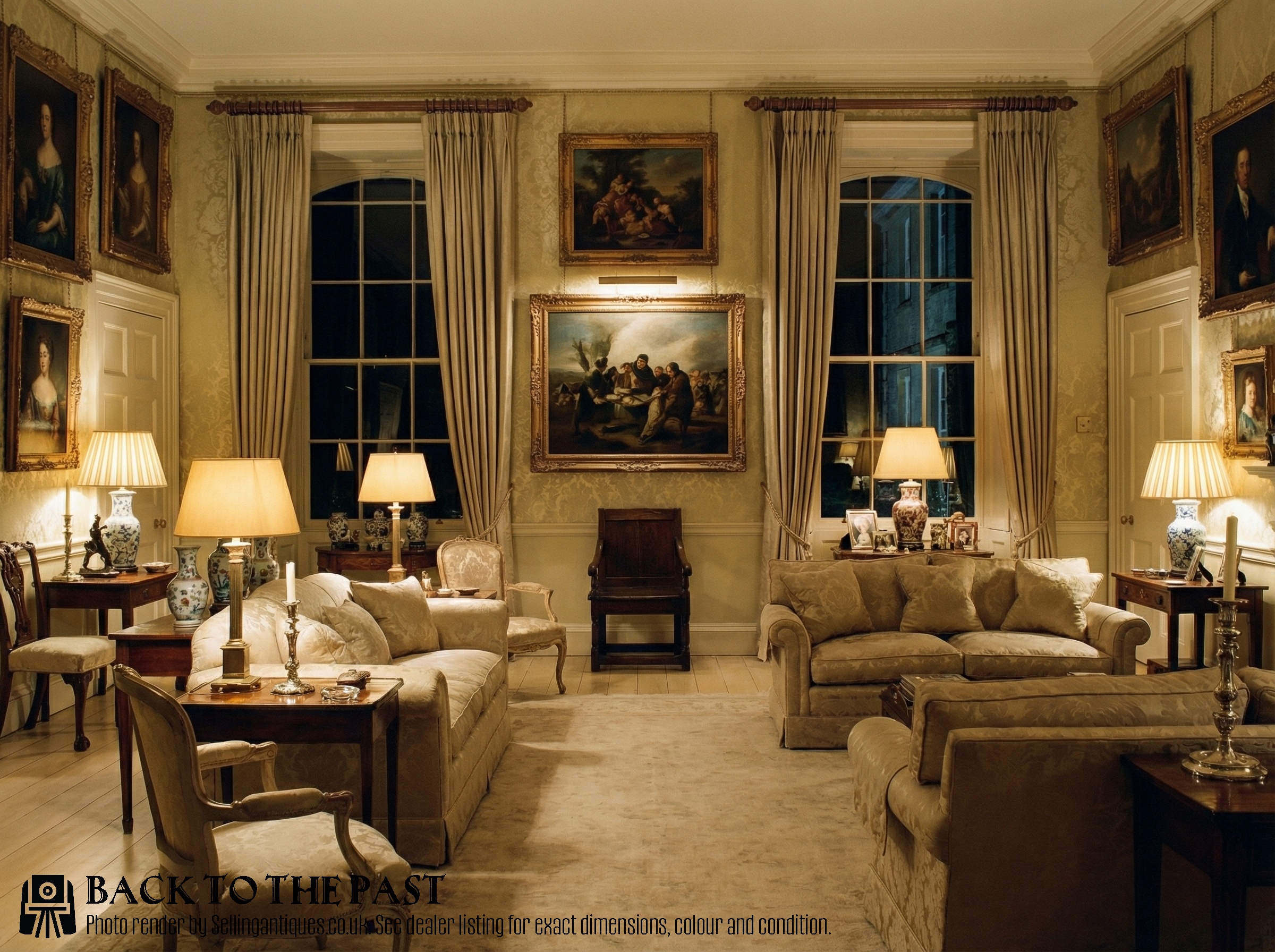
Panel Back Armchair
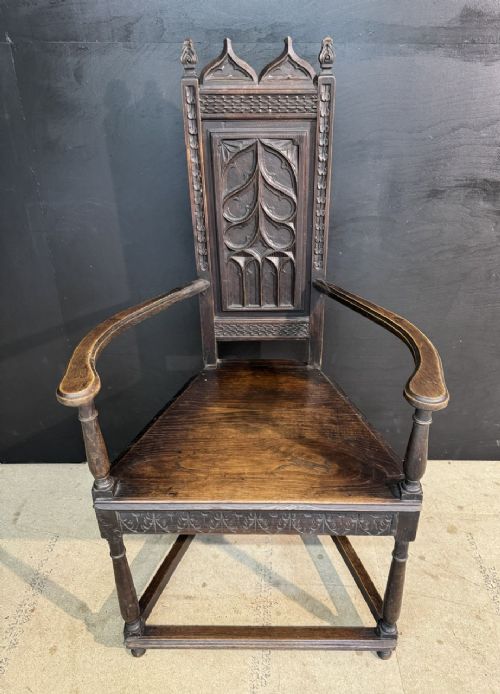
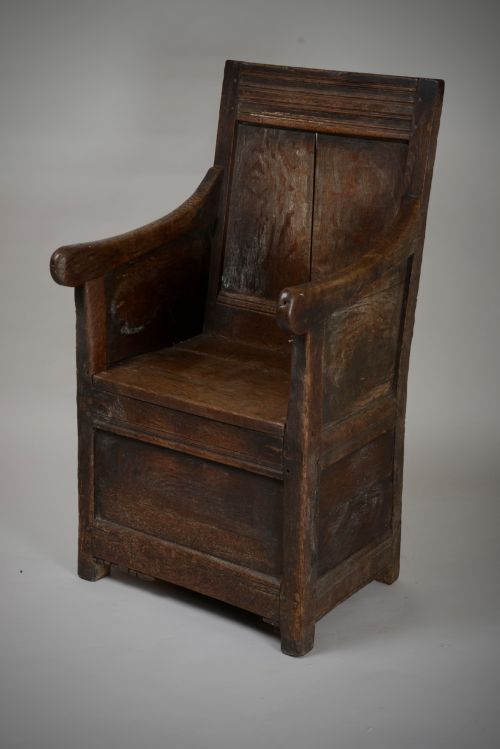
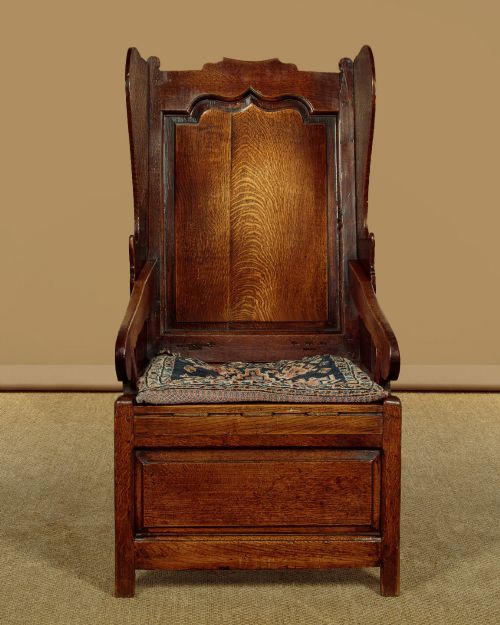
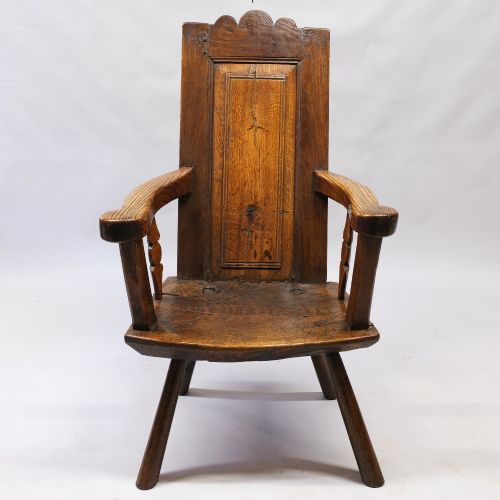
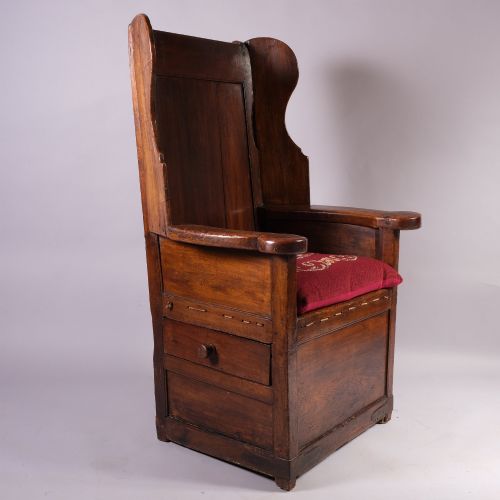
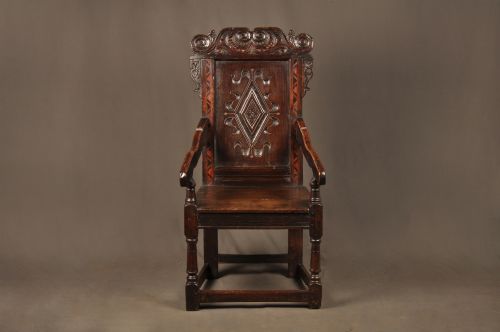
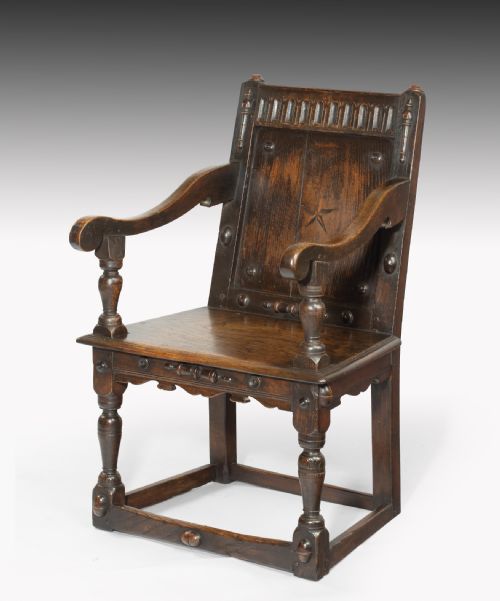
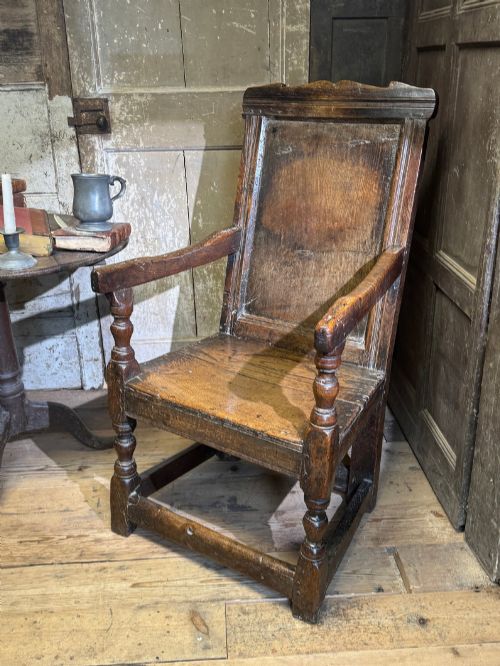
Buyers exploring this selection encounter various heavy timber forms, including wainscot chairs, lambing chairs, and regional vernacular armchairs. While seventeenth-century iterations dominate the historical examples, nineteenth-century adaptations and provincial vernacular pieces from the eighteenth century appear frequently across the inventory.
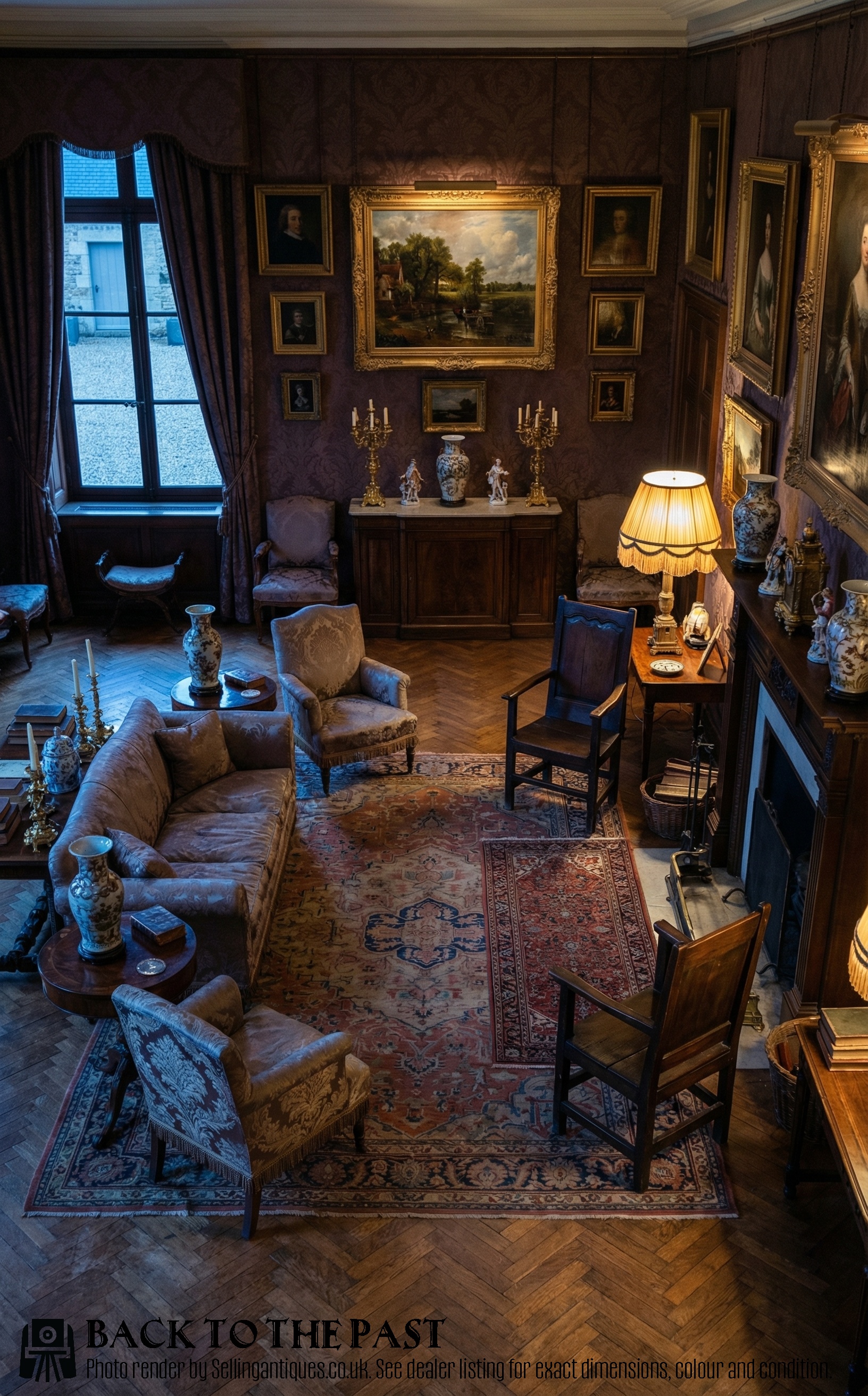
Materials and construction methods
Construction relies heavily on solid oak, supplemented by walnut, elm, and exotic hardwoods in select pieces, often assembled using traditional jointing rather than metal fasteners. Artisans shaped these sturdy frames to accommodate flat timber panels, occasionally enhancing the framework with surface carving, upholstery, textile inserts, or tooling leather details.
The integration of secondary materials remains minimal in the earliest forms, though later nineteenth-century interpretations incorporate fabrics, brass accents, and needlepoint tapestry panels. Surface treatments range from natural timber ageing to deliberate revivals mimicking seventeenth-century aesthetics.
Panel Back Armchair Retail Price Guide 2026
Typical asking prices for panel back armchair among the pieces listed under this phrase on Sellingantiques today, from the lower quarter to the upper quarter. They describe what is for sale here now, not the wider market.
The listings span multiple centuries, incorporating seventeenth-century oak wainscot chairs, eighteenth-century vernacular lambing chairs, and nineteenth-century Gothic revival pieces.
Evaluating craftsmanship and integrity
Quality rests primarily in the proportion of the timber, the crispness of the original joinery, and the degree of structural survival over centuries of use. Pieces retaining their original timber panels and uncompromised framing demonstrate superior adherence to period construction standards.
The depth and execution of carved ornamentation distinguish high-tier examples from simpler vernacular workshop outputs. The integration of period textiles and the preservation of natural timber tone further elevate the standing of individual chairs.
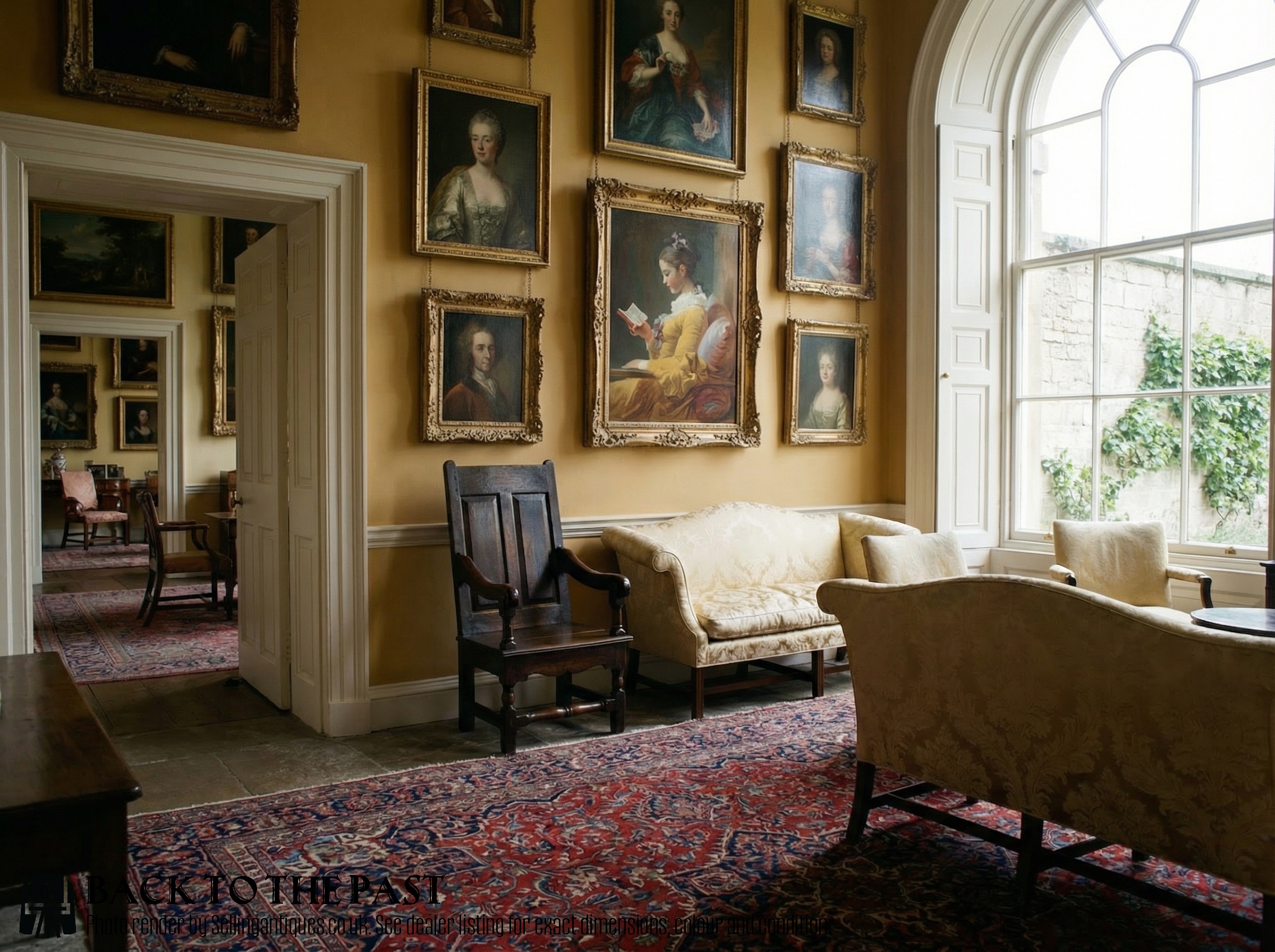
The Panel Back Armchair Glossary
- Wainscot chair
- An early wooden armchair constructed with framed panels, solid timber seats, and rigid upright supports. This form represents one of the earliest domestic seating types preserved from the seventeenth century.
- Mortise and tenon
- A traditional woodworking joint where a projecting tenon fits tightly into a corresponding mortise hole to lock structural members together without metal nails. This technique underpins the stability of early oak seating.
- Lambing chair
- A vernacular armchair featuring high enclosed wooden or upholstered wing panels designed to shield the occupant from drafts. These regional pieces frequently date to the eighteenth century.
- Caquetoire
- A lightweight sixteenth or seventeenth-century conversation chair featuring a high narrow back and trapezoidal seat. Continental examples of this form appear in walnut and oak.
- Vernacular
- Furniture produced by regional makers using local traditions and timber rather than following strict metropolitan court styles. These pieces often display idiosyncratic regional characteristics.
Panel Back Armchair: Frequently Asked Questions
What is a panel back armchair?
A panel back armchair is a heavy wooden seat featuring a flat or carved wooden panel inset into the backrest frame. These chairs originate primarily from the seventeenth century onward, utilising sturdy joinery to provide upright support.
Over subsequent centuries, makers revived these medieval and early modern styles, producing nineteenth-century interpretations that mirror earlier vernacular traditions.
How do I identify a seventeenth-century piece?
Seventeenth-century examples typically display heavy solid oak construction, pegged mortise and tenon joints, and hand-carved regional motifs. The timber often exhibits deep patination developed over centuries of exposure.
Later nineteenth-century revivals frequently employ cleaner machinery cuts or differ in timber weight and overall colour consistency.
Where were these armchairs used?
Historically, wainscot and panel back armchairs stood as principal seats of authority within great houses, reserved for the head of the household or important guests. Their solid wooden construction offered protection against cold draughts in large, stone-walled rooms.
Later vernacular forms like lambing chairs served practical domestic roles in rural farmhouses and country cottages across regions such as Yorkshire and Wales.
How do I care for antique oak?
Maintain antique oak furniture by keeping it away from direct heat sources and sudden humidity shifts, which cause timber to split. Apply a microcrystalline wax sparingly to nourish the wood surface and preserve the natural patination.
Avoid commercial liquid polishes that contain silicones, as these build up over time and dull the historic finish of the timber.