




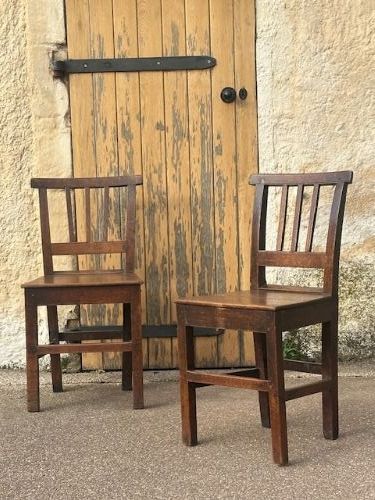


Joined Oak Chair
A joined oak chair brings seventeenth-century solidity into a room, offering sturdy timber construction and regional vernacular character that collectors prize.
Joined Oak Chair
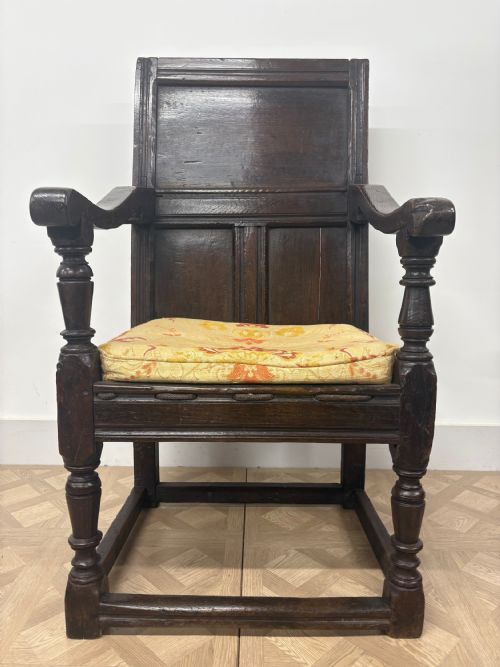
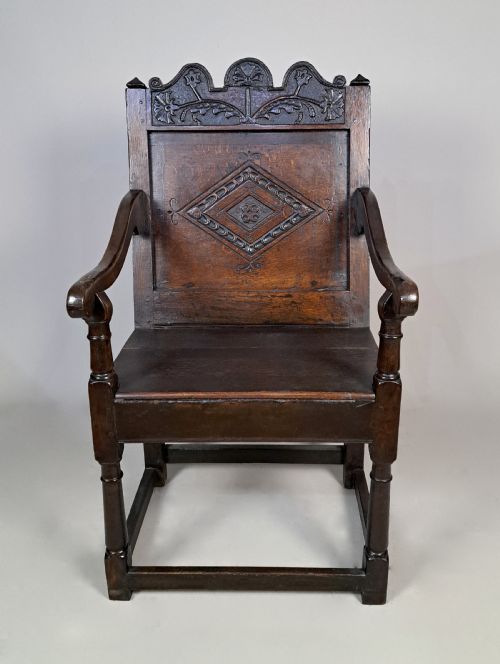
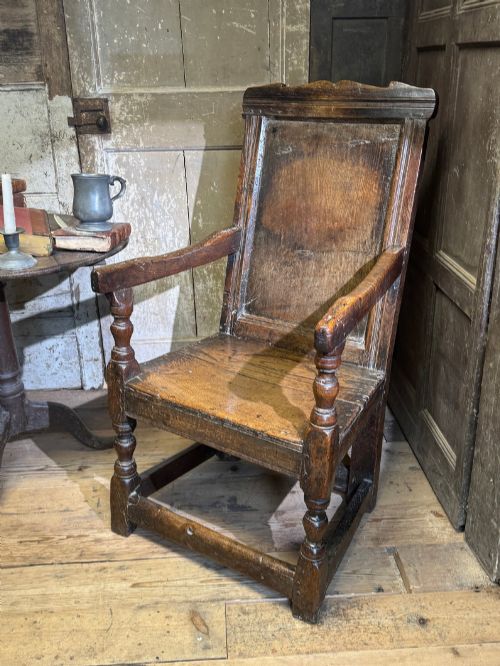
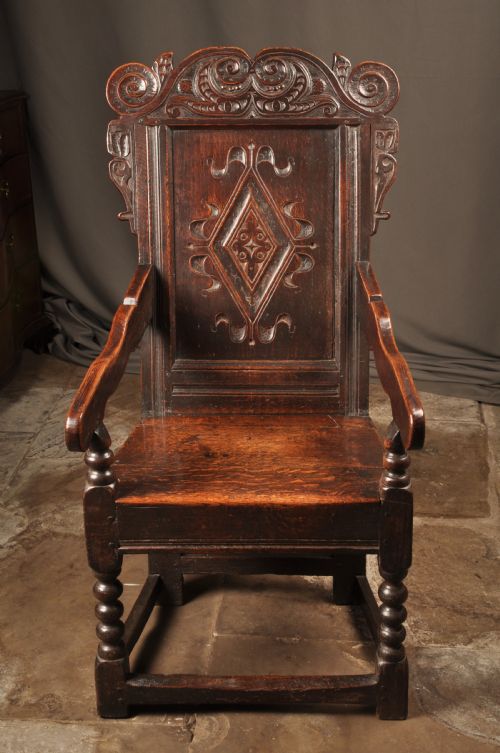
When you search for a joined oak chair, you find robust wooden seating constructed using traditional mortise and tenon joints secured with wooden pegs rather than metal nails. These pieces span from the seventeenth century through to the nineteenth century, reflecting regional British cabinet-making traditions from Yorkshire, Wales, Lancashire, Cheshire, and Scotland.
The most common form you meet on this page is the wainscot armchair, characterised by a solid panelled back, carved wooden seat, and sturdy armrests. Alongside these heavy armchairs, the selection includes joined back stools, side chairs, dining chairs, and occasional children's highchairs or close stools.
Originating largely from rural workshops, these chairs display vernacular styles such as Jacobean carving, plain panelled backs, and simple turned legs. While seventeenth-century examples dominate the early periods, later eighteenth and nineteenth-century pieces continue the solid joined oak tradition in regional British households.
What varies in quality
The degree of original timber preservation dictates much of the standing of a joined oak chair, particularly regarding the survival of the original wooden seat boards and lower frame stretchers. Chairs that retain their untouched surface patination and deep natural colour sit above examples stripped or heavily restored in later centuries.
Carving depth and regional distinctiveness separate standard vernacular pieces from masterworks of provincial joinery. Crisp execution in the panel detailing and stiles indicates a maker working with high competence within seventeenth and eighteenth-century traditions.
Joined Oak Chair Retail Price Guide 2026
Typical asking prices for joined oak chair among the pieces listed under this phrase on Sellingantiques today, from the lower quarter to the upper quarter. They describe what is for sale here now, not the wider market.
Listings span from the seventeenth century through to the nineteenth century, featuring regional oak wainscot armchairs, side chairs, and vernacular dining sets.
The Joined Oak Chair Glossary
- Wainscot
- A heavy wooden armchair with a panelled back and solid seat, common in seventeenth-century English interiors. The term originally referred to fine foreign oak boards imported for wall panelling.
- Joined chair
- A chair constructed by a joiner using tight mortise and tenon joints held with wooden pegs. This method preceded standard frame-making techniques and provided exceptional rigidity.
- Back stool
- An early form of chair without arms, serving as a seat for ordinary household members or guests. These pieces mirror the construction of larger armchairs on a smaller scale.
- Vernacular
- Objects designed and built by local craftsmen using regional styles and available materials rather than following metropolitan fashions. Scottish and Welsh examples show distinct local traits.
- Peg joint
- A construction method utilising wooden dowels driven through pre-drilled holes in fitted joints. This holds the frame securely without relying on modern adhesives.
Joined Oak Chair: Frequently Asked Questions
What is a wainscot chair?
A wainscot chair is a heavy wooden armchair featuring a solid panelled back and turned supports, originating mostly in the seventeenth century. They stood as important household items in vernacular interiors.
Craftsmen built them entirely from solid oak using pegged joints. Their sturdy construction allowed them to survive centuries of domestic use.
How do I date an oak chair?
Dating relies on examining the construction methods, tool marks, timber shrinkage, and stylistic vernacular details. Seventeenth-century examples typically display pegged joints and chip carving.
Later eighteenth and nineteenth-century pieces often show different proportions and machine-sawn timber indicators. Comparing panel thickness and regional design traits helps narrow the manufacturing period.
Were these chairs used at dining tables?
Earlier wainscot and armchair variants served primarily as principal seats of authority for the head of the household rather than around a dining table. Sets of joined dining chairs became more common by the eighteenth century.
Dining sets from later periods provided matching seating for multiple guests. Single armchairs remained statement pieces placed against room walls.
How do I care for antique oak?
Antique oak benefits from stable indoor humidity levels away from direct heat sources and sunlight. Applying traditional beeswax helps nourish the historic timber surface.
Avoid modern liquid polishes that can build up on the grain. Gentle dusting with a dry cloth preserves the natural surface patination.