
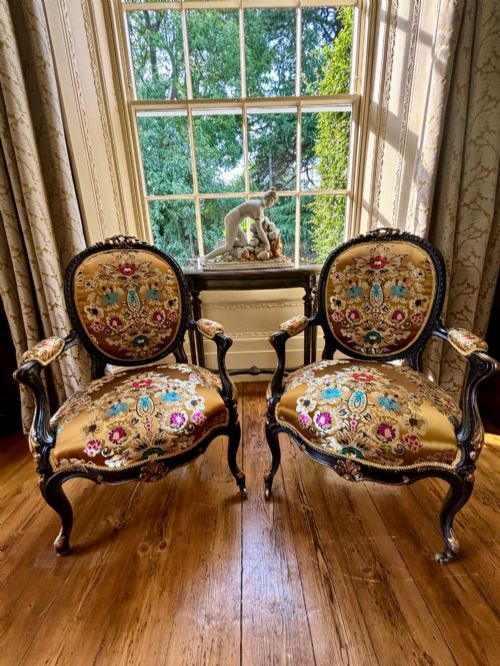


Dark Walnut Armchair
A dark walnut armchair brings deep timber tones and centuries of seating history into a room.
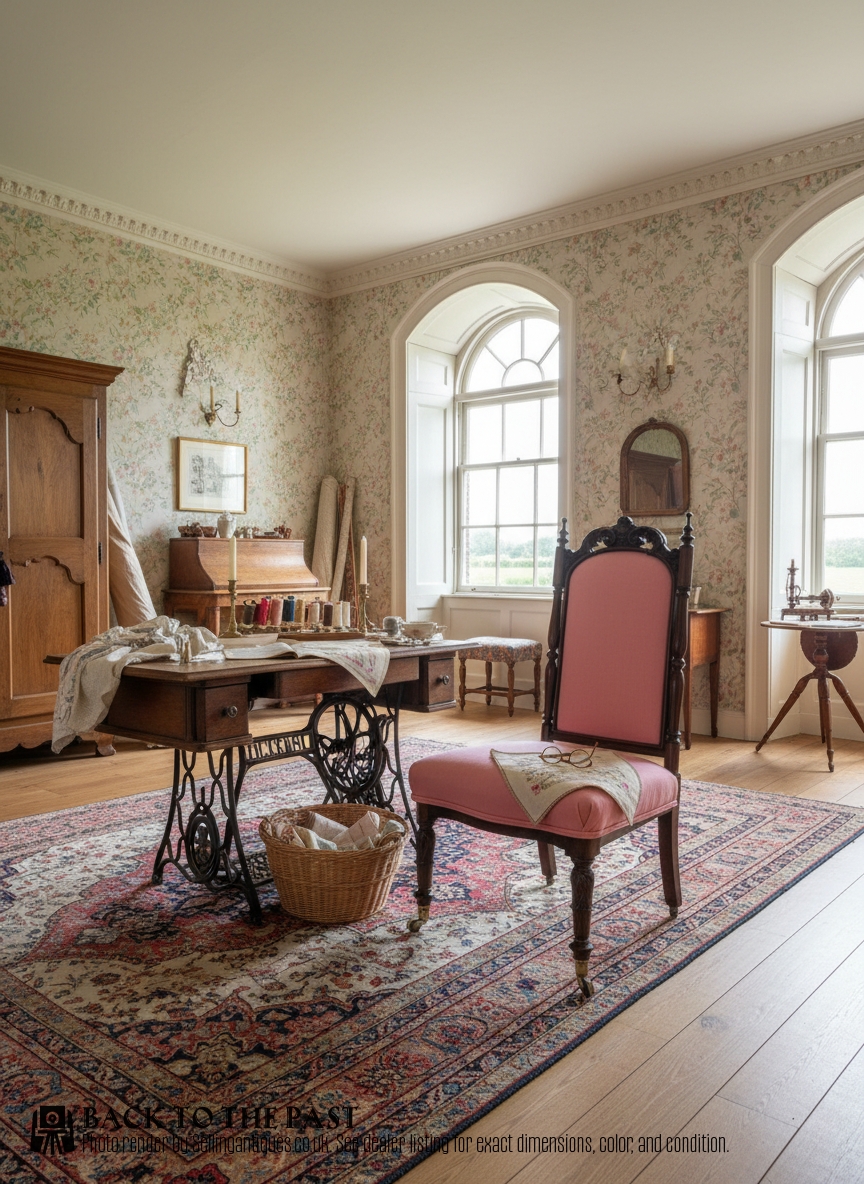
Dark Walnut Armchair
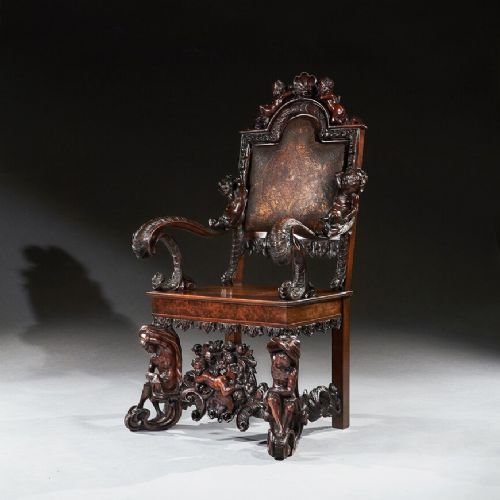
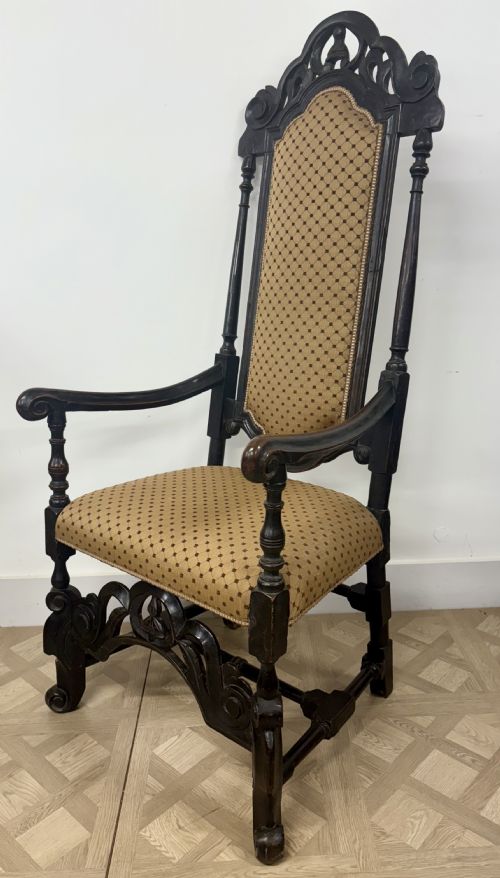
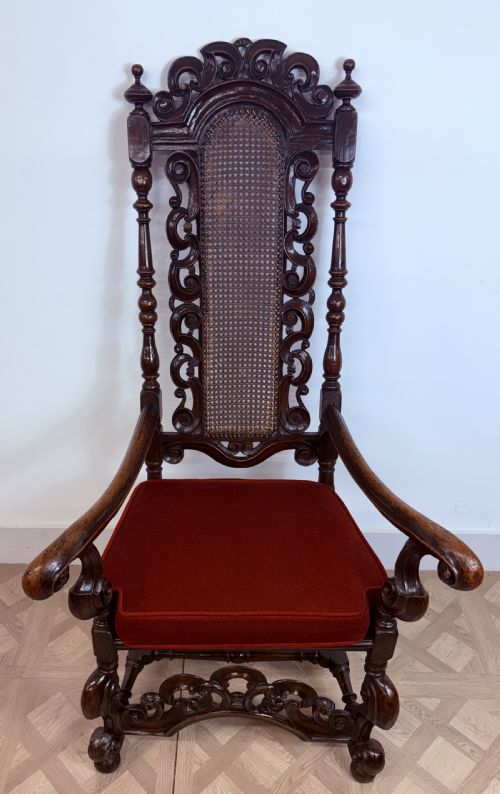
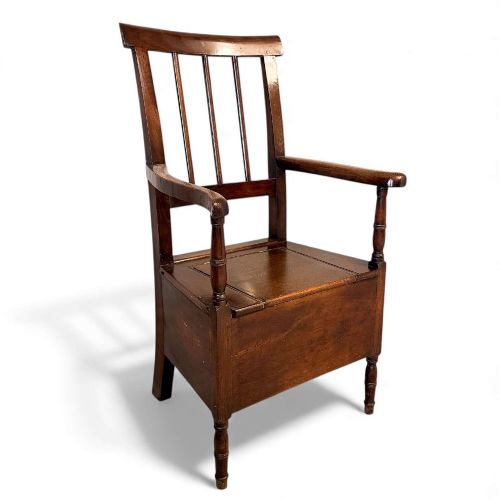
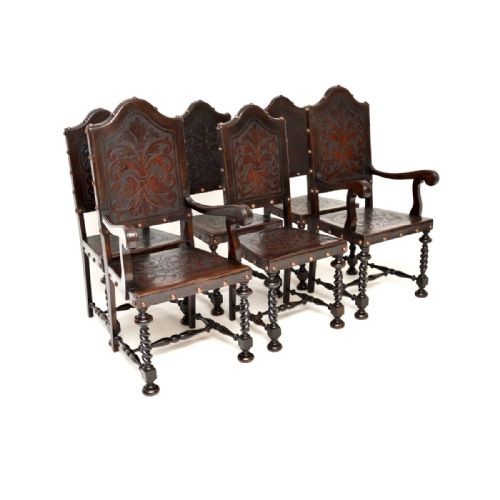
A dark walnut armchair spans multiple centuries of furniture design, originating from periods such as the seventeenth, eighteenth, and nineteenth centuries. Buyers encounter diverse forms within this group, including open armchairs, dining chairs, desk chairs, and corner chairs.
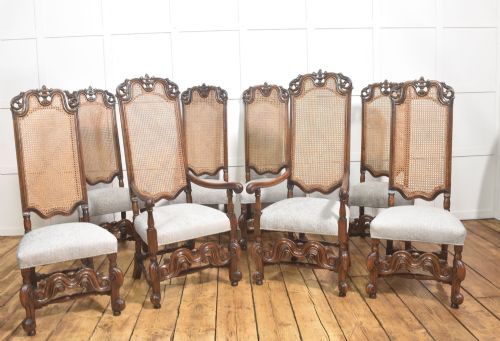
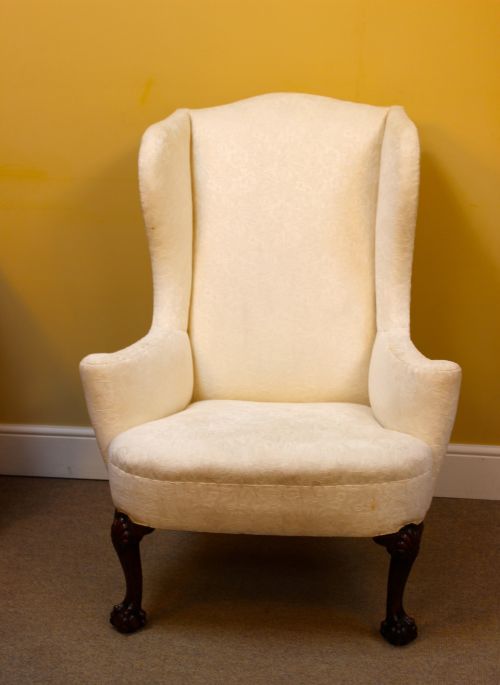
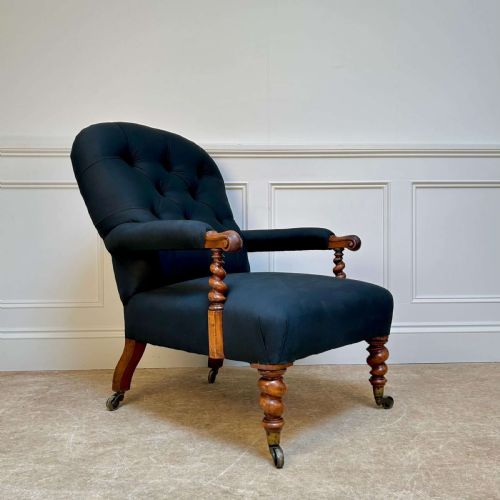
Seating formats range from high-back cane dining chairs to heavily carved library chairs and upholstered wing armchairs. Each piece demonstrates the enduring appeal of dark walnut timber across different historical eras.
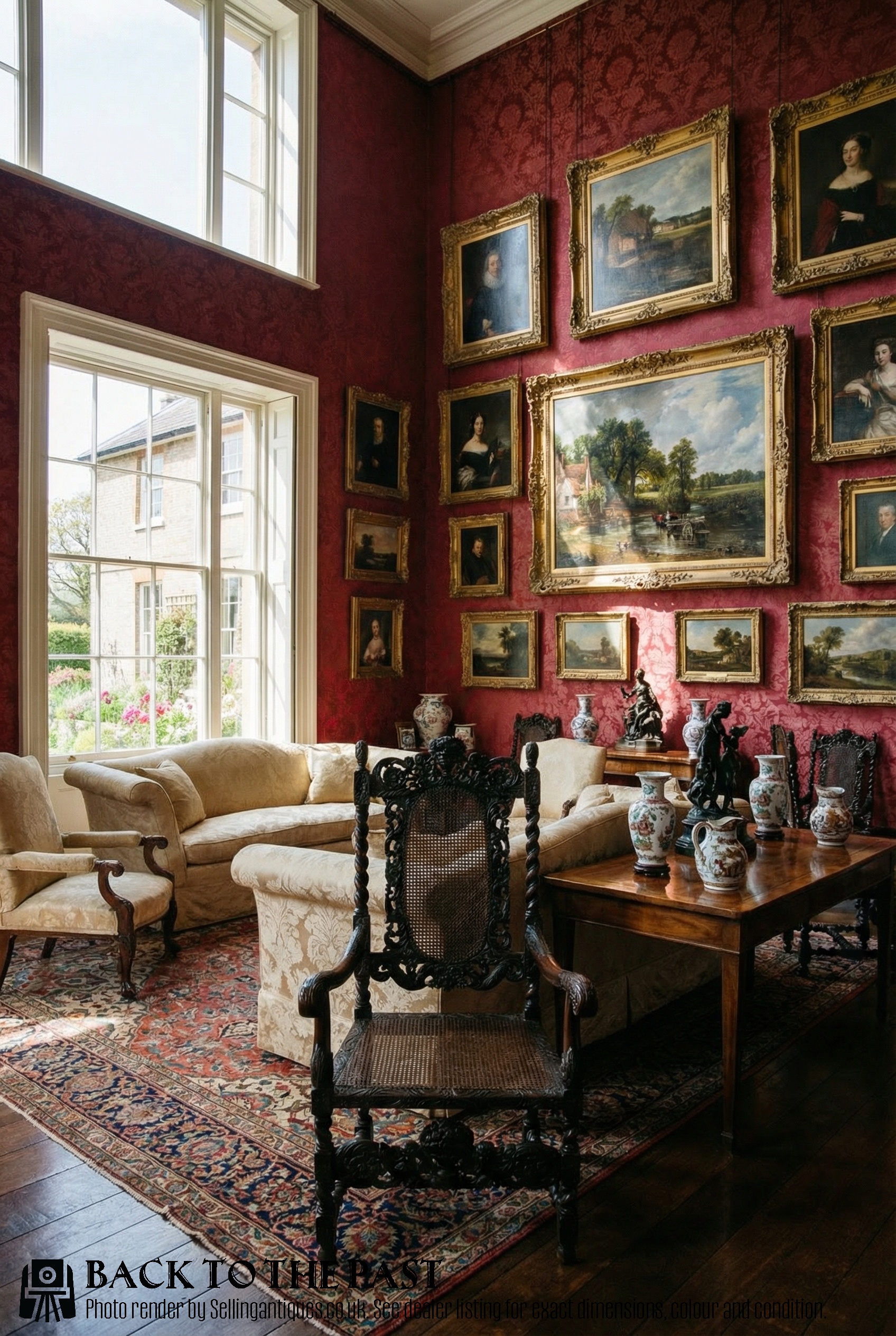
Materials and Construction
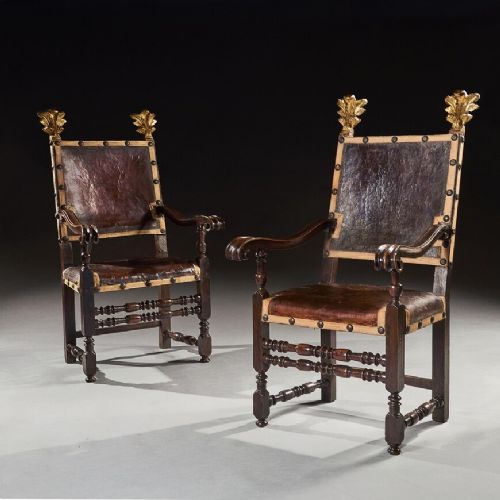
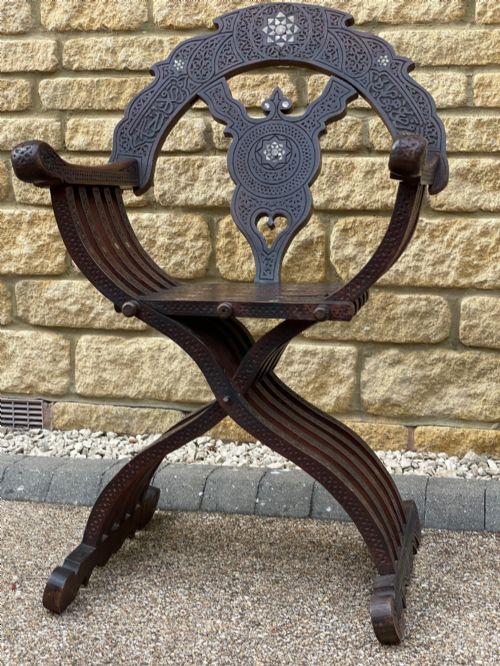
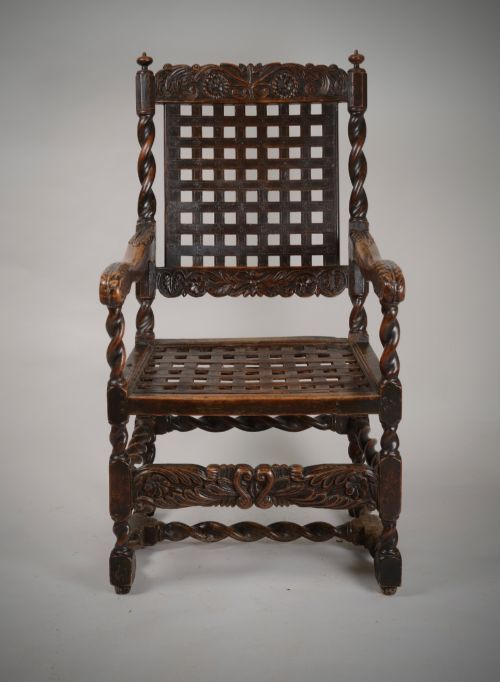
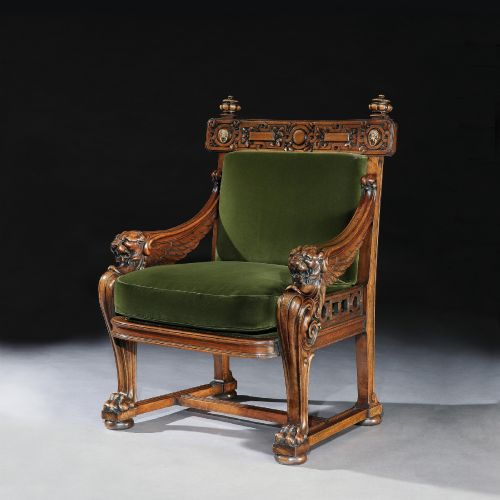
Craftsmen utilised solid walnut for the primary framework of these armchairs, frequently employing carving, bobbin turning, or parcel-gilding to ornament the timber. Workshops integrated contrasting elements such as mother-of-pearl inlay or painted polychrome details on specific regional variants.
Upholstery methods varied by period, utilising leather, fabric, cane, velvet, and needlepoint tapestry panels secured to the frames. Secondary materials like brass studs, cane webbing, and textile covers complemented the dark wood structures.
Dark Walnut Armchair Retail Price Guide 2026
Typical asking prices for dark walnut armchair among the pieces listed under this phrase on Sellingantiques today, from the lower quarter to the upper quarter. They describe what is for sale here now, not the wider market.
Listings feature walnut armchairs spanning from the seventeenth century through the Victorian era and into the twentieth century.
Evaluating Craftsmanship
The distinction between standard and exceptional pieces rests upon the crispness of the wood carving and the integrity of the joinery. Heavily carved examples display differing depths of relief and anatomical precision in figures or scrollwork.
Original upholstery materials and period coverings elevate a piece above later replacements. The richness of the walnut patina and the survival of original surface treatments dictate the standing of individual chairs.
Hindley And Sons·Thomas Hope·Andrea Brustolon
The Dark Walnut Armchair Glossary
- Carolean
- A style dating from the reign of Charles II, characterised by rich walnut framing, scrollwork, and high backs.
- Caquetoire
- A type of sixteenth or seventeenth-century conversation chair with a high narrow back and splayed arms.
- Monopodia
- A furniture support formed of a single lion leg and paw, seen in classical revival designs.
- Bergère
- An enclosed upholstered armchair with wooden framing exposed around the sides and back.
- Marquetry
- Decorative veneer work forming patterns using different woods and materials.
Dark Walnut Armchair: Frequently Asked Questions
How do I identify a seventeenth century walnut armchair?
Seventeenth century pieces often display characteristic joinery, bobbin-turned supports, and carved crest rails typical of the Carolean period. The timber develops a deep, dark patina over centuries of handling.
Examination of the frame construction and underside reveals period tool marks and construction methods consistent with early workshop production.
What is a caquetoire armchair?
A caquetoire is a light sixteenth or seventeenth century chair designed for conversation, featuring a trapezoidal seat and narrow back. The arms curve outward to accommodate contemporary fashions in dress.
These chairs stand on four legs and often incorporate detailed carved decoration on the wooden framework.
How should I care for antique leather upholstery?
Antique leather requires gentle cleaning and regular conditioning to prevent drying and cracking over time. Avoid placing the chair near direct heat sources or strong sunlight.
Professional conservation preserves the original surface texture and colour of period hides without altering their historical character.
Where were corner chairs used?
Corner chairs served as versatile seating options in studies, bedrooms, and parlours, often functioning as desk or reading chairs. Their design allowed them to fit neatly into room angles.
Georgian and Victorian examples combine structural stability with supportive curved armrests.