



Walnut Corner Chair
A walnut corner chair is a clever space-saving seat designed to fit neatly into room angles, offering sturdy wooden frames and deep character.
Walnut Corner Chair
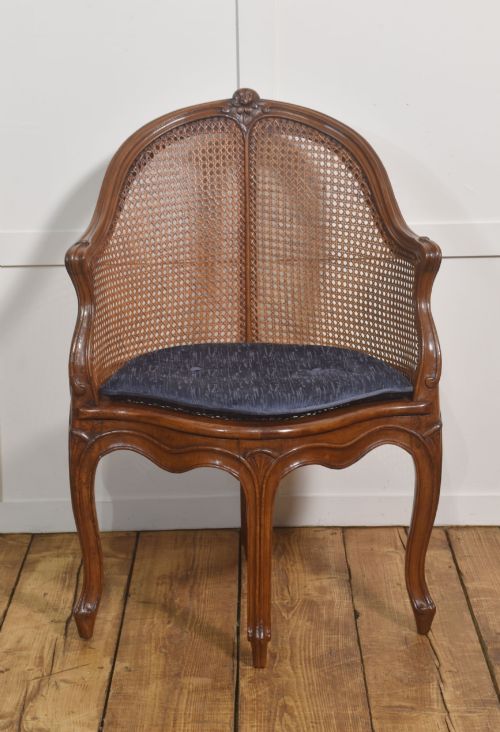
A walnut corner chair provides an ingenious seating solution designed specifically for room angles, combining a diagonal stance with a curved backrest. Buyers seek these pieces for their compact footprint and distinctive framing, which sets them apart from standard armchairs.
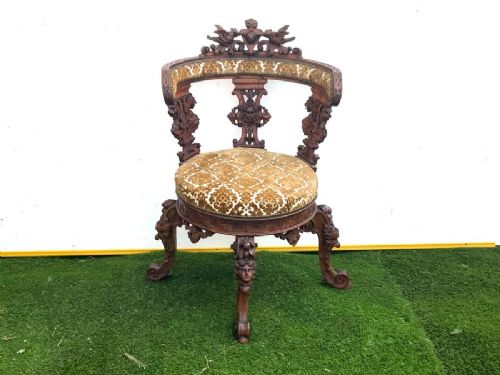
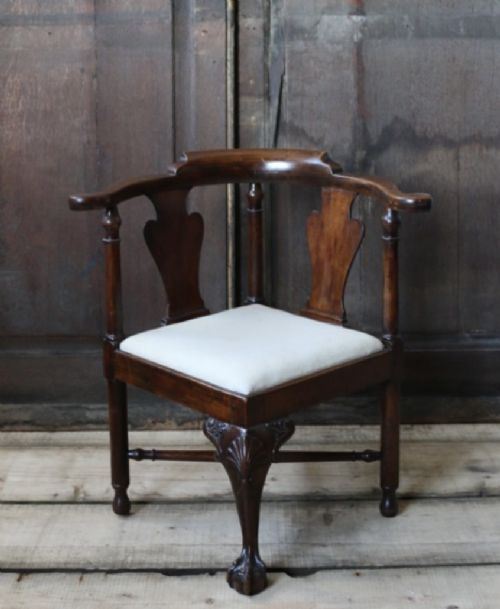
The versions most frequently met on this page span the eighteenth and nineteenth centuries, ranging from early Georgian desk adaptations to ornate Victorian revival models. These items frequently surface in styles such as George II, Queen Anne, and Italian Renaissance Revival.
Makers constructed these seats to serve multiple domestic functions, including use at writing desks or as bedroom chairs. The triangular seat base and continuous armrail distinguish this particular seating form from conventional side chairs.
How they were made
Joiners built the foundational structure using solid walnut timber, often turning and carving the wooden members to create supportive back rails and cabriole legs. Workshops utilised durable joinery techniques like mortise and tenon to ensure the diagonal frame withstood daily sitting.
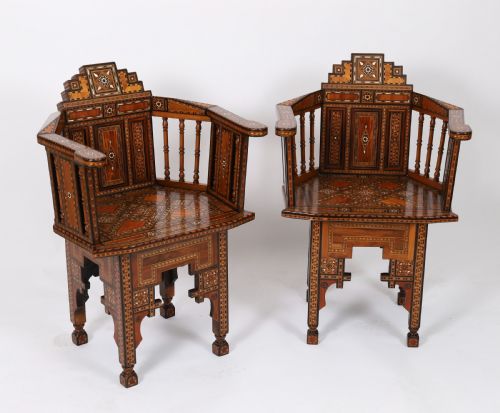
Upholstery elements incorporate various textiles, including fabric, velvet, and tapestry, frequently mounted over drop-in pad seats. Artisans also employed cane work and intricate parquetry inlay featuring bone and mother-of-pearl to ornament the wooden surfaces.
Walnut Corner Chair Retail Price Guide 2026
Typical asking prices for walnut corner chair among the pieces listed under this phrase on Sellingantiques today, from the lower quarter to the upper quarter. They describe what is for sale here now, not the wider market.
Some nineteenth-century makers evidently expected sitters to fidget, reinforcing corner chair joints with extra knee blocks that survived centuries of restless reading.
What varies in quality
The standard of carving and the selection of figured walnut timber dictate the upper tier of these chairs. Pieces displaying deep, crisp hand-carved details on the splats and knees command greater attention than plain, utilitarian examples.
Structural integrity also separates workshop outputs, visible in the tightness of the frame joints and the retention of original timber components. The finesse of inlaid details, such as bone or mother-of-pearl work, further distinguishes superior examples from simpler ones.
The Walnut Corner Chair Glossary
- Cabriole leg
- A furniture leg that bends outward and tapers downward, commonly seen on eighteenth-century walnut seating. This shape mimics the legs of animals and provides stable support without heavy stretchers.
- Parquetry
- A mosaic of geometric wood pieces laid into a surface to form decorative patterns. Craftsmen utilised this technique to adorn the backrests and frames of Levantine and Moorish-inspired chairs.
- Splat
- The central vertical strip of wood in the back of a chair. In corner chairs, multiple splats often support the continuous curved armrail.
- Drop-in seat
- A removable upholstered frame that fits into the seat rails of a chair. This design allows easier reupholstery without dismantling the main wooden structure.
- Tub chair
- An armchair with a circular back enclosing the sides. This form frequently merges with the corner chair layout in Victorian and French styles.
Walnut Corner Chair: Frequently Asked Questions
Where did people put walnut corner chairs?
Historically, owners placed these seats in room angles, hallways, or beside writing desks where standard chairs took up too much space. Their diagonal design allowed them to tuck neatly into corners while remaining accessible for conversation or reading.
In modern rooms, they serve a similar purpose, adding architectural interest to unused wall junctions or acting as distinct accent pieces in bedrooms and studies.
How do I date a walnut corner chair?
Dating relies on examining the leg styles, stretcher arrangements, and joining methods used in the frame. Eighteenth-century models often feature simple cabriole legs and pad feet, whereas nineteenth-century pieces display heavier carving or revival motifs.
Wood patina, wear patterns around the footings, and the type of secondary timbers underneath also help confirm whether a piece originates from the Georgian era or a later Victorian workshop.
Were these chairs used at desks?
Many examples from the eighteenth century functioned specifically as desk or reading chairs. The curved backrail provided wrap-around support for writers who needed to pivot between a writing surface and surrounding room spaces.
Designers adapted the triangular seat plan so users could sit comfortably while facing a corner writing table or bureau.
What is red walnut?
Red walnut refers to timber harvested from American walnut trees that displayed a warmer, reddish hue compared to darker European varieties. Cabinet makers in the eighteenth century utilised this specific stock for fine seating.
The distinct coloration develops naturally within the heartwood of certain trees and ages to a rich, glowing tone under traditional wax polishes.