




Georgian Corner Seat
A georgian corner seat is a clever piece of domestic architecture, designed to tuck snugly into a room angle while offering a sturdy and enveloping armchair perch.
Georgian Corner Seat
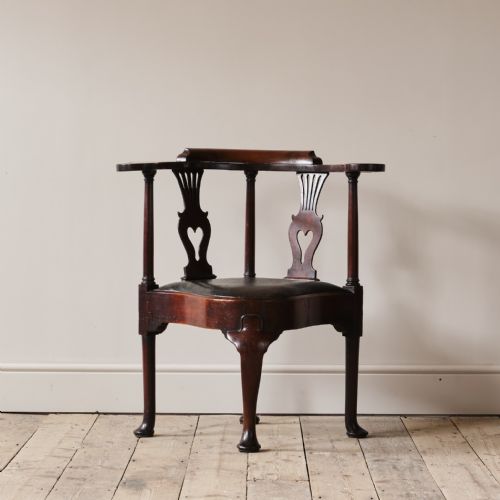
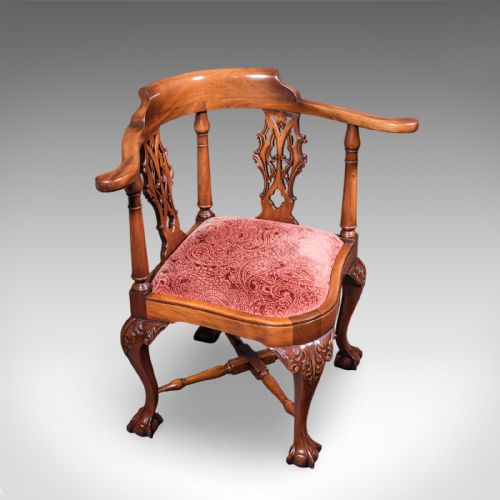
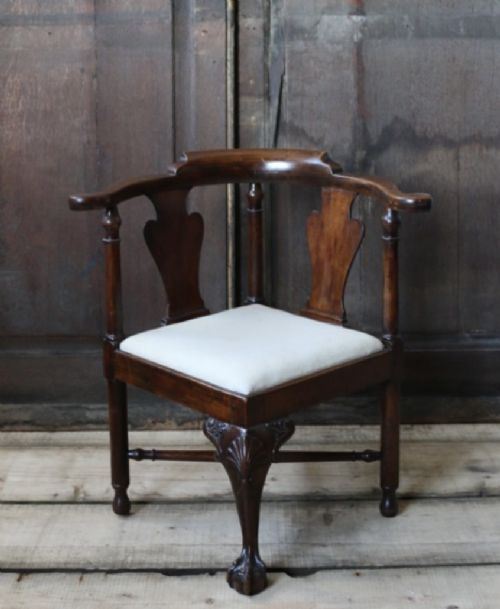
A georgian corner seat is an ingenious furniture form conceived to occupy the unused angles of eighteenth-century rooms without blocking domestic traffic. The selections available here showcase regional adaptations and formal iterations, from provincial country workshop pieces to sophisticated urban seating.
Most examples encountered on this page date from the eighteenth century, spanning periods from George I and George II reigns through to the broader Georgian era. These chairs frequently serve double duty as desk chairs, reading chairs, or dressing seats, featuring a distinctive horseshoe-shaped backrest supported by turned pillars above a square seat.
Materials and construction methods
Cabinetmakers constructed these frames using dense hardwoods such as mahogany, oak, walnut, and elm, relying on traditional joinery to unite the complex compound curves of the horseshoe armrest. Timber selection governed both the structural integrity and the ultimate status of the furniture, with figured mahogany and walnut reserved for high-style urban commissions.
Seating platforms vary considerably in their fabrication, utilising drop-in squab cushions upholstered in fabric, leather, velvet, or textile, alongside traditional woven rush inserts found in country pieces. Regional workshops often incorporated local materials like ash and elm alongside simpler slat-back designs for everyday domestic durability.
Materials documented across the inventory include mahogany, walnut, oak, elm, ash, rush, leather, velvet, and various textiles.
Distinguishing quality across examples
The degree of refinement in the carved details and the cleverness of the structural joinery separate standard provincial examples from master cabinetmaker productions. Attention to the shaping of the arms, the grace of the splats, and the integrity of the underlying framing determine the standing of each piece.
The Georgian Corner Seat Glossary
- Corner Chair
- A seat designed specifically to fit into the ninety-degree angle of a room, featuring a diagonal orientation with one leg pointing directly forward.
- Horseshoe Back
- A continuous curved armrest rail that sweeps around the rear and sides of the chair, supported by a series of small turned columns.
- Squab Seat
- A loose upholstered cushion resting upon a wooden or woven platform base within the chair frame.
- Rush Seat
- A seating surface woven from dried marsh rushes, commonly found on provincial and country-made chairs.
- Slat Back
- A chair backrest constructed primarily from vertical wooden slats rather than solid carved splats.
Georgian Corner Seat: Frequently Asked Questions
What is a georgian corner seat used for?
These seats were originally designed to fit neatly into room corners, serving as writing chairs, card-playing seats, or comfortable spots in hallways and parlours where space was at a premium. Their enveloping horseshoe arms provided a secure, contained posture suitable for writing at small desks or reading.
Over time, their utilitarian role expanded into more formal domestic settings, where finer mahogany and walnut versions functioned as statement pieces of furniture rather than mere space-saving seating.
How do I identify a genuine period piece?
Authenticating a period example involves examining the timber patination, construction joints, and tool marks hidden beneath the frame, which should show the consistent wear of centuries of use. Eighteenth-century construction methods typically employ pegged joints and hand-cut elements rather than modern industrial fixings.
Comparing the proportions and wood types against documented examples from the George I, George II, or broader Georgian periods helps confirm the era of manufacture.
Are these chairs comfortable for daily seating?
The supportive horseshoe backrest offers a surprisingly robust and upright posture, making them well-suited for sitting at a desk or table for moderate periods. Their low profile and sturdy wooden frames prioritize stability and space efficiency over deep, modern relaxation.
Adding an appropriate squab cushion helps tailor the seating height and comfort level for contemporary living without altering the historical integrity of the piece.
How do country chairs differ from urban examples?
Country variants often utilise accessible local timbers like oak, elm, or ash, frequently incorporating woven rush seats and simpler slat-back designs tailored for rugged domestic utility. They prioritize practical durability and regional craftsmanship over elaborate ornamentation.
Urban pieces generally showcase expensive imported hardwoods like mahogany or walnut, featuring refined cabriole legs, carved splats, and sophisticated upholstery platforms intended for fashionable drawing rooms.