


Corner Reading Chair
These corner reading chair examples offer sturdy, wraparound seating designed to fit snugly into room angles while providing comfortable support for the seated reader.
Corner Reading Chair
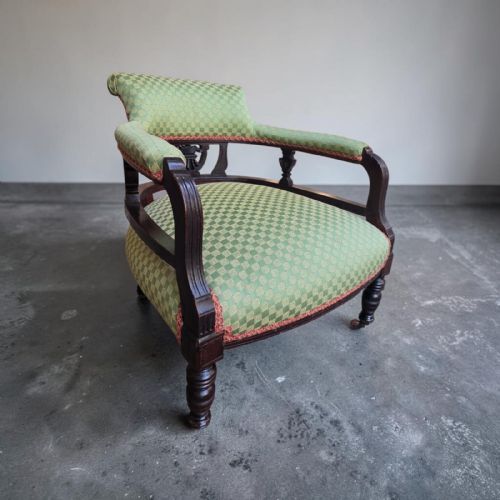
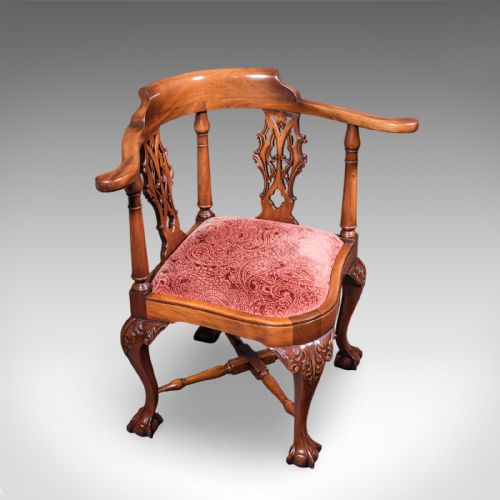
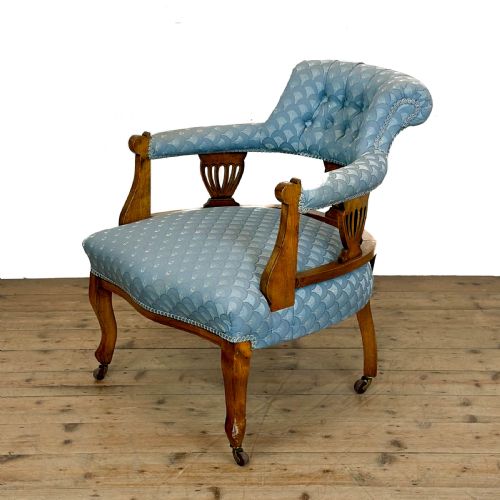
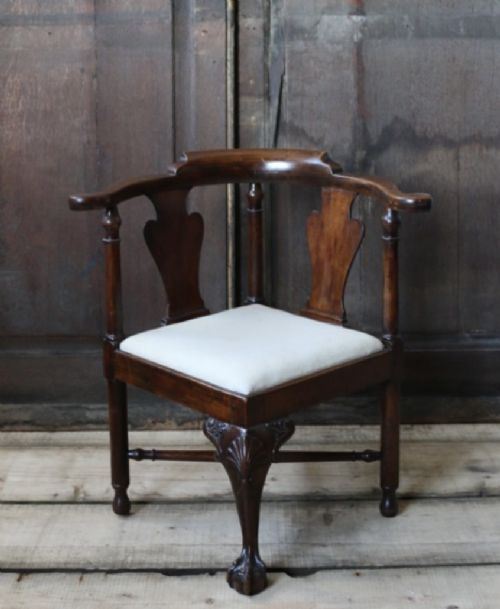
A corner reading chair provides a distinctive form designed to fit compactly into room angles while offering supportive, wraparound arms for a seated reader. The examples found here encompass several eras, with Edwardian and Victorian pieces appearing alongside earlier George II and Georgian designs.
You will most frequently meet Edwardian mahogany versions and sturdy Victorian tub chairs on this page. These pieces serve well as accent or desk chairs, combining functional corner placement with practical upholstery fabrics.
How they were made
Cabinet makers built these chairs using solid timbers such as mahogany, walnut, and dark oak to ensure structural stability for corner placement. Selected pieces feature decorative satinwood inlay to add visual contrast to the polished wood frames.
Upholstery completed the construction, utilising fabrics like velvet and traditional squab seats for comfort. Brass fittings and detailed wood carving occasionally appeared to enhance the finish of formal seating.
Several chairs include a squab seat, offering a removable cushion for anyone who prefers a softer perch.
What varies in quality
The refinement of the timber and the crispness of any carved detail set finer examples apart from simpler utility seating. Superior pieces display carefully selected wood grain and well-executed joinery around the curved back rails.
The choice of covering material and the preservation of the original frame structure also influence the standing of each piece. Chairs retaining their early upholstery or featuring subtle inlay demonstrate greater artisanal effort.
Miles & Edward’s
The Corner Reading Chair Glossary
- Squab Seat
- A loose cushion placed upon the wooden base of a chair for added seating comfort. This removable pad is often upholstered in velvet or matching fabric.
- Tub Chair
- An armchair characterised by a continuous curved back and armrest enclosing the sitter in a rounded shape. This form provides a secure and sheltered seat.
- Satinwood Inlay
- Decorative woodwork where contrasting light satinwood is fitted into recesses of a darker primary timber. It creates geometric or floral patterns on the surface.
- George II
- An 18th-century English design period known for robust proportions and carved mahogany furniture. Pieces from this era often display strong cabriole legs.
Corner Reading Chair: Frequently Asked Questions
What is a corner reading chair used for?
These chairs provide a practical seating option designed to occupy room angles efficiently without wasting floor space. The wraparound backrest supports a reader comfortably during extended periods of sitting.
They also function effectively as desk chairs or decorative accent seating within a room layout.
How do I identify a Georgian corner chair?
Georgian versions typically feature dense timber such as mahogany or walnut, constructed with robust joinery. They often date from the 18th century and display characteristic period carving.
Look for traditional structural forms that predate later Edwardian revivals.
What materials are common in these chairs?
Mahogany and walnut appear frequently as the primary woods used for the frames and back rails. Dark oak is also found among earlier examples.
Upholstery fabrics include velvet and traditional woven textiles, sometimes paired with brass details.
How do Edwardian pieces differ from 18th century ones?
Edwardian examples often incorporate decorative elements like satinwood inlay into lighter mahogany frames. They represent later interpretations of earlier Georgian styles.
Eighteenth-century pieces rely on heavier timber construction and simpler structural forms without decorative veneer work.