
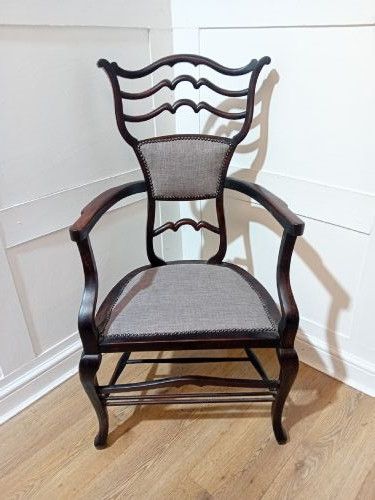
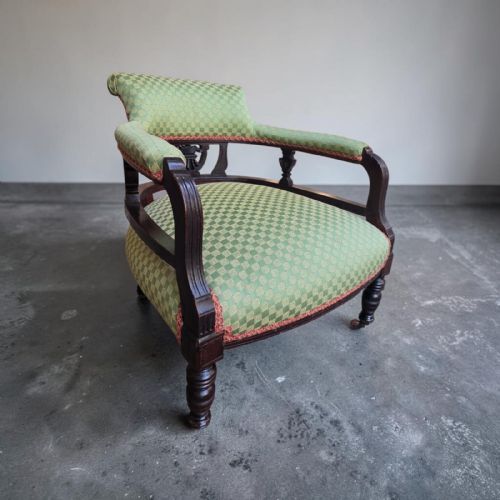
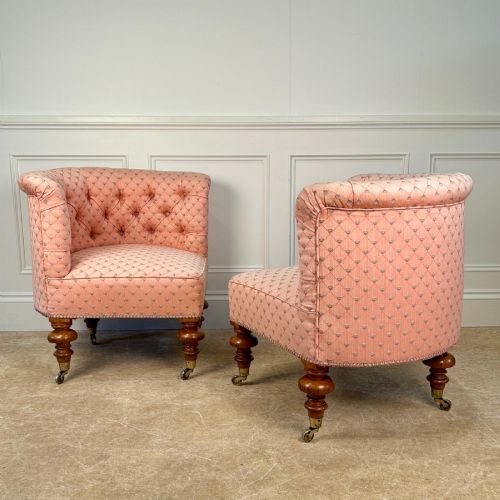


Vintage Corner Chair
These vintage corner chair designs bring sculptural seating into awkward spaces, offering compact proportions and sturdy builds from periods spanning the Georgian era to the early twentieth century.
Vintage Corner Chair
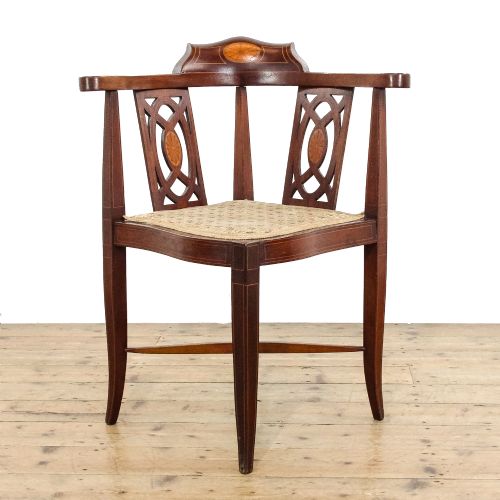
A vintage corner chair turns unused room angles into functional seating through a diagonal frame and a central backrest. These pieces appear in numerous historic iterations, from eighteenth-century Georgian walnut models to Edwardian inlaid mahogany versions.
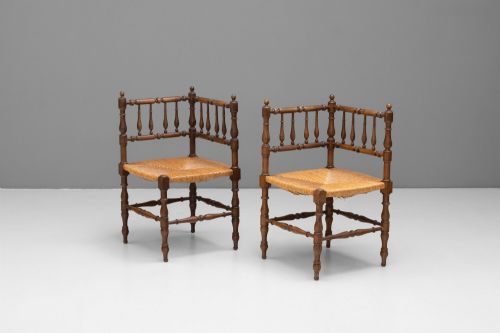
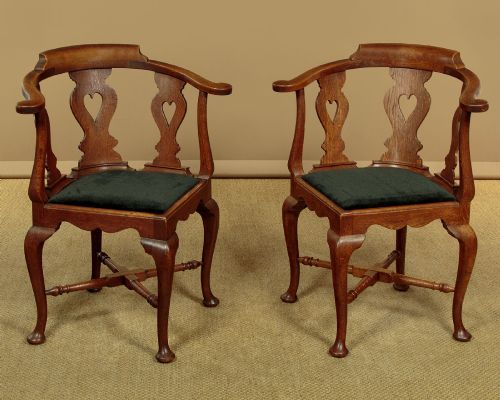
Makers designed these low-slung seats for studies, dressing rooms, and parlours where standard square chairs obstructed movement. The evidence here holds examples ranging from rustic oak and rush constructions to refined satinwood and brass-accented salon pieces.
Shoppers frequently encounter Edwardian and Victorian incarnations alongside earlier 18th-century forms. The configuration allows the sitter to face into the room while fitting snugly into the junction of two walls.
Assessing quality and craftsmanship
The sophistication of the timber figure and the intricacy of the wood inlay establish the visual hierarchy among these seats. Simple rush-seated country versions contrast sharply against urban salon chairs featuring detailed satinwood banding and marquetry.
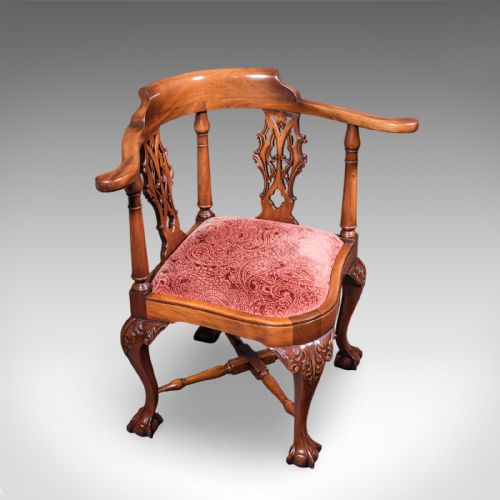
Joinery integrity defines the durability of a diagonal frame, since the unusual angles place distinct pressures on the corner post. Superior pieces display seamless corner joints and finely carved spindles rather than plain, heavy-handed framing.
A tiny child-sized chair dated 1796 proves that miniature people required proper corner seating too.
S&H Jewell·Miles & Edward’s
The Vintage Corner Chair Glossary
- Corner Chair
- A seat designed specifically to fit into the angle of a room, featuring a diagonal plan with a backrest positioned over one of the rear legs.
- Inlay
- A technique where pieces of contrasting wood, such as boxwood or satinwood, are inserted into recesses in the primary timber to create decorative patterns.
- Rush Seat
- A woven seating surface made from dried marsh grasses twisted into cords and hand-plaited across the chair frame.
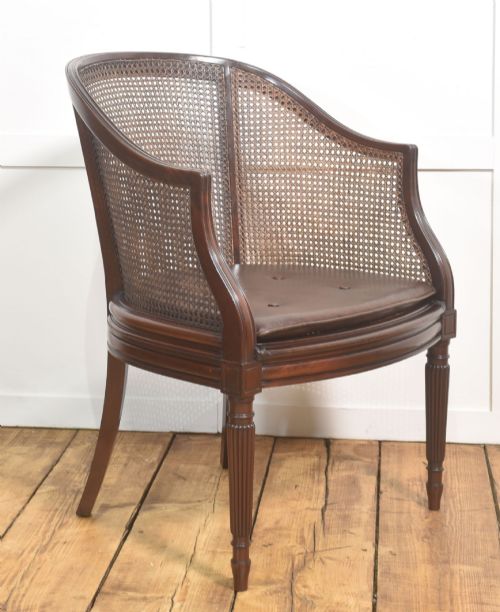
- Tub Chair
- A deep-seated armchair with a continuous curved back and armrest rail forming a rounded enclosure.
- Marquetry
- Elaborate wood inlay work forming pictorial or geometric designs across the surface of the furniture.
Vintage Corner Chair: Frequently Asked Questions
What is a vintage corner chair used for?
These chairs fit snugly into empty room corners, functioning primarily as accent seating, desk chairs, or occasional dressing seats.
Their compact footprint provides a comfortable perch without crowding narrow hallways or small bedrooms.
How do I identify a Georgian corner chair?
Georgian examples rely on heavier solid timbers like mahogany or walnut, often featuring plain or pierced splats and drop-in upholstered seats.
Later Victorian and Edwardian iterations tend to incorporate lighter woods, decorative marquetry inlay, and slender turned supports.
Are corner chairs comfortable to sit in?
The diagonal design offers unique back support along two adjacent sides, making them surprisingly cosy for reading or conversation.
Upholstered squab cushions or padded velvet seats enhance the comfort level compared to rigid wooden boards.
Which woods were used for these chairs?
Cabinetmakers utilised durable hardwoods including mahogany, oak, and walnut as the primary structural materials for the frames.
Exotic accents and lighter veneers such as satinwood and boxwood appear frequently on Edwardian and revival pieces.