



Early Georgian Desk Chair
An early georgian desk chair brings solid eighteenth-century craftsmanship and practical seating to a study.
Early Georgian Desk Chair
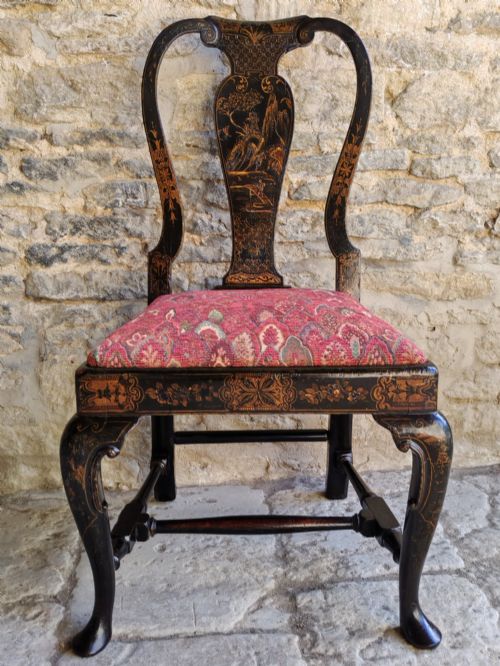
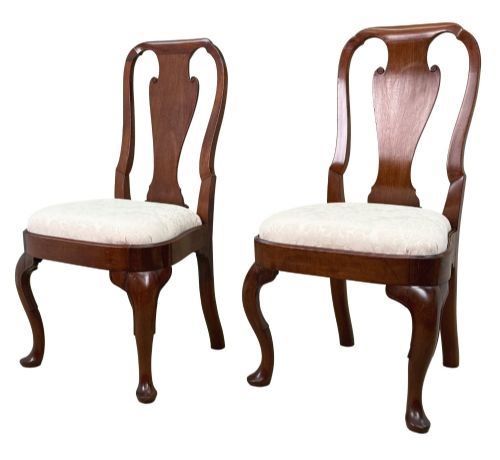
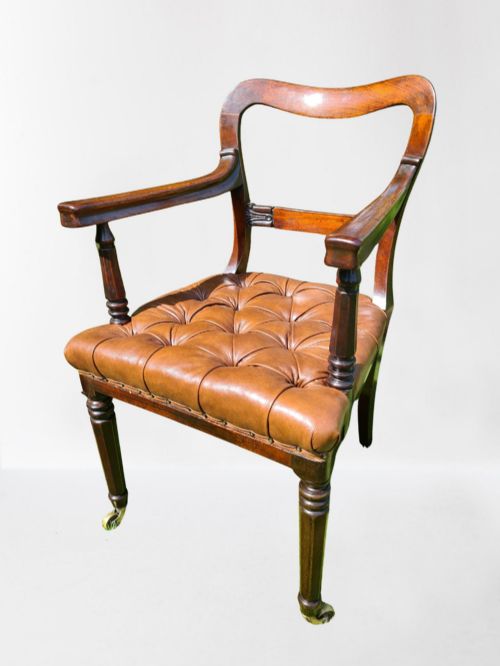
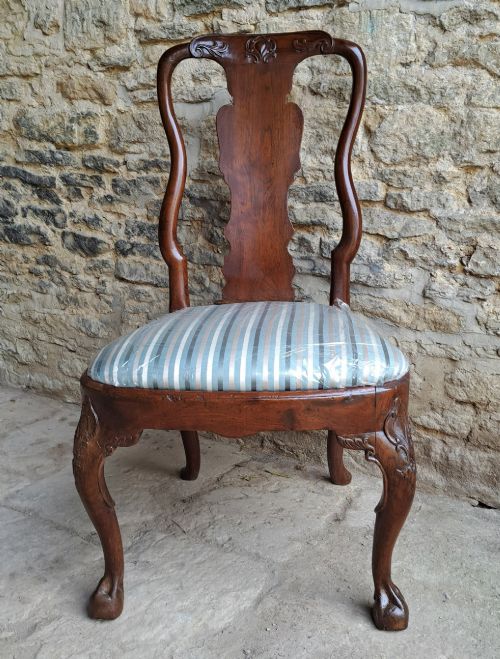
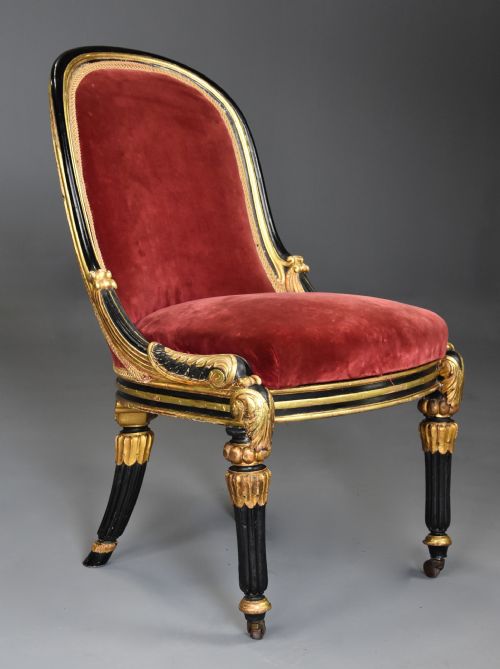
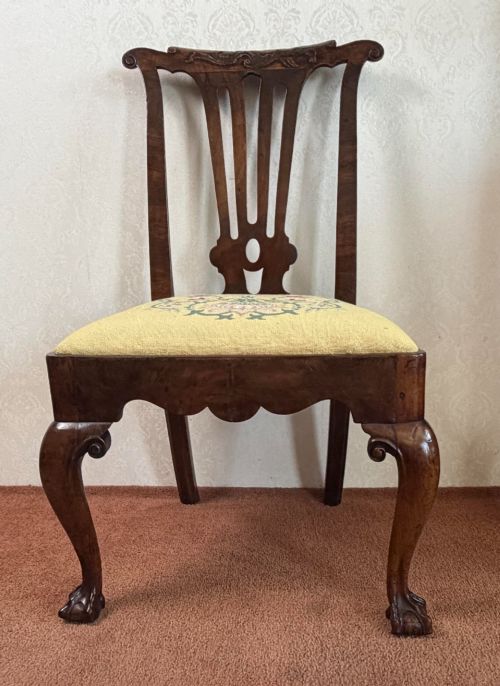
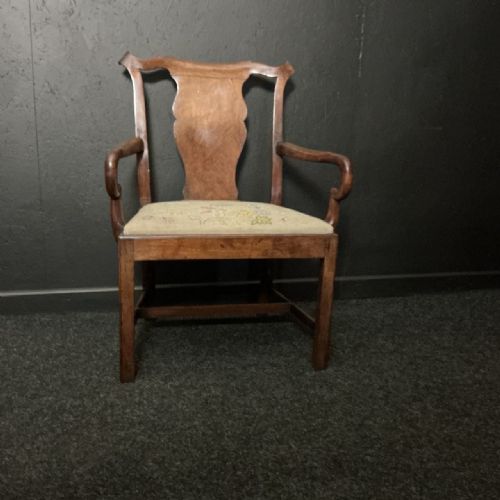
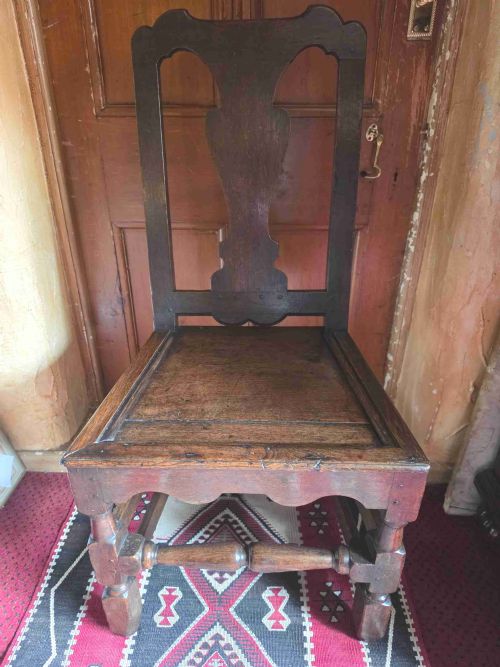
An early georgian desk chair provides sturdy seating designed for reading, writing and administrative tasks in eighteenth-century interiors. These forms include walnut corner chairs, side chairs and elbow chairs originating from the Georgian period.
The versions most commonly met on this page span the eighteenth and nineteenth centuries, often reflecting George I, George II, George III and Regency periods or later revivals. Makers of the time utilised robust timbers such as mahogany, walnut, elm and yew to construct these utilitarian seats.
How they were made
Cabinetmakers and country joiners utilised solid hardwoods including mahogany, walnut, elm, yew and ash for frames, sometimes incorporating brass fittings. Timber selection dictated the structural integrity and grain pattern of each piece.
Joinery methods involved traditional mortise and tenon construction, supported by turned spindles and shaped splats. Seats frequently accommodated drop-in pads upholstered in fabric, tapestry or textile.
Current listings feature walnut, mahogany, elm, ash and yew across eighteenth and nineteenth-century periods.
What varies in quality
The refinement of timber carving and the choice of primary wood distinguish superior examples from simpler country-made variants. Selected grain patterns in walnut and mahogany elevate the visual weight of a piece.
Structural honesty and the retention of original framing elements determine the integrity of the chair. Subtle details such as carved splats, shaped arms and well-fitted corner joints separate standard workshop production from finer commissions.
The Early Georgian Desk Chair Glossary
- Corner chair
- A seating form designed to fit into a room corner, featuring a diagonal seat plan and a continuous curved armrest supported by multiple columns.
- Elbow chair
- An armchair providing support for the arms, often utilised at a desk or writing table.
- Splat
- The vertical central strip of wood in the back of a chair, frequently shaped or carved.
- Drop-in seat
- A removable frame upholstered separately and dropped into the seat rails of the chair.
- Windsor chair
- A wooden chair constructed with a solid saddle-seated base into which the legs and back spindles are tenoned directly.
Early Georgian Desk Chair: Frequently Asked Questions
How do I identify an early georgian desk chair?
Look for characteristic eighteenth-century timber choices such as walnut or mahogany, combined with sturdy corner or elbow forms intended for writing.
Examine the construction methods and joinery beneath the seat to confirm period authenticity.
Where were these chairs placed?
These chairs served writers, readers and administrators in libraries, studies and private offices.
Their compact corner designs or supportive armrests allowed users to sit comfortably while attending to correspondence.
How should I clean the wood?
Maintain timber surfaces by applying a traditional beeswax polish with a soft cloth to nourish the grain.
Avoid modern liquid cleaners that might strip the historic patina or damage original fabric upholstery.