


Edwardian Throne Chair
An edwardian throne chair commands attention in a room, offering tall backs, heavy timber, and a sense of architectural authority.
Edwardian Throne Chair
When searching for an edwardian throne chair, buyers encounter heavy wooden seating influenced by historic revival movements and early twentieth-century design. These pieces combine domestic utility with imposing silhouettes, often standing taller than standard armchairs to create a distinct focal point in a hallway or study.
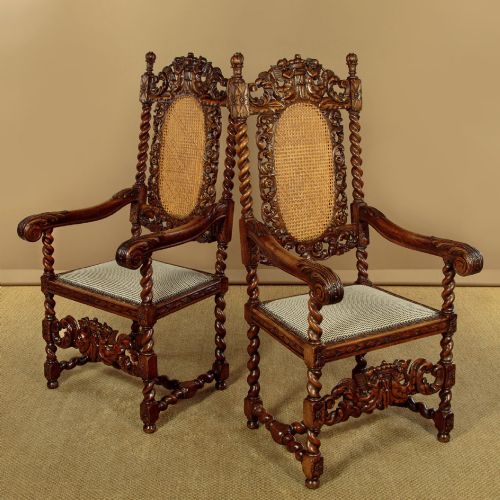
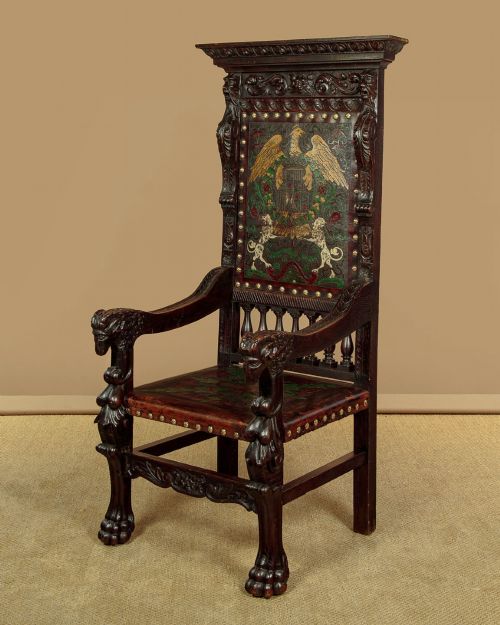
The versions most common on this page rely on oak construction, high backs, and carved details that draw heavily on earlier Jacobean, Gothic, and Renaissance idioms. Alongside substantial wooden armchairs, the broader category occasionally includes small sterling silver novelty pin cushions fashioned in the exact likeness of coronation thrones.
Makers of the period adapted centuries-old furniture forms for Edwardian interiors, incorporating upholstered leather panels, tapestry fabric, or brass accents. These armchairs function both as practical seating and as decorative statements rooted in historic revivals.
Judging Quality and Execution
The distinction between standard production and superior craftsmanship lies in the depth and precision of the carved ornament. Chairs featuring sharply defined linenfold panels, figural motifs, or classical column details reflect a higher level of workshop skill than those with shallow, mechanical pressing.
The integrity of the timber frame and the quality of the original upholstery materials dictate the overall merit of a piece. Substantial joinery, sound barley twist turnings, and well-preserved leather or tapestry upholstery elevate an armchair above simpler domestic seating.
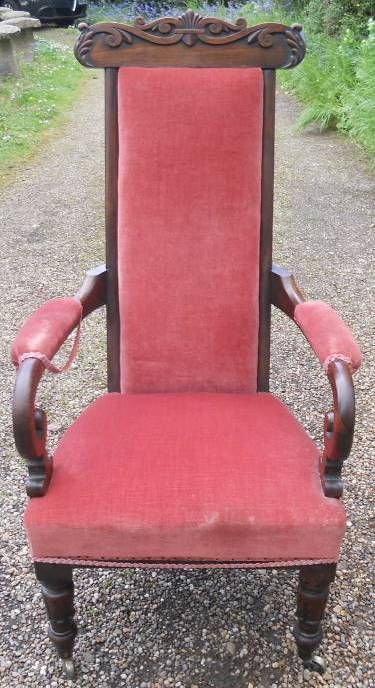
Materials recorded across the inventory include solid oak, walnut, rosewood, brass, cane, velvet, and tapestry fabric.
A.W.N. Pugin
The Edwardian Throne Chair Glossary
- Throne chair
- A high-backed, imposing armchair designed to impart status and authority, typically featuring elaborate carving or architectural elements.
- Jacobean Revival
- A nineteenth and early twentieth-century style imitating seventeenth-century English furniture, known for dark oak, geometric mouldings, and turned supports.
- Gothic Revival
- An architectural and decorative style drawing on medieval forms, featuring pointed arches, tracery, and vertical emphasis.
- Barley twist
- A type of woodturning shaped like a spiralling rope, commonly found on the legs and stretchers of Edwardian and earlier armchairs.
- Carver armchair
- A traditional term for an armchair, often placed at the head of a table or utilised as a hall chair.
Edwardian Throne Chair: Frequently Asked Questions
Where should I place an edwardian throne chair?
These imposing armchairs suit spaces with high ceilings and traditional proportions, such as a large hallway, a study, or a library. Their tall backs and architectural details allow them to stand alone as statement pieces rather than clustering with standard seating.
Avoid tucking them into cramped corners where their carved arms and extended backrests lose their visual impact.
How do I care for leather and wood?
Maintain the timber frame by dusting regularly with a soft cloth and applying a microcrystalline wax periodically to nourish the oak or walnut. Keep the piece away from direct sunlight and heat sources to prevent the wood from drying out.
Treat upholstered leather panels with a suitable leather conditioner to keep the material supple and prevent cracking over time.
Are these chairs comfortable for daily use?
While Edwardian throne chairs were built with sturdy proportions, their primary purpose was often decorative or formal rather than lounging. Many examples feature upright backs and rigid frames designed for posture rather than soft relaxation.
Buyers intending to use one daily should examine the depth of the seat and the firmness of the original padding or buttoned upholstery.
How do I distinguish Edwardian revivals from older pieces?
Examine the timber shrinkage, tool marks, and construction methods to determine the age of the framework. Edwardian revivals often utilise machine-sawn components and standardised fixings hidden beneath symmetrical, crisp carving that lacks the irregular wear of seventeenth-century originals. Nail holes, block construction, and secondary woods inside the frame typically reveal whether a chair dates to the 1900s or an earlier century.