



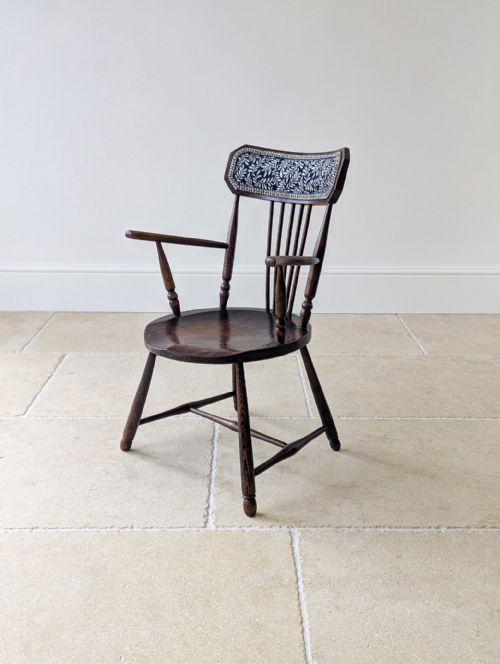
Antique Arts and Crafts Chair
An antique arts and crafts chair represents a design movement centred on honest construction, vernacular materials, and utility.
Antique Arts and Crafts Chair
An antique arts and crafts chair is a seat produced during the late nineteenth and early twentieth centuries, reflecting a rejection of mass industrial standardisation in favour of traditional craftsmanship. These pieces span simple country vernacular forms to sophisticated London retailing house productions.
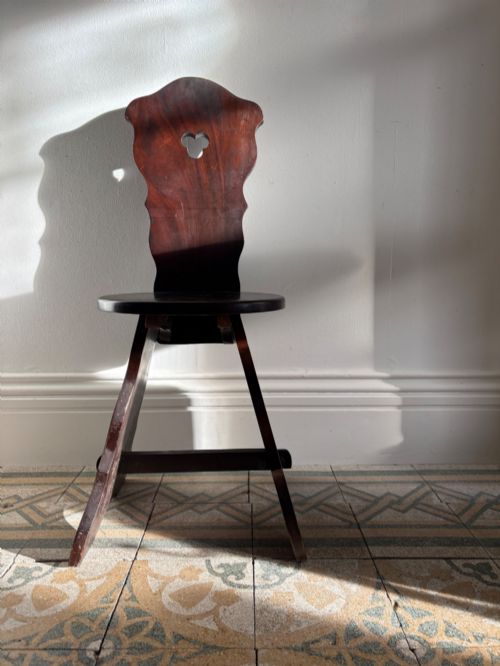
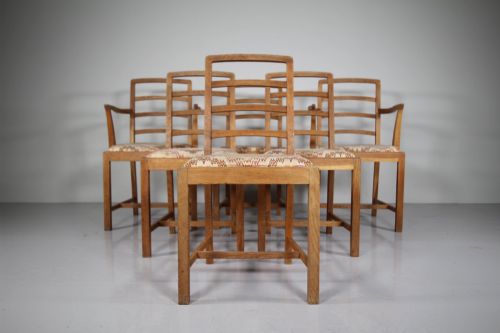
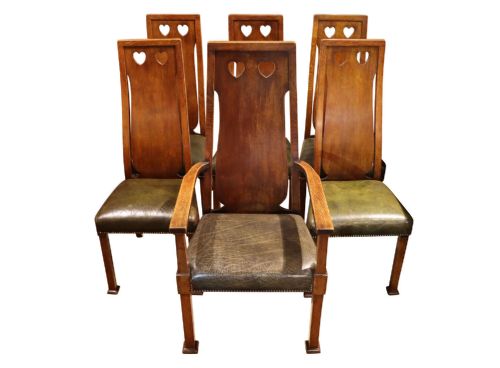
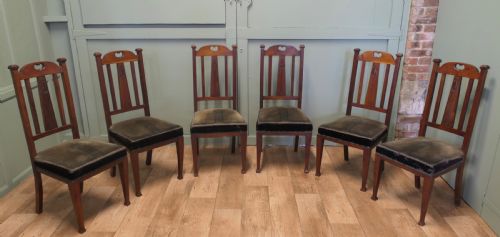
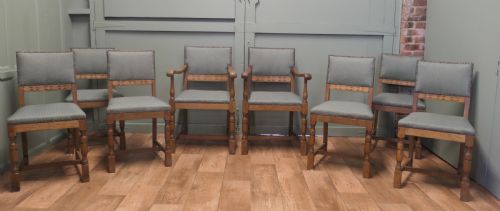
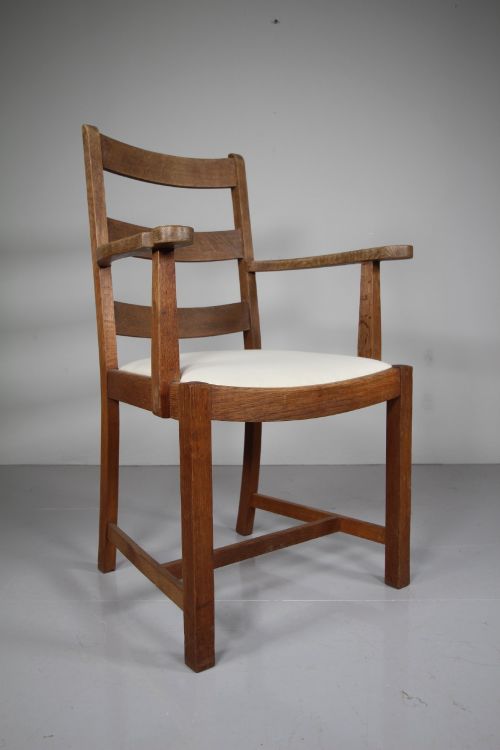
The most common examples encountered on this page are dining chairs, armchairs, and side chairs constructed from oak, often incorporating rush or leather seating. These items range from plain utilitarian forms to elaborate designs linked to prominent architectural and decorative movements.
Makers drew inspiration from Gothic revivalism, Scottish school designs, and English country traditions to create seating suitable for libraries, halls, and everyday domestic interiors. Buyers encounter both single statement fireside pieces and matched sets intended for dining spaces.
How they were made
Makers relied primarily on solid oak, beech, elm, and laburnum, selecting timbers for their grain and structural integrity rather than masking them with heavy veneers. Frames frequently utilised exposed joinery, such as pegged mortise and tenon joints, which demonstrated the methods of construction.
Seating surfaces often employed woven natural materials like rush, or traditional upholstery using leather, fabric, and velvet fixed with brass tacks. Secondary timbers like pitch pine and ebonised beech appeared in specific regional or stylistic variants.
Structures ranged from steam-bent wooden components in country vernacular designs to rectilinear frames favoured by urban workshops. Surface finishes typically remained close to the natural timber, utilising wax or oil polishes to protect the wood while preserving its texture.
Listings on this site show oak as the predominant material, alongside beech, rush, and leather, spanning the late nineteenth century to the early twentieth century.
What varies in quality
Quality separates mass commercial production from pieces executed by notable designers or specialist workshops under the direct supervision of leading practitioners. The presence of maker stamps, retail labels, or documented commission marks elevates a piece above standard anonymous workshop output.
Material selection and timber figure dictate the visual success of the piece, with dense golden oak and well-matched grain patterns commanding greater attention than plain utility timber. The execution of structural elements, such as hand-shaped spindles, tightly woven rush seats, and precise joinery, marks the distinction between competent utility furniture and fine artistic production.
Design integrity also varies according to the maker's adherence to the core principles of the movement, where proportion and functional honesty dictate the form. Pieces retaining their original upholstery materials, finish, and structural components preserve a higher degree of historical integrity.
Heals of London·Goodyers London·Morris And Co·Edward Barnsley·James Shoolbred And Co
The Antique Arts and Crafts Chair Glossary
- Rush seat
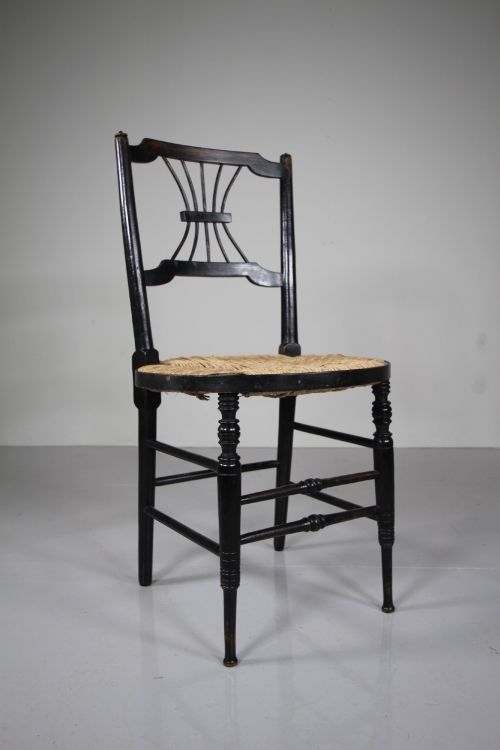
- A seating surface woven from dried marsh rushes, commonly utilised in vernacular and Sussex style chairs for its durability and natural texture.
- Spindle back
- A chair back constructed with a series of thin, turned wooden rods, frequently seen in fireside and country vernacular seating.
- Gothic Revival
- An architectural and decorative style drawing inspiration from medieval forms, characterised by pointed arches, trefoil details, and heavy structural framing.
- Vernacular
- Traditional regional furniture built by local craftsmen using available native timbers and time-tested methods rather than following urban stylistic trends.
- Metamorphic
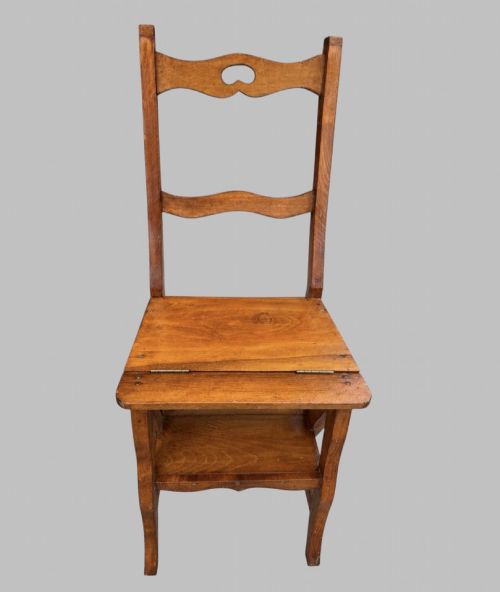
- Furniture designed to transform into another object, such as a library chair that unfolds into a set of steps.
Antique Arts and Crafts Chair: Frequently Asked Questions
How do I identify an arts and crafts chair?
Look for honest construction methods, exposed joinery, and the use of solid oak, beech, or rush without excessive ornamentation. These designs prioritize functional utility and simple geometric or vernacular lines.
Many pieces also feature distinctive elements such as spindle backs, leather upholstery fastened with brass tacks, or references to Gothic and country traditions.
Were these chairs used for dining or lounging?
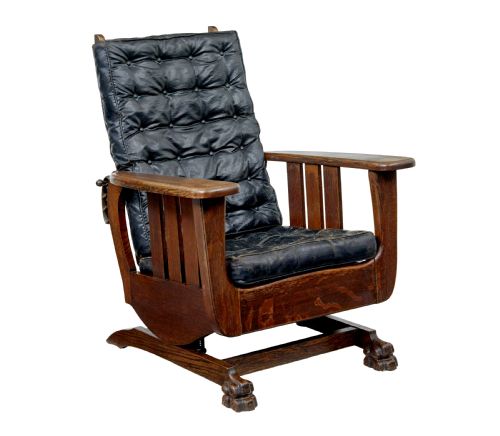
Both functions are well represented, as makers produced everything from rigid dining sets to low armchairs, rocking chairs, and fireside seats. Dining chairs were usually sold in matched sets for domestic interiors.
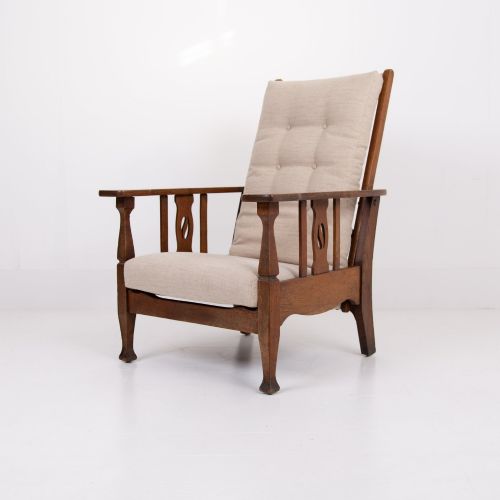
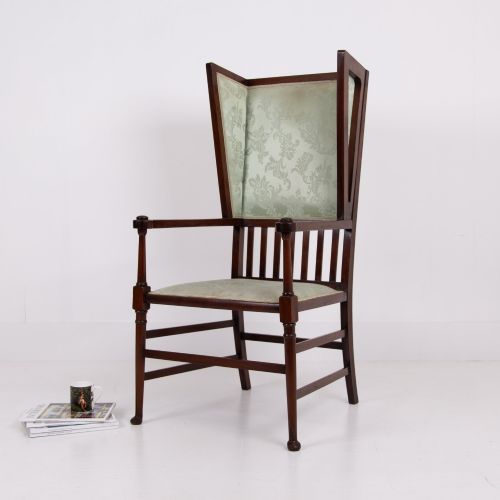
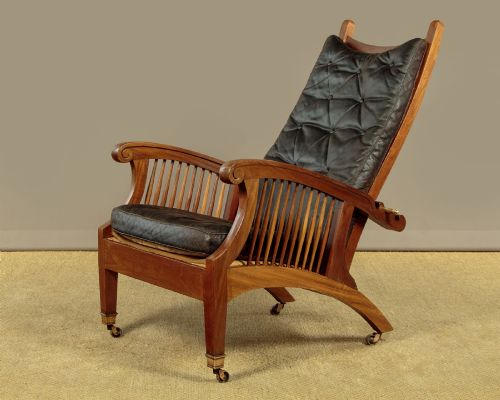
Lounging forms, including recliner armchairs and winged seats, were designed for libraries, halls, and drawing rooms to provide comfortable relaxation.
What is a Sussex chair?
The Sussex chair is a lightweight, ebonised or stained beech armchair featuring a spindle back and a woven rush seat. It originated from traditional country patterns rediscovered by nineteenth-century designers.
These pieces became popular domestic fireside chairs due to their simple construction and comfortable, practical proportions.
How should I care for an antique oak chair?
Keep the timber away from direct heat sources and rapid temperature fluctuations to prevent the wood from drying out or splitting. Apply traditional beeswax periodically to nourish the surface and maintain the natural finish.
Avoid harsh modern cleaning chemicals and protect rush or leather seats from excessive moisture.