
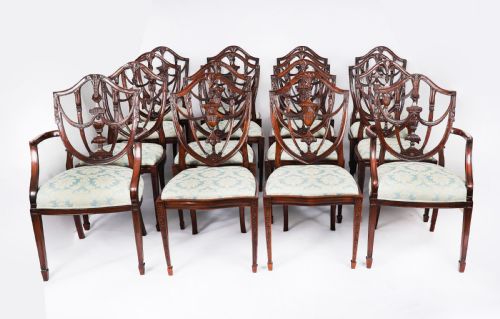
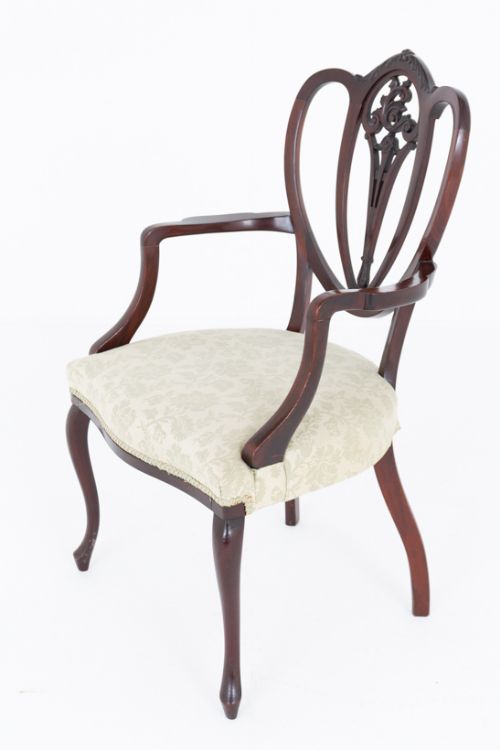
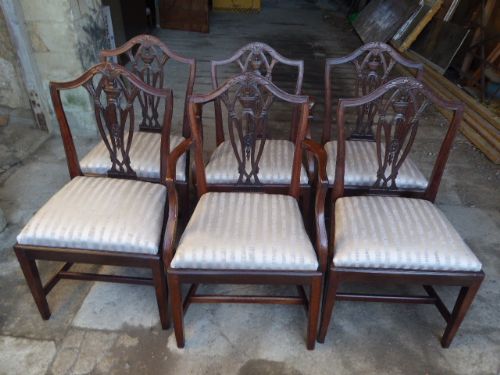
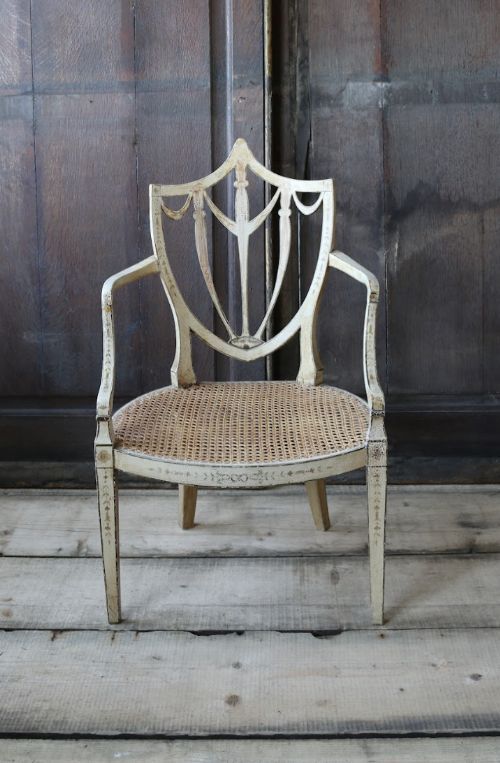


Shield Back Armchairs
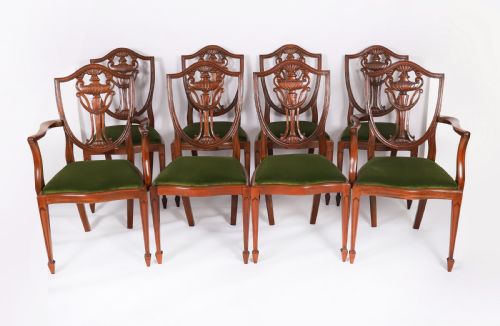
Shield back armchairs combine structural elegance with refined woodwork, offering collectors a distinctive seating option spanning multiple centuries.
Shield Back Armchairs
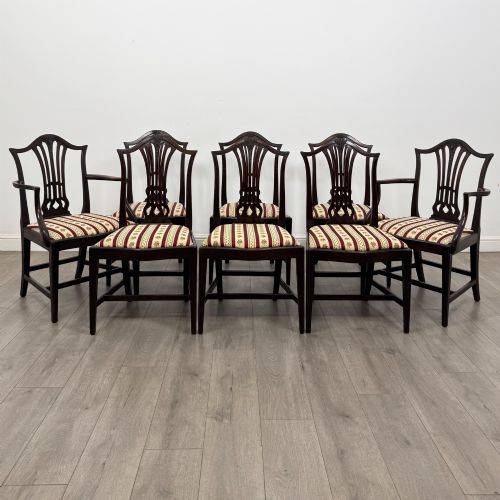
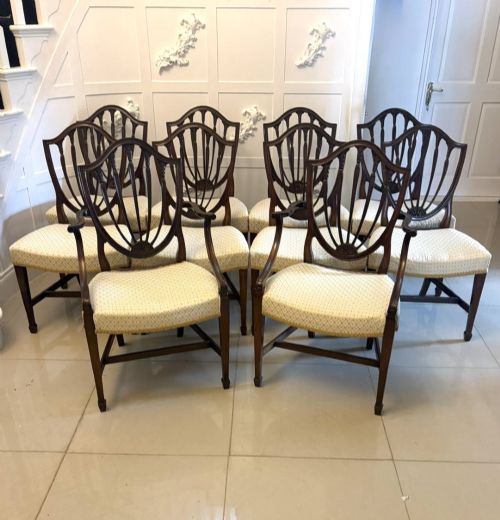
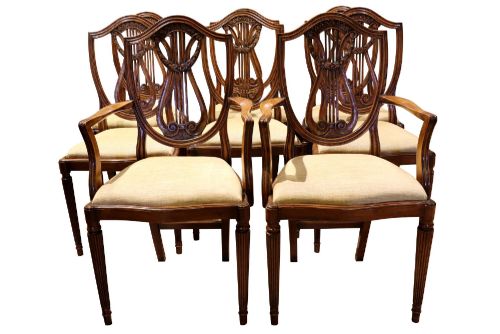
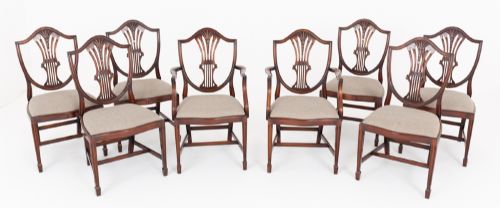
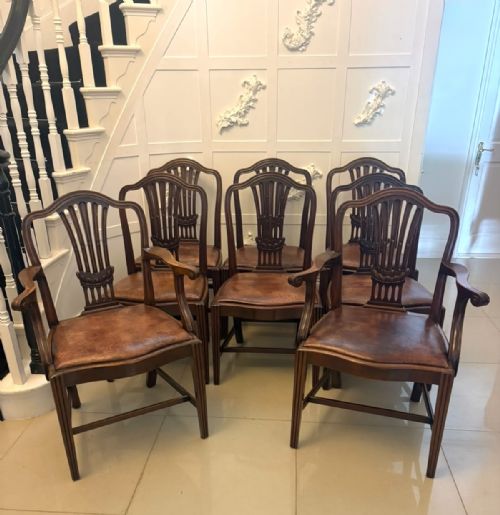
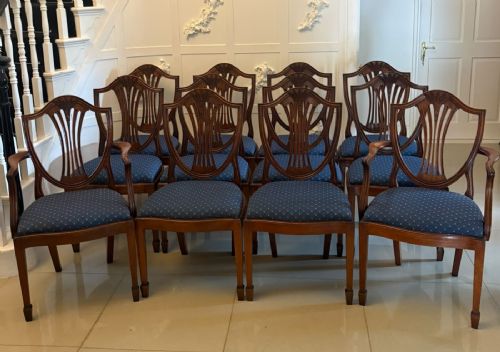
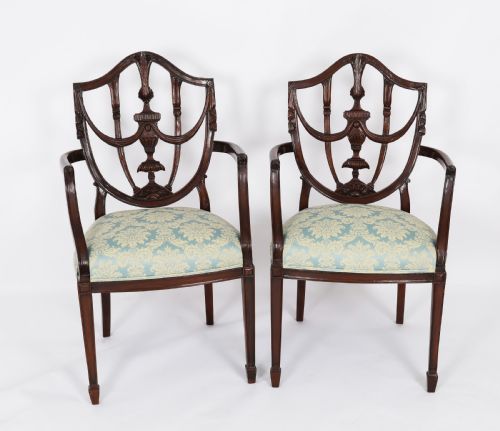
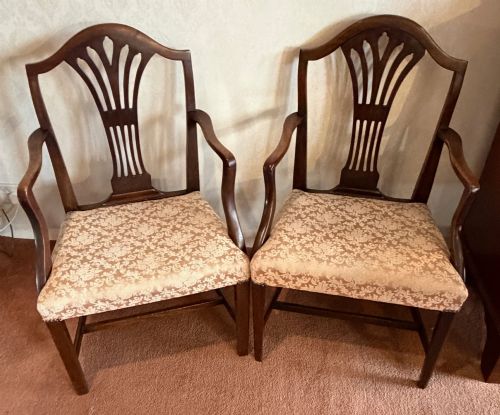
Shield back armchairs represent a specific class of seating defined by a backrest shaped like a heraldic shield, appearing frequently alongside matching dining sets and occasional furniture. Buyers searching for shield back armchairs encounter pieces originating from the eighteenth century through to the twentieth century, encompassing both original period examples and subsequent revivals.
The selection ranges from single carver chairs and pairs of open armchairs to large suites designed for formal dining rooms. Mahogany forms the predominant timber across these variants, supplemented by satinwood, maple, and painted frames.
Alongside standard dining chairs and desk chairs, the inventory includes specific regional and stylistic interpretations such as Federal revival pieces, French Napoleon III designs, and Edwardian adaptations. These forms provide practical seating while maintaining the characteristic silhouette that defines the category.
What varies in quality
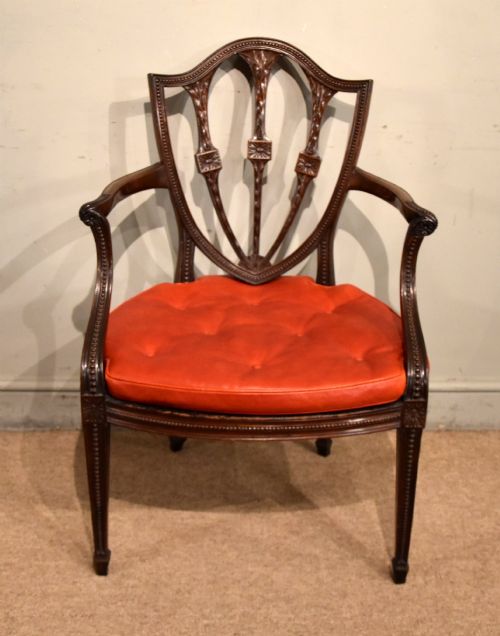
The standard of carving determines much of the distinction between pieces, with sharper detailing in the pierced splats and crisp foliage indicating superior craftsmanship. Timber selection also plays a role, as figured mahogany with rich grain patterns elevates the visual presence of a chair compared to plain stock.
Integrity of the frame construction and the survival of original surface finishes separate standard examples from finer ones. Pieces retaining their initial leather or fabric upholstery schemes, or those demonstrating meticulous marquetry and inlay work, occupy the upper tier of the range.
Listings feature mahogany as the dominant wood, accompanied by satinwood, maple, and brass accents.
Maple and Co·Edwards and Roberts
The Shield Back Armchairs Glossary
- Carver
- An armchair designed with open sides to accommodate formal clothing, frequently produced as part of a larger set alongside smaller dining chairs.
- Hepplewhite
- A classical eighteenth-century furniture style associated with graceful curves, shield-shaped backrests, and tapered legs.
- Splat
- The vertical wooden slat positioned in the centre of a chair back, which in these pieces takes the contoured outline of a shield.
- Marquetry
- Decorative veneer work arranged in intricate patterns across the wooden frame, utilising contrasting timbers and brass elements.
- Ebonised
- Wood treated with a dark stain or finish to imitate the appearance of ebony, seen on late nineteenth-century examples.
Shield Back Armchairs: Frequently Asked Questions
How do I identify a true period piece?
Examine the timber shrinkage, joinery methods inside the seat frame, and hand-carved details on the shield splat to establish age. Genuine eighteenth-century items display tool marks and construction traits consistent with period workshop practices.
Compare the proportions and wood patination against documented examples from the same era. Revival pieces from the Edwardian or Victorian periods often show machine-cut components and different secondary woods.
Were these chairs used for dining?
Armchairs in this style served primarily as carvers at the head and foot of formal dining tables. They provided comfortable seating during long meals while allowing room for voluminous eighteenth-century clothing.
Matching sets typically paired two armchairs with six or eight single dining chairs. Single examples also functioned as desk chairs or occasional seating in drawing rooms.
How do I care for antique upholstery?
Protect the fabric or leather surfaces from direct sunlight and excessive heat to prevent fading and drying out. Regular gentle dusting preserves the textile fibres without causing abrasion.
Consult a professional restorer before attempting any deep cleaning of antique leather or delicate silk velvets. Ensure the underlying webbing and stuffing remain stable under normal seated weight.
What is the difference between styles?
Hepplewhite designs emphasise delicate proportions, curved shield backs, and straight tapered legs often ending in spade feet. Later revivals incorporate heavier frames, denser mahogany, and varied inlay patterns reflecting Victorian or Edwardian tastes.
French Napoleon III variants introduce buttoned upholstery and painted or gilt frames. Federal revival pieces adapt these British shapes to American aesthetic preferences of the twentieth century.