
Hepplewhite Dining Armchairs
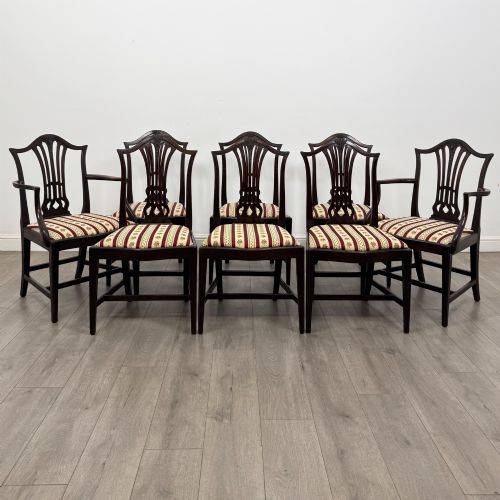
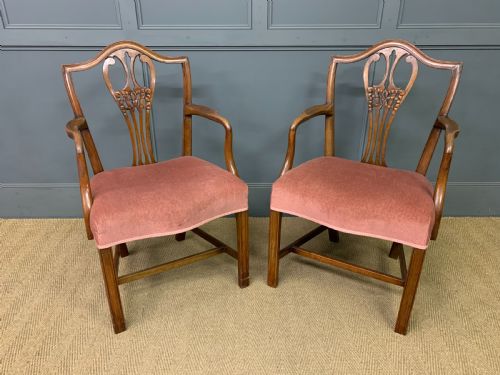
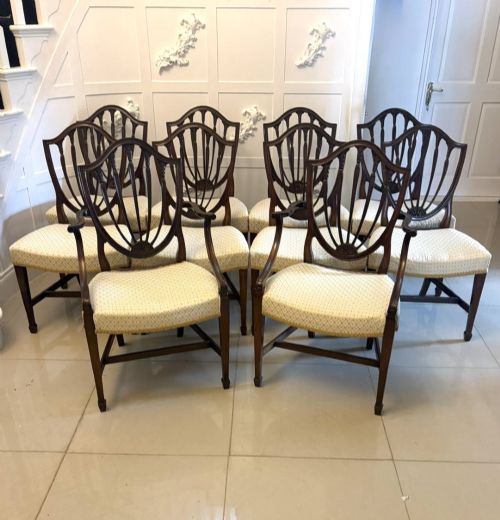
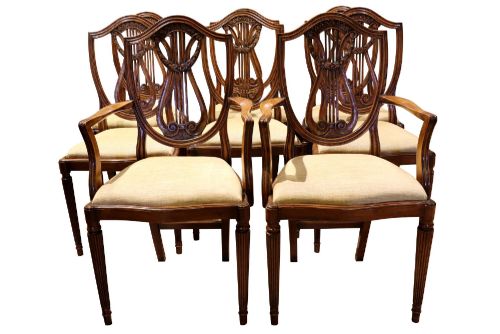
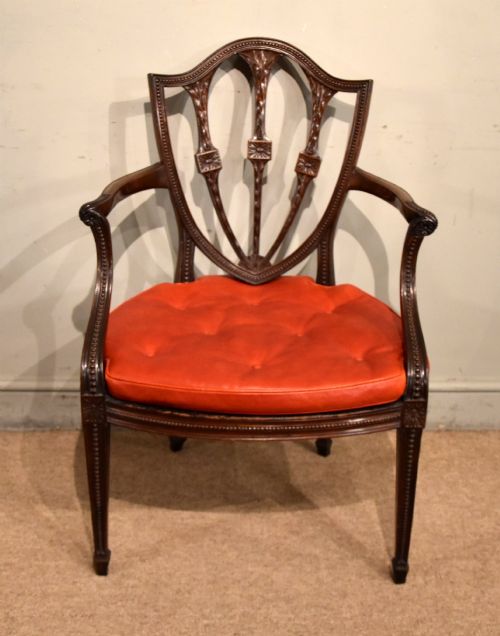
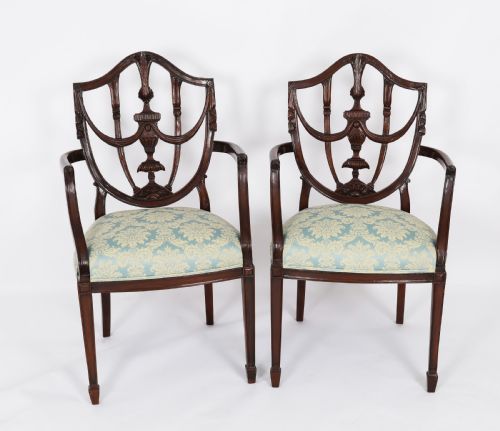
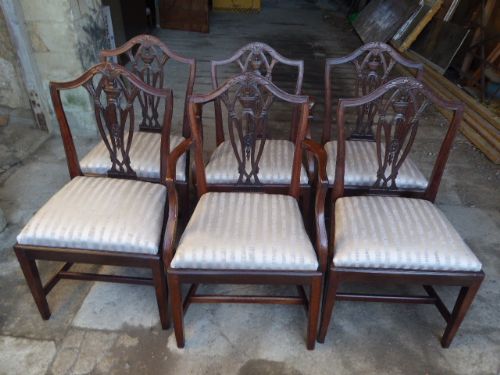
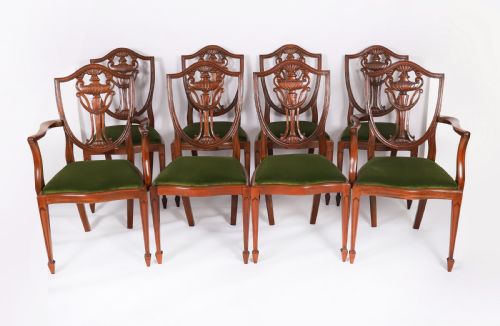
These hepplewhite dining armchairs bring characteristic shield backs and carved mahogany forms to the dining table, offering formal seating with classical proportions.
Hepplewhite Dining Armchairs
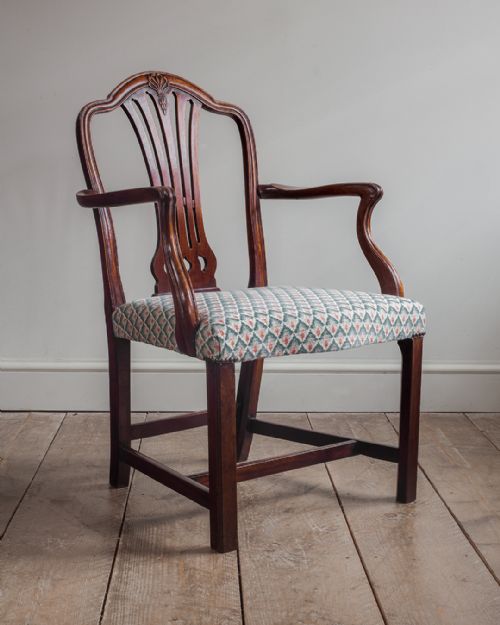
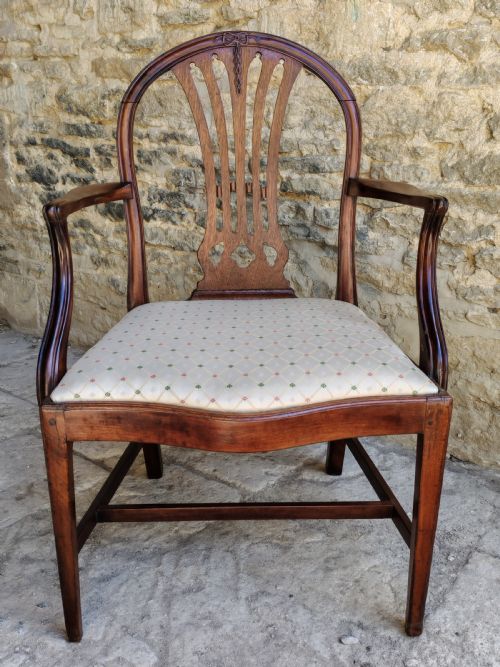
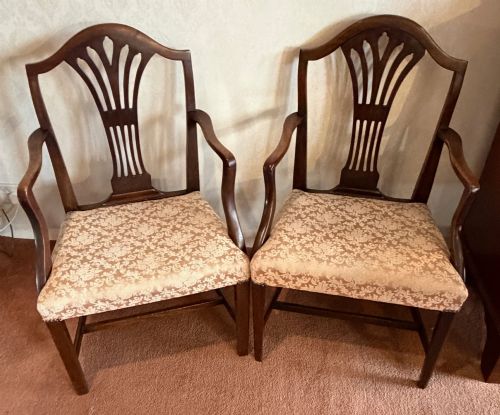
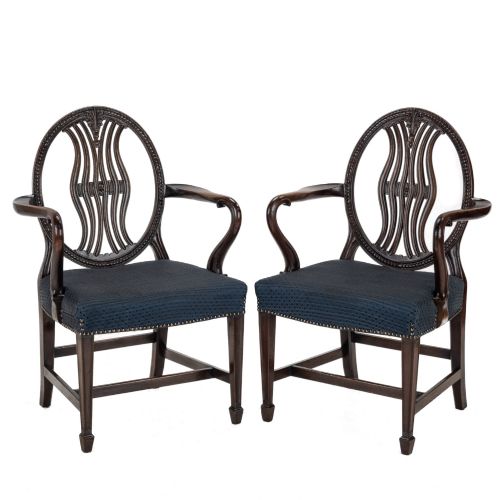
Hepplewhite dining armchairs represent a defined classical aesthetic grounded in the eighteenth century, most instantly recognised by their shield-shaped backs and straight or slightly tapered legs. The selections here encompass genuine eighteenth-century period pieces alongside later nineteenth-century adaptations and twentieth-century revival sets.
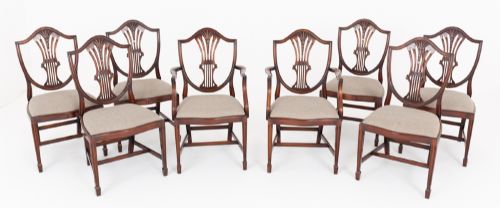
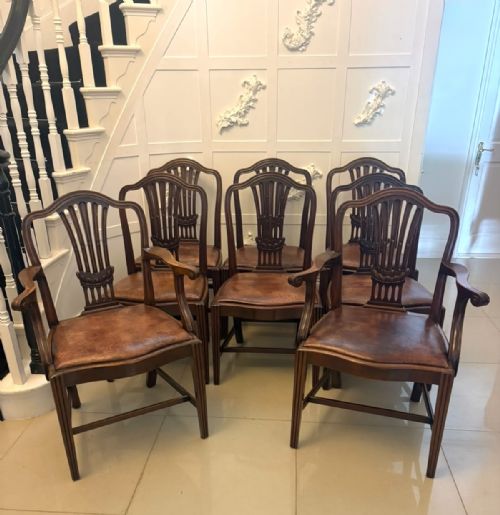
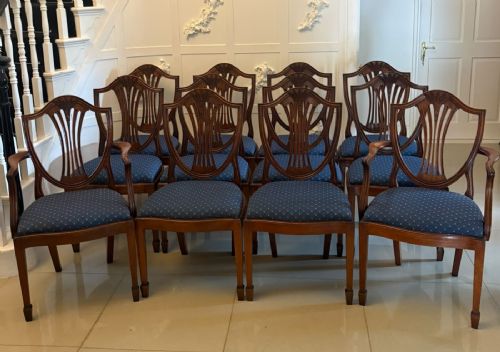
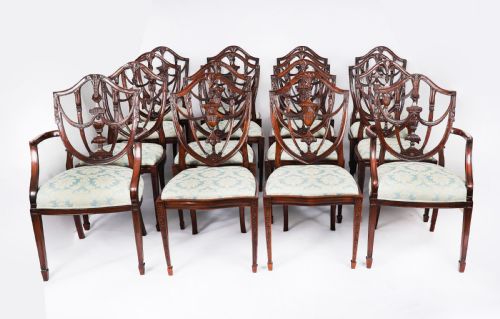
The form typically combines a generous open armchair structure with integrated arms, often referred to as carvers, designed to sit at the head of a dining table or accompany matching sets of single dining chairs. Buyers frequently encounter these in matched pairs or compiled sets of varying sizes, ranging from intimate pairs to extensive dining suites numbering up to sixteen chairs.
Originating during the Georgian era, the design vocabulary spans George III originals through to Edwardian, Victorian and Federal revival interpretations. Mahogany remains the dominant wood across these eras, paired with diverse seat coverings including leather, velvet and traditional upholstery fabric.
Materials and Construction
Cabinetmakers relied heavily on solid mahogany for its tensile strength and rich grain, allowing intricate pierced splats in the shield backs to be carved without compromising structural integrity. Timber selection determined how crisply back splats, wheatsheaf motifs and drapery carvings could be executed.
Joints were traditionally pegged and tenoned to withstand the daily stresses placed on dining armchairs and elbow chairs. Upholstered drop-in seats or fixed pads used webbing and traditional stuffing materials, surfaced with fabrics, leather or velvet according to the period of manufacture or subsequent reupholstery.
Mahogany is the universal timber choice across the available inventory, occasionally paired with maple in Edwardian interpretations.
Quality Variations
The distinction between standard examples and the finest pieces lies in the depth and crispness of the carving on the shield back and arm supports. Subtle detailing on the pierced splats and the elegance of the sweeping arm terminals separate master craftsmanship from routine workshop production.
Originality of timber, surface patination and structural cohesion dictate overall merit across both eighteenth-century originals and later revival suites. Sets that retain their original proportions without excessive timber shrinkage or replacement parts command greater appreciation among collectors.
Maple and Co
The Hepplewhite Dining Armchairs Glossary
- Shield Back
- A chair back shaped like a classic heraldic shield, tapering towards a narrower base above the seat. This profile forms the primary visual hallmark of Hepplewhite seating design.
- Carver
- A traditional term for an armchair, typically designed with open arms to sit at the head of a dining table alongside matching single chairs. These pieces provide additional width and support.
- Splat
- The vertical wooden slat positioned in the centre of the chair back, which in these pieces is frequently pierced and carved into urn, lyre or drapery motifs.
- Elbow Chair
- An alternative historical term for an armchair, referencing the supportive armrests designed to accommodate the user's elbows.
- Revival
- A later design movement, spanning the Victorian and Edwardian periods, that consciously recreated eighteenth-century furniture styles using contemporary manufacturing techniques.
Hepplewhite Dining Armchairs: Frequently Asked Questions
How do I distinguish an original eighteenth-century chair from a revival piece?
Original pieces display authentic timber ageing, traditional hand-cut joinery methods and surface patination accumulated over centuries of use. Revival pieces, while often finely made during the Victorian or Edwardian eras, show uniform machine-tool marks and later hardware.
Examining the underside of the seat frame and the wear patterns around the legs helps confirm the true age of the timber and construction.
What is the difference between a dining armchair and a carver?
In historical and marketplace terminology, dining armchairs and carvers describe the exact same seating form. Both terms refer to chairs fitted with armrests designed to complement standard side chairs around a dining table.
Pairs of these armchairs were traditionally placed at the head and foot of the table while matching single chairs lined the sides.
How should I care for antique mahogany chair frames?
Maintenance requires keeping the mahogany away from direct heat sources and strong sunlight to prevent the timber from drying out or splitting. Gentle dusting with a dry cloth preserves the polish, supplemented occasionally by traditional beeswax.
Avoid commercial silicone sprays, as they can penetrate the wood grain and damage the historic finish over time.
Can I mix these armchairs with a modern dining table?
The classic proportions and warm mahogany tones of these armchairs allow them to pair effectively with contemporary or antique dining tables. Their open shield backs maintain a visual lightness that prevents them from dominating a modern dining space.
When combining periods, ensure the table height accommodates the arm clearance beneath the apron.