

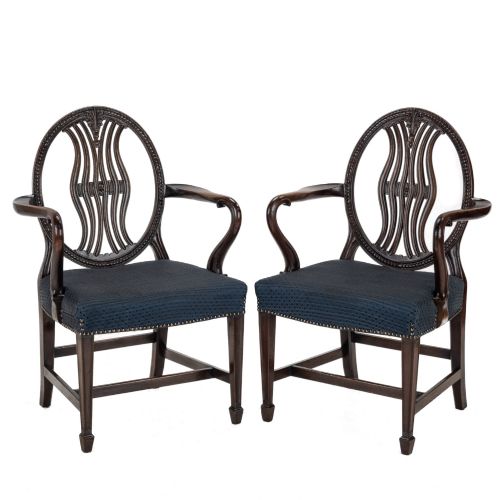


Hepplewhite Armchairs Pair
These hepplewhite armchairs pair options bring enduring Georgian elegance and carved woodwork into a room.
Hepplewhite Armchairs Pair
When you search for a hepplewhite armchairs pair, you encounter seating designed around the graceful aesthetics of the eighteenth century alongside later revival interpretations. The selection spans genuine Georgian period pieces from the seventeen-eighties, nineteenth-century adaptations, and twentieth-century revivals.
Most entries on this page consist of mahogany frames configured as carvers, elbow chairs, or open armchairs designed for dining rooms, libraries, and drawing rooms. Alongside standard mahogany, the evidence includes satinwood, satinbirch, beech, birch, elm, and giltwood frames reflecting both formal urban cabinet work and country traditions.
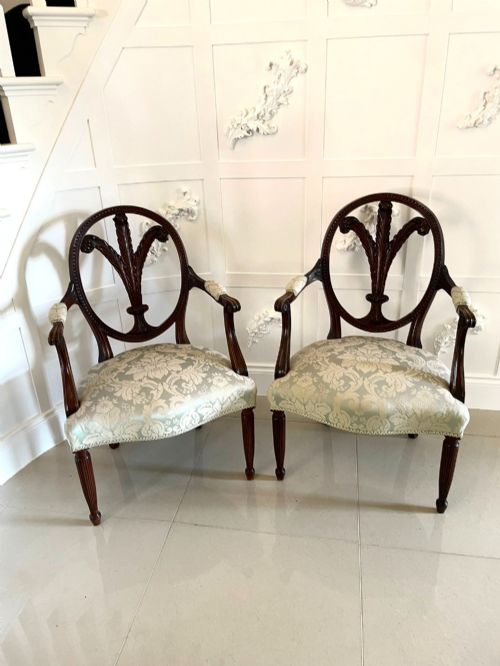
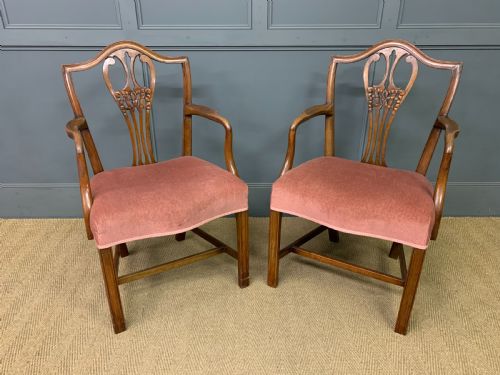
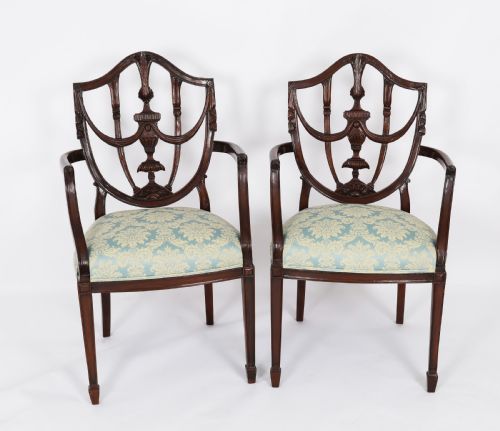
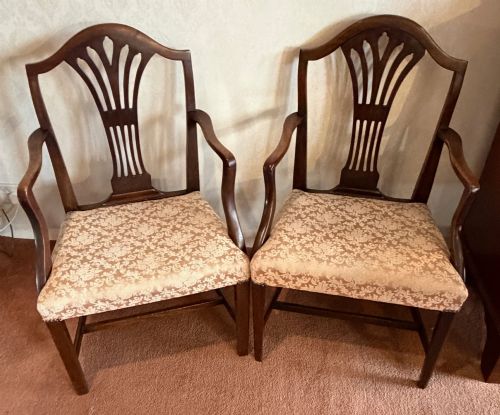
Design characteristics encompass shield backs, oval backs, and petal backs, sometimes featuring polychrome decoration or inlay work. These seating options appear primarily in pairs, suiting balanced interior arrangements.
Materials and construction
Cabinet makers utilised dense hardwoods, predominantly mahogany, to achieve the slender, strong members required for shield backs and curved arm supports. Workshops also employed satinwood, beech, elm, and birch for regional or specific stylistic commissions.
Construction relies upon traditional joinery combined with decorative carving, turning, and occasional giltwood finishes. Upholstery schemes historically incorporate fabric, damask upholstery, and velvet secured over webbing and padding.
Hepplewhite Armchairs Pair Retail Price Guide 2026
Typical asking prices for hepplewhite armchairs pair among the pieces listed under this phrase on Sellingantiques today, from the lower quarter to the upper quarter. They describe what is for sale here now, not the wider market.
Materials documented across the inventory include mahogany, satinwood, satinbirch, beech, birch, elm, brass, giltwood, and multiple upholstery fabrics.
Distinctions in execution
The standard of carving on the splats, arms, and front rails dictates the visual hierarchy between ordinary examples and exceptional pieces. Crisp detailing in the woodwork separates workshop interpretations from standard production.
The choice of timber grain, the integrity of the structural frame, and the fidelity to period proportions determine the standing of each pair. Original eighteenth-century examples differ inherently from later nineteenth and twentieth-century revivals in material patina and age.
The Hepplewhite Armchairs Pair Glossary
- Carver
- An armchair, typically designed with arms to match a set of smaller dining chairs. These sit at the head of a dining table or serve as occasional seating.
- Shield back
- A chair back shaped like a heraldic shield, introduced during the neoclassical period and heavily associated with George Hepplewhite designs. The central splat often incorporates carved wheat ears, urns, or drapery motifs.
- Elbow chair
- An alternative term for an open armchair, referencing the padded or carved supports designed to receive the arms of the sitter. They appear frequently in Georgian dining sets.
- Giltwood
- Timber treated with gold leaf or a gold-coloured metallic preparation. This finish is found on salon and French taste pieces intended for formal reception rooms.
Hepplewhite Armchairs Pair: Frequently Asked Questions
How do I date an armchair pair?
Dating relies upon examining the timber species, joinery methods, tool marks, and the specific nuances of the revival style versus original eighteenth-century manufacture. Secondary woods and fastener types provide further clues to the period of assembly.
Comparison against documented pieces from the Georgian era helps clarify whether a set originates from the seventeen-eighties or represents a later nineteenth-century revival interpretation.
Where were these chairs used?
Original period examples furnished grand dining rooms, libraries, and drawing rooms of large country houses and urban residences. They served both practical seating functions and decorative roles in formal interior design schemes.
Later revival iterations brought this aesthetic into Victorian and twentieth-century homes seeking a traditional architectural atmosphere.
What is the difference between styles?
Georgian period pieces represent original eighteenth-century craftsmanship, whereas Hepplewhite Style and revival pieces date from the nineteenth and twentieth centuries. The latter replicate the shield backs and tapered legs of the earlier era using later manufacturing techniques.
French taste and Gainsborough variants introduce different carving vocabularies, such as giltwood frames and upholstered arm panels, while retaining open armchair configurations.
How should I clean the mahogany?
Maintenance requires dusting with a soft, dry cloth and applying appropriate wax formulations formulated for antique wood surfaces. Avoid modern silicone sprays that can degrade the historic finish.
Upholstery care depends on the textile involved, requiring professional cleaning for delicate damask, velvet, or fabric coverings to preserve the textile structure.