



Hepplewhite Open Armchairs
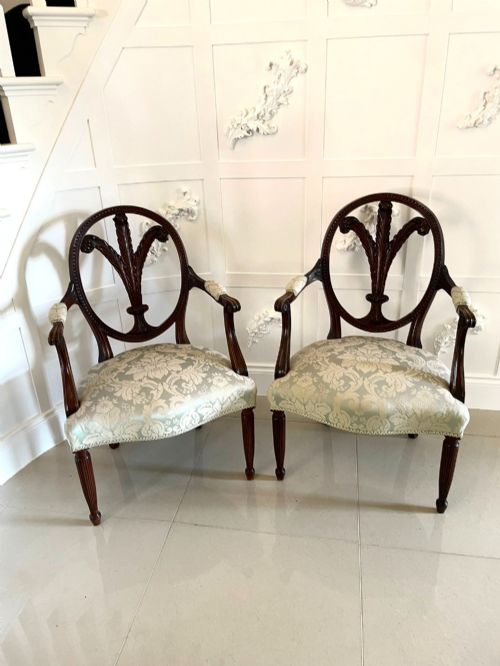
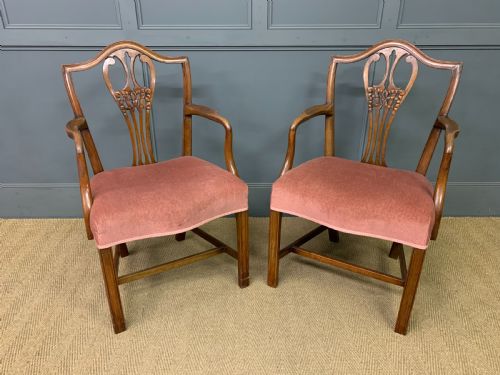
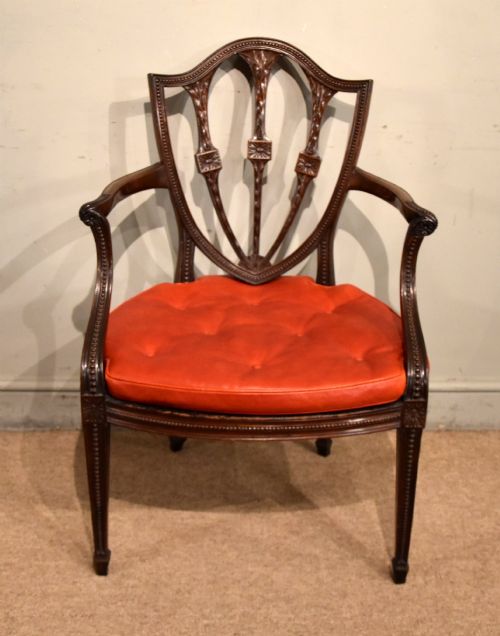
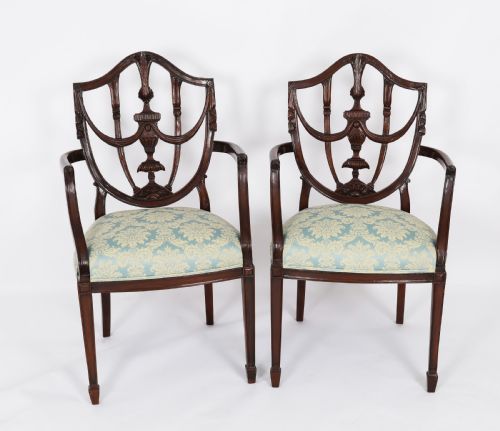
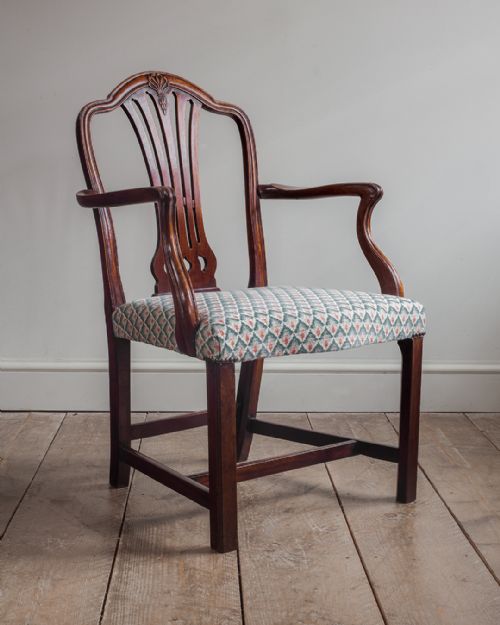
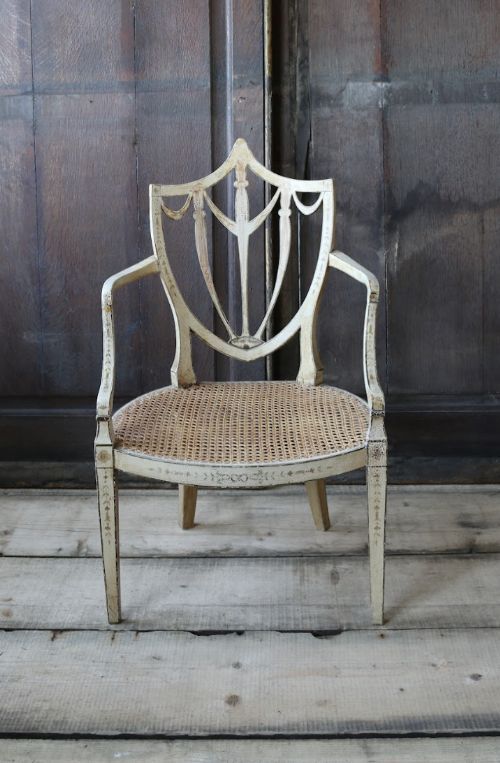
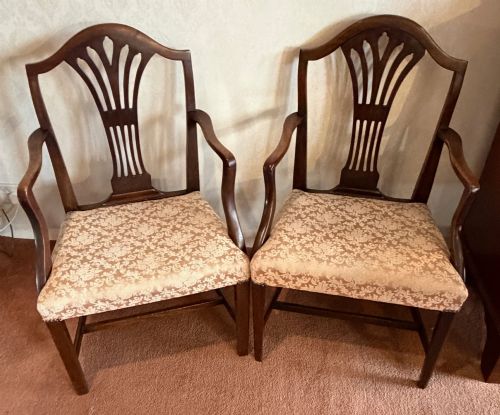
Hepplewhite open armchairs offer elegant seating characterised by carved shield backs and graceful mahogany frames dating from the eighteenth century onwards.
Hepplewhite Open Armchairs
Hepplewhite open armchairs are seating pieces defined by their association with George Hepplewhite's neoclassical design vocabulary. When searching for hepplewhite open armchairs, buyers encounter examples ranging from eighteenth-century period pieces to later revival iterations.
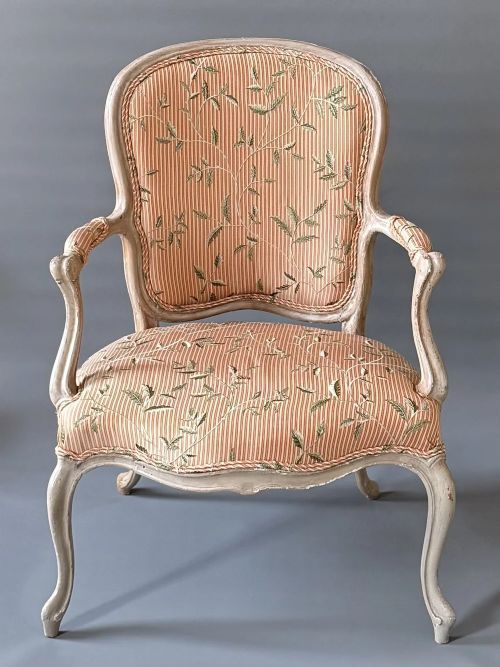
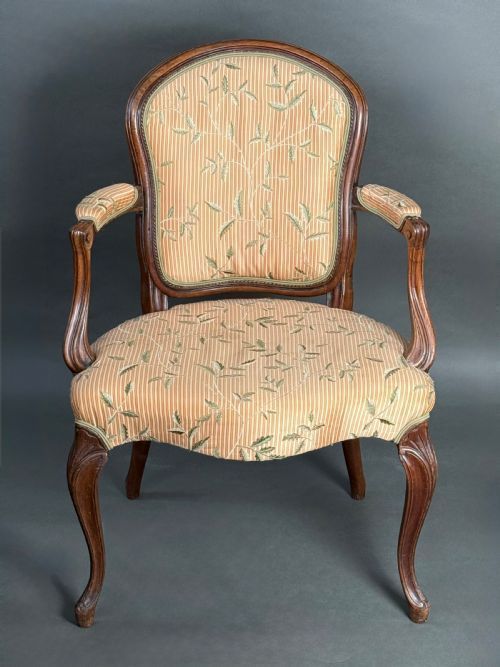
The selections span various forms including salon chairs, carvers, and dining armchairs. Mahogany remains the dominant wood, alongside instances of painted finishes, birch, and elm.
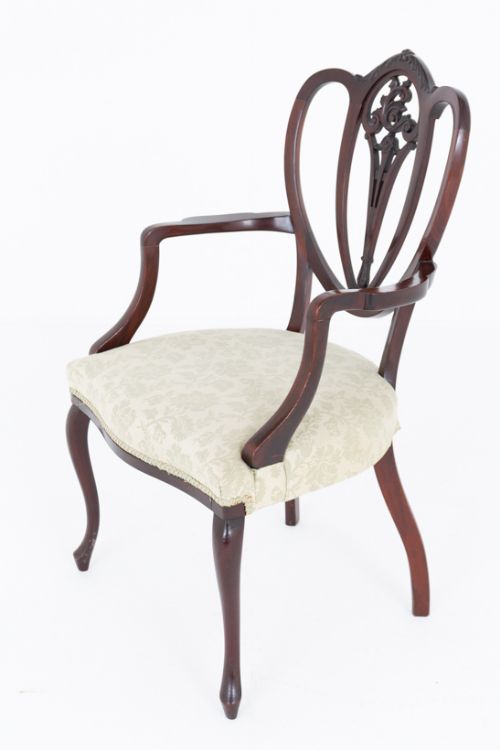
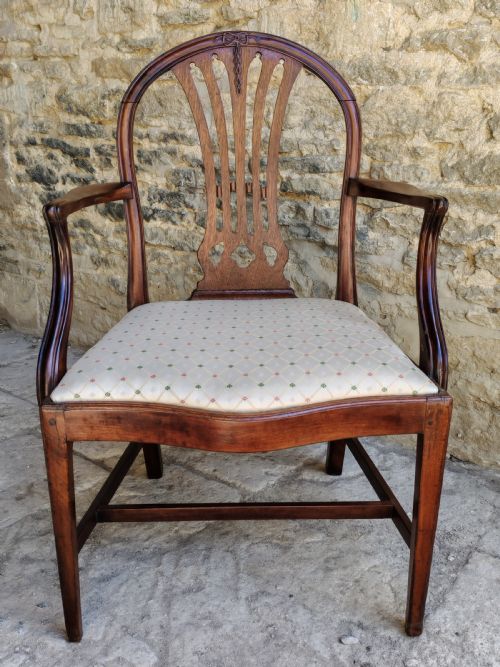
Design characteristics encompass shield backs, oval backs, and petal backs, sometimes accompanied by polychrome decoration or inlay. Pieces appear from the Georgian, Victorian, and later revival periods.
Materials and construction methods
Makers utilised solid timbers such as mahogany, birch, and elm for the structural frames of these chairs. Wood was shaped through carving and occasionally augmented with painted surfaces, ebonising, or brass accents.
Upholstery forms a significant component of the construction, utilising fabrics, silk, and textiles fixed over webbing and stuffing. Silk by makers such as Colefax and Fowler appears on specific examples.
Joinery methods secured the arms, legs, and backrests, ensuring stability for seating while allowing for intricate pierced splats and carved details.
Hepplewhite Open Armchairs Retail Price Guide 2026
Typical asking prices for hepplewhite open armchairs among the pieces listed under this phrase on Sellingantiques today, from the lower quarter to the upper quarter. They describe what is for sale here now, not the wider market.
Listings span periods from the seventeenth century through the Georgian and Victorian eras up to the twentieth century, utilising mahogany, silk, and brass.
Variations in quality and execution
The standard of carving distinguishes different grades of these chairs, with crisp, deeply defined detail in the wood separating superior examples from simpler versions. The handling of the shield back and arm terminals reveals the carver's proficiency.
Materials contribute to the overall standard, evidenced by the selection of finely grained mahogany or high-grade upholstery silks. The integrity of the original frame construction and the subtlety of painted or decorated surfaces further influence the tier of the piece.
The Hepplewhite Open Armchairs Glossary
- Carver
- A traditional term for an armchair, typically designed as part of a dining set to sit at the head of the table. These pieces feature supportive armrests alongside the standard seat.
- Revival
- A later stylistic movement that reinterprets historical designs, such as eighteenth-century forms produced during the Victorian era or the twentieth century. These pieces emulate earlier aesthetics using contemporary manufacturing methods.
- Polychrome
- Decoration applied using multiple colours, often seen on painted wooden frames from the eighteenth century. This technique adds pictorial or floral ornamentation to the chair.
- Splat
- The vertical central strip of wood within a chair back, connecting the seat to the top rail. In these chairs, splats take carved, pierced forms.
Hepplewhite Open Armchairs: Frequently Asked Questions
How do I identify a period piece?
Period pieces display eighteenth-century construction methods, timber ageing, and hand-carved details consistent with the original Georgian era.
Later revival versions exhibit nineteenth- or twentieth-century manufacturing traits and secondary wood choices.
Were these used for dining?
Many examples function as carvers or dining armchairs intended to accompany a matching set of dining chairs.
Others serve as salon chairs or occasional seating for drawing rooms and parlours.
What woods were used?
Mahogany is the predominant timber found across these listings, valued for its strength and suitability for carving.
Alternative materials include birch, elm, and painted or ebonised wood surfaces.
How should I care for the upholstery?
Upholstery materials range from modern fabrics to historic textiles and silk.
Gentle vacuuming and professional textile cleaning preserve the condition of delicate silks and traditional stuffings.