



Period Oak Hall Chair
A period oak hall chair brings solid timber structure and centuries of regional British craftsmanship directly into an entranceway.
Period Oak Hall Chair
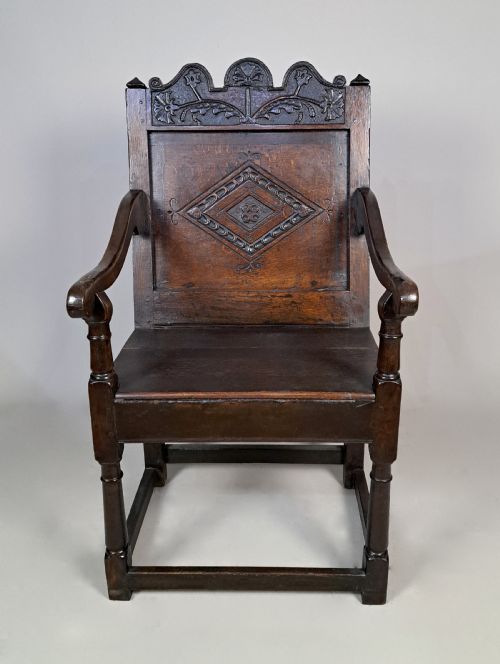
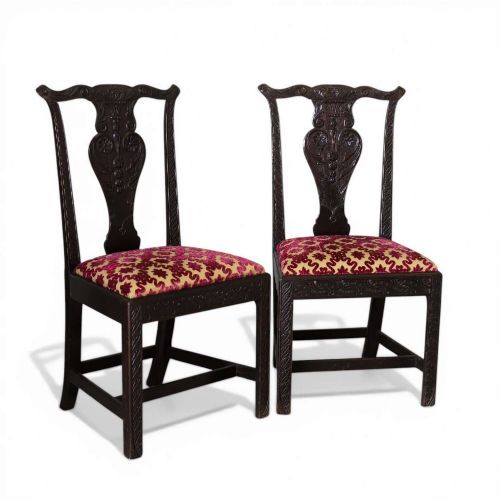
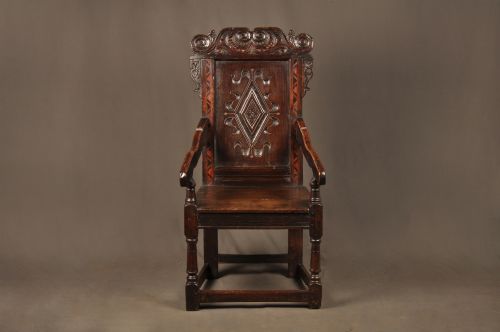
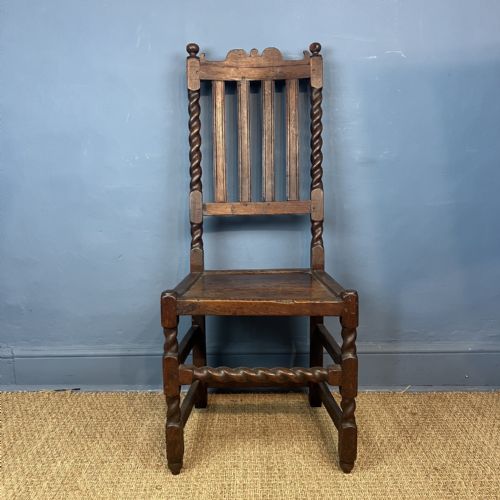
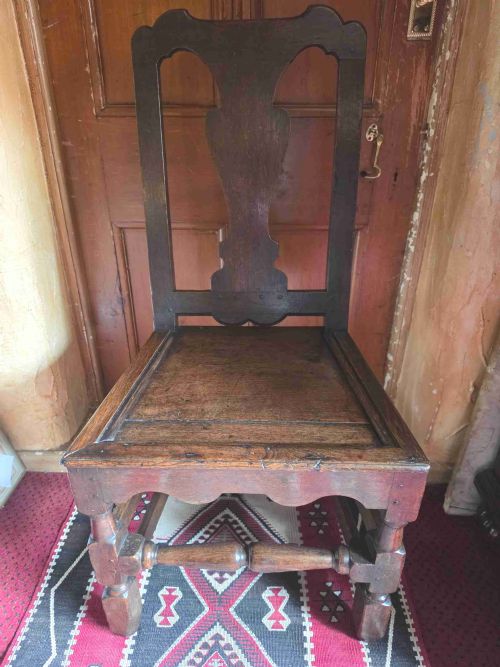
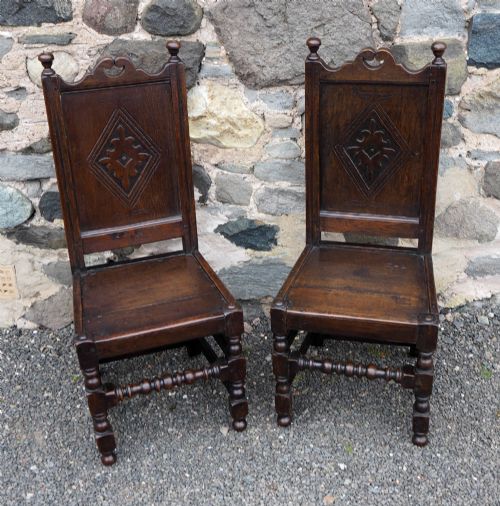
A period oak hall chair encompasses robust seating forms shaped primarily in 17th century and 18th century British workshops, including wainscot armchairs, side chairs, and backstools. Buyers seeking this phrase encounter regional variations such as Yorkshire, Derbyshire, and Lancashire chairs alongside later 19th century revival styles.
The selection ranges from early joined timber armchairs dated around sixteen thirty-five to slender high back chairs and Regency period examples. Side chairs and backstools dominate the inventory, offering upright seating designed for hallways and occasional use rather than long periods at a dining table.
How they were made
Construction relies heavily on solid oak joined by traditional framing techniques, mortise and tenon joints, and pegged joints rather than modern fasteners. Wood surfaces often display hand carving, turned supports, and central splats characteristic of seventeenth century English joinery.
Upholstery appears selectively on specific pieces utilising materials like textile, cane, velvet, tapestry, and fabric. Certain later interpretations incorporate japanned finishes or decorative Zoffany fabric to complement the underlying timber.
Several seats double as footman's chairs, proving that even historical oak furniture occasionally suffered from an identity crisis.
What varies in quality
The degree of original carving detail and the crispness of regional turning separate standard examples from finer regional work. Pieces retaining their initial joined construction without extensive timber replacement command greater appreciation.
The integration of secondary materials, such as early cane work or authentic textile upholstery, influences the overall character of each chair. Maker attribution, visible in documented workshop pieces from centres like Lancaster, adds notable distinction.
Gillows of Lancaster
The Period Oak Hall Chair Glossary
- Wainscot chair
- A heavy wooden armchair constructed mainly from oak, featuring a panelled back and solid seat typical of early domestic interiors.
- Backstool
- An early form of chair without arms, essentially an evolution of the joint stool possessing an added upright backrest.
- Splat
- The vertical central strip of wood set within the middle of a chair back, frequently shaped or carved.
- Japanned
- A European imitation of East Asian lacquerwork applied to furniture surfaces to create a dark, glossy decorative finish.
- Joined oak
- Furniture built using interconnected framing joints secured with wooden pegs rather than glued or nailed boards.
Period Oak Hall Chair: Frequently Asked Questions
Where were these chairs placed?
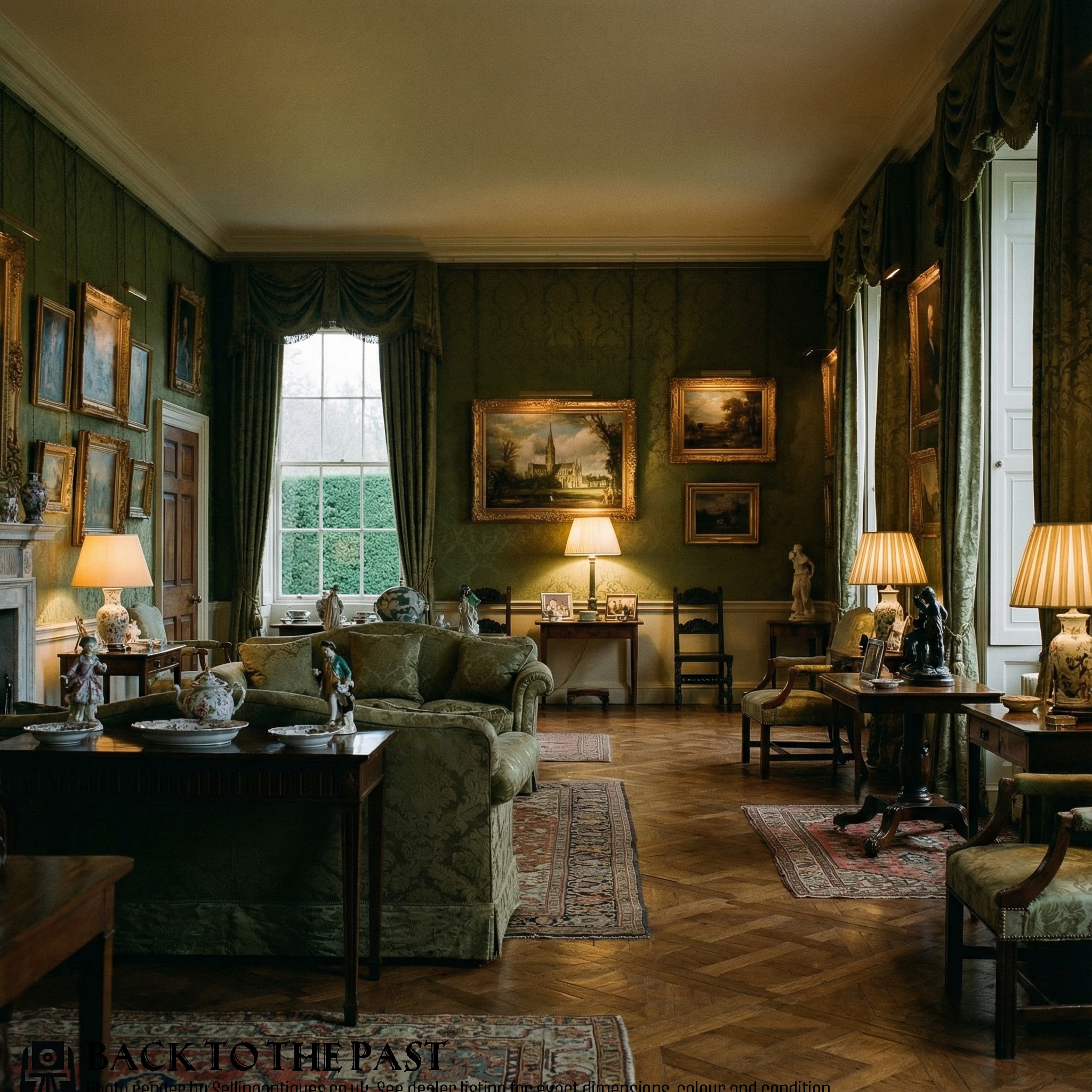
These chairs stood in entrance halls and passage areas of large houses for guests to use while waiting.
Their sturdy oak frames suited high-traffic spaces where delicate seating would quickly wear out.
How do I identify a 17th century piece?
Examine the construction methods for pegged joints, hand-carved regional motifs, and heavy turned supports.
Early pieces rely on joined oak framing without metal screws or modern commercial adhesives.
Can I use them every day?
Solid oak construction makes these chairs exceptionally durable for regular seating in modern homes.
Care should be taken with antique upholstery textiles and older cane panels during daily use.
What is a Yorkshire chair?
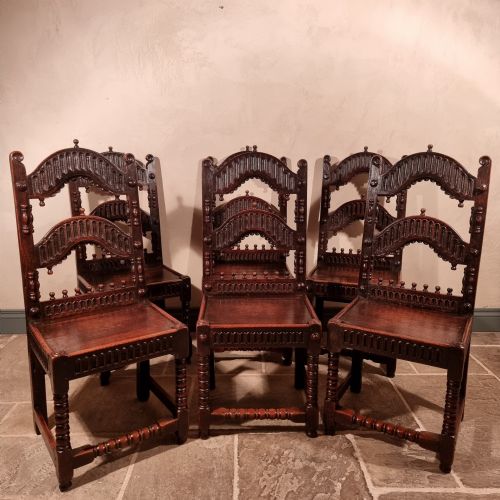
A Yorkshire chair is a regional seventeenth century variant known for distinct carved back rails and turned stretchers.
These pieces often feature sturdy backstool designs originating from northern English workshops.