

Wooden Hallway Seating
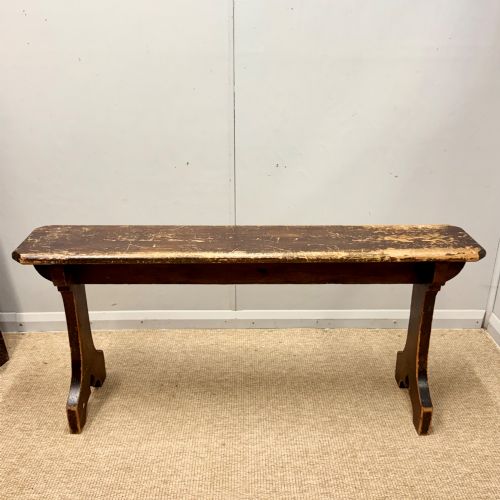
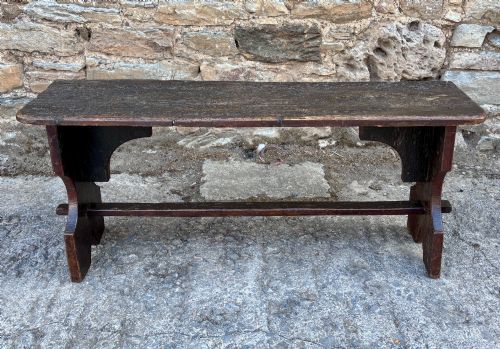
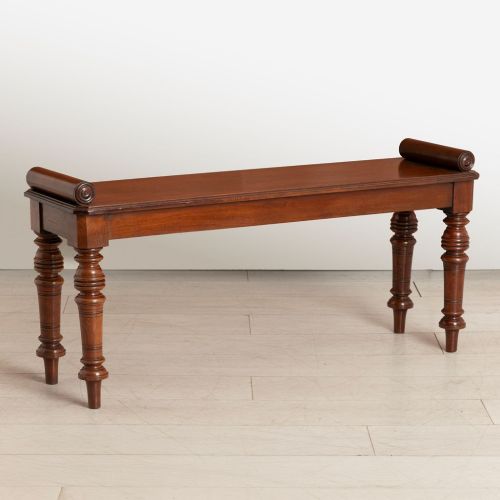
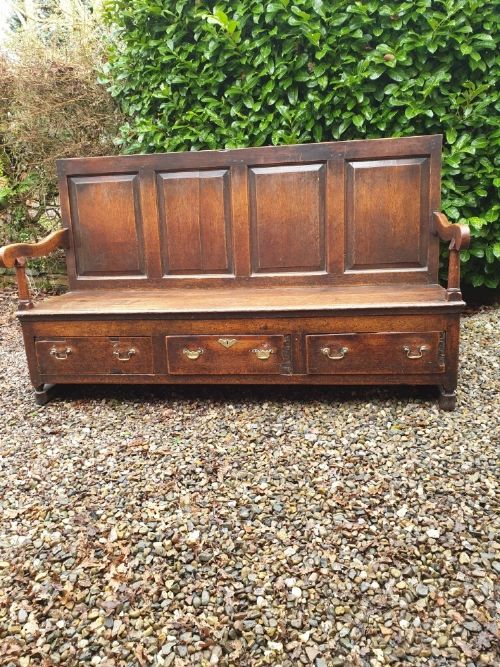
These pieces of wooden hallway seating offer practical passage furniture in pine, oak and mahogany, uniting utility with period character.
Wooden Hallway Seating
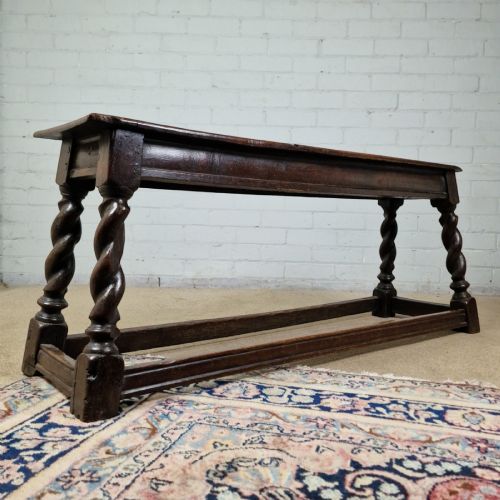
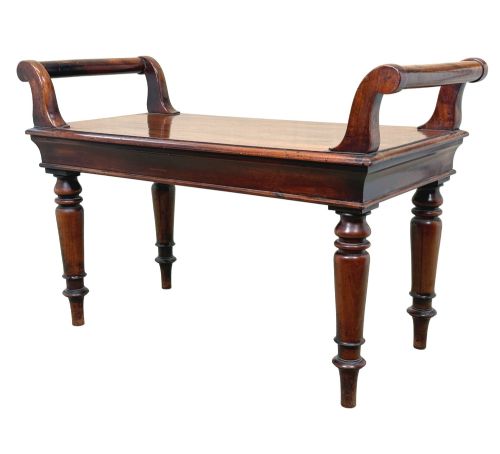
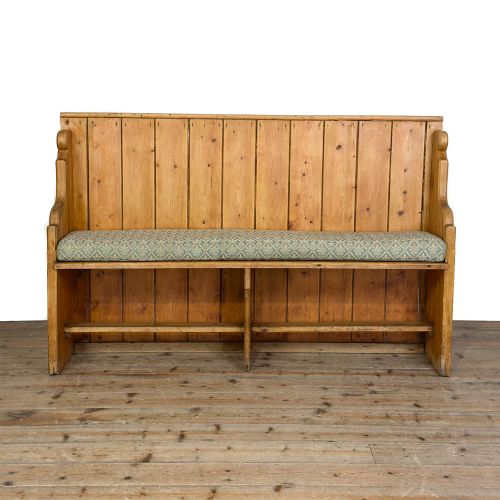
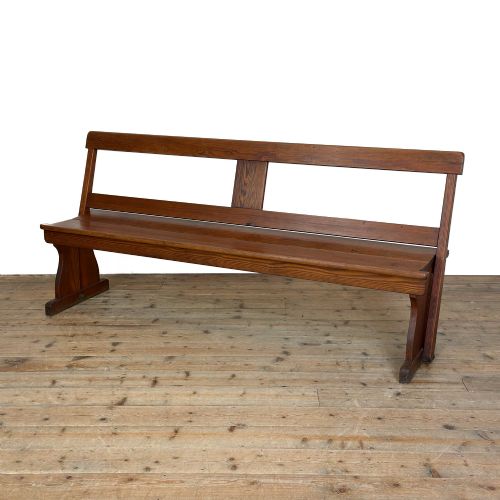
Wooden hallway seating covers utilitarian benches, settles, and hall chairs designed for entryways and passages across the eighteenth, nineteenth, and early twentieth centuries. Buyers seeking wooden hallway seating commonly encounter pine church pews, oak box settles with lift-up seats, and mahogany window seats.
The selection ranges from robust rustic country pieces in elm and pitch pine to formal Regency and Victorian mahogany designs. Makers utilised local timbers to create functional items that served for sitting while removing boots or waiting in halls.
Materials and Construction
Makers constructed these items predominantly from solid oak, pine, and mahogany, frequently incorporating brass and iron for hooks, hinges, and mounts. Carpenters joined panels using traditional methods to build high-back settle benches and storage compartments that endured heavy daily use.
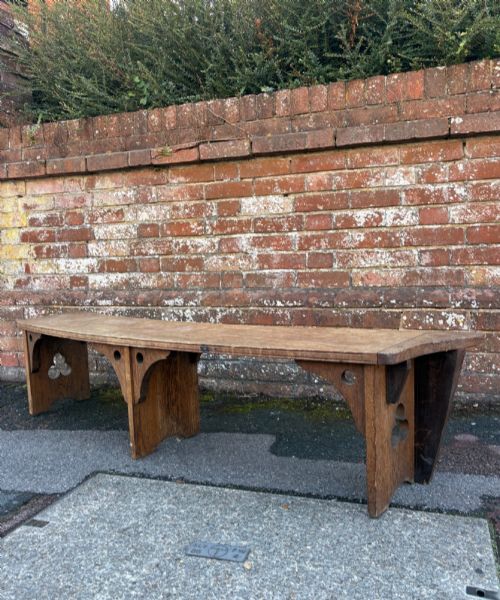
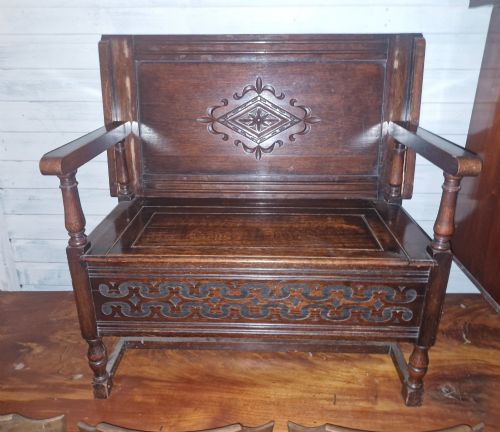
Surface finishes vary from waxed patinas on country pine to carved detailing on Gothic oak and Regency mahogany frameworks. Structural elements include trefoil supports, panelled backs, and hinged tops that double as storage boxes or flip-over tables.
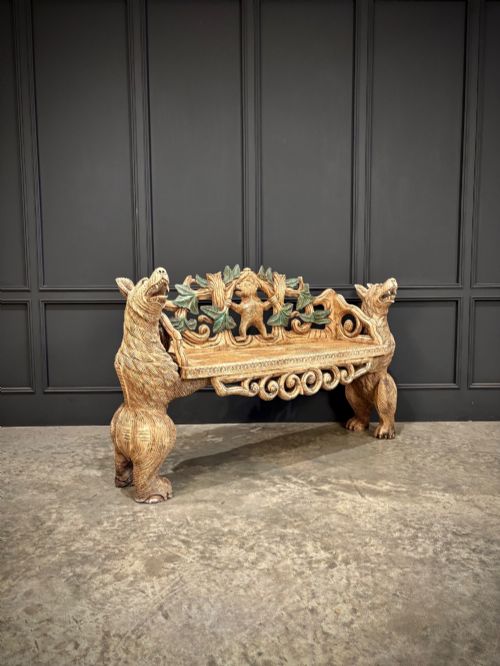
A solitary Black Forest bear keeps watch from a two-seat bench carved in the early twentieth century.
Gradations in Standard
Quality depends upon the integrity of the timber and the crispness of any carved decoration, distinguishing simpler utility pews from commissioned cabinet work. Pieces bearing maker stamps or specific regional styling demonstrate superior workshop provenance.
Proportion and structural retention dictate the standing of an item, as alterations or replacement boards diminish the original form of a settle or bench. Retained surface patinas and original hardware elevate the standing of surviving hallway furniture.
Gillows·Jas Shoolbred·James Shoolbred and Co
The Wooden Hallway Seating Glossary
- Settle
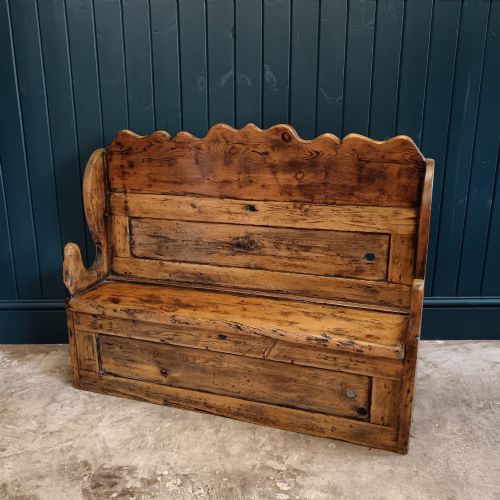
- A wooden bench with a high back, solid arms, and often a storage box beneath the seat. This form protected sitters from draughts in corridors and entrance halls.
- Box Settle
- A seating form featuring a hinged seat lid opening to a compartment below. Such dual-purpose items stored household goods in communal hallways.
- Hall Chair
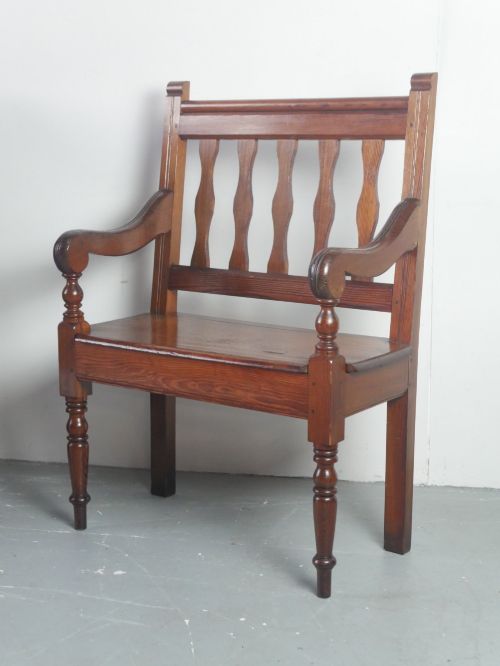
- A rigid wooden seat, usually without arms, designed for brief sitting in a passage. These pieces frequently display carved crests or plain timber panels.
- Window Seat
- A long bench tailored for placement beneath a window or along a narrow passage wall. Regency and Victorian examples often feature scrolled ends and upholstered tops.
- Pitch Pine
- A durable resinous softwood utilised for nineteenth-century church pews and hallway benches. It yields a distinctive dense grain pattern when waxed.
Wooden Hallway Seating: Frequently Asked Questions
How were church pews adapted for hallways?
Church pews were often shorter in length, making them suitable for domestic corridors and narrow entryways. Carpenters trimmed longer lengths of pine or pitch pine to fit residential proportions.
These adapted pews retained their original waxed finishes and sturdy box bases, offering narrow seating with built-in backrests.
Which woods are most common in these pieces?
Oak and pine appear most frequently across these listings, reflecting their durability and availability in country and period workshops. Oak suits heavier carved designs, while pine provides a simpler aesthetic with a honey-brown patina.
Mahogany appears in more formal nineteenth-century pieces, particularly in Regency and Victorian window seats and hall chairs.
Do these items include storage compartments?
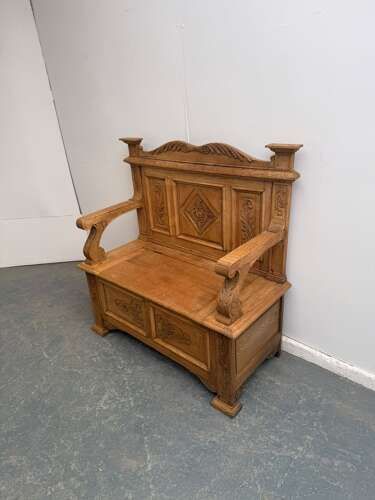
Many box settles and specific hall seats incorporate lift-up lids or fold-over tops concealing storage space beneath the cushion. These compartments were designed to hold boots, umbrellas, and accessories out of sight in the passage.
Simpler benches and hall chairs rely entirely on open frames without internal storage cavities.