


Victorian Entry Chairs
Victorian entry chairs are timber reception seats designed for hallways, offering robust construction and formal character for modern spaces.
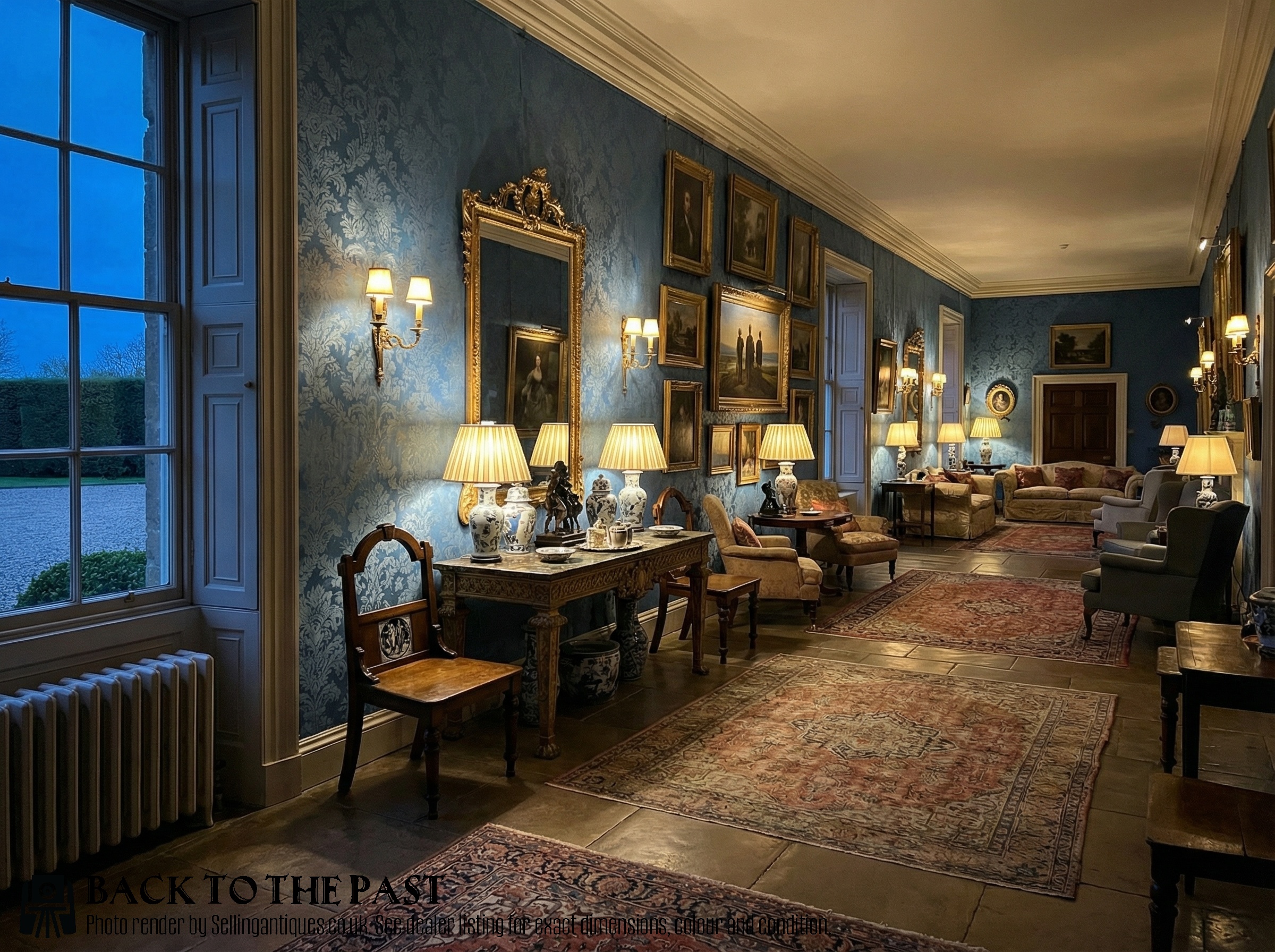
Victorian Entry Chairs
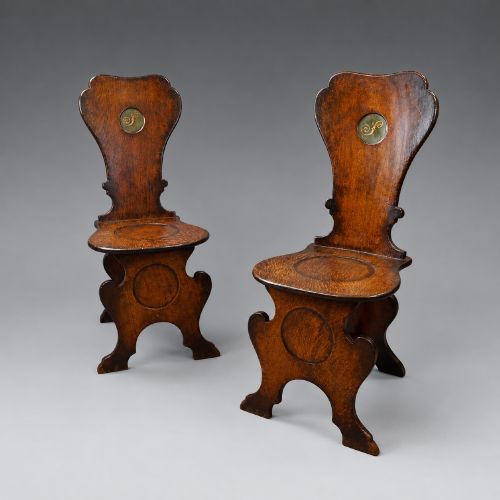
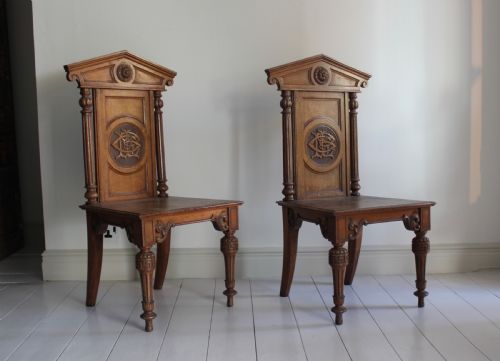
Victorian entry chairs comprise solid timber seating designed for hallways, receptions and vestibules. The pieces found here span the nineteenth century, including specific dates such as 1840, 1850, 1860, 1870, 1880 and 1890, alongside broader Regency and eighteenth-century examples. Forms include hall chairs, monks benches and occasional benches made for practical use.
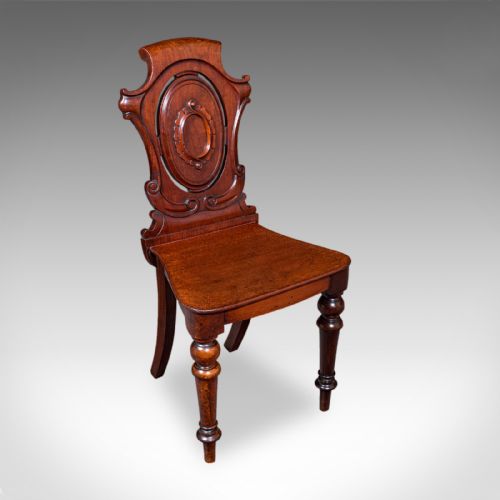
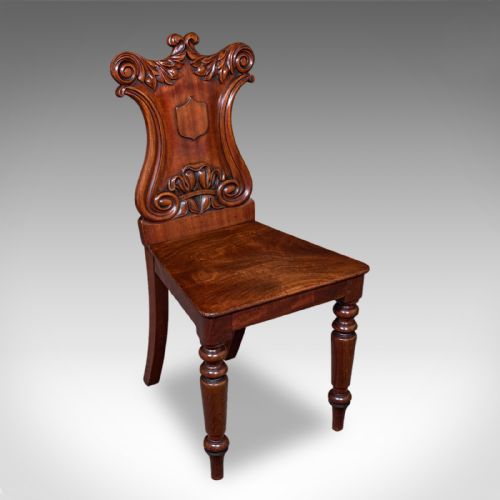
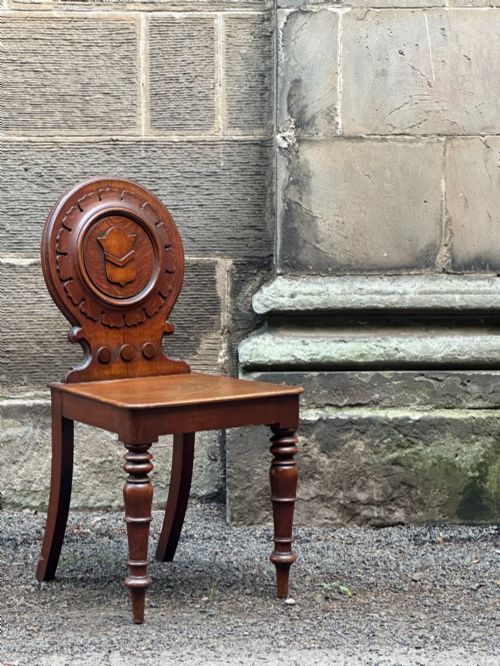
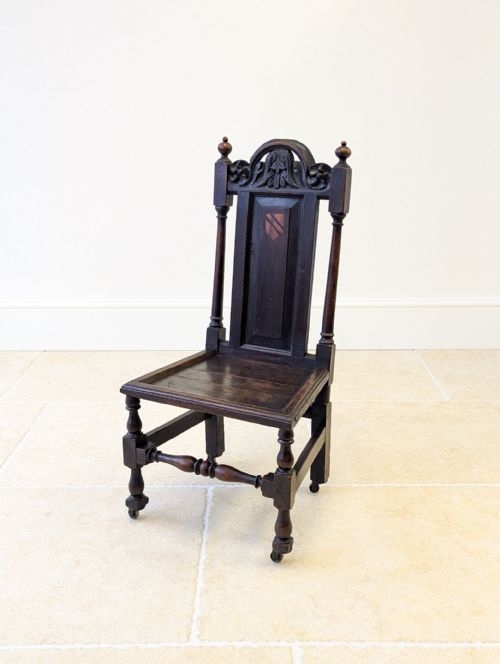
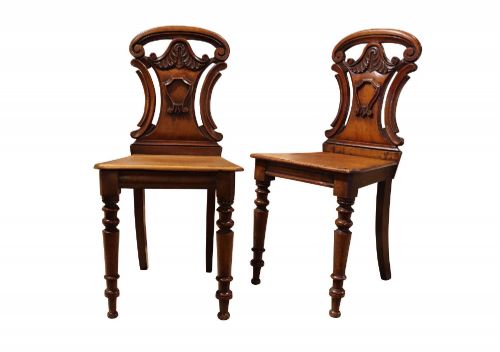
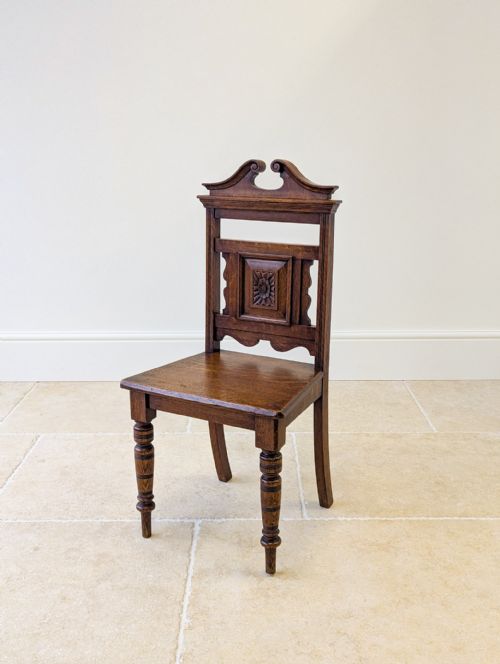
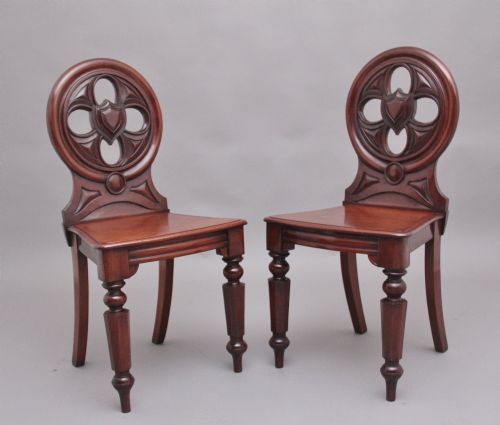
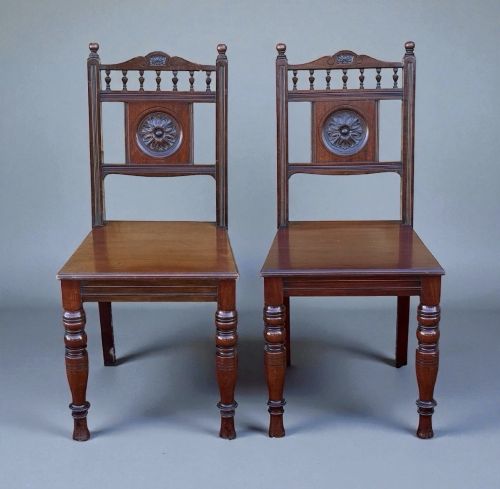
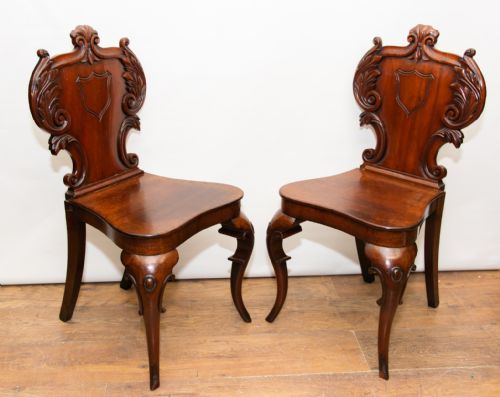
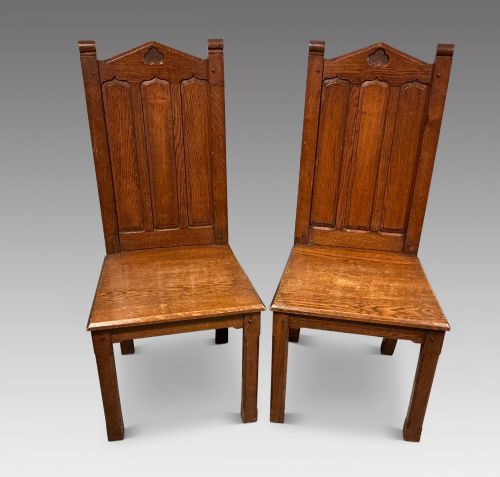
Mahogany and oak dominate the selection, frequently shaped into shield backs, shell backs or carved panels. Walnut, pitch pine, ceramic inserts and brass details appear across the inventory. Stylistic influences range from Gothic Revival and Jacobean Revival to Aesthetic Movement, Renaissance Revival and Arts and Crafts designs.
Scottish, Irish, English, French and American origins appear in the listings, showing regional variations in carving depth and timber choice. Pairs and sets of four recur frequently, indicating that these seats were often commissioned in groups for formal entrances.
Materials and Technique
Cabinetmakers utilised dense hardwoods such as oak, mahogany and walnut to withstand heavy daily use in entranceways. Timber was selected for grain pattern and structural strength, often shaped with solid carved wooden seats rather than upholstery.
Joinery techniques relied on sturdy mortise and tenon construction to ensure rigidity under repeated weight. Decorative elements involve deep hand carving, relief work, applied mouldings and occasional ceramic tile insets.
Victorian Entry Chairs Retail Price Guide 2026
Typical asking prices for victorian entry chairs among the pieces listed under this phrase on Sellingantiques today, from the lower quarter to the upper quarter. They describe what is for sale here now, not the wider market.
Some hall chairs double as tables when their hinged backs fold flat.
Assessing Quality
Quality rests upon the crispness of the hand carving and the selection of the timber grain. Examples with deep relief work and finely detailed shields or shells demonstrate superior craftsmanship compared to plain versions.
Proportion and structural integrity distinguish finer examples, particularly where joints remain tight and timber surfaces retain good patination. Sets and pairs maintain greater design consistency across the group.
Holland and Sons
The Victorian Entry Chairs Glossary
- Sgabello
- A light wooden chair with a high back and trestle supports, originating in the Italian Renaissance and revived in the nineteenth century.
- Shield Back
- A chair back carved in the outline of a heraldic shield, popular in mahogany seating.
- Gothic Revival
- A nineteenth-century design style drawing on medieval architectural motifs such as pointed arches and tracery.
- Monks Bench
- A multifunctional hall seat featuring a folding back that converts the bench into a table.
- Patina
- The surface sheen and colour developed on timber over decades of handling and polishing.
Victorian Entry Chairs: Frequently Asked Questions
Where were entry chairs placed?
Victorian entry chairs stood in hallways, vestibules and reception rooms where visitors waited. They functioned as formal seating rather than lounging furniture.
The upright posture encouraged by their wooden seats suited brief occupation rather than extended sitting.
How do I care for antique oak?
Maintain antique oak by applying natural beeswax sparingly and buffing with a soft cloth. Avoid placing timber furniture near direct heat sources.
Consistent room humidity prevents the wood from drying out and keeps joints stable over time.
Are pairs common for these chairs?
Pairs and matching sets appear frequently because entrance halls required symmetrical seating arrangements. Matching pairs flanked doorways or console tables.
Finding matched sets of four remains unusual, reflecting their original commissioning for large country houses.
What is Gothic Revival style?
Gothic Revival draws inspiration from medieval architecture, incorporating pointed arches, trefoils and heavy carved tracery. This aesthetic appealed to Victorian makers seeking historicism.
Oak furniture in this style often displays deep relief carving and structural mass.