

Pair Carved Oak Chairs
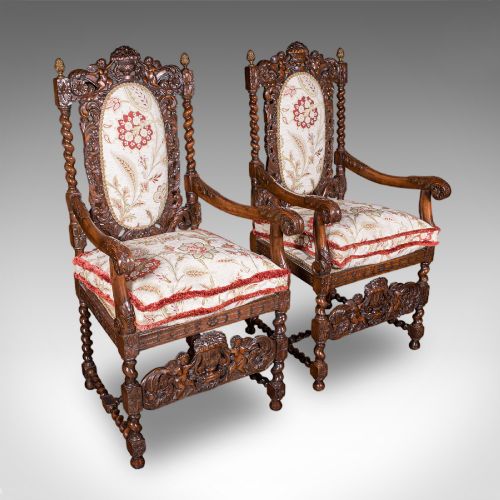
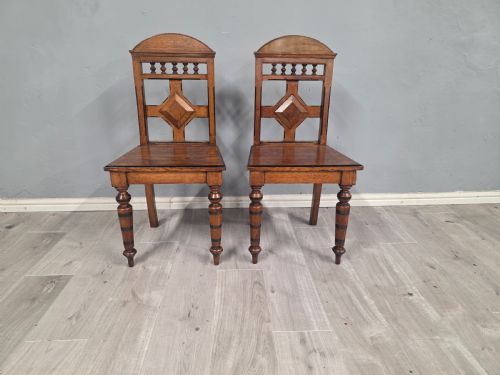
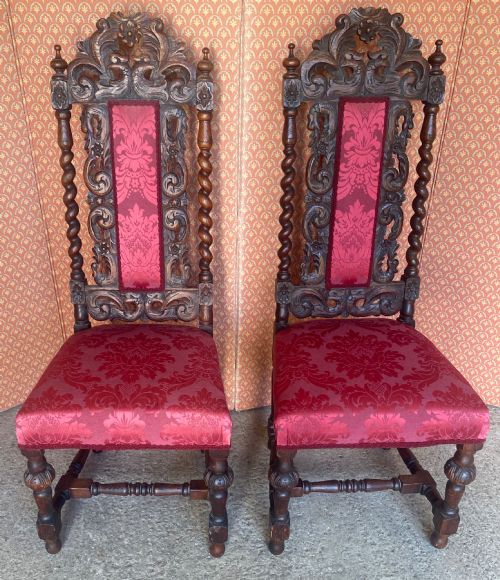
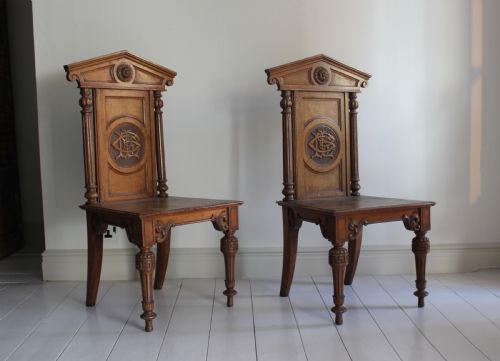
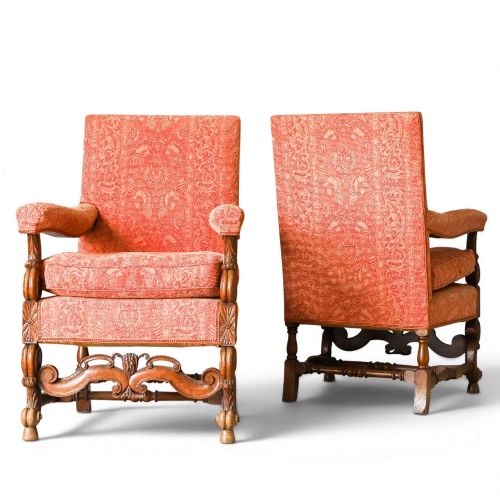
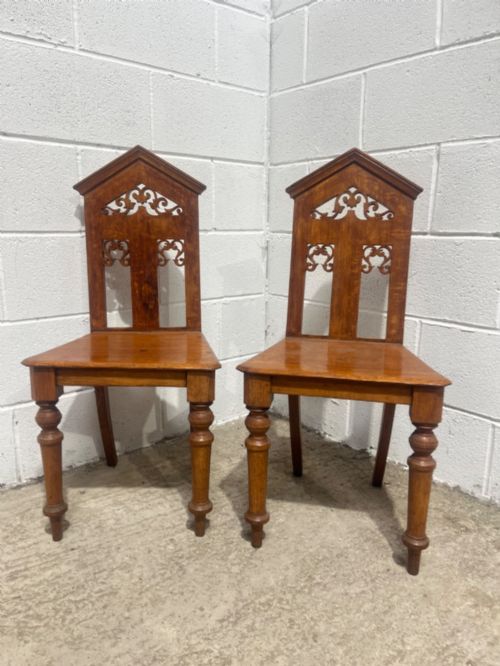
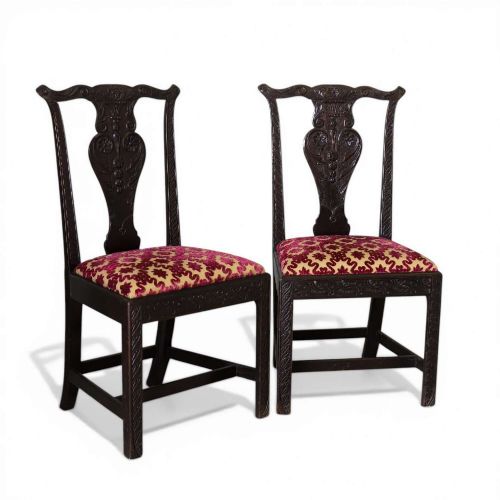
Pair carved oak chairs bring centuries of architectural presence and robust craftsmanship into a room.

Pair Carved Oak Chairs
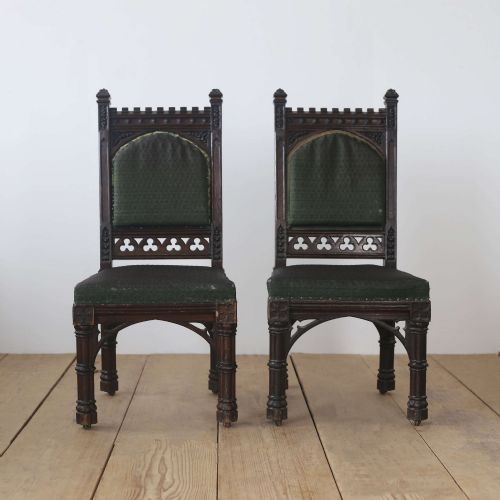
A buyer examining pair carved oak chairs encounters seating designed for formal halls, dining spaces, and libraries, spanning periods from the seventeenth to the twentieth century. The selection leans heavily toward nineteenth-century revival pieces, including Victorian Gothic, Jacobean, and Renaissance styles alongside earlier seventeenth- and eighteenth-century examples.
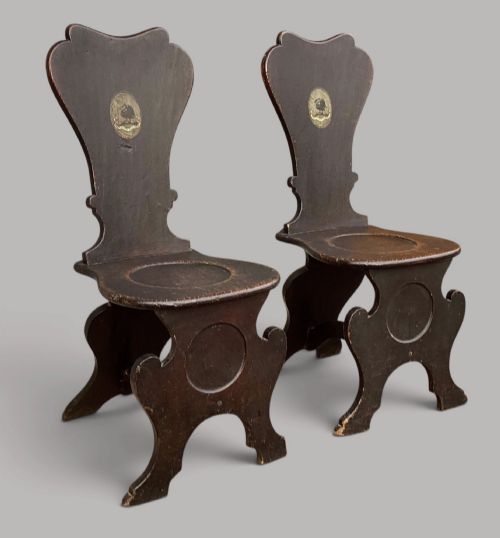
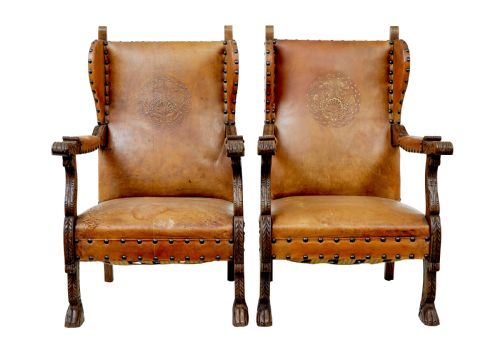
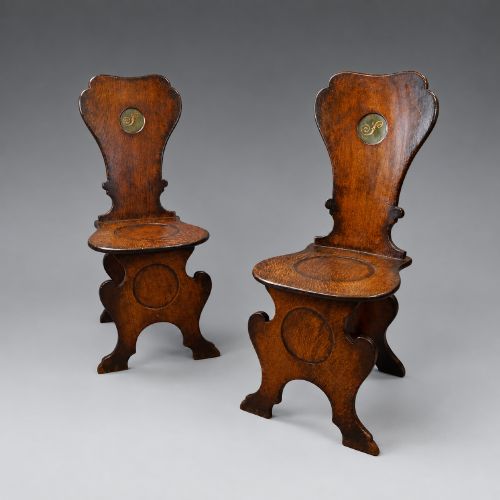
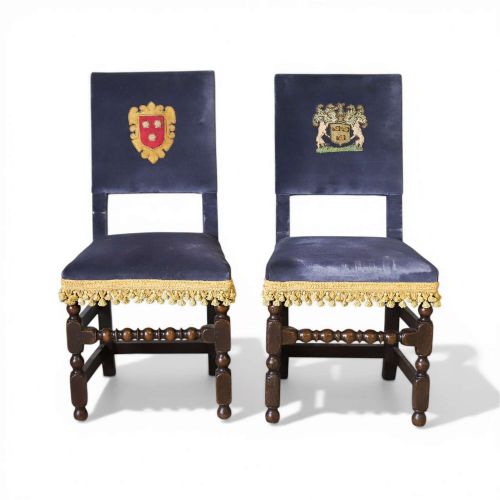
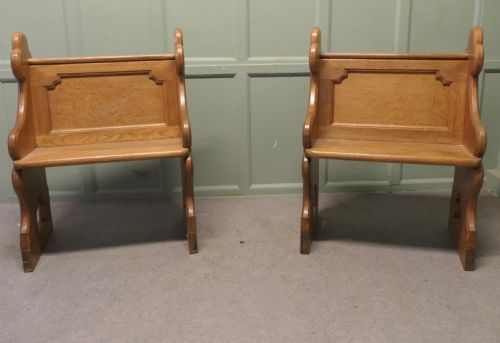
The functional forms vary widely across the inventory, ranging from rigid hall chairs and side chairs with heraldic shield backs to substantial throne armchairs, sgabello forms, and upholstered library seats. These pieces reflect diverse regional origins, incorporating English, Scottish, and continental European workshops.
Materials and construction techniques
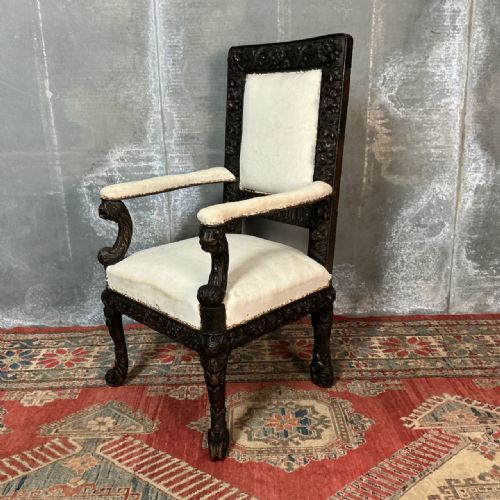
Makers relied principally upon solid oak, supplemented by secondary timbers such as elm and diverse hardwoods, utilising traditional joinery and heavy framing to support elaborate chisel work. Surface ornamentation frequently includes deep relief carving, bobbin turnings, and barley twist components.
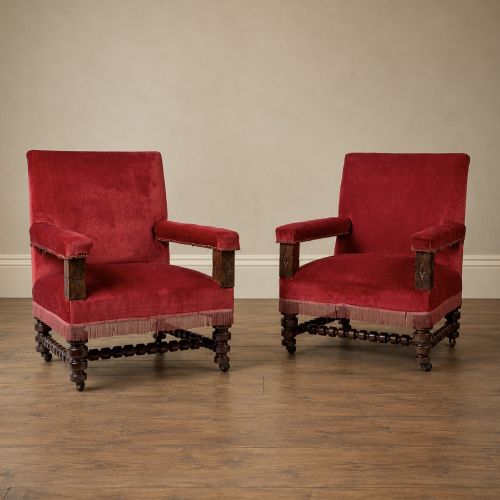
Upholstery and secondary details introduce contrasting textures to the dense timber frames, employing embossed leather, woven leather, velvet, suede, and textile fabrics. Metal elements such as brass studs and engraved plaques appear alongside heraldic crests and trefoil motifs.
Pair Carved Oak Chairs Retail Price Guide 2026
Typical asking prices for pair carved oak chairs among the pieces listed under this phrase on Sellingantiques today, from the lower quarter to the upper quarter. They describe what is for sale here now, not the wider market.
Listings demonstrate a strong prevalence of nineteenth-century Gothic Revival and Jacobean revival styles executed in solid oak.
Factors determining the calibre of the seating
Depth and crispness of the chisel work distinguish superior carved decoration from routine production, separating factory-milled ornamentation from hand-executed depth. The integration of the timber grain with the sculptural motifs dictates the overall visual harmony of the frame.
Structural integrity relies upon the retention of original joinery without excessive timber shrinkage or replacement components. Matched consistency between the two chairs, particularly regarding patination and timber selection, determines whether the pairing maintains historical cohesion.
Gillows of Lancaster
The Pair Carved Oak Chairs Glossary
- Sgabello
- A light wooden chair originating in the Italian Renaissance, featuring a backrest and a solid trestle base rather than conventional legs. These often display elaborate carved panels.
- Wainscot
- An early form of heavy wooden armchair constructed with panelled backs and solid seats, typically associated with seventeenth-century joinery. They denote high status in domestic interiors.
- Glastonbury
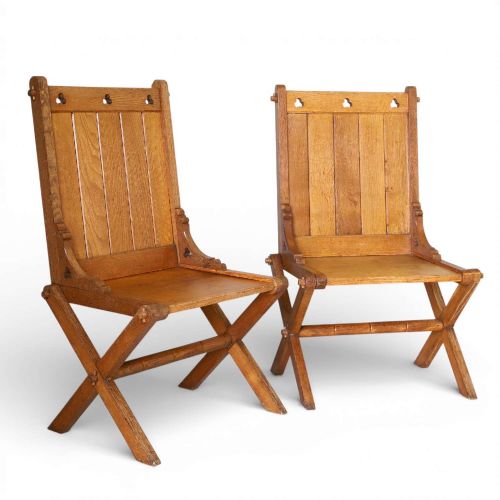
- A nineteenth-century revival chair design based on an ancient relic, featuring folding X-frame supports and sloping armrests. They frequently incorporate Gothic trefoil details.
- Barley twist
- A decorative turning technique resembling a spiralling rope, utilised extensively on the legs and stretchers of seventeenth-century and revival seating.
- Bergere
- An enclosed upholstered armchair with a wooden frame, sometimes featuring double caned sides and backs. They offer a lighter aesthetic than solid panelled throne chairs.
Pair Carved Oak Chairs: Frequently Asked Questions
How do I place pair carved oak chairs in a modern room?
These imposing seats anchor a modern interior when used as statement bookends in a hallway or flanking a fireplace. Their rich timber tones contrast effectively against neutral plaster walls.
Allow sufficient physical space around throne or armchair variants so the deep relief carving remains fully visible. Pair them with simple contemporary tables to let the historical joinery command attention.
What is the difference between hall chairs and throne chairs?
Hall chairs are typically upright side chairs featuring wooden seats and elaborately carved heraldic or shield-shaped backs, designed for occasional seating in entryways. Throne chairs offer substantial armrests, higher upholstered or panelled backs, and wider proportions intended for prolonged sitting.
While hall chairs prioritise heraldic display and architectural silhouette, throne chairs focus upon physical enclosure and comfort through leather or velvet padding.
How do I distinguish a seventeenth-century chair from a nineteenth-century revival piece?
Seventeenth-century originals display hand-split timbers, peg joinery that shows irregular hand-tool marks, and centuries of oxidized patination on the oak surface. Revival pieces from the Victorian era often utilise more uniform machine-sawn framing while closely copying earlier Jacobean or Gothic motifs.
Examining the underside and interior joinery reveals the technological markers of the workshop period in which the piece was actually assembled.
Are these chairs suitable for daily dining use?
Side chairs and sgabello forms function adequately for dining when fitted with stable frames, though their wooden seats lack modern cushioning. Armchairs and throne variants generally prove too wide and heavy for standard dining tables.
Assess the seat height and leg clearance of each specific pair to ensure comfort during extended seating.