
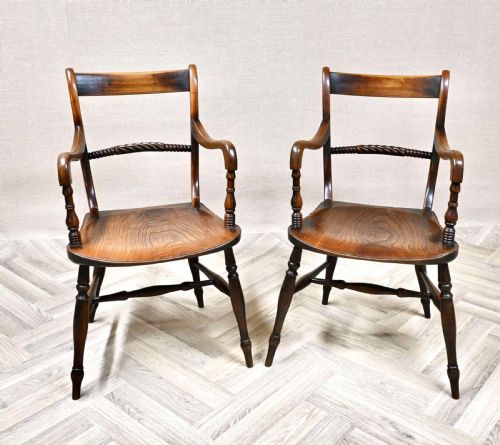
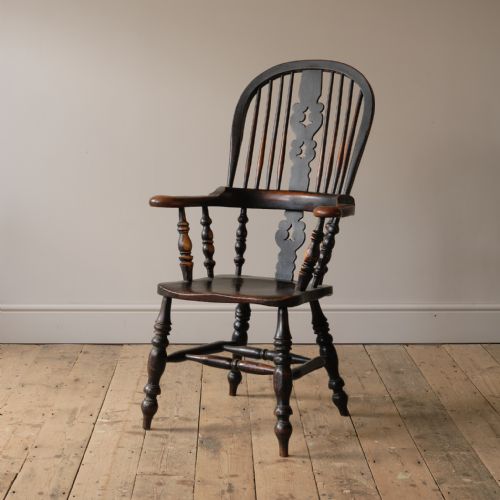
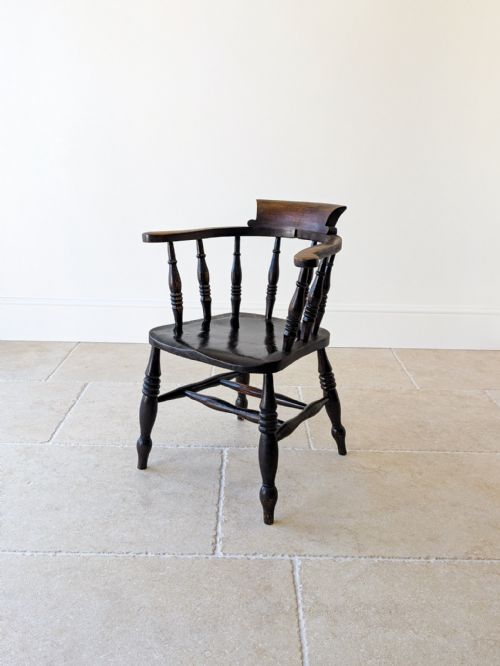
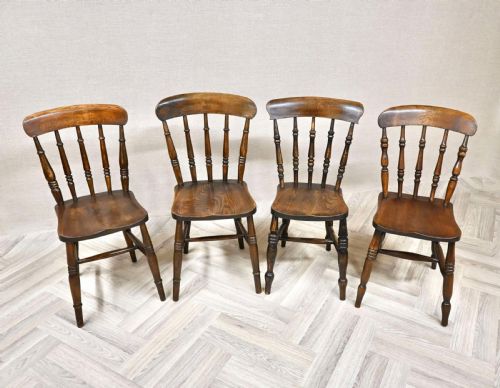
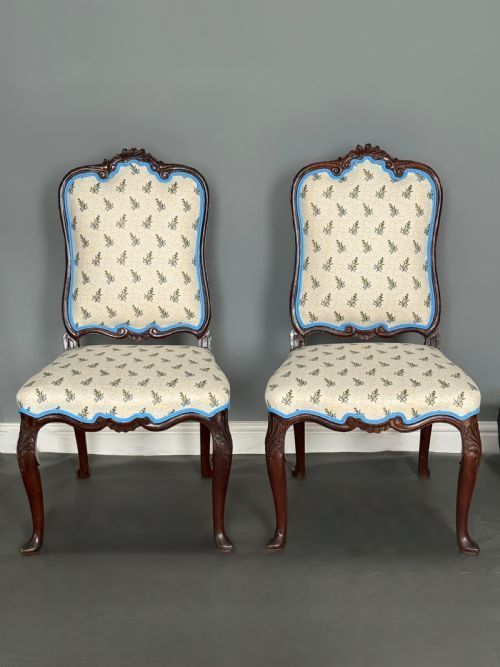
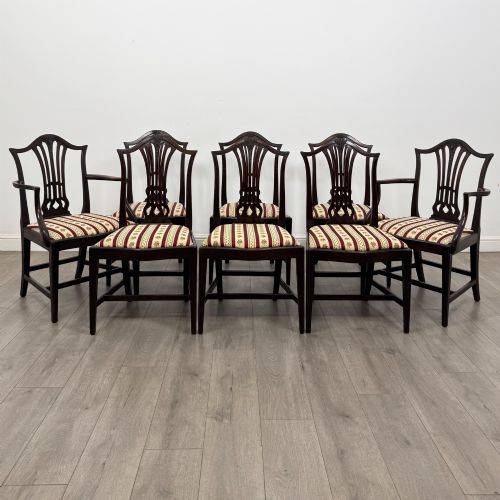
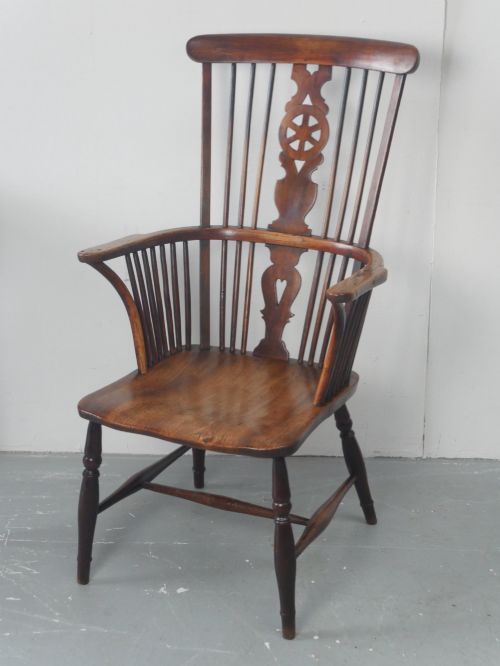
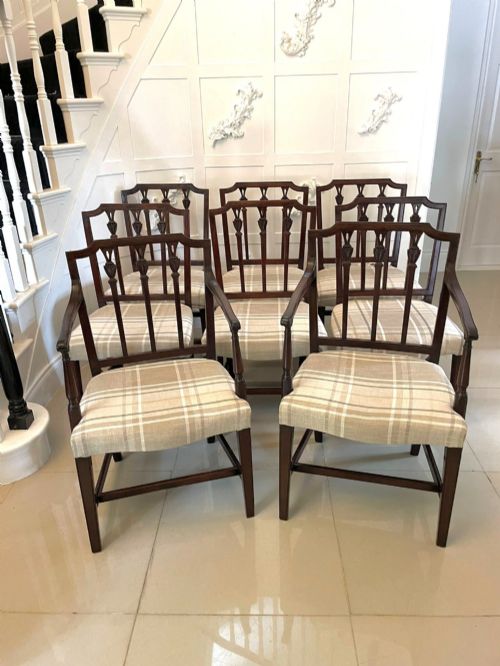


Traditional Dark Wood Chairs
Traditional dark wood chairs bring enduring presence to a room, offering sturdy seating forged from rich timbers across multiple historic periods.
Traditional Dark Wood Chairs
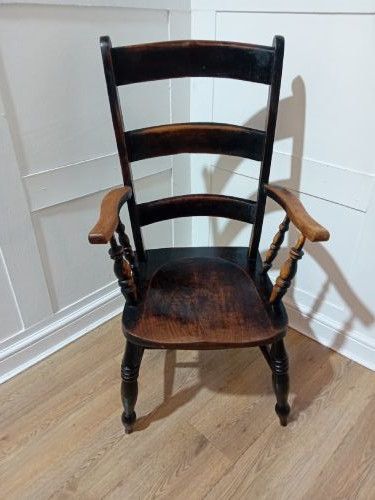
Traditional dark wood chairs encompass a wide variety of seating forms, from formal dining sets to rustic country armchairs. When searching for traditional dark wood chairs, buyers frequently encounter 19th-century Windsor models, Victorian mahogany dining sets, and sturdy kitchen seating.
The pieces span several centuries, including Georgian, Victorian, and Edwardian eras, reflecting both formal urban craftsmanship and vernacular country traditions. Common forms include side chairs, carvers, desk chairs, and occasional elbow chairs.
Makers utilised native and imported timbers, resulting in distinct regional types such as Thames Valley Windsor chairs and West Country children's seats. These chairs served everyday domestic functions in dining rooms, libraries, and kitchens.
How they were made
Cabinetmakers and rural bodgers constructed these chairs using dense timbers such as mahogany, elm, ash, beech, and oak. Mahogany predominated in formal dining and library chairs, while country Windsors relied on combinations of elm seats with ash or beech spindles and bendings.
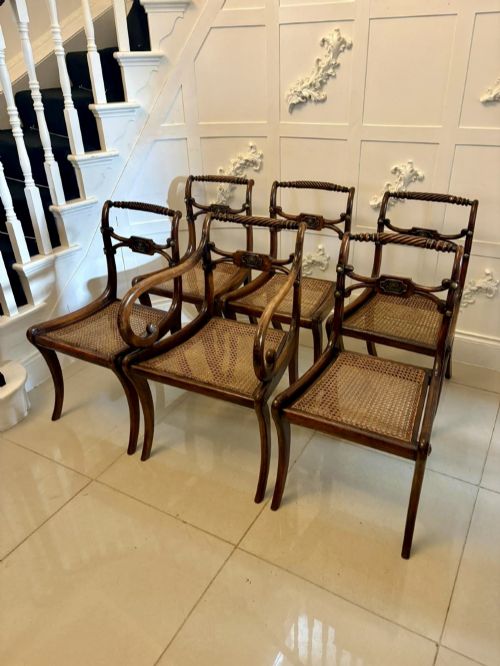
Joinery methods varied according to the intended use, incorporating traditional mortise and tenon joints, turned components, and steam-bent wood. Selected pieces integrate secondary materials such as cane seats, rush seating, leather upholstery, and brass fittings.
Surfaces received finishes ranging from polished mahogany to original patinated wax on country elm and ash, preserving the natural grain of the dark wood over centuries of use.
Selected chairs retain mysterious ink stamps and carpenter's tally marks hidden beneath the solid elm seats.
What varies in quality
Quality in these chairs rests upon the selection of timber, the integrity of the original construction, and the preservation of surface finish. Dense, well-figured Cuban mahogany or carefully matched elm and ash signify superior material choice.
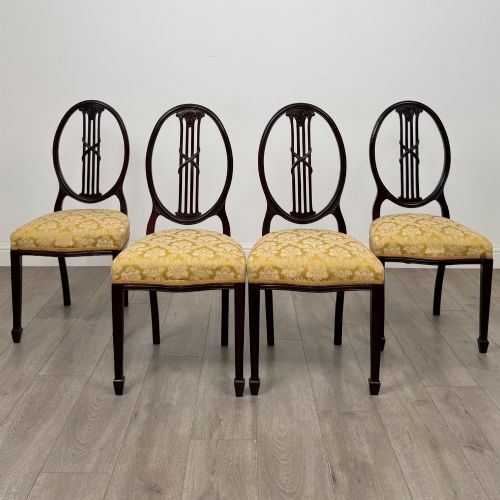
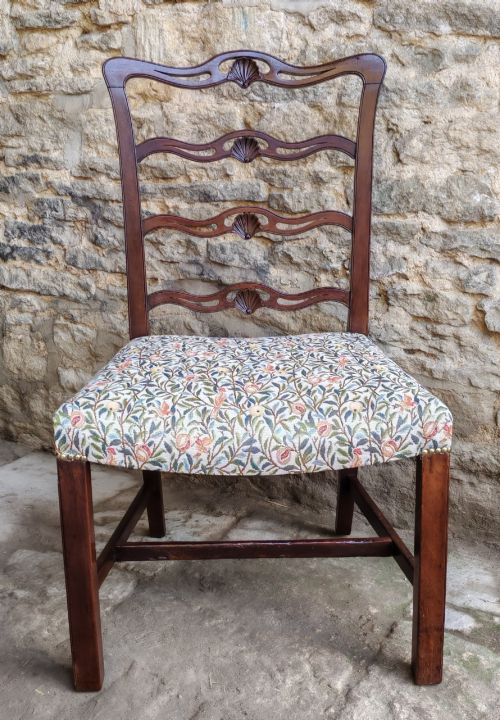
Proportion and carved detail separate standard production from exceptional work, particularly in shield back, ladderback, and Chippendale style dining chairs. The retention of original finish and untouched structural joinery determines the standing of vernacular pieces like Windsor and Thames Valley chairs.
Philip Clissett·Alfred Allen of Birmingham
The Traditional Dark Wood Chairs Glossary
- Windsor chair
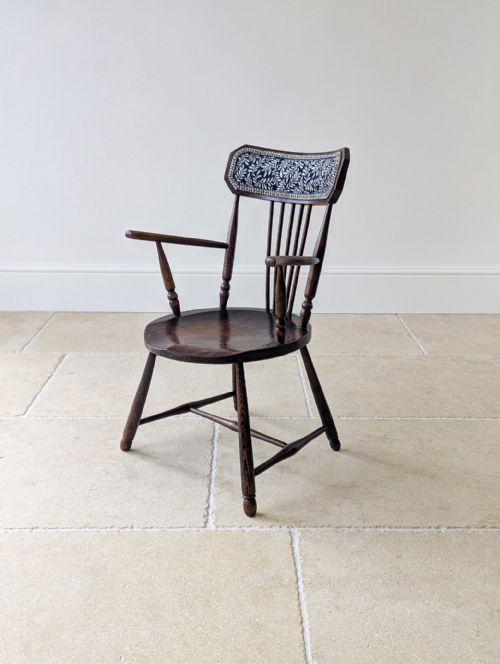
- A traditional wooden chair featuring a solid sculpted wooden seat into which the legs and back spindles are separately socketed. These vernacular seats often combine elm, ash, and beech.
- Carver chair
- An armchair designed to match a set of single dining chairs, traditionally placed at the head of a dining table. They frequently feature open arms and wider proportions.
- Shield back
- A chair back design shaped like a heraldic shield, popular in late 18th-century dining chairs. Master cabinetmakers carved intricate vertical splats within the enclosing wooden frame.
- Barback
- A chair design characterised by a horizontal wooden rail across the backrest, often shaped or reeded. This form appears frequently in 19th-century kitchen and tavern seating.
- Cane seat
- A seating surface woven from split rattan cane, providing a resilient and lightweight platform. Regency and Edwardian dining chairs frequently utilise this technique.
Traditional Dark Wood Chairs: Frequently Asked Questions
What is a Windsor chair?
A Windsor chair is a wooden seat built with a thick plank bottom into which legs and back spindles are fitted. They rely on vernacular joinery rather than traditional framed upholstery.
Rural craftsmen typically built them using elm for the seat combined with ash or beech for the bentwood parts and spindles.
How do I identify mahogany dining chairs?
Mahogany dining chairs are distinguished by their heavy, dense timber, reddish-brown hue, and fine grain pattern. They appear primarily in formal Georgian and Victorian styles.
Cabinetmakers shaped these timbers into shield backs, ladderbacks, and carved open armchairs for domestic dining rooms.
What is a carver chair?
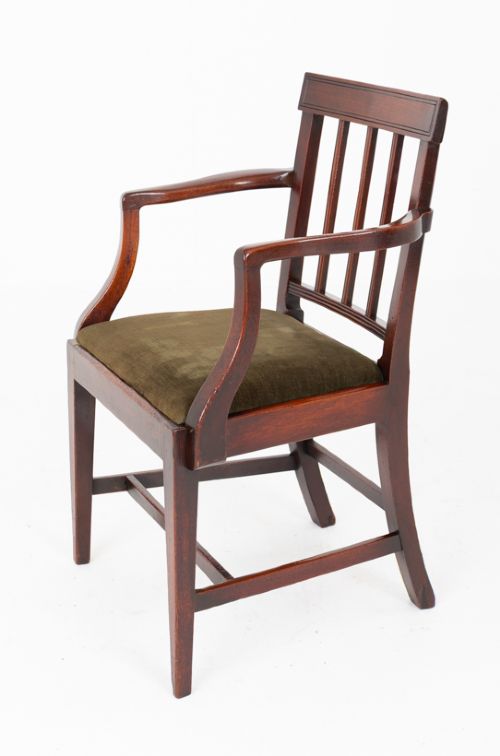
A carver chair is an armchair designed to accompany a matching set of single dining chairs. They provide wider seats and armrests for the head of the table.
These pieces share the prevailing style and timber of the accompanying dining set, whether Regency, Victorian, or Edwardian.
How should I care for dark wood chairs?
Care for dark wood chairs involves maintaining stable indoor humidity and applying occasional natural wax to nourish the timber. Avoid placing them near direct heat sources.
Gentle dusting with a soft cloth preserves the original finish and patination accumulated over the centuries.
What is a Thames Valley chair?
A Thames Valley chair is a regional variation of the Windsor form produced along the River Thames. These pieces are noted for refined turnings and generous proportions.
Craftsmen in this area frequently employed yew wood alongside elm and ash to build distinctive local armchairs.