




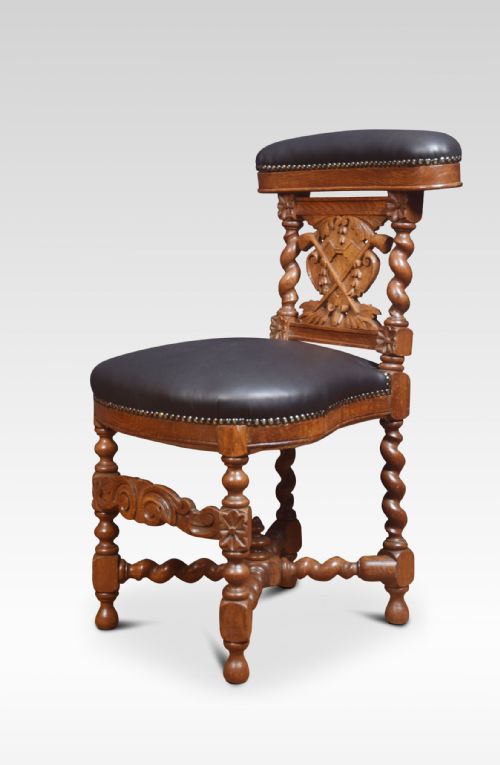


Brown Leather Hall Chairs
These brown leather hall chairs combine sturdy timber framing with durable hide upholstery, offering robust seating for grand entrances.
Brown Leather Hall Chairs
Buyers encounter diverse regional interpretations and Revivalist movements within this selection, including Victorian Gothic Revival, Jacobean Revival, and Arts and Crafts examples. Forms range from rigid high-backed hall chairs to wider armchairs and occasional side seating.
Materials and Construction
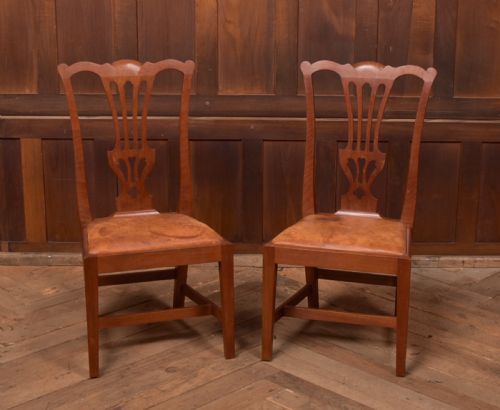
Wood selection forms the structural foundation of these brown leather hall chairs, with English oak, walnut, and mahogany providing dense, durable frames. Joinery relies on traditional carpentry methods to support daily weight in busy hallways.
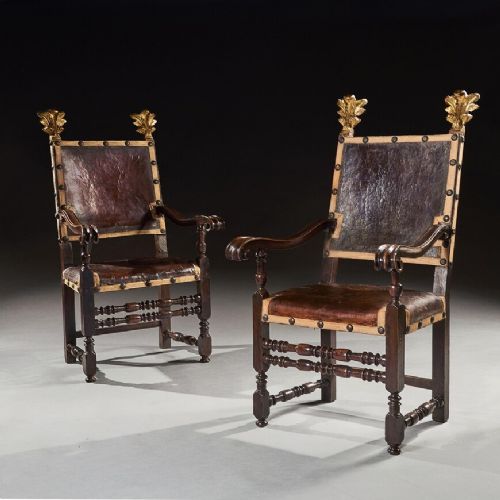
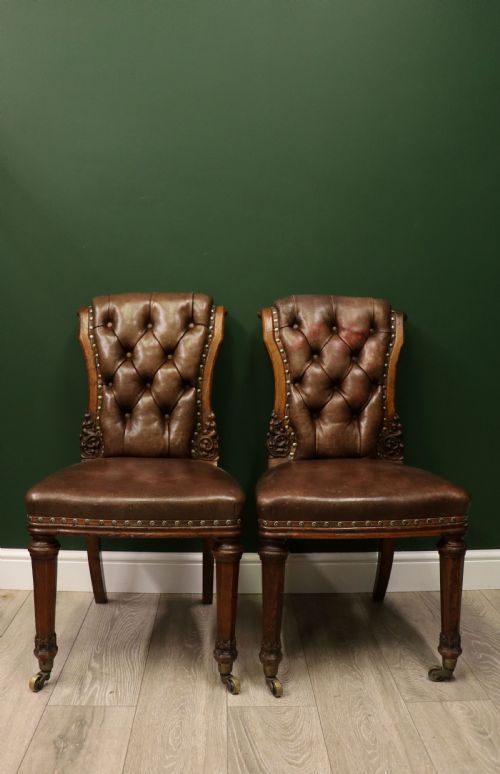
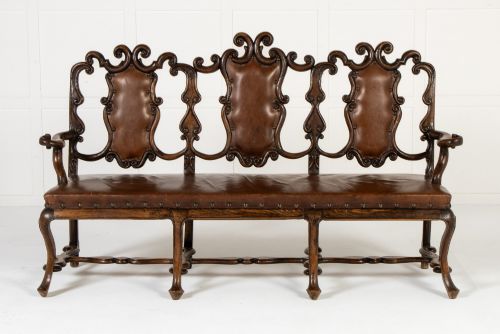
Leather upholstery is secured to the wooden frames using metal studs or brass elements, whilst specific examples incorporate woven leather techniques or parcel-gilt details. Carved ornamentation adorns the structural timber on distinct revivalist pieces.
Brown Leather Hall Chairs Retail Price Guide 2026
Typical asking prices for brown leather hall chairs among the pieces listed under this phrase on Sellingantiques today, from the lower quarter to the upper quarter. They describe what is for sale here now, not the wider market.
At least one set bears the distinct carved trademark of a mouse, hiding quietly in the oak woodwork.
Evaluating Quality and Craftsmanship
The degree of hand-carving and timber selection distinguishes standard utility seating from finer stylistic interpretations, such as Gothic Revival or Italian Baroque commissions. Heavier framing timbers and intricate joinery indicate superior workshop production.
The condition and retention of original leather, alongside period-appropriate metal studs or gilding, elevate the standing of an individual chair or pair. Consistency across matched sets determines their desirability for formal interior placement.
The Brown Leather Hall Chairs Glossary
- Hall chair
- A rigid wooden seat traditionally placed in an entrance hallway, often featuring a carved back bearing family crests or decorative motifs.
- Gothic Revival
- An architectural and decorative style drawing inspiration from medieval forms, characterised by pointed arches and heavy carved oak.
- Parcel-gilt
- A decorative technique where specific portions of a wooden or metal surface are highlighted with thin layers of gold leaf.
- Jacobean Revival
- A nineteenth-century furniture style imitating the robust, geometric carved aesthetic of early seventeenth-century English design.
Brown Leather Hall Chairs: Frequently Asked Questions
Are these chairs comfortable for daily use?
Most historic hall chairs were built for upright posture in entryways rather than prolonged lounging in a living room. Their wooden frames and taut leather pads provide firm, supportive seating.
Filtered through centuries of domestic use, models with padded arms or buttoned backs offer slightly more cushioning than rigid panel-back designs.
How do I care for antique leather?
Historic leather requires minimal moisture and protection from direct sunlight to prevent drying and cracking over time. Gentle dusting with a dry cloth preserves the surface.
Applying specialised leather balms occasionally helps maintain suppleness without altering the historical patina developed over generations.
Where should I place a hall chair?
Traditionally stationed in grand entrance halls or corridors, these chairs suit modern entryways, landings, or bedrooms as sculptural accent pieces. Their narrow profiles fit well against walls.
Pairs look striking flanking a console table or doorway, while single examples anchor empty corners effectively.
How can I date a wooden chair?
Dating relies on identifying timber species, joinery methods, and stylistic cues from specific eras like the Victorian or Gothic Revival periods. Tool marks and fastener types offer further clues.
Comparing structural proportions against documented design books helps narrow down the decade of manufacture.