




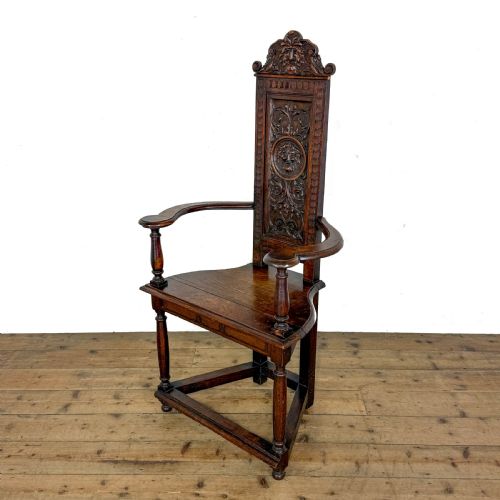


Jacobean Revival Hall Chairs
These jacobean revival hall chairs bring solid oak and deep carving into hallways, echoing seventeenth-century designs through nineteenth- and twentieth-century craft.
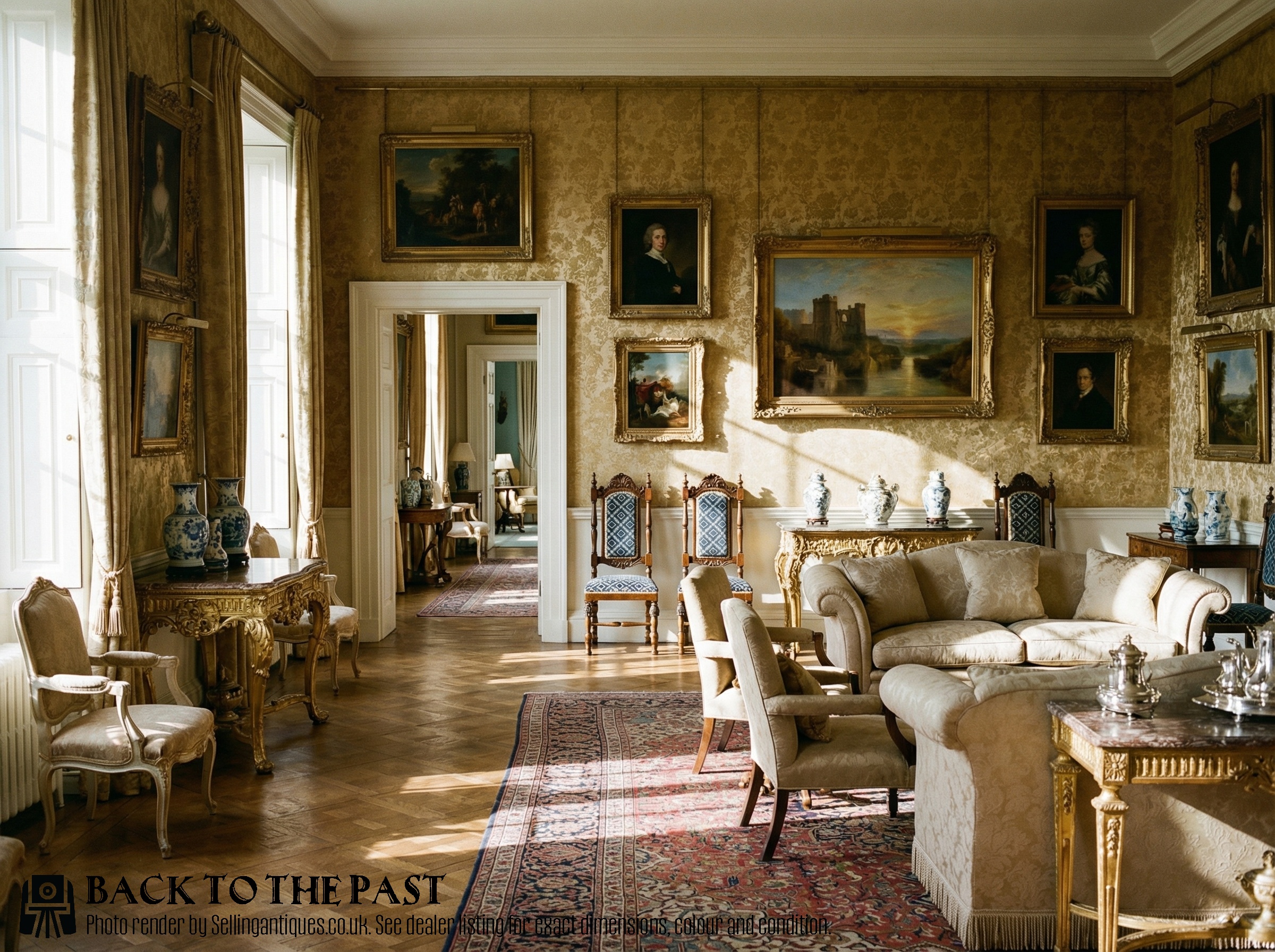
Jacobean Revival Hall Chairs
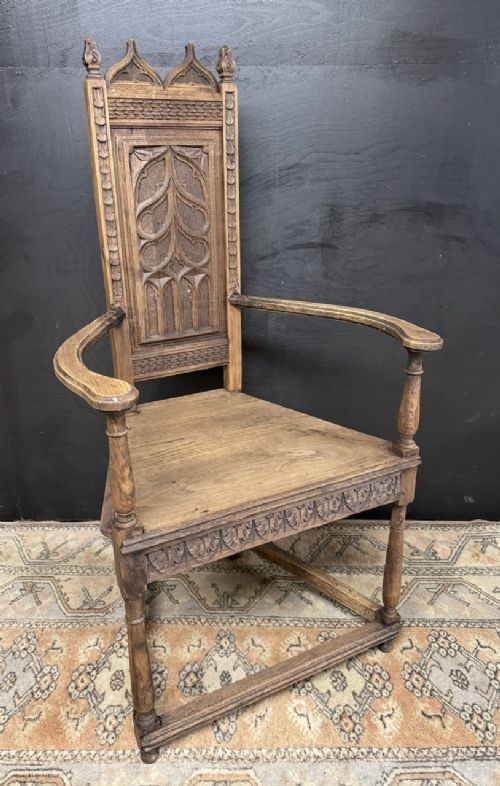
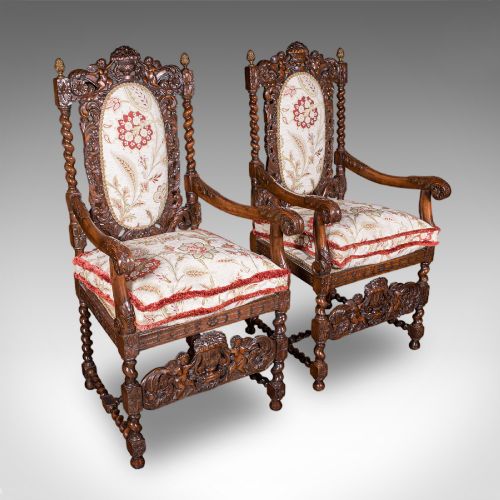
Jacobean revival hall chairs draw upon seventeenth-century motifs, translating heavy seventeenth-century style and Carolean revival elements into nineteenth- and twentieth-century seating. Pieces on this page span the Victorian era, the nineteenth century, and into the early decades of the twentieth century.
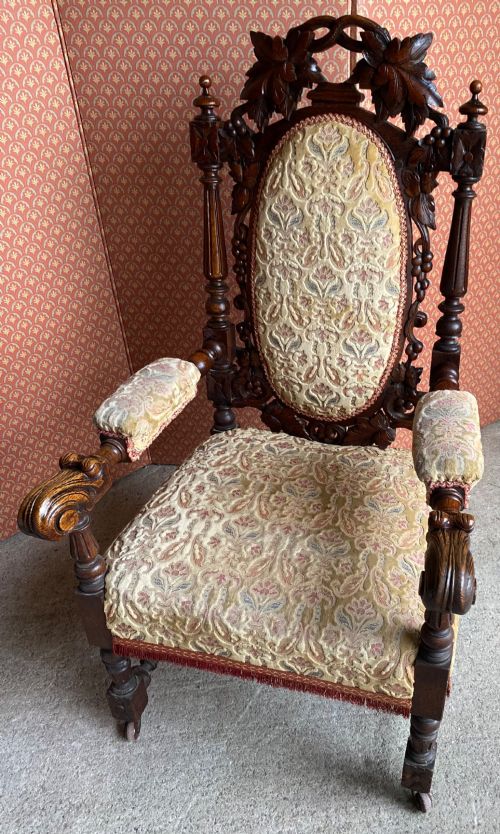
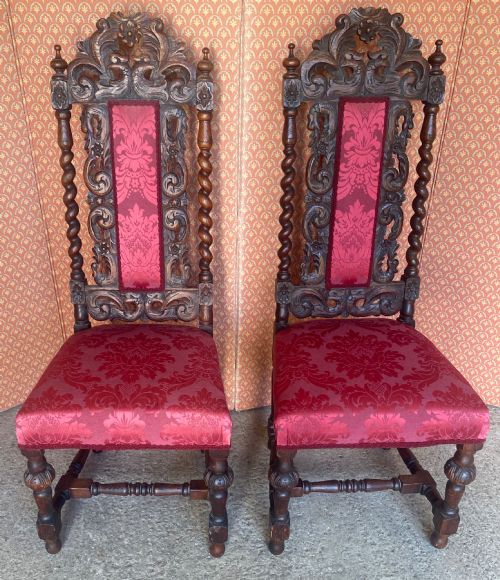
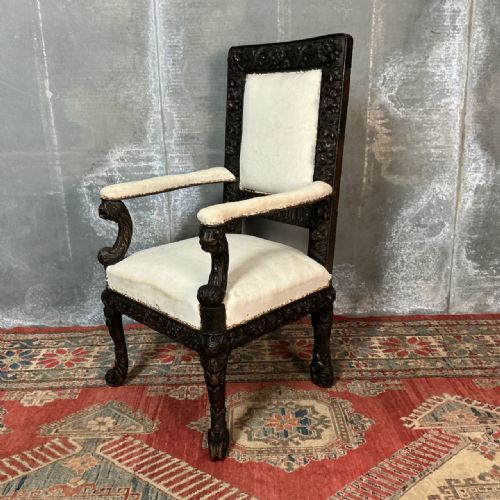
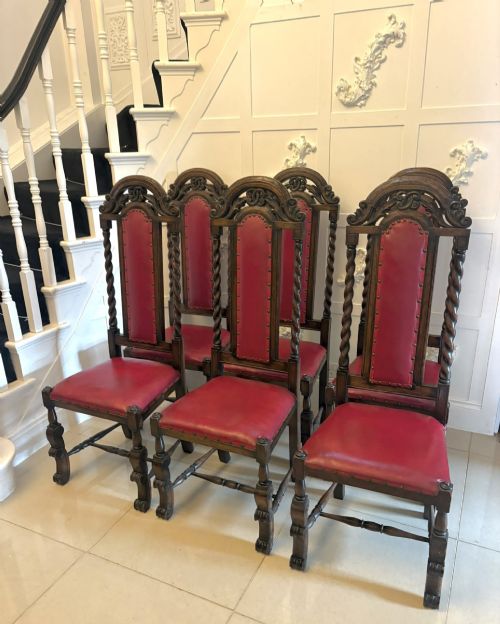
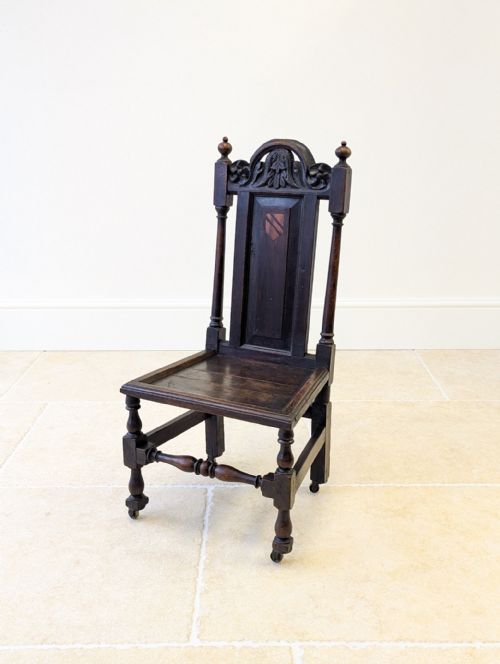
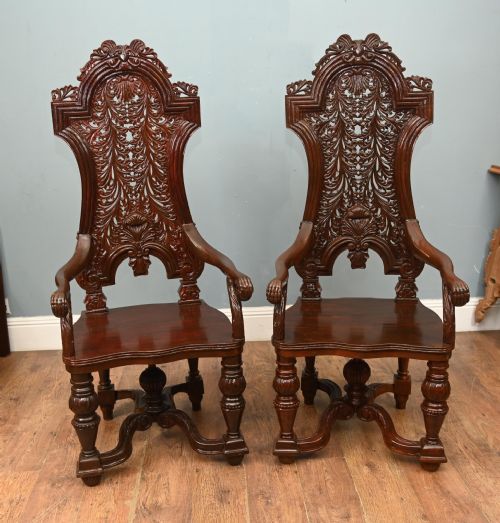
Forms include straightforward side chairs, high-backed hall chairs, armchairs, and throne chairs alongside larger monks benches and hall seats with lift-up lids. Oak forms the primary structural timber, shaped into panels, turned legs, and elaborate crest rails.
The aesthetic leans heavily on Gothic revival and Baroque revival influences, featuring carved foliage, green man masks, and panelled backs. Buyers encounter single chairs, pairs, and occasional sets suited for entrance spaces and reception rooms.
Defining Quality
Quality rests upon the crispness of the timber carving and the depth of the relief work across the back panels and crest rails. Sharply defined green man faces, foliage, and geometric strapwork indicate superior hand execution compared to softer, shallower machine cutting.
The selection of the oak timber itself dictates structural integrity, with dense grain, quarter-sawn figuring, and minimal sapwood representing the higher end of production. Joints fitted with pegged mortises demonstrate better joinery than simpler modern fixings.
Proportion and scale distinguish standard side chairs from impressive throne chairs and larger monks benches. Balanced armrests, substantial turned barley twist legs, and well-integrated folding tops elevate the presence of individual pieces.
Jacobean Revival Hall Chairs Retail Price Guide 2026
Typical asking prices for jacobean revival hall chairs among the pieces listed under this phrase on Sellingantiques today, from the lower quarter to the upper quarter. They describe what is for sale here now, not the wider market.
Several heavy throne chairs feature staring green man masks carved into the crest rails to watch over hallway visitors.
The Jacobean Revival Hall Chairs Glossary
- Wainscot chair
- A heavy wooden armchair of seventeenth-century origin, constructed with panelled backs and solid wooden seats. These pieces often feature carved crests and sturdy arm supports.
- Barley twist
- A turned wooden furniture leg or stretcher carved in a spiral resembling a twist of barley. This decorative turning became popular during the seventeenth century and returned during nineteenth-century revivals.
- Green man
- A sculptural architectural and furniture motif depicting a human face disgorged from foliage or surrounded by leaves. This symbol appears frequently on carved oak panels within nineteenth-century revival pieces.
- Monks bench
- A multifunctional piece of furniture featuring a hinged top that folds down to convert a bench into a table. These versatile items often incorporate built-in storage beneath the seat.
- Carolean revival
- A style of furniture reproduction drawing upon the reign of Charles II, characterised by rich carving, scrolling foliage, and turned supports. It forms a subset of the broader Jacobean revival movement.
Jacobean Revival Hall Chairs: Frequently Asked Questions
How were hall chairs used historically?
Hall chairs served primarily as decorative and functional seating in entranceways, corridors, and landings of large homes. They were rarely intended for lounging, instead offering a formal seat for callers waiting briefly in the hall.
Some variants, such as monks benches and hall seats with lift-up tops, also functioned as storage boxes for outdoor wear or converted into small tables. Their sturdy wooden construction withstood the cool, high-traffic environment of a period hallway.
How do I care for antique oak seating?
Solid oak requires stable indoor humidity levels away from direct heat sources and strong sunlight to prevent the timber from drying out. Regular dusting with a soft, dry cloth preserves the finish without stripping the natural patina.
Feed the wood periodically with appropriate wax polish to maintain its lustre and protect the carved surfaces. Cane and upholstered elements require gentle handling and occasional vacuuming using a low-suction brush attachment.
How can I tell the period of these chairs?
Dating relies on examining the timber preparation, tool marks, and hardware assembly methods visible beneath and behind the chair. Nineteenth- and twentieth-century revival pieces often display machine-sawn elements or later joining techniques hidden within the construction.
Stylistic cues also help narrow the date, as Victorian interpretations frequently feature bolder relief carving and green man motifs. Comparing the proportions and secondary woods provides further clues to whether a piece dates to the Victorian era or the early twentieth century.