
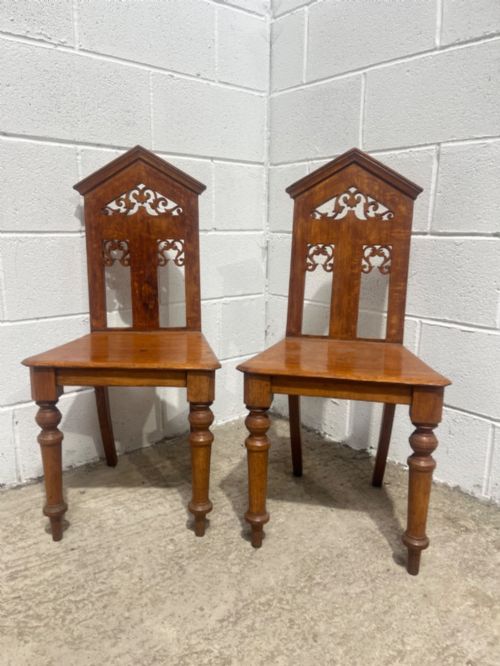
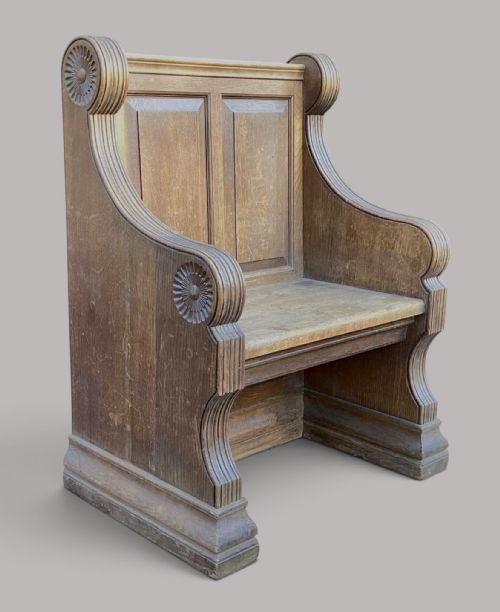
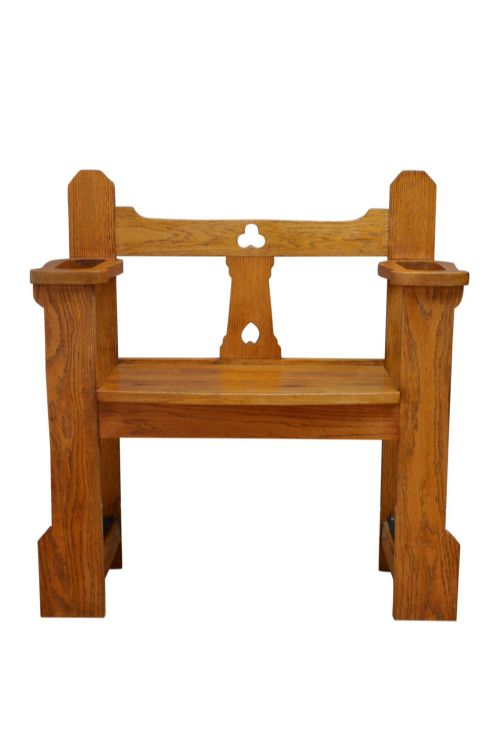
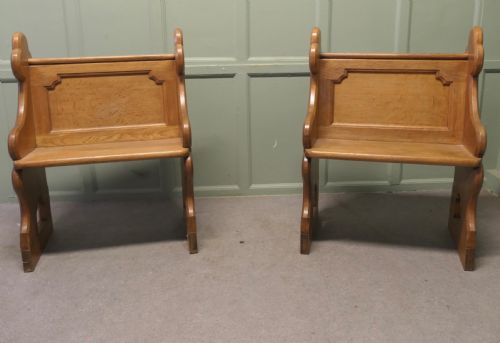

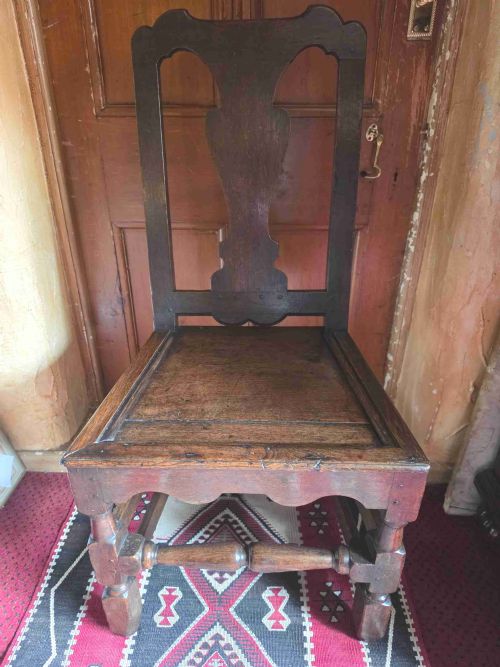

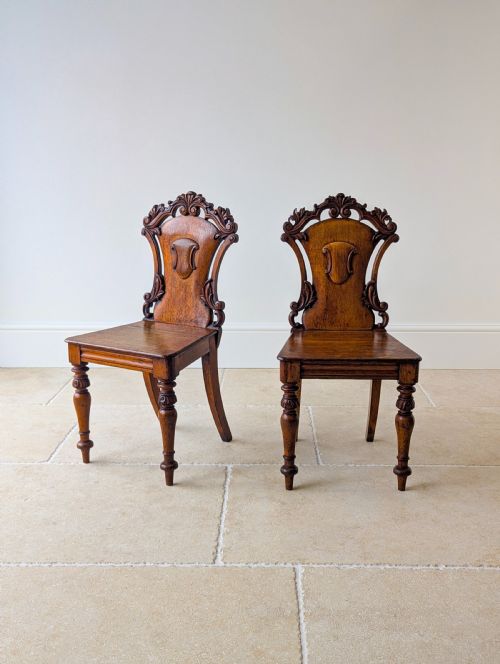
Solid Oak Hall Chair
A solid oak hall chair brings heavy timber and upright seating straight into the narrowest entrance.
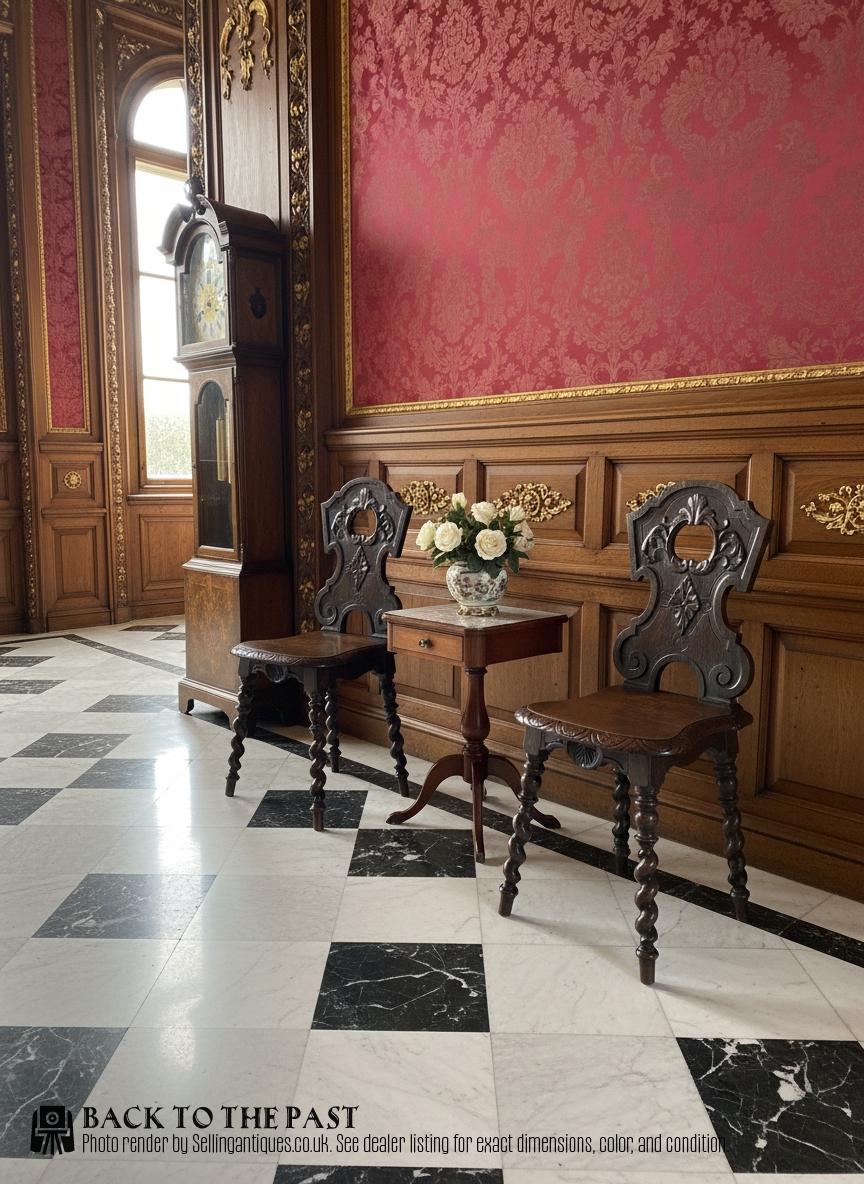
Identifying a solid oak hall chair
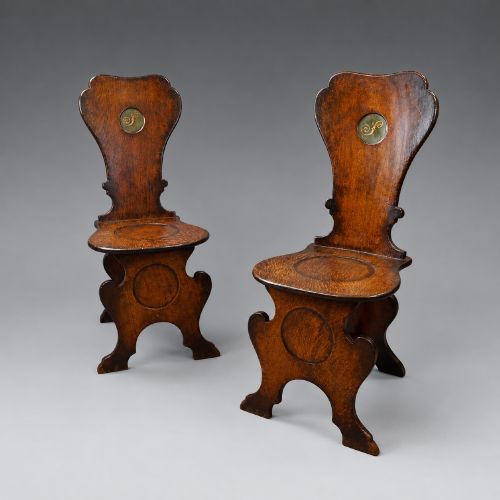
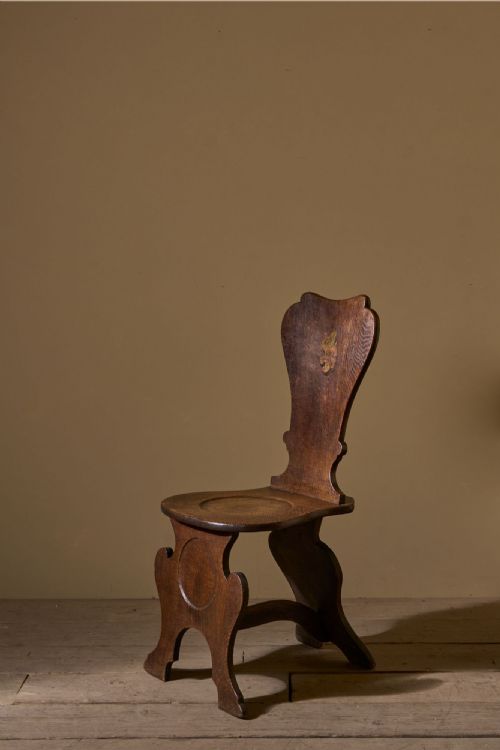
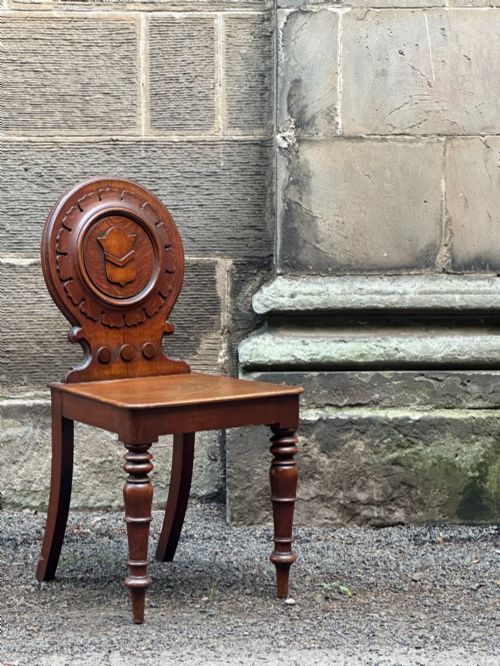
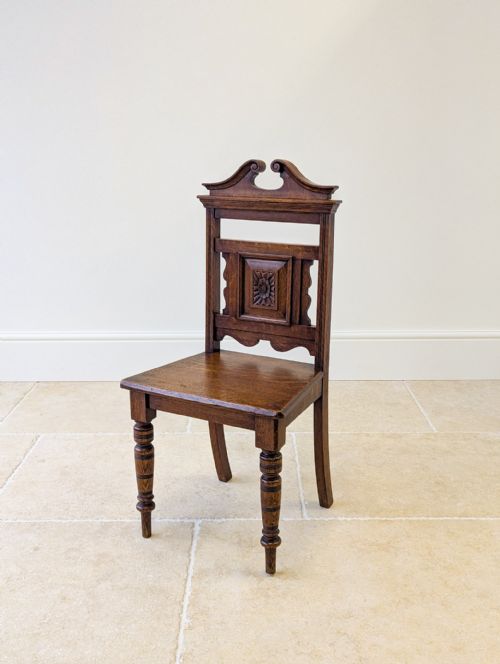
A solid oak hall chair is a rigid wooden seat designed for brief use in an entranceway or passage, constructed almost entirely from heavy timber rather than veneered panels. Pieces matching this solid oak hall chair search span the Victorian era, the Edwardian period, and the nineteen thirties, with nineteenth century examples appearing most frequently.
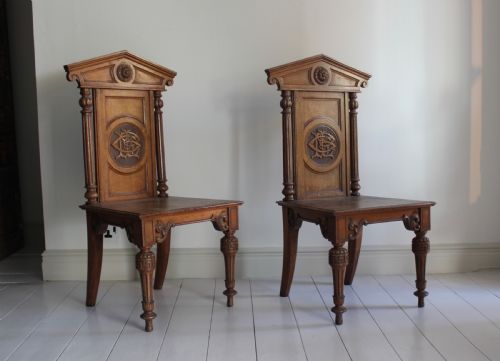
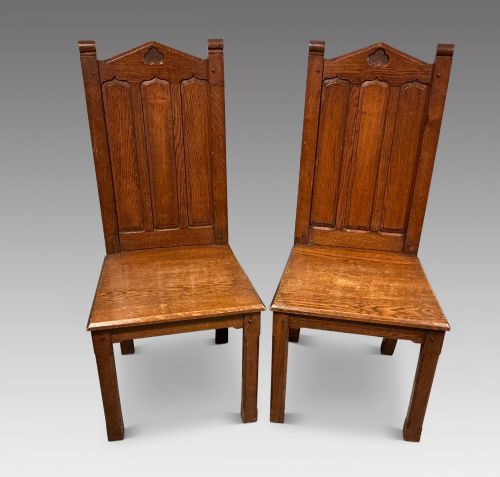
The styles of these chairs shift across the decades from strict Victorian Gothic Revival and ecclesiastical taste to carved Arts and Crafts and Jacobean Revival motifs. Makers utilised both single chair configurations and pairs, alongside occasional armchairs and carver variants.
Earlier archive records demonstrate that occasional seventeenth century wainscot forms also surface, though nineteenth and early twentieth century interpretations dominate the current selection.
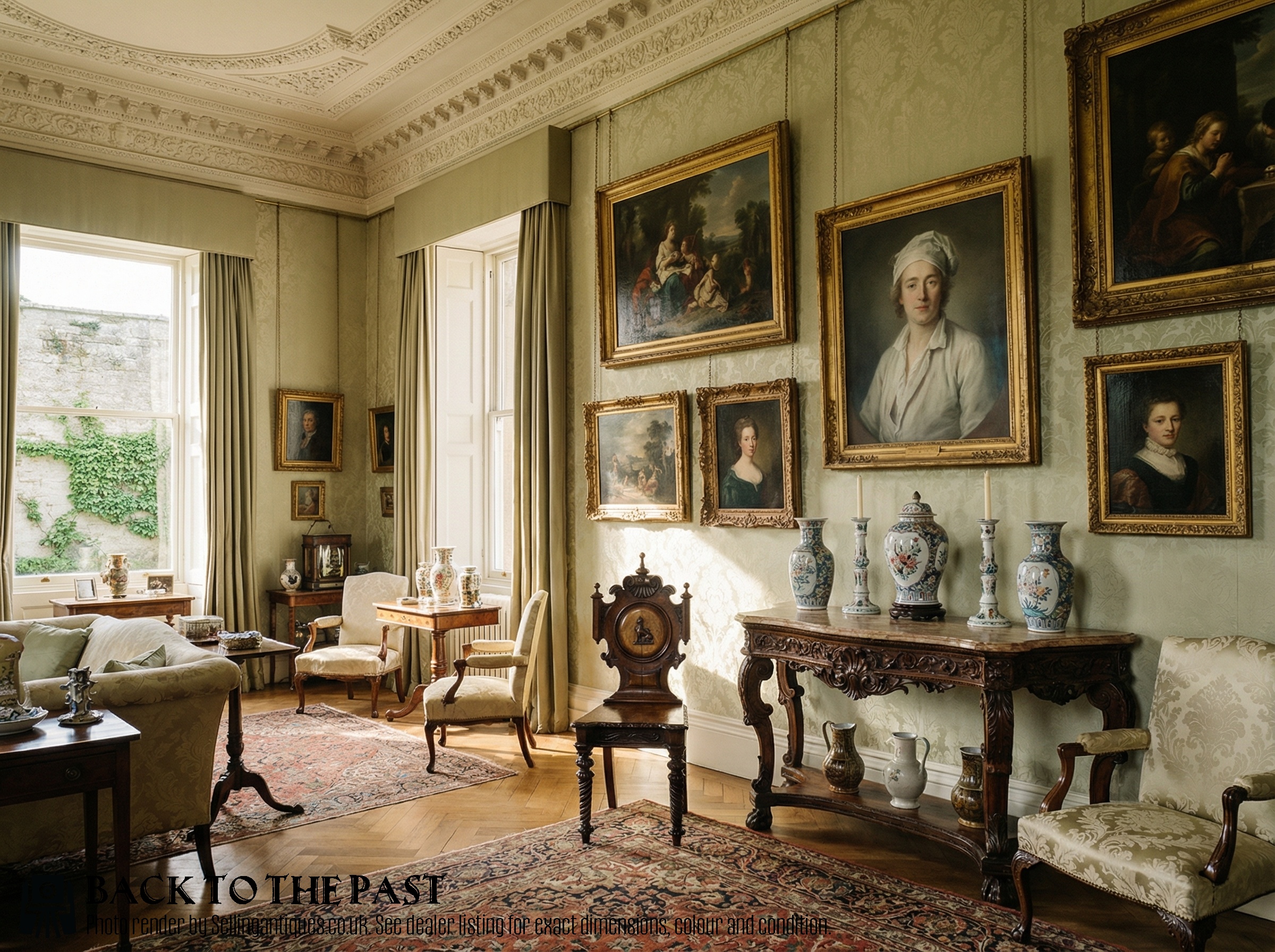
Materials and construction
Construction relies entirely upon solid oak timber, frequently selected for its dense grain and durability in high-traffic areas like corridors and porches. Workshops shaped these heavy boards using traditional joinery methods suited to upright, load-bearing furniture.
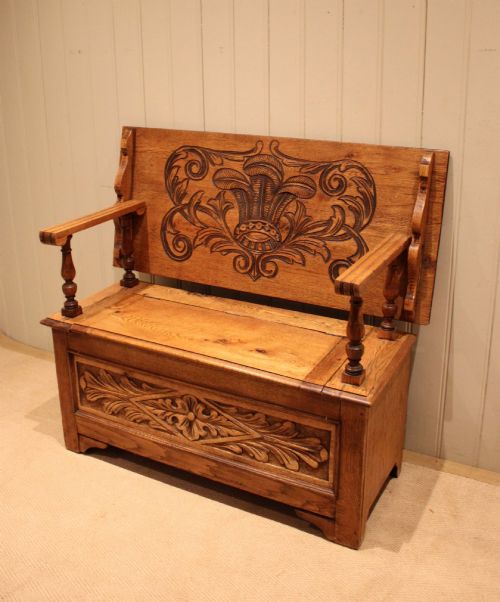
Surface decoration relies upon deep relief carving rather than applied veneers or complex inlays, bringing geometric, Gothic, or foliate patterns straight out of the wood. Brass elements occasionally appear as structural fixings or decorative accents on specific nineteenth century iterations.
Retail Price Guide 2026
Typical UK retail prices for solid oak hall chair, calculated from the Sellingantiques database of over a million retail prices indexed since 2003. This retail price guide relies exclusively on Sellingantiques data; no external sources or auction records are used, so the figures do not describe the wider market.
Judging quality and character
Quality separates ordinary utilitarian seating from superior examples through the depth and crispness of the hand carving on the backrest and panel work. Pieces at the top of the range display precise joint work and thick, uncompromised timber sections that resist warping.
The integrity of the original timber surface and the presence of period-correct joinery dictate the standing of any given example. Simpler, later twentieth century interpretations lack the rich patination and sculptural ambition seen in mid-to-late Victorian Gothic and Arts and Crafts commissions.
The Solid Oak Hall Chair Glossary
- Wainscot
- An early form of wooden armchair with a solid panelled back and heavy timber seat. These pieces date back to the seventeenth century and represent the heavier ancestors of later hall seating.
- Gothic Revival
- A nineteenth century design movement that revived medieval architectural motifs such as pointed arches, tracery, and trefoils. This style heavily influences the carved backrests of Victorian hall chairs.
- Arts and Crafts
- A design movement focusing on traditional craftsmanship, visible construction, and natural materials. Chairs from this period emphasise honest woodwork and straightforward joinery over excessive ornamentation.
- Jacobean Revival
- A style popular during the nineteenth century that mimics the heavy, geometric turned legs and panelled decoration of early seventeenth century English furniture.
- Carver
- A traditional term for an armchair, often placed at the head of a table or utilised as a substantial single seat in a hallway.
Frequently Asked Questions
What is a solid oak hall chair?
A solid oak hall chair is a rigid, upright wooden seat built for use in a hallway, passage, or entrance porch rather than for long periods of lounging.
These pieces were traditionally placed against a wall where visitors would wait briefly, featuring unpadded wooden seats and decorative carved backrests.
How do I date a hall chair?
Dating relies on observing stylistic markers such as Gothic Revival pointed arches, Arts and Crafts linear carving, or Jacobean Revival turned details.
Material density, tool marks, and the specific way the legs join the seat help distinguish mid-nineteenth century Victorian examples from Edwardian or later nineteenth-century pieces.
Were hall chairs made in pairs?
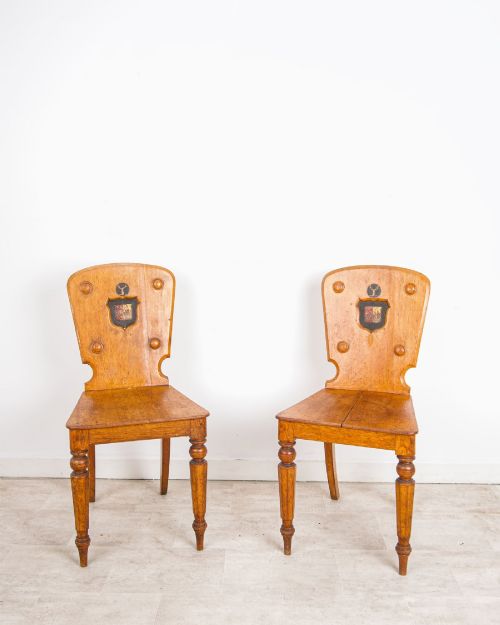
Makers frequently produced hall chairs in pairs so they could stand symmetrically flanking a doorway or console table.
Single examples and pairs appear with equal frequency across the Victorian and Edwardian periods recorded in our evidence.
How do I live with a hall chair?
A hall chair functions well as an accent piece in a narrow corridor, bedroom, or entryway, serving as a sculptural object when not in use.
Because the seats are solid timber without upholstery, they require minimal maintenance beyond regular dusting and occasional treatment with suitable furniture wax.