

Carved Oak Throne
A carved oak throne delivers commanding presence to a room, anchoring the space with centuries of heavy timber and sculptural decoration.
Carved Oak Throne
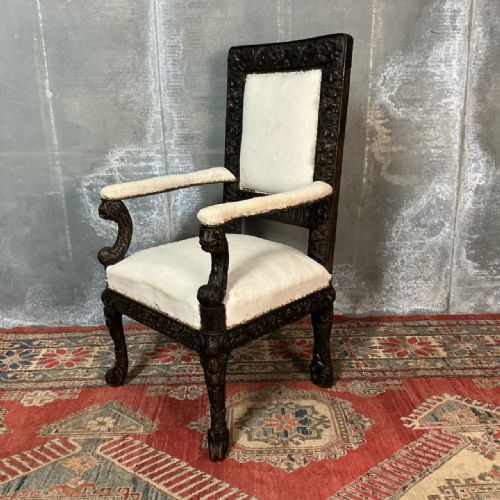
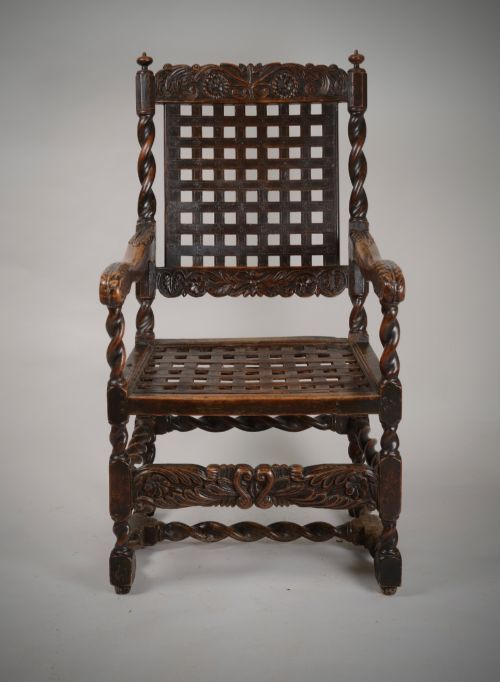
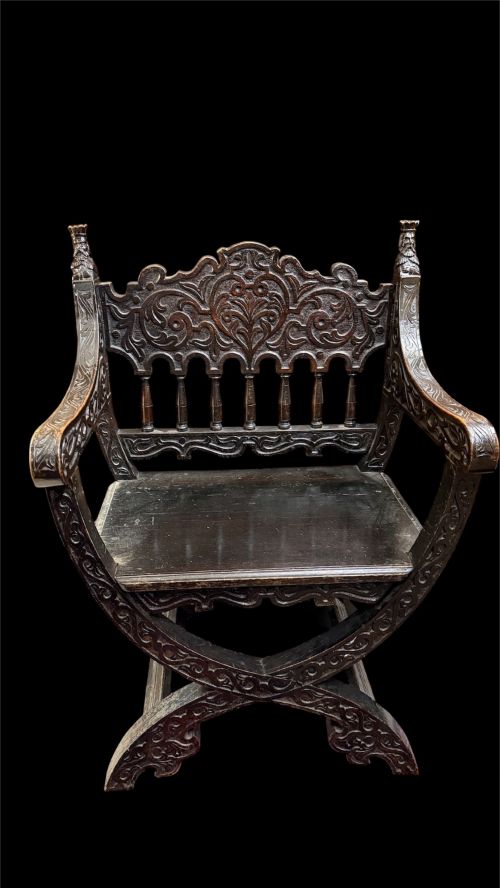
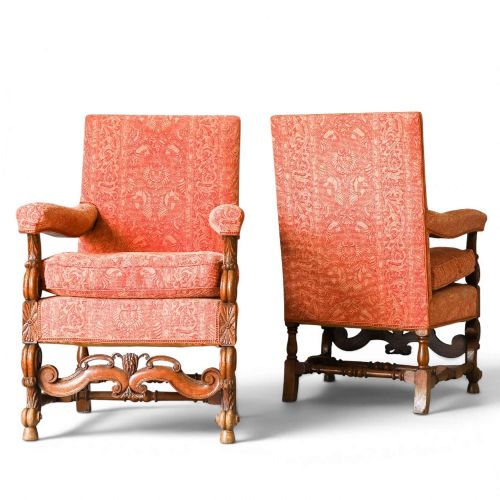
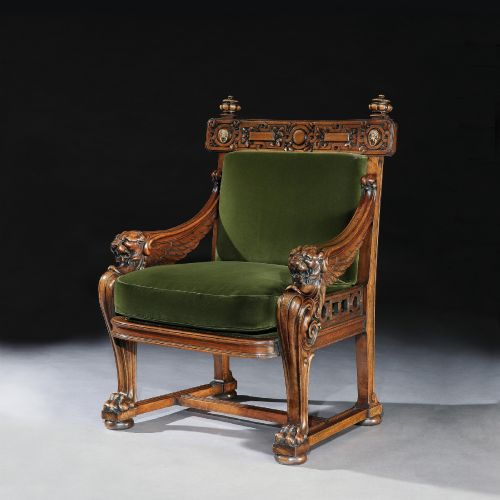
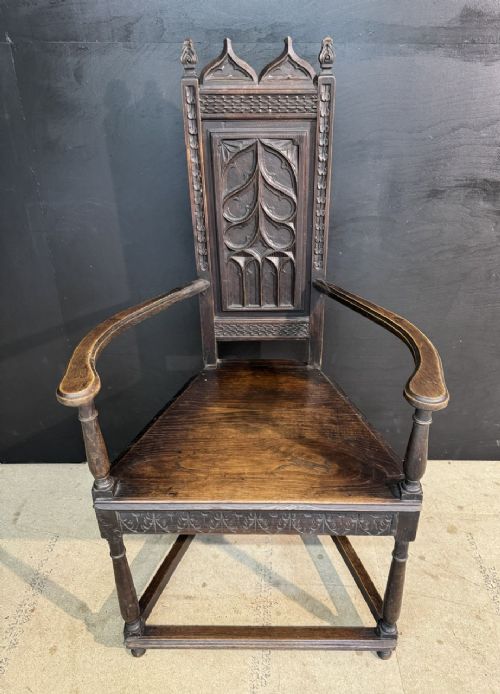
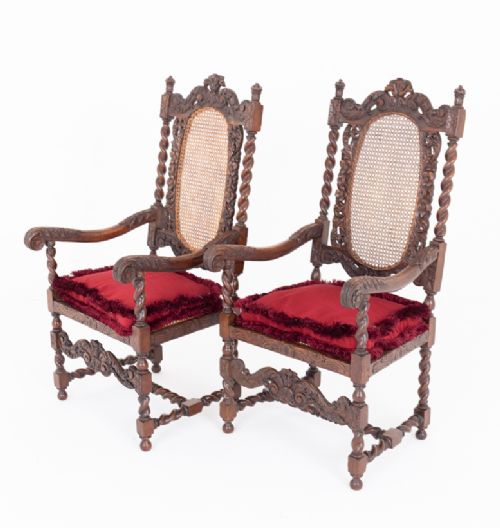
A carved oak throne represents the heavier, more imposing end of antique seating, combining domestic function with architectural display. These chairs typically feature high backs, solid panel construction, and deep relief carving influenced by periods such as the seventeenth century and the nineteenth-century Gothic revival.
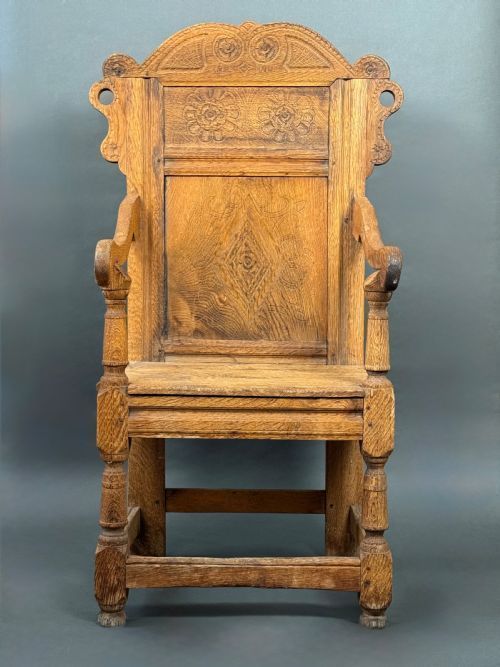
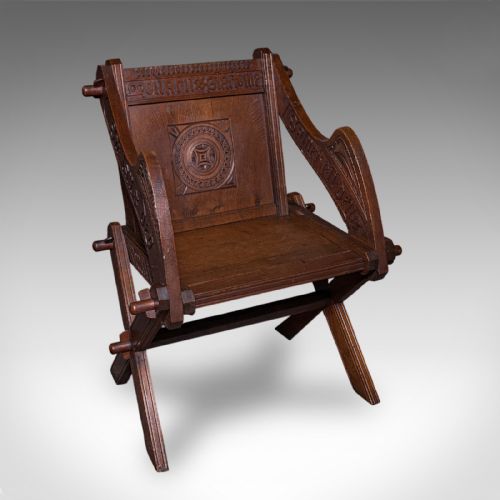
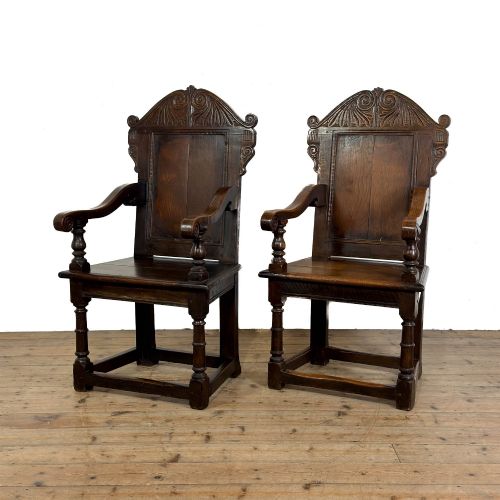
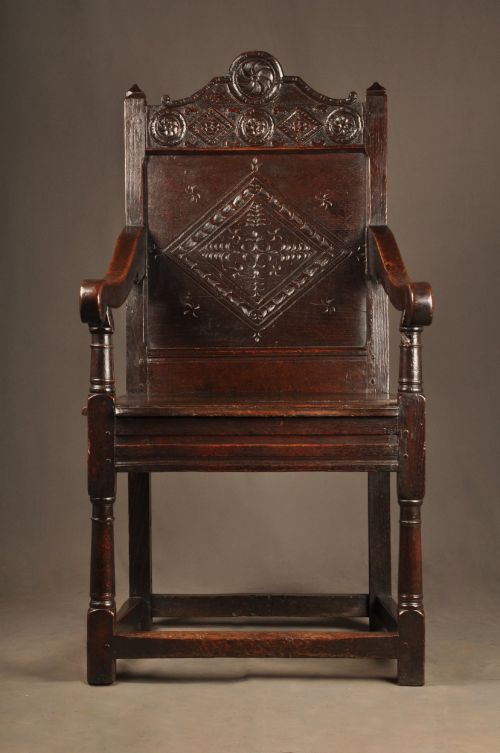
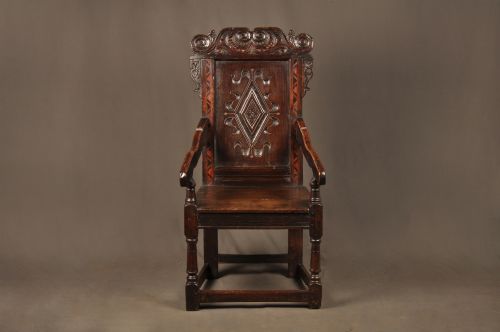
The version most commonly met on this page is the nineteenth-century revival piece, often drawing on earlier Jacobean or medieval motifs. Alongside these sit authentic seventeenth-century wainscot chairs and chapel thrones, offering substantial timber frames designed to hold authority.
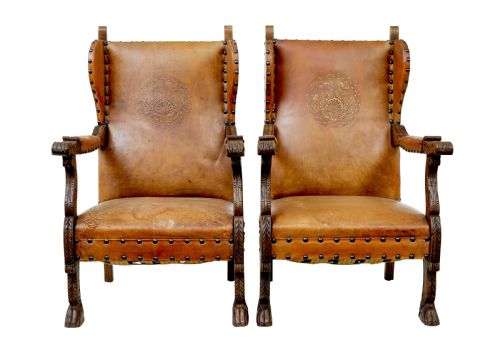
Makers utilised heavy local woods to construct seats intended for halls, churches, and grand parlours. The resulting forms range from strict linear wainscot panels to elaborate upholstered chairs featuring leather, tapestry, and brass detailing.
How They Were Made
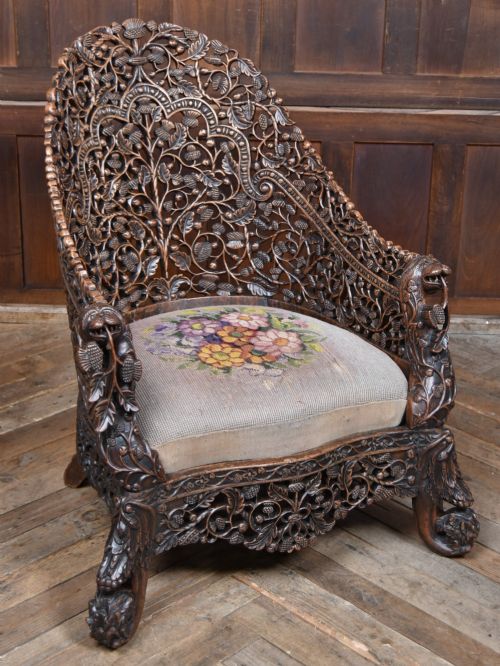
Carpenters constructed these seats primarily from solid oak, relying on pegged mortise and tenon joints to secure the heavy framework. This dense timber supported deep chisel work, allowing craftsmen to carve foliage, heraldic motifs, and masks directly into the structural panels.
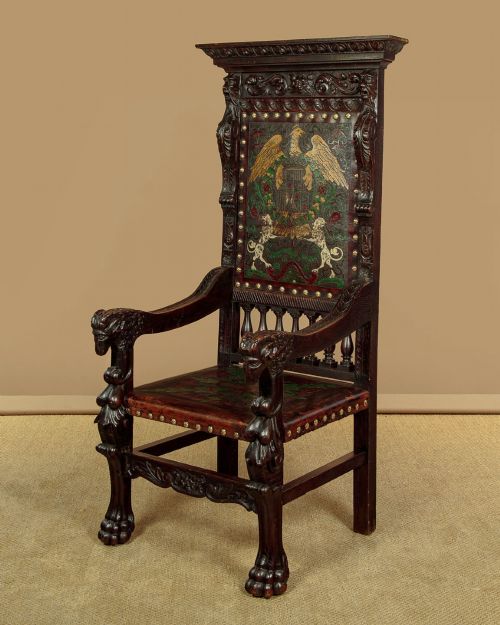
Upholstery elements, where present, relied on durable materials like embossed leather, woven tapestry, and velvet secured with brass studs. Decorative additions such as turned barley-twist supports and applied mouldings gave structural depth to the upright posts and armrests.
Carved Oak Throne Retail Price Guide 2026
Typical asking prices for carved oak throne among the pieces listed under this phrase on Sellingantiques today, from the lower quarter to the upper quarter. They describe what is for sale here now, not the wider market.
Listings feature oak construction alongside supportive materials including brass, leather, velvet, tapestry, and textile.
What Varies in Quality
The standard of a carved oak throne rests upon the crispness of the chisel work and the integrity of the timber frame. Superior examples display deep, deliberate undercutting in the foliage and figures, whereas lesser pieces rely on shallow, mechanical surface stamping.
Proportion and structural balance also dictate worth, as genuine seventeenth-century proportions differ significantly from Victorian interpretations. Original joinery without excessive modern replacement timber distinguishes a superior survival from a heavily restored assembly.
The Carved Oak Throne Glossary
- Wainscot
- A heavy wooden armchair with a solid panel back and panelled seat base, typical of seventeenth-century domestic interiors. This form provides a solid barrier against cold draughts.
- Gothic Revival
- An architectural and decorative style popular during the nineteenth century, drawing inspiration from medieval ecclesiastical design. It frequently incorporates pointed arches and tracery.
- Jacobean
- The period spanning the early seventeenth century under James I, characterised by rigid symmetry and strapwork carving. Oak furniture from this time uses robust, geometric construction.
- Baroque
- A flamboyant style originating in the seventeenth century, known for theatrical curves, rich ornamentation, and dynamic movement. Pieces in this manner feature scrolls and high relief.
- Monopodia
- A furniture support consisting of a single carved animal leg and foot, often terminating in a lion paw. This classical motif appears on revival armchairs.
Carved Oak Throne: Frequently Asked Questions
Where were oak thrones used historically?
These seats originally occupied the head of the dining table for the master of the household, or served ecclesiastical functions in chapels and bishops' residences. Their elevated height and substantial armrests symbolised authority and status within the room.
In domestic settings, they stood in panelled halls or reception rooms where guests were received. Their heavy construction ensured they remained stationary, functioning as architectural fixtures rather than movable chairs.
How do I distinguish seventeenth-century pieces from nineteenth-century revivals?
Authentic seventeenth-century examples display tool marks, timber shrinkage appropriate to age, and construction methods specific to early joinery. They often show vernacular regional traits in the carving style and wood selection.
Nineteenth-century revival pieces, by contrast, frequently utilise mechanised cutting techniques and display an eclectic mix of historical revivals such as Renaissance or Gothic styles. Their finish and state of wear generally reflect later nineteenth-century interior fashions.
How should I care for the leather and upholstery?
Original leather and fabric panels require stable environmental conditions away from direct sunlight and strong heat sources. Maintaining moderate humidity prevents the old hide from drying out and cracking.
Gentle dusting with a dry cloth protects the surface texture. Avoid modern chemical cleaners, as historic textiles and embossed leathers react poorly to harsh agents.
Can I use an antique throne as a desk chair?
The fixed armrests and upright wooden panels make these chairs unsuited for modern desk work. Their deep seats and high backs are designed for upright posture rather than computer use.
Instead, they function best as statement pieces in hallways, studies, or living rooms where their sculptural qualities can be appreciated without daily ergonomic demands.