


Brown Upholstered Dining Chairs
Brown upholstered dining chairs bring rich timber tones and soft seating to the table, uniting period craftsmanship with practical comfort.
What these chairs are
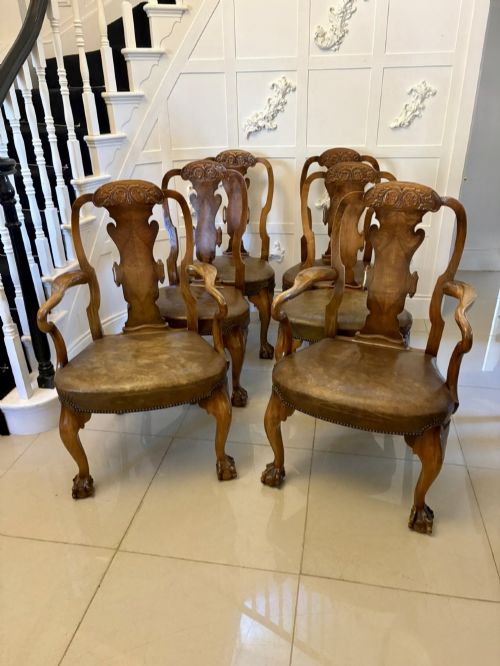
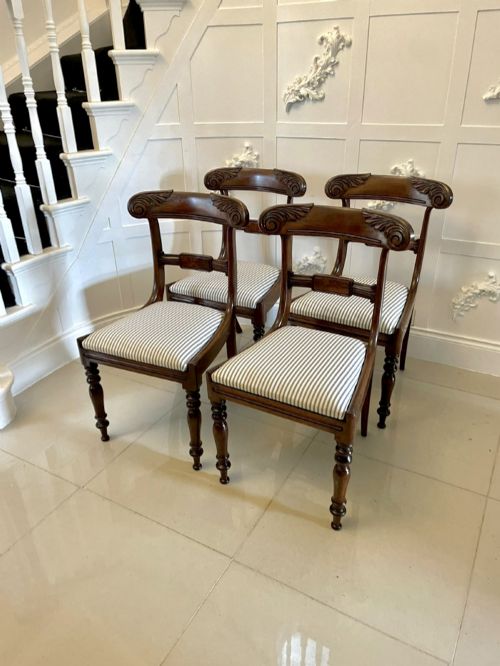
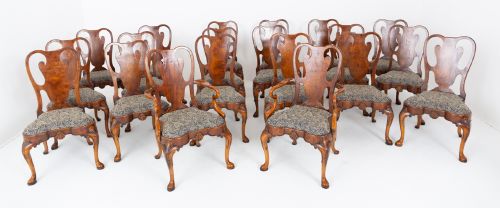
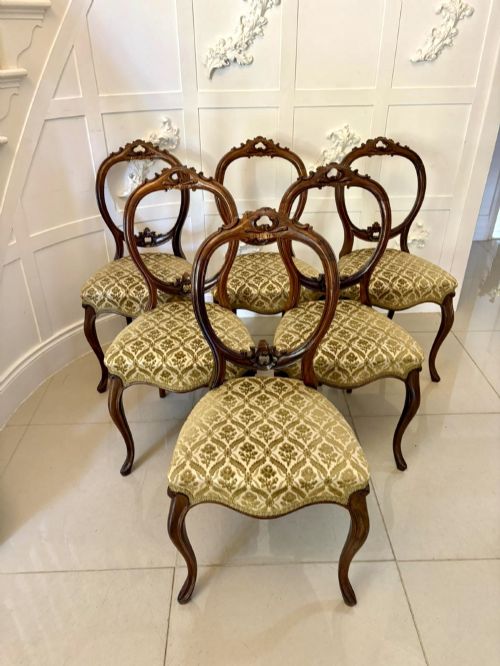
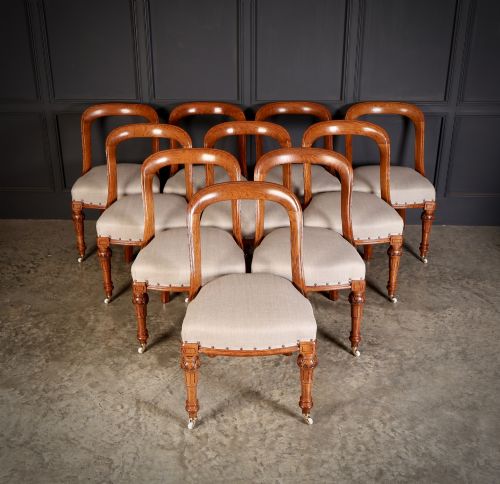
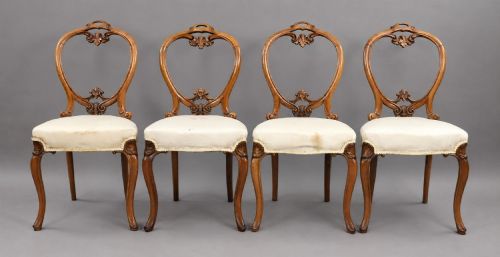
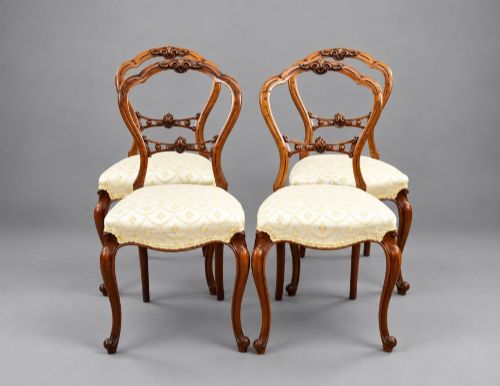
Brown upholstered dining chairs appear across several distinct periods, including Regency, Edwardian, and Victorian eras. These seats range from grand sets of thirteen simulated rosewood pieces to smaller gatherings of four walnut balloon back chairs.
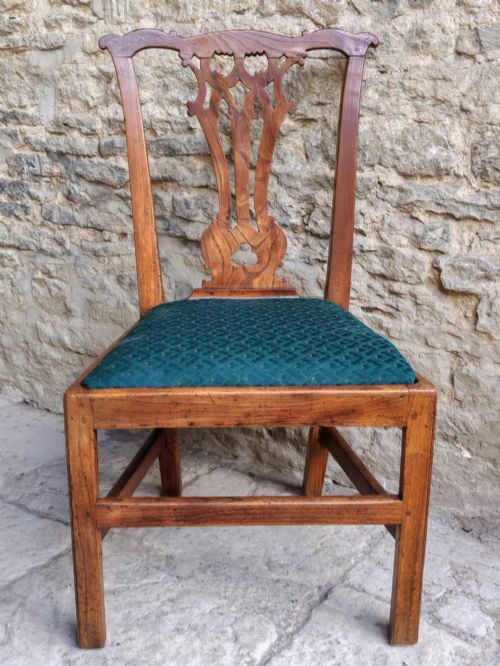
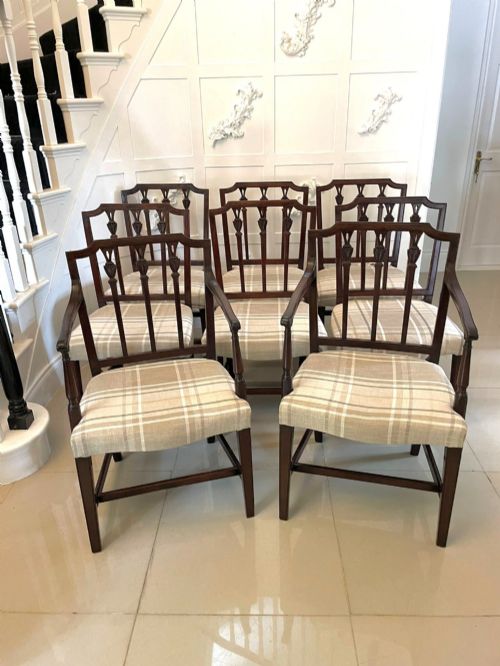
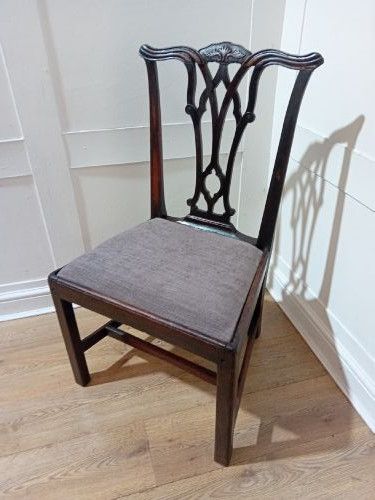
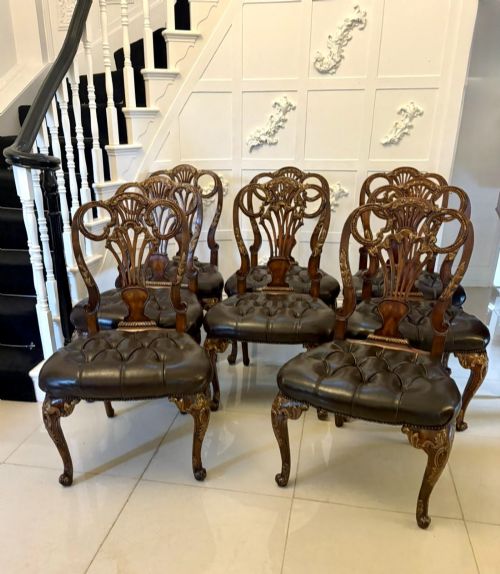
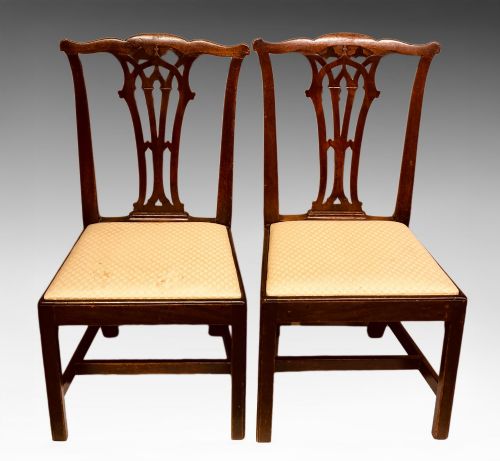
Makers adapted traditional forms such as Chippendale style and Anglo Indian designs using timber frames paired with fabric or leather upholstery. Sets vary in size from intimate groups to large dining room suites of ten or twelve.
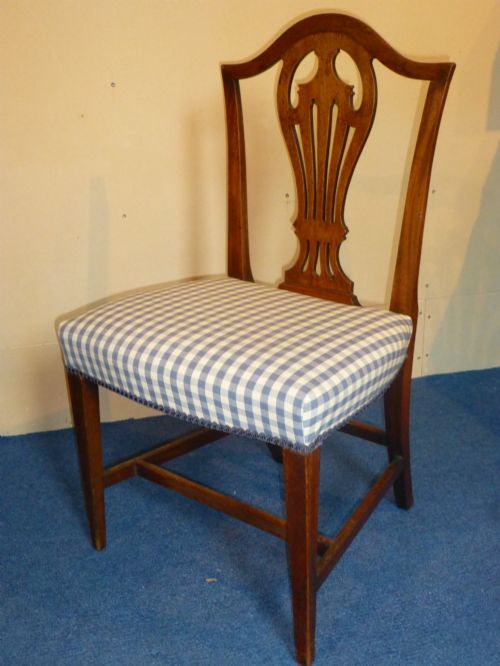
The brown upholstered dining chairs on this page demonstrate the enduring appeal of mahogany, walnut, rosewood, elm, and beech. Each set reflects the distinct domestic dining habits of its original nineteenth or early twentieth century context.
How they were made
Frames rely on dense hardwoods like mahogany, walnut, rosewood, elm, and beech, sometimes finished as simulated rosewood. These timbers provide the structural strength required for daily dining use.
Upholstery techniques involve securing fabric or leather over supportive padding within the timber framework. Carved details on backs and legs demonstrate period woodworking skills executed by hand.
Retail Price Guide 2026
Typical UK retail prices for brown upholstered dining chairs, calculated from the Sellingantiques database of over a million retail prices indexed since 2003. This retail price guide relies exclusively on Sellingantiques data; no external sources or auction records are used, so the figures do not describe the wider market.
A set of thirteen chairs ensures nobody ever has to sit on the floor, provided the dining table is equally ambitious.
What varies in quality
The standard of a set rests upon the choice of timber and the ambition of the carving on the frame. Finer examples display crisp detail in walnut, mahogany, or rosewood rather than simpler secondary woods.
Proportion and scale separate ordinary seating from exceptional sets, particularly in larger dining suites. The integrity of the frame construction and the execution of the upholstery define the upper tier.
The Brown Upholstered Dining Chairs Glossary
- Regency
- A British design period spanning the early nineteenth century defined by classical restraint and simulated woods. Pieces from this era often feature clean lines and dark timber finishes.
- Balloon back
- A rounded, curved chair back resembling a balloon shape popular during the Victorian era. This form offered ergonomic support alongside decorative carved wooden profiles.
- Simulated rosewood
- A painted or stained surface treatment applied to a more common timber to mimic exotic grain patterns. Artisans used this technique to achieve a luxury appearance at a different cost.
- Anglo-Indian
- Furniture produced in the Indian subcontinent under British colonial influence, frequently utilising dense rosewood. These items combine British forms with intricate local carving traditions.
Frequently Asked Questions
What periods do these dining chairs cover?
The selection spans from the early nineteenth century Regency period through to Edwardian and Arts and Crafts examples around nineteen hundred.
Most pieces date from the Victorian era and the broader nineteenth century, reflecting various historical revival styles.
How many chairs typically come in a set?
Sets vary widely from small intimate groups of four up to large dining suites numbering ten, twelve, or thirteen chairs.
Larger sets of eight or more are particularly notable for surviving intact over generations of family dining.
Which woods are used for the frames?
Makers utilised a variety of dense hardwoods including mahogany, walnut, rosewood, elm, and beech.
Some pieces feature simulated rosewood finishes applied to alternative timbers to achieve a uniform dark aesthetic.
What styles influence the designs?
Designs draw upon Regency elegance, Victorian carving, Chippendale proportions, and Anglo Indian decorative traditions.
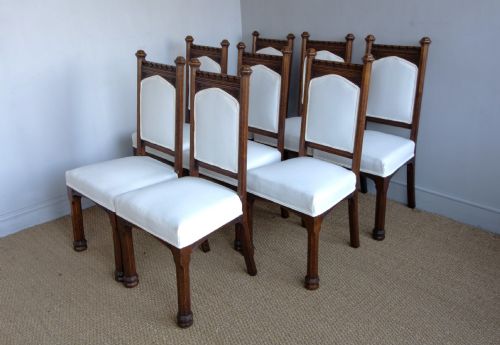
Arts and Crafts examples from nineteen hundred offer a simpler aesthetic focused on honest construction in elm.