




Colonial Dining Chairs
Colonial dining chairs are sturdy seating forms shaped by global trade and local cabinet-making traditions, offering rich timbers and varied regional designs.
Colonial Dining Chairs
Colonial dining chairs encompass a broad geographic span, covering styles from Anglo-Indian and Portuguese Baroque to Cape Dutch and American Country.
The pieces on this page include side chairs, dining chairs, and accent chairs originating from regions influenced by European settlement and local craft.
Buyers meet forms ranging from simple American slat backs to heavily carved ebony armchairs and caned side chairs from the nineteenth century.
Materials and construction
Construction relies heavily on dense timbers such as padauk, ebony, rosewood, teak, walnut, oak, and general hardwood.
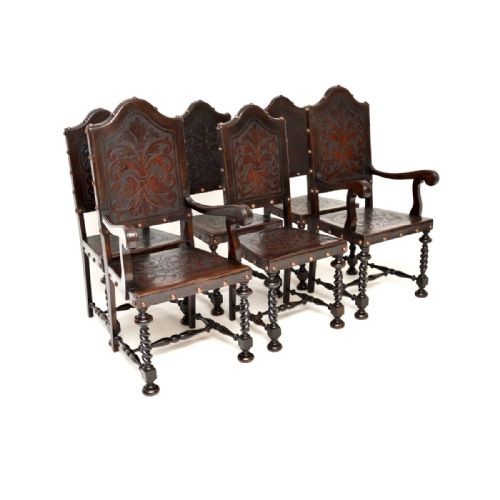
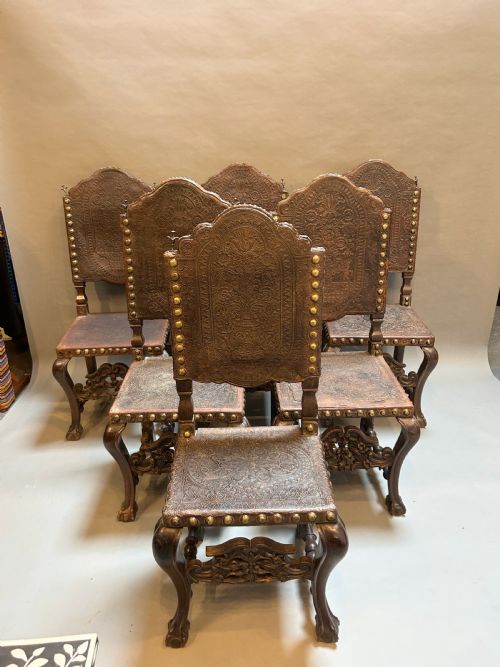
Seating surfaces and backs incorporate cane, embossed leather, brass details, and traditional upholstery to finish the framework.
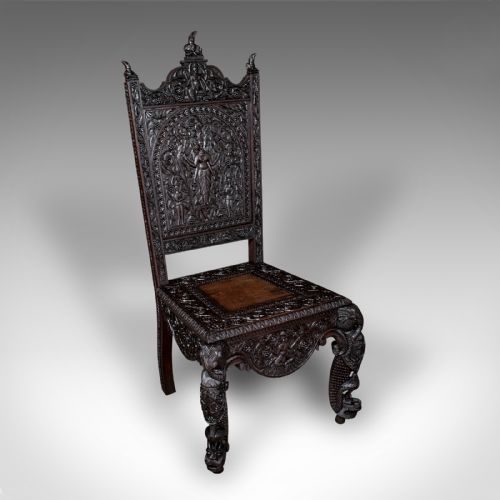
Some verified Ceylonese veranda chairs feature ornate seats designed specifically to endure tropical humidity while keeping sitters cool.
Assessing quality
Quality rests in the crispness of hand-carved ornamentation and the selection of dense native or imported hardwoods.
The integrity of integrated caning, embossed leather panels, and structural joinery separates standard utility seating from finer workshop production.
The Colonial Dining Chairs Glossary
- Anglo-Indian
- Furniture made in India by local craftsmen following British furniture forms, often utilising dense regional timbers. This style merges European proportions with intricate local carving techniques.
- Cape Dutch
- A regional design style originating from South Africa that adapts European furniture traditions using local materials. Pieces often display robust proportions and practical construction.
- Padauk
- A heavy, durable tropical hardwood prized for its deep reddish-brown colour and stability. It accepts fine carving without splintering.
- Caning
- Woven rattan material used to form breathable seats and backs on seating furniture. It provides flexibility and lightness to heavy timber frames.
Colonial Dining Chairs: Frequently Asked Questions
What periods do these chairs cover?
The listings span several centuries, featuring pieces from the eighteenth century through the Victorian era up to the early twentieth century.
Styles shift from Portuguese Baroque and Spanish Revival to Regency and colonial revival forms.
Which woods appear most often?
Makers utilised a range of dense timbers depending on the region of production, including padauk, ebony, rosewood, teak, walnut, and oak.
Hardwood and general timber also form the primary structure for many American and colonial country pieces.
Are these chairs sold in sets?
Inventory includes individual accent chairs, pairs, and larger matched sets numbering up to six or fourteen pieces.
Larger dining sets typically consist of side chairs alongside matching armchairs.
How do regional styles differ?
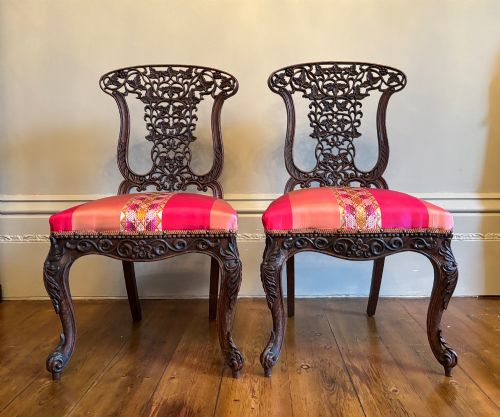
Anglo-Indian chairs often feature elaborate carved details in ebony or padauk, while Cape Dutch and American country pieces show simpler lines.
Portuguese examples frequently incorporate embossed leather and oak or walnut construction.