


Hand Carved Dining Chairs
These hand carved dining chairs combine solid timber and meticulous hand skill, offering character and enduring seating for any traditional interior.
Hand Carved Dining Chairs
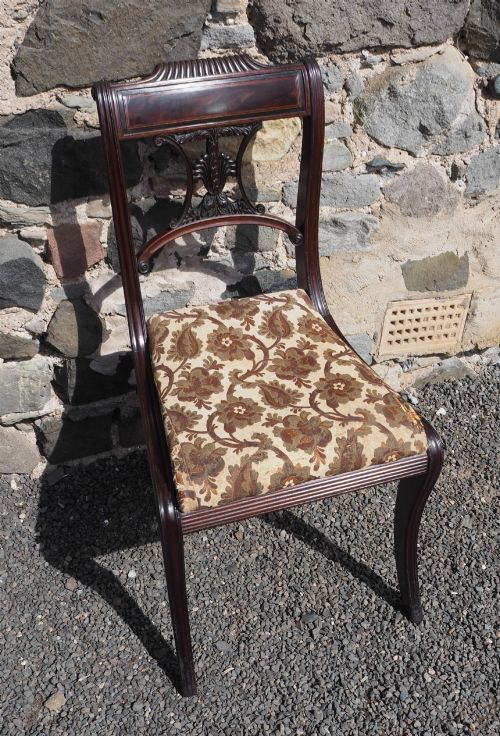
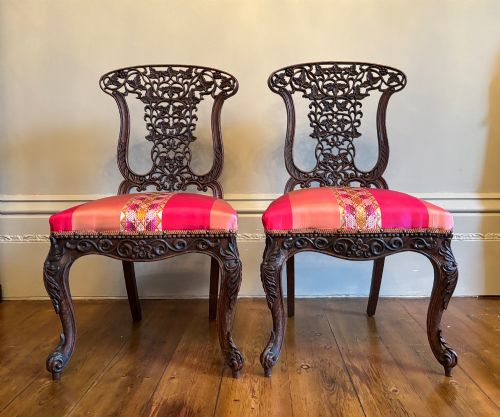
When you search for hand carved dining chairs, you encounter a diverse range of forms spanning several centuries, including side chairs, armchairs, and hall chairs. The examples on this page predominantly reflect historical periods such as the Georgian, Victorian, and Edwardian eras, alongside distinct regional interpretations.
You are most likely to meet mahogany, oak, and padauk timber constructions on this page, often paired with upholstered seats in fabric, leather, or silk. The styles range from classical Regency and Chippendale Revival designs to Anglo-Indian Colonial and Victorian Gothic Revival pieces.
How they were made
The makers of these chairs utilised dense hardwoods like mahogany, padauk, oak, and walnut, selecting timber capable of supporting deep chisel work and intricate relief patterns. Skilled artisans shaped the frames by hand, joining structural components with traditional methods to ensure long-term stability.
Surface ornamentation relied entirely on manual carving techniques, creating detailed motifs along the backs, rails, and legs. Finishers applied upholstery including leather, fabric, silk, and brass details to complete the seating.
The listings on this page feature multiple timber types including mahogany, padauk, oak, and walnut, spanning periods from the 18th century to 1900.
What varies in quality
The distinction between standard examples and the finest pieces lies in the depth and precision of the carving across the timber framework. Superior chairs display crisp relief work and fluid lines executed by confident hands, whereas lesser items show shallower cuts and softer detailing.
Material selection also dictates overall quality, with dense grain hardwoods and premium upholstery such as hand-dyed leather elevating the piece. The structural integrity of the joints and the proportional balance of the design further separate everyday seating from exceptional examples.
The Hand Carved Dining Chairs Glossary
- Side chair
- An upright chair without arms, designed primarily for dining tables. These pieces form the core of most matching sets.
- Carver chair
- An armchair traditionally placed at the head of a dining table or used as an occasional seat. They often feature more elaborate arm supports and wider proportions than standard side chairs.
- Padauk
- A heavy, durable tropical hardwood with a distinctive reddish hue, frequently utilised in Anglo-Indian and colonial furniture making. It accepts fine hand carving exceptionally well.
- Balloon back
- A rounded, oval-shaped chair back popular during the Victorian period. This form provides comfortable lumbar support while offering an expansive surface for carved decoration.
- Apprentice piece
- A smaller or experimental item created by a trainee artisan to demonstrate mastery of a craft. These objects often exhibit exceptional attention to detail despite their scale.
Hand Carved Dining Chairs: Frequently Asked Questions
What periods do these chairs come from?
The listings on this page span the 18th, 19th, and early 20th centuries. You will find pieces originating from the Georgian, Victorian, and Edwardian eras.
Alongside British periods, regional styles such as Anglo-Indian and French designs appear across various timber types and forms.
Are these chairs comfortable for daily dining?
Many of these pieces were built for formal dining rooms and formal seating arrangements. Upholstered seats in leather, fabric, or silk provide traditional padding.
Seat heights and back angles reflect the ergonomic standards of their respective historical periods.
How do I care for antique timber chairs?
Maintain solid wood frames by keeping them away from direct heat sources and sudden temperature fluctuations. Regular dusting with a soft cloth preserves the timber finish.
Treat leather or fabric upholstery according to its specific material requirements to prevent drying or staining over time.
How do I identify different furniture styles?
Style identification relies on examining the decorative motifs, leg shapes, and overall proportions of each chair. Chippendale Revival pieces often display ornate pierced splats, while Gothic Revival items feature pointed arches and architectural elements.
Comparing the primary timber and carving techniques helps link a piece to its likely era.