
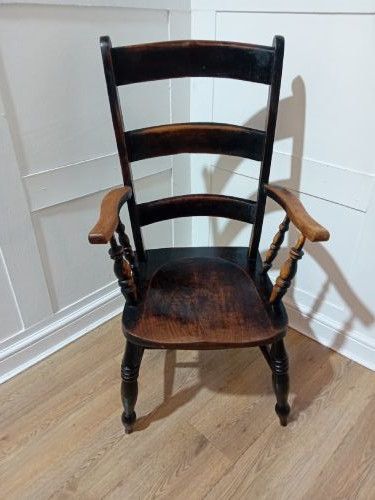
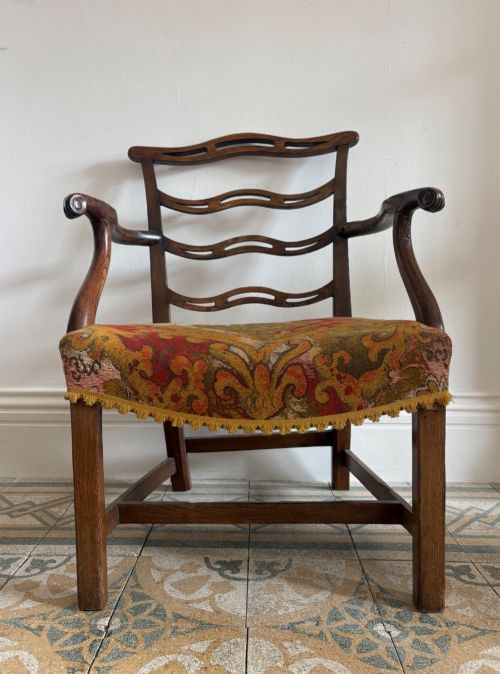
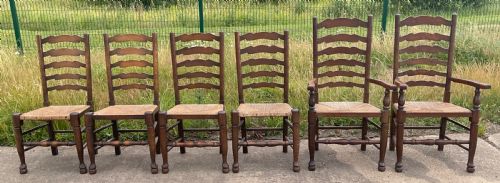
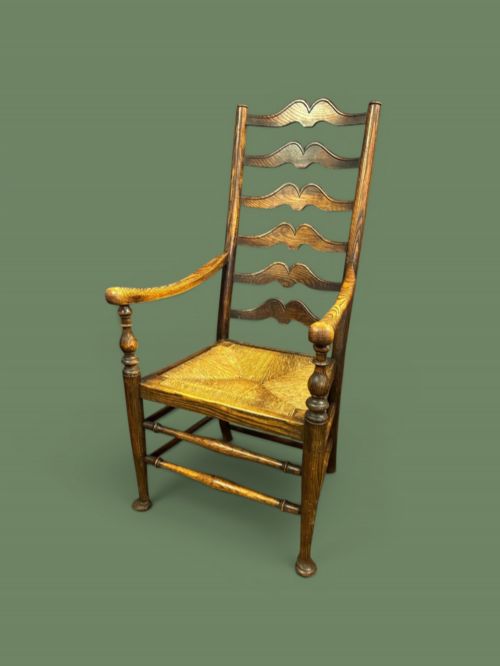


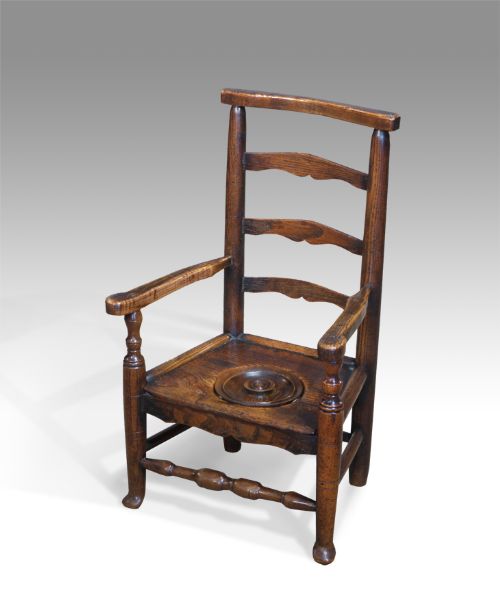
Elm Ladderback Chairs
Elm ladderback chairs are robust vernacular seats combining sturdy timber frames with woven rush, built to last generations in country homes.
Elm Ladderback Chairs
Elm ladderback chairs sit firmly in the tradition of English country furniture, prized for their straightforward construction and honest materials. When exploring this phrase, buyers encounter single items, pairs, and substantial dining sets spanning the eighteenth, nineteenth, and early twentieth centuries.
The regional variety runs from Lancashire and Cheshire designs to Thames Valley iterations, taking the form of open armchairs, carvers, and standard dining seats. Makers frequently paired elm with ash or beech, producing pieces suited to farmhouse kitchens and vernacular parlours alike.
These chairs serve equally well around a modern dining table or as individual accents in a hallway. Their enduring appeal lies in utility paired with unpretentious rural character.
Materials and construction
Makers utilised elm for its interlocking grain and resistance to splitting, making it ideal for solid seats and curved components. Ash and beech provided the strength needed for slender uprights and turned spindles, while oak occasionally appeared in foundational framing.
Rush seats were hand-woven tightly across wooden frames to form a supportive, resilient platform. Traditional joinery relied on pegged mortise and tenon joints, allowing chairs to flex under daily use without failing.
Listings demonstrate spans from the eighteenth century through the Arts and Crafts movement, featuring elm combined with rush, beech, and ash.
Evaluating quality and condition
Quality rests in the integrity of the timber frame and the tightness of the rush seating. Superior examples retain matching sets of rungs and well-defined turnings that have not suffered from excessive sanding or dry rot.
Patina distinguishes a piece handled over centuries from one stripped to raw wood. Original surfaces, whether aged wax or early finish, preserve the visual depth that collectors value.
Gimson
The Elm Ladderback Chairs Glossary
- Ladderback
- A chair style defined by horizontal slats between the rear upright posts. These slats are often curved to fit the sitter's back.
- Rush seat
- A seating surface woven from dried marsh grass or sedge twisted into cords. It provides a flexible and durable platform.
- Carver
- An armchair designed in a similar style to a set of dining chairs, often placed at the head of a table.
- Vernacular
- Everyday furniture made by regional joiners and local makers rather than high-style urban workshops. These pieces prioritise function and local timber availability.
- Spindle back
- A chair type featuring multiple thin turned vertical rods supporting the backrest rather than solid splats.
Elm Ladderback Chairs: Frequently Asked Questions
How do I clean a rush seat?
Dust gently with a soft brush and avoid exposing natural rush to excessive moisture. Spills should be blotted immediately with a dry cloth to prevent rotting.
Keep these chairs away from direct heat sources and radiators, which can cause the rush to dry out and snap prematurely.
Can these chairs handle daily dining?
Solid elm and ash construction makes these chairs exceptionally durable for everyday seating. Traditional mortise and tenon joints absorb daily movement well.
Check periodically that the stretcher joints remain tight and secure to ensure long-term stability during meals.
How do I date an elm chair?
Dating relies on observing tool marks, timber shrinkage, and structural wear patterns. Hand-turned spindles and peg construction point towards earlier vernacular production.
Comparing the slat profile and leg turnings against documented regional styles helps narrow down the period of manufacture.
Are carvers and side chairs matching?
Vernacular sets often include armchairs alongside matching side chairs for the head of the table. These carvers share identical turnings and slat profiles with the smaller dining chairs.
Mixing similar country chairs around a table creates an authentic historic dining arrangement.