

Antique Rush Dining Chairs
These antique rush dining chairs bring tactile, woven texture and honest vernacular charm to a table.
Antique Rush Dining Chairs
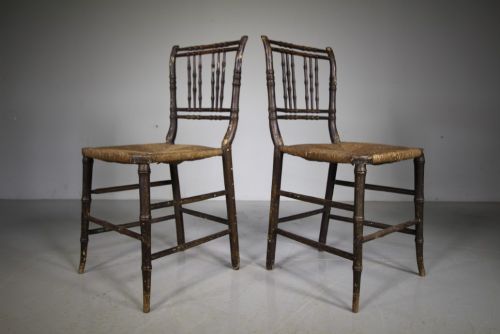
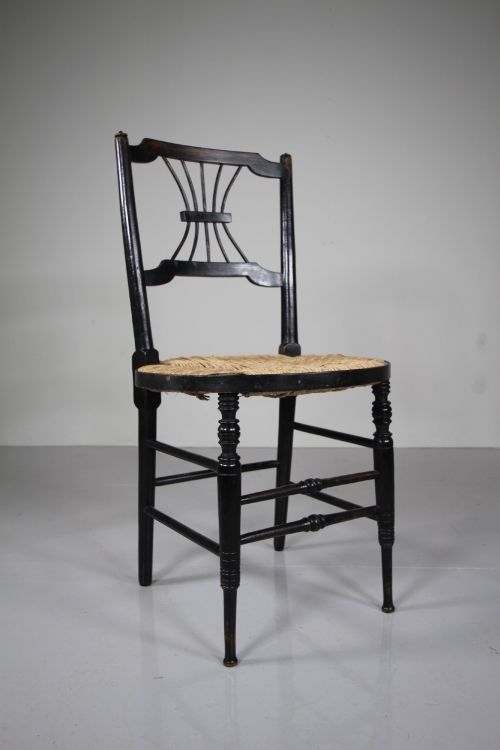
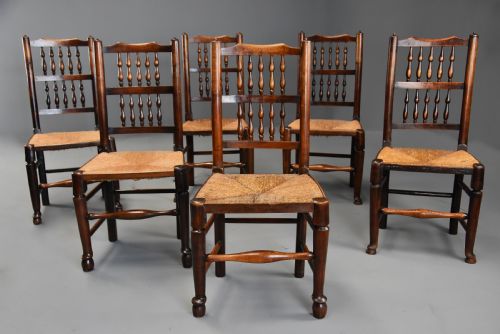
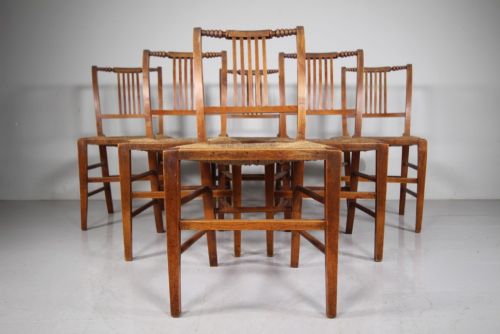
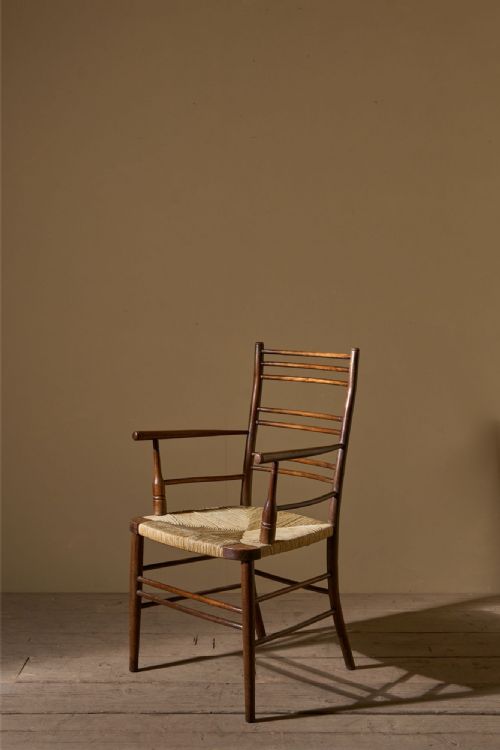
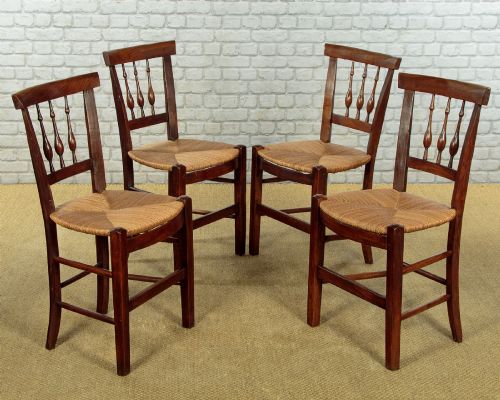
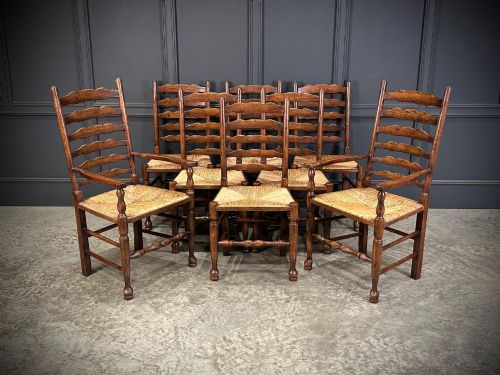
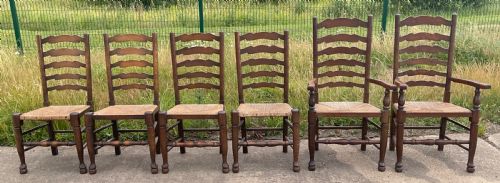
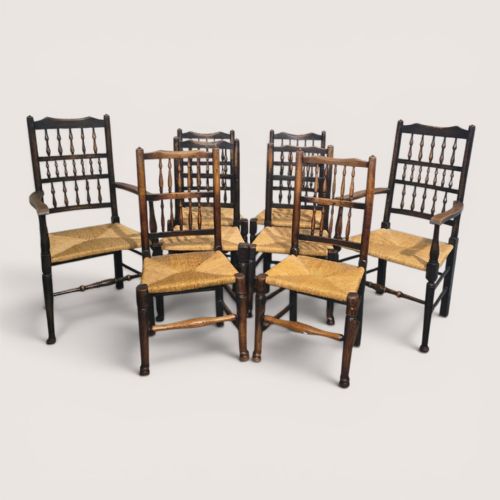
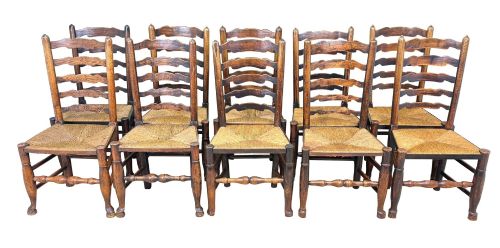
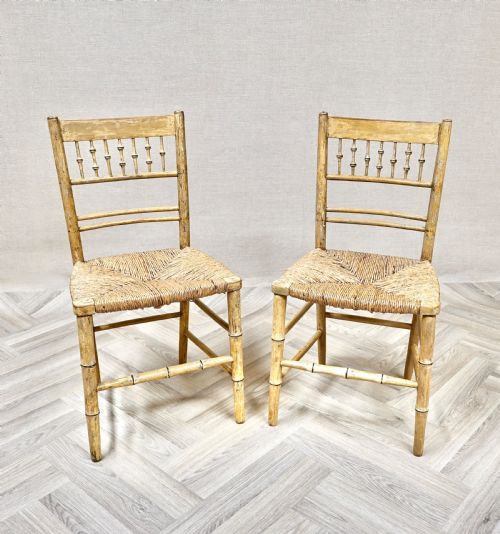
When searching for antique rush dining chairs, you encounter seating built for everyday domestic use across British, French, and wider European farmhouses and country houses. These pieces span from the eighteenth century through the Arts and Crafts movement and the early twentieth century, taking forms such as ladder backs, spindle backs, and regional vernacular styles.
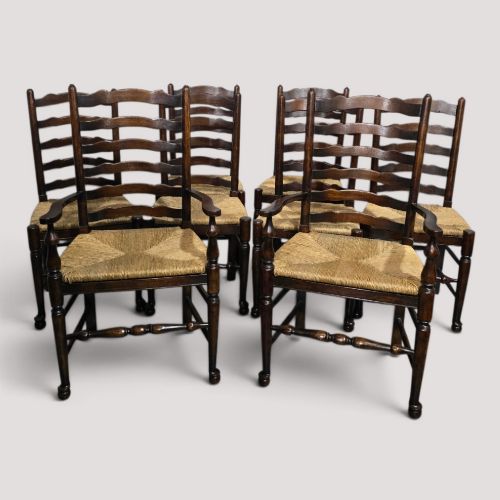
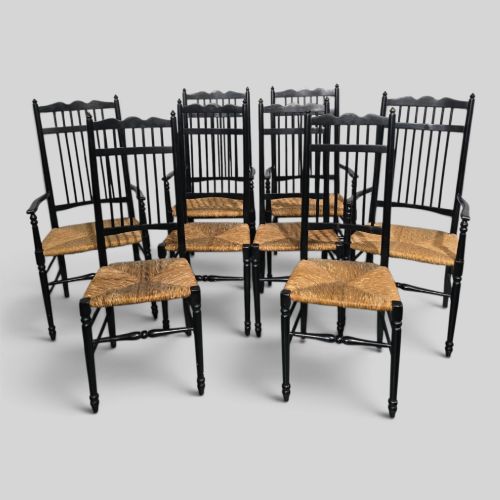
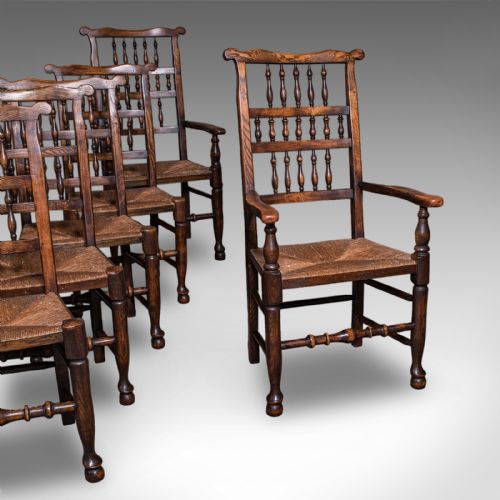
The most common examples on this page are country dining sets in oak, elm, and beech featuring woven rush seating. You find everything from individual carvers to large harlequin sets suited for daily gatherings around a farmhouse table.
How they were made
Cabinetmakers and rural joiners constructed the frames using native hardwoods like oak, ash, elm, beech, and fruitwood, often turning spindles on a lathe or shaping uprights by hand. Country workshops utilised local timber resources, combining flexible woods for bent parts with durable timbers for legs and stretchers.
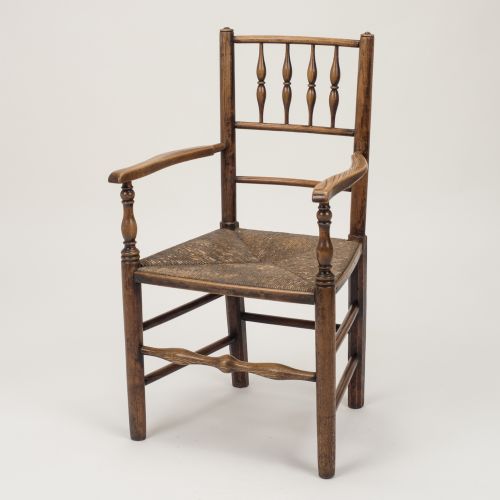
The seats themselves are formed by tightly plaiting dried marsh rush around a wooden frame in a characteristic square or envelope pattern. This traditional cordage technique yields a resilient, slightly springy surface designed to withstand decades of regular use.
High chairs let the smallest household members join the dining table in rush-seated style.
What varies in quality
Quality rests on the integrity of the timber frame, the tightness and material of the rush weaving, and the preservation of original surfaces. Chairs retaining a rich surface patina or untouched timber show superior integrity compared to heavily altered examples.
Proportion and turning execution separate standard workshop output from finer vernacular pieces. A well-balanced ladder back with crisp turnings and evenly tensioned rush represents the upper tier of country chairmaking.
William Morris·Rossetti
The Antique Rush Dining Chairs Glossary
- Rush
- Dried marsh plant stems twisted into cords and hand-woven to form durable, flexible seating surfaces. This material requires periodic care to maintain its structural tension.
- Ladder back
- A chair frame featuring horizontal arched slats between the rear uprights. This regional vernacular design supports the back comfortably.
- Spindle back
- A chair design incorporating numerous thin turned wooden rods in the backrest. These vertical elements distribute pressure evenly.
- Carver
- An armchair version of a dining chair, usually placed at the head of a table. These pieces often feature matching side chairs in larger sets.
- Patina
- The deep surface sheen developed through decades of handling, polishing, and natural wear. This quality indicates genuine age and tactile history.
Antique Rush Dining Chairs: Frequently Asked Questions
How do I care for antique rush seats?
Keep woven rush seats dry and clean them gently with a soft brush to remove dust. Avoid excess moisture, which can cause the natural plant fibres to become brittle over time.
Applying occasional light humidity via a damp cloth can help maintain the flexibility of older marsh cordage. Placing chairs away from direct heat sources prevents the rush from drying out and snapping.
Can I mix these chairs around a table?
Mixing different country chairs creates a characterful harlequin dining set. Many period dining groups were gathered organically over time rather than purchased as a single uniform batch.
Matching similar wood tones or common back designs, such as ladder backs or spindle backs, helps unify a varied group. Height variations should be checked to ensure comfortable seating levels for everyone dining.
How do I date a ladder back chair?
Dating relies on examining the turning style of the uprights, the construction joints, and the wear patterns on the feet. Earlier eighteenth-century examples often display chunkier proportions and hand-carved details.
Later nineteenth and early twentieth-century revivals, including Arts and Crafts interpretations, utilise machine assistance while emulating earlier vernacular forms. Wood choice also assists, as regional fruitwoods and elms typically point to older country production.
Are rush seats strong enough for daily use?
Traditional hand-woven rush seating is remarkably resilient and designed for heavy everyday dining use. The tight plaiting distributes weight effectively across the wooden frame underneath.
While robust, these seats benefit from sensible treatment and should not be knelt upon. Well-maintained historical rush withstands normal sitting without sagging or losing tension.